1. The missing giant straw
Augie had packed an imaginary straw.
“How big?” asked Ana.
“Tree big.”
Andy inspected the empty space above Augie’s hand. “Excellent. Fits in the car. Very light.”
At Bryce Canyon, their next mystery had sounded impossible: could a forest drink a cloud? Now the family had arrived at Redwood National and State Parks on California’s northern coast, and Allie was looking for evidence.
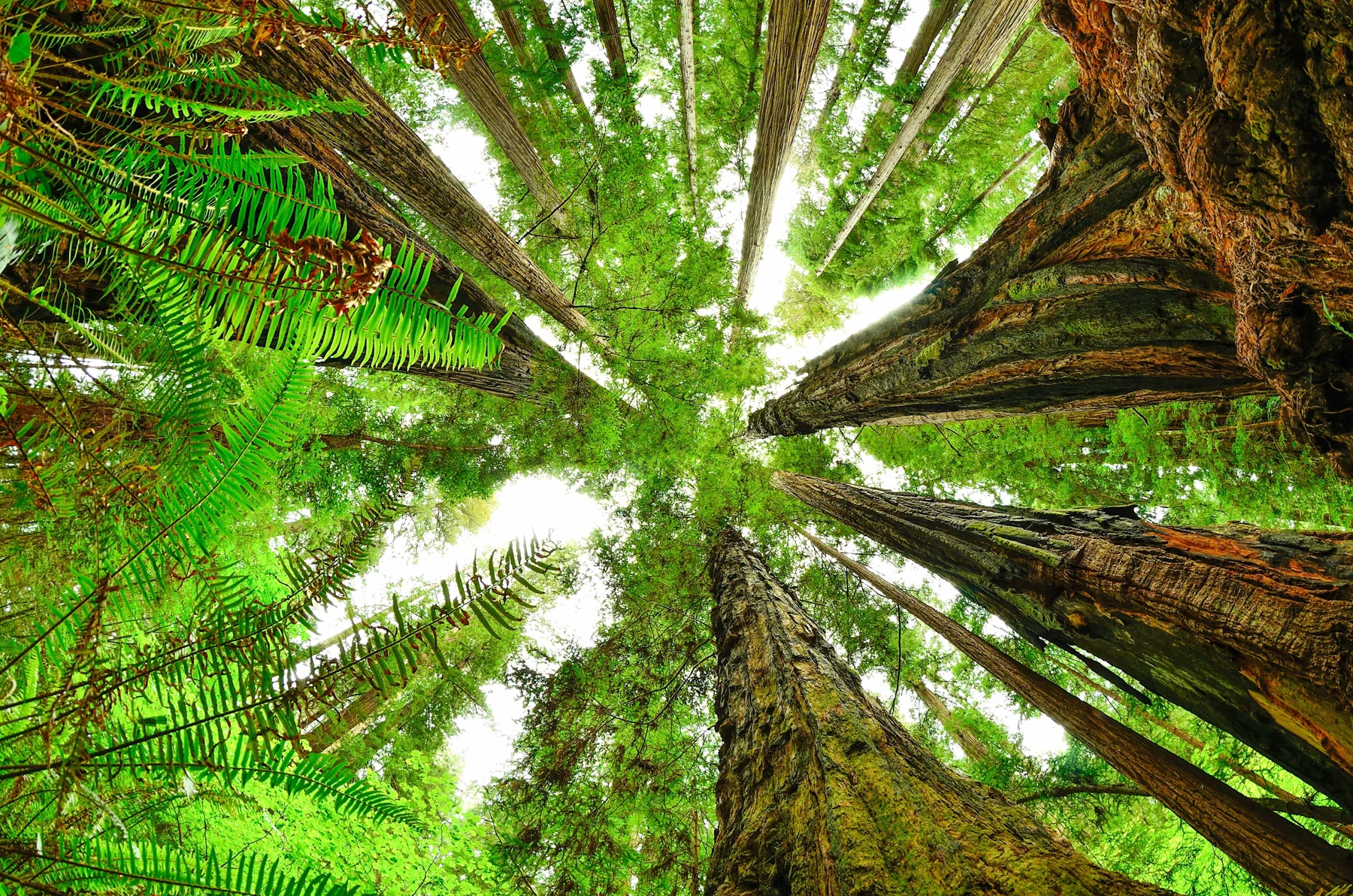
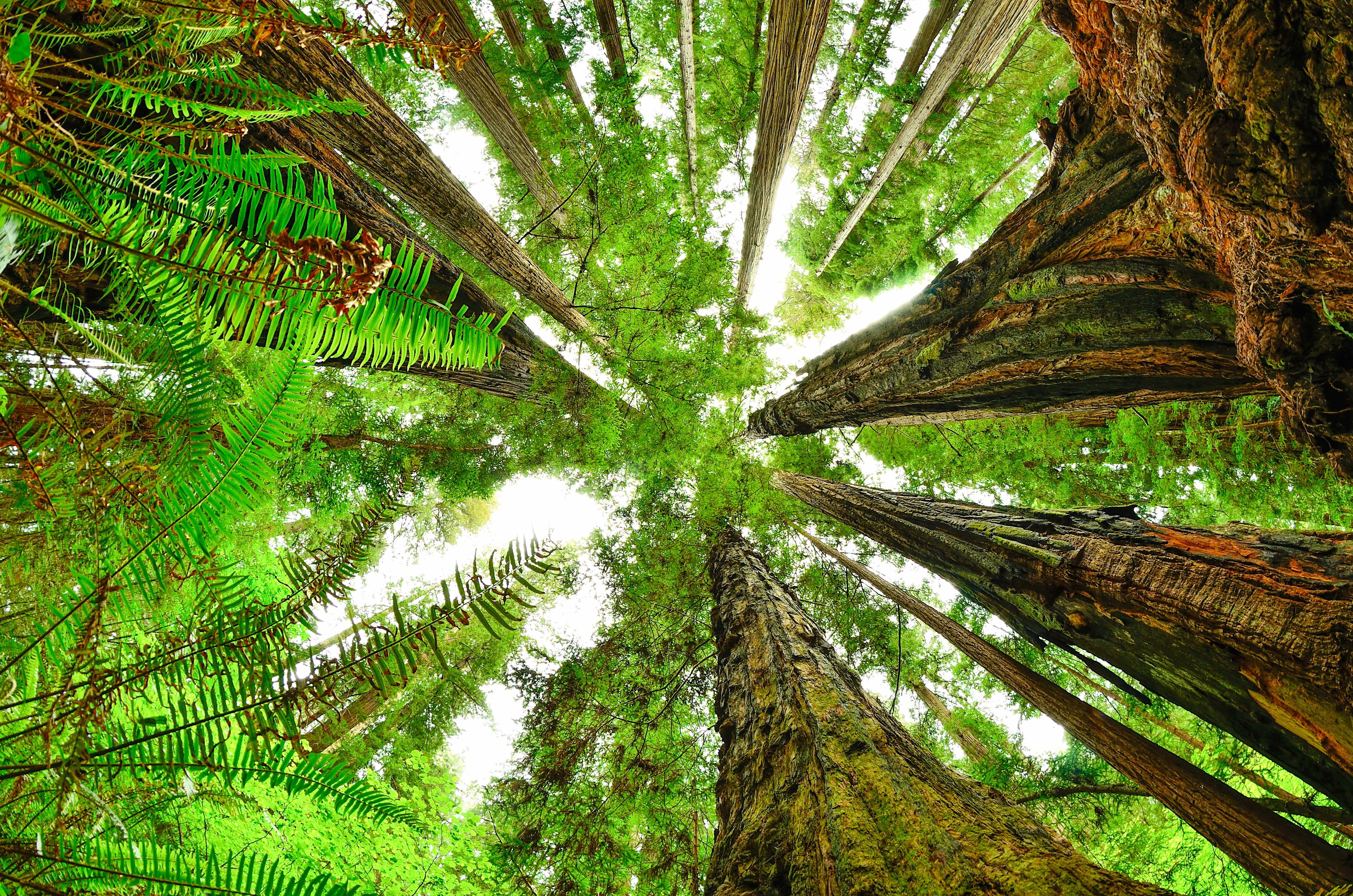
The trees made looking up feel like a whole activity. Reddish trunks rose past ferns, branches, and more branches, until the children’s eyes lost track of which green roof belonged to which tree.
“Someone forgot to stop building,” Andy whispered.
Ana opened the notebook. “Not buildings. Living trees.”
“Then someone forgot to stop growing.”
Mom had chosen a suitable established walk after checking current park information. The children stayed on the path beside their grown-ups. They did not need to climb anything to feel small. Standing still worked perfectly.
Augie tilted his head back, then looked down at his shoes.
“My neck needs a break.”
Allie read the name in their guide: coast redwood, Sequoia sempervirens. It was a different species from the giant sequoias they had learned about in Yosemite. Coast redwoods were famous for height; giant sequoias were especially massive.
“So ‘big tree’ needs a second question,” Ana said. “Big in which way?”
Andy made a measuring gesture with his hands.
“Big enough to make my sandwich look tiny.”
“Your sandwich already is tiny,” said Allie.
“That is an unrelated tragedy.”
They put their first question at the top of the page: WHERE DOES A TREE THIS TALL GET ITS WATER?
Augie drew a straw beside it.
Ana let the straw stay. Good mysteries could begin with a wrong idea, as long as you were willing to change it.
2. A cloud at walking height
A pale veil softened the more distant trees. The air felt cool and damp. Augie reached toward it with his imaginary straw.
“Cloud drink.”
“Fog is made of tiny liquid water droplets suspended near the ground,” Allie said. “We’re not watching a tree eat a fluffy piece of sky.”
Andy opened his mouth dramatically.
“No cloud sandwiches?”
“Not on this menu.”
Coast redwoods grow naturally in a narrow coastal belt from central California into southern Oregon. The Pacific Ocean helps create the mild, moist climate they need. Rain matters, especially in the wet season. During the drier summer, coastal fog helps the forest in several ways.
Ana held out a finger to count. “First way?”
“Cooling and moistening the air can reduce how much water the trees lose.”
“Like making a thirsty day less thirsty,” Andy said.
“Second,” Allie continued, “droplets collect on leaves and other surfaces. Some water drips to the ground.”
Augie pointed beneath a branch. “Tree shower.”
“Sometimes. The amount varies with the place and conditions.”
“And the third way?” Ana asked.
“Redwood foliage can absorb water directly, too.”
Ana drew three arrows: less water lost, drops to soil, water into foliage.
“Not one straw,” she said. “Several connections.”
The title of their mystery suddenly sounded less impossible. A forest could receive water from fog without having a mouth, a cup, or a very tall waiter.
Andy added a waiter to the margin anyway.
“Would you like your cloud with ice?”
“We already visited the hoodoo ice department,” Allie said.
Augie crossed out his straw. Under it he wrote, with help: LEAVES.
Then he added a small cup, because he was not ready to dismiss every possibility.
3. Upstairs, without an elevator
The fog clue answered one question and produced another.
“Even with rain,” Ana said, “how does water get up there?”
Andy checked the nearest trunk for buttons.
“No elevator.”
Inside a tree are water-conducting tissues called xylem. Water evaporating from leaves helps create a pull through those pathways. Water molecules stick to one another, helping maintain the connected water column.
Allie drew a simplified tree with arrows from roots toward leaves.
“The drawing leaves out lots of details,” she said. “But it shows why the roots and leaves belong in the same investigation.”
Augie stared upward. “Very long drink.”
“Very impressive physics,” Ana said.
“And no elevator music,” Andy added.
They looked at a picture showing roots spreading beneath the forest. Compared with a redwood’s astonishing height, its roots were relatively shallow and spread far outward. The tree did not have one enormous taproot reaching down like a mirror-image trunk.
“So our giant straw was wrong underneath, too,” Ana said.
Roots could intermingle with neighboring root systems. Soil, roots, and the surrounding grove all mattered to how a tree stood. Even these giants could fall, including in strong winds.
Mom pointed to the path. Walking over exposed roots and trampling soil around trees could damage the living system they had come to admire.
“Feet on the trail,” Augie announced.
“Correct department,” said Andy.
Ana’s drawing now had a tall trunk, a broad spread of roots, little arrows, and one very disappointed elevator operator.
“Good news,” Allie told him. “The forest has other jobs.”
They closed the notebook for a moment and listened. A quiet forest was not an empty forest. Their next clue might be somewhere far above their heads—or right beside their shoes.
4. The forest has a penthouse
At an educational display, Ana discovered something that made her turn the page sideways.
“There are gardens up in the trees.”
Andy looked suspicious. “Who carries the watering can?”
Not a gardener in boots. Organic material can collect on large branches. Over time, decomposing material can form pockets of soil high in an old forest’s canopy. Ferns and other plants can grow there.
Augie imagined a tiny mailbox attached to a branch.
“Upstairs house.”
“The canopy is habitat,” Allie said. “Not just the forest’s lid.”
They pictured layers of life: the sunlit tops, shaded branches, trunks, smaller trees, shrubs, ferns, and the forest floor. Different species used different parts. The children could not see the whole community from a path below.
“So a photo of a trunk is like a photo of one apartment-building wall,” Ana said.
“You miss everyone inside,” Andy replied. “And the neighbor who practices trumpet.”
A seabird added another surprise. Marbled murrelets feed at sea, but in this region they use large limbs in old-growth forest for nesting.
Andy looked between the forest picture and a picture of the ocean.
“Breakfast at sea. Bedroom in a tree.”
“A connection between habitats,” said Allie.
They did not plan to search for a nest. Watching an exhibit was enough. Small, hidden animals did not owe explorers a personal appearance.
Dad explained another practical connection: keeping crumbs and food scraps contained helps avoid attracting animals that can threaten nesting wildlife.
Andy checked his jacket.
“I have been transporting evidence.”
He tipped the crumbs into the family’s waste container, not onto the ground.
Ana wrote: EVEN A TINY CRUMB CAN JOIN A BIG STORY.
Augie drew a crumb with a suitcase.
“Going home with us.”
5. The log that wasn’t finished
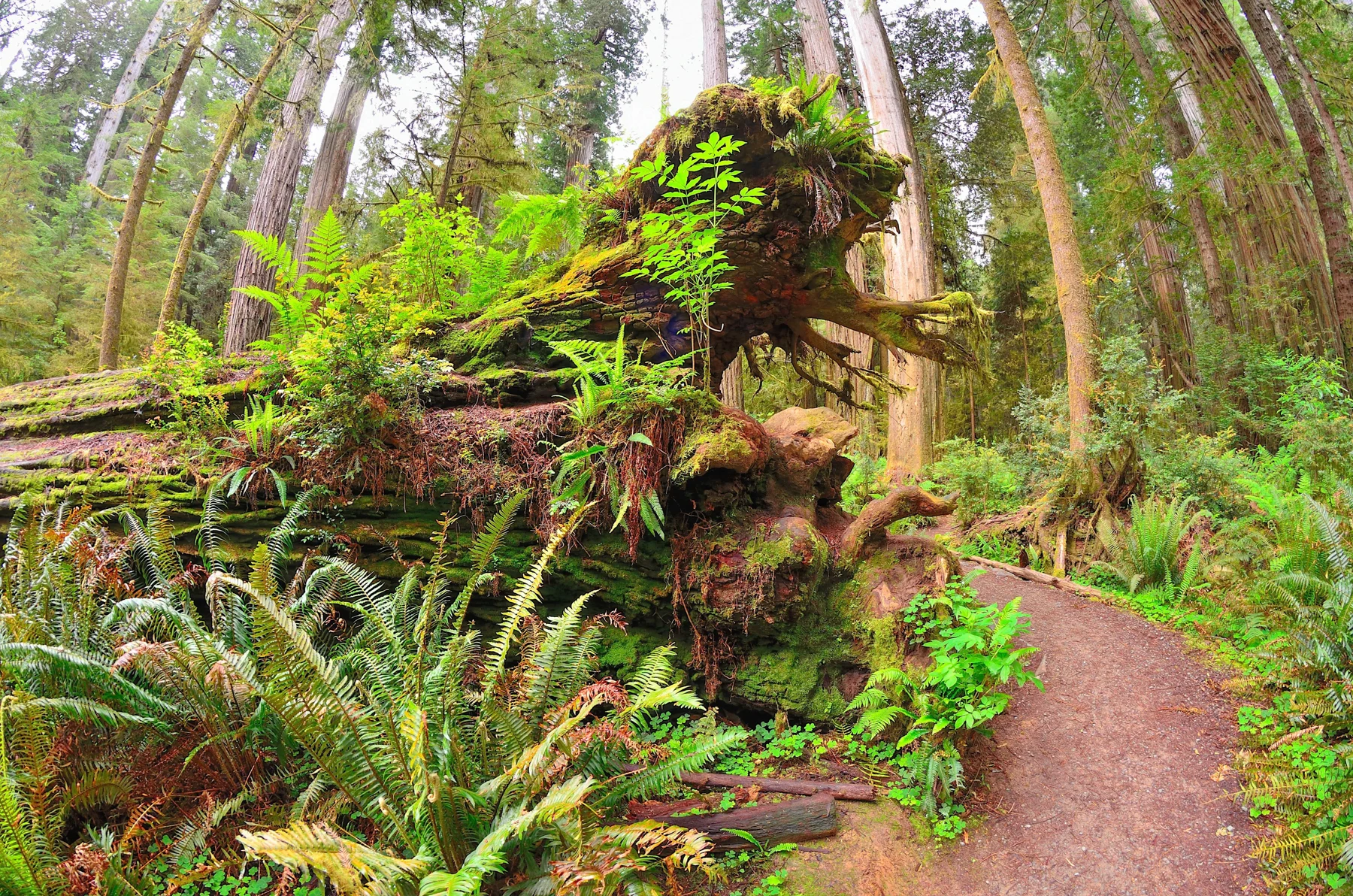

A photograph showed greenery growing over an old stump. To Andy, it looked as though the tree had turned into an enormous flowerpot.
“Is that tree finished?” he asked.
“Finished standing,” Allie said. “Not finished being part of the forest.”
Fallen wood offers shelter and surfaces for other living things. Fungi and other decomposers help break it down. Nutrients return to the system over time. A log can hold moisture and provide places for plants to take root.
Ana drew a large circle, with arrows rather than a finish line.
“Living tree, fallen wood, smaller lives, soil, more growth.”
“Recycling,” Augie said.
“Yes, although nature’s recycling doesn’t arrive every Tuesday in a truck.”
Andy made a deep rumbling noise.
“Sorry. Imaginary truck. Very small fuel bill.”
They left fallen wood and bark alone. Peeling a piece off might remove someone’s shelter. Their photographs and drawings could come home without taking a piece of the habitat.
Nearby, a guide picture showed redwood sprouts. Coast redwoods can reproduce from seeds, but they can also sprout from existing living parts, including around a damaged trunk or stump. Some groups of trunks began as sprouts related to an earlier tree.
Augie studied the picture. “Tree family?”
“In a biological sense, these sprouts can be clones,” Allie said. “But we shouldn’t assume every ring of trees has exactly the same history.”
Andy imagined a parent tree calling its sprouts to dinner.
“Everybody wash your leaves!”
Ana added two ideas to the notebook: old wood can support new life, and a tree’s story may continue in more than one way.
Their Bryce towers had been leftovers carved from rock. This forest had a different kind of leftover—one that could help support the next generation.
“Useful leftovers,” Andy said. “My favorite kind.”
He paused.
“After pizza.”
6. The banana with an appointment
The forest floor in their guide held a yellow surprise.
“Dropped snack,” said Augie.
“Banana slug,” Allie read.
Andy leaned closer to the photograph. “The banana has escaped.”
“It’s an animal.”
“Then it has made a very good disguise.”
A banana slug is a mollusk, related to snails. It moves on a muscular foot over mucus. It has no walking legs, no shopping basket, and no reason to hurry to the fruit aisle.
Ana drew a slug with an appointment card: ARRIVE EVENTUALLY.
The name did not mean every banana slug looked identical. Some were bright yellow; others were greenish or brown, with or without dark spots. The children would not identify every yellow shape as a slug—or every slug as this species.
“All bananas in this chapter are subject to inspection,” Andy announced.
Banana slugs eat a variety of material, including decomposing matter and fungi. They help with nutrient cycling on the forest floor. A creature that seemed comically small beside a redwood still belonged to the same ecosystem.
Augie put a dot beside his huge tree drawing.
“Important dot.”
“Exactly,” Ana said.
They could enjoy a slug without touching or moving it. Moist skin and mucus were useful parts of its life, not invitations to pick it up. If they encountered one on a suitable walk, they would observe carefully without crowding or stepping on it.
Andy considered the comparison between enormous trees and a slow-moving mollusk.
“The forest has really committed to a range of sizes.”
Allie smiled. “A habitat isn’t a contest for the biggest resident.”
Augie added a crown to the dot.
“Small champion.”
7. A canyon wearing green
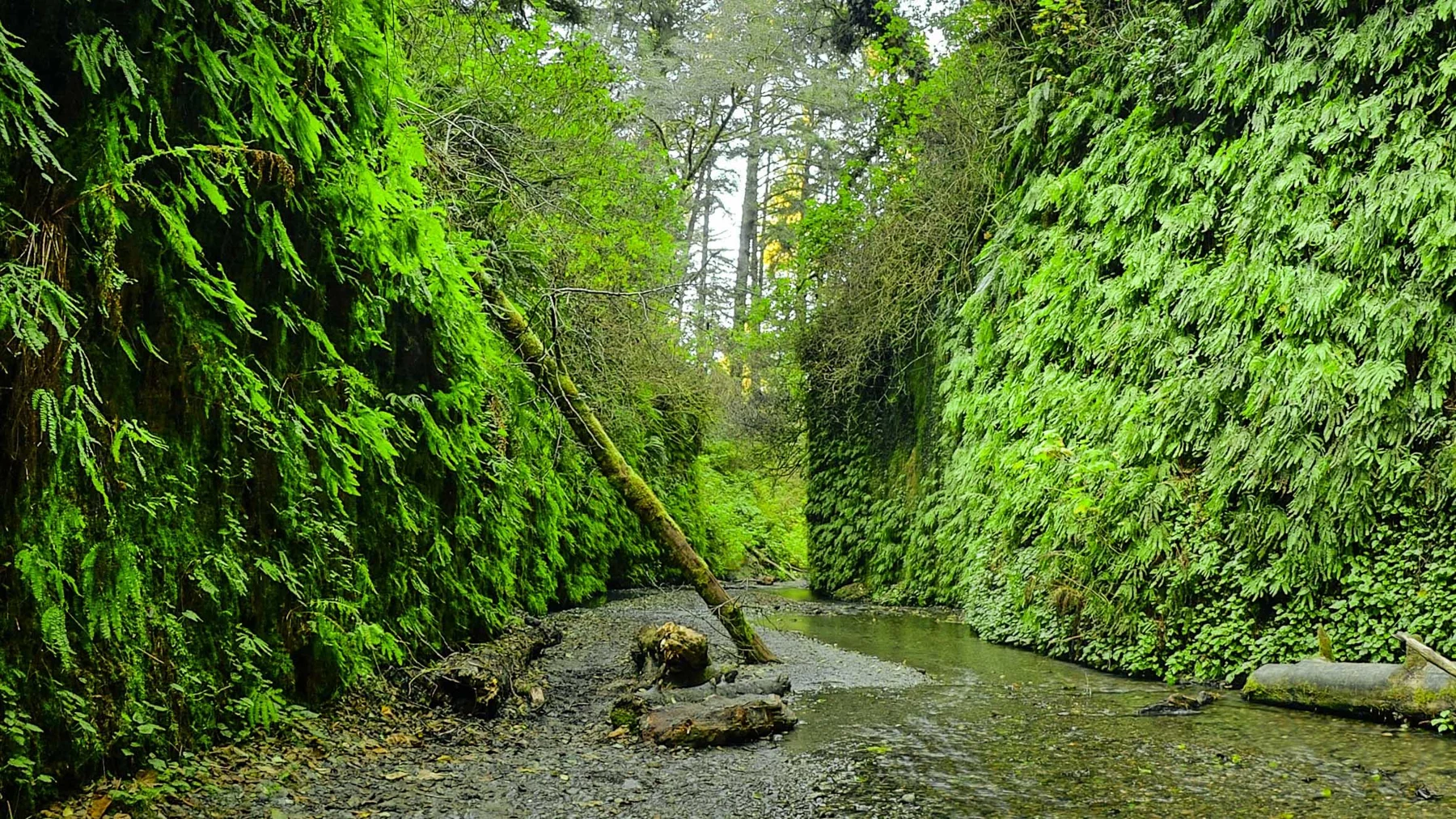

In another photograph, ferns covered steep walls beside a shallow creek strewn with cobbles. The children recognized Fern Canyon, in Prairie Creek Redwoods State Park.
Andy turned back to their Bryce drawing.
“Canyon comparison!”
“Different rock, water, climate, and history,” Ana reminded him. “Not all canyons have the same recipe.”
The green walls showed how moisture and shade can create growing places for ferns. A photograph made the scene seem almost like a hallway, but it was a living creek environment, not a carpeted passage through a museum.
Augie drew a doormat: PLEASE WIPE YOUR BOOTS.
Mom checked the current official information. Some destinations have access requirements or seasonal restrictions, and a route involving stream crossings is not right for every family or every day.
“We can investigate this one in pictures today,” she said.
Andy gave the photograph a thoughtful nod.
“Excellent. My socks vote yes.”
The park collection itself needed explaining. Redwood National and State Parks combined Redwood National Park with three California state parks: Jedediah Smith Redwoods, Del Norte Coast Redwoods, and Prairie Creek Redwoods.
“Four parks working together,” Ana said.
“Like four kids,” Andy replied.
“With fewer arguments about snacks,” said Allie.
“We cannot prove that,” Ana said.
The protected landscape included much more than big trees: prairies, rivers, woodlands, and coastline. Their family could choose from suitable forest walks, visitor-center discoveries, scenic stops, and other activities rather than treating one famous destination as the whole park.
Augie drew four little flags above one large notebook.
“Same adventure team.”
That seemed a good reason to keep the full name on their cover.
8. The people in the forest’s story
Before calling the forest “untouched,” Allie stopped herself.
“People have lived here and cared for this region for a very long time.”
The kids learned about Indigenous communities of the North Coast, including Yurok and Tolowa peoples. These were living communities with distinct identities, languages, and continuing relationships with the land—not characters from a vanished past.
Ana left space for notes from official exhibits and Indigenous sources.
“We should listen before we try to tell someone else’s story.”
The history also included terrible harm: settlers forced Indigenous people from their lands, and violence devastated communities. Mom explained this plainly, without turning it into an adventure game.
Augie leaned against her. Andy put down his joke pencil.
“That belongs in the history too,” Ana said quietly.
“Yes,” Mom replied. “And so do the people and communities who are here today.”
Commercial logging had also transformed much of the region’s forest. Protecting surviving old growth was one part of the work; restoring previously logged areas was another.
The kids learned about Redwoods Rising, a collaboration involving the National Park Service, California State Parks, and Save the Redwoods League. Restoration could include improving forest conditions and repairing damage associated with old logging roads and altered streams.
“So planting one tree isn’t the whole job,” Allie said.
“It’s a whole connected landscape,” Ana replied.
Andy looked at their growing list: water, trees, roots, soil, birds, slugs, people, history, and time.
“We need a bigger page.”
Augie held up another sheet.
“Teamwork.”
The children could not restore a forest with a pencil. But they could learn carefully, follow park guidance, protect the places they visited, and understand that caring for a landscape was ongoing work.
9. The ocean signs the case report
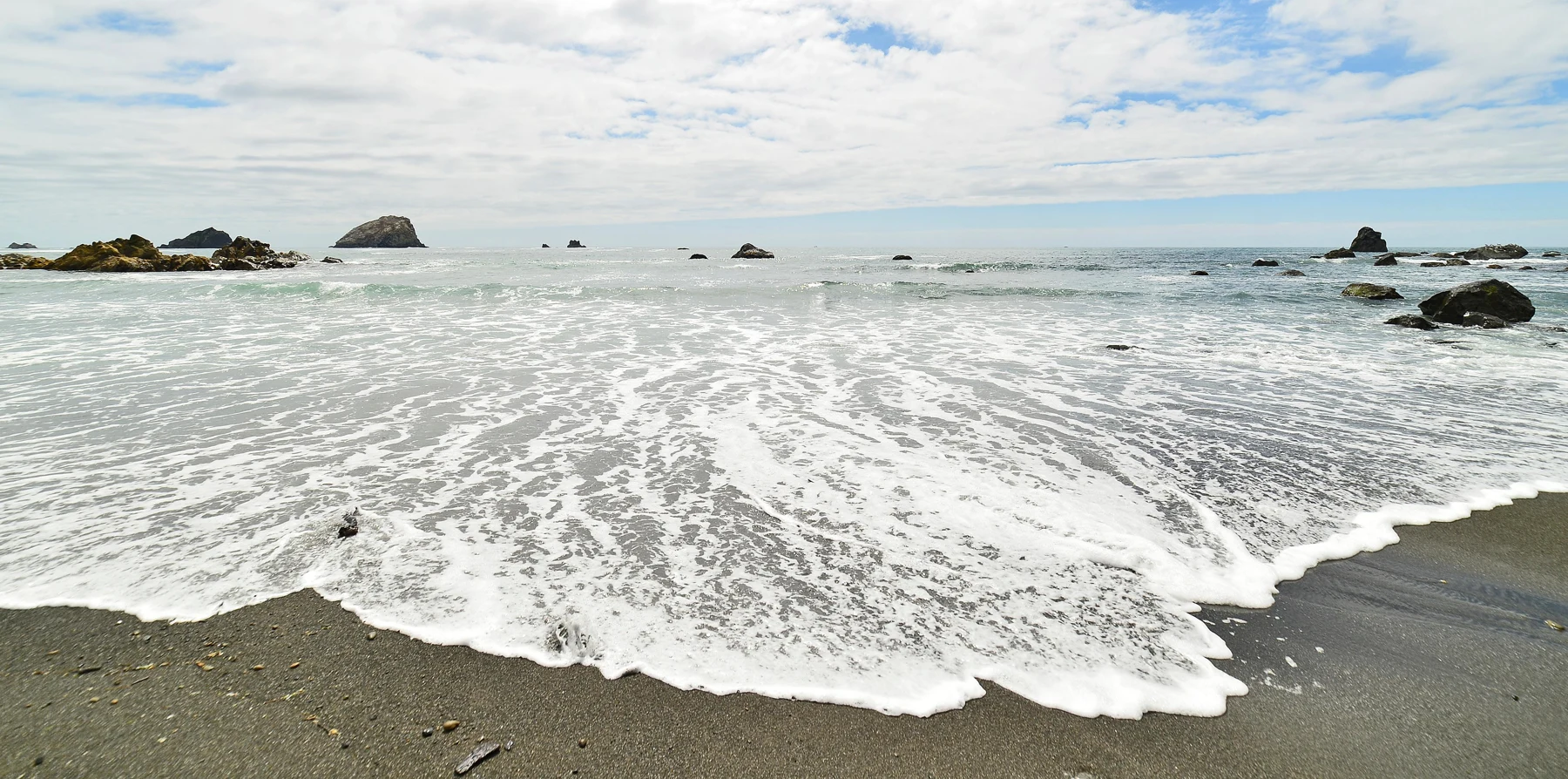

At a suitable coastal viewpoint, the family looked toward the Pacific. Waves moved around dark offshore rocks. The ocean that helped shape the forest’s climate now had a whole page to itself.
Andy pointed from the water toward the trees.
“The forest’s weather neighbor.”
“And the murrelet’s dining room,” said Ana.
The children stayed well back from the surf and followed their grown-ups’ chosen viewing plan. A photograph could show a beautiful beach without showing the force of every wave or the hazards of a particular day.
Augie drew a wave outside his notebook’s frame.
“Too big for paper.”
Allie read the mystery question one last time: CAN A FOREST DRINK A CLOUD?
“Not with a mouth,” Ana answered. “Fog can reduce water loss, collect and drip into the soil, and supply water directly through foliage.”
“And rain still matters,” Allie added.
“Roots and leaves work together,” said Andy. “No elevator.”
Augie raised his empty hand.
“No giant straw.”
They had found more than a clever tree trick. The forest connected sky to soil, ocean to canopy, and fallen wood to new growth. Small residents mattered beside giant ones. People’s histories and care belonged in the picture too.
Ana drew a final arrow from the cloud to the tree, then another from the tree toward the ground.
“The best answer was bigger than our first question.”
Andy looked delighted. “That is a very educational way to say our notebook is full.”
Their next chapter would take them somewhere with a very different water story: Death Valley National Park, where salt could form puzzling patterns across the ground.
Augie frowned at the new page.
“Did someone spill the salt?”
Allie wrote THE SALT-POLYGON PUZZLE.
Andy closed the notebook carefully.
“Please tell me the next mystery doesn’t need an imaginary pepper shaker.”
Explorer’s notebook
Nine discoveries to keep
- Coast redwoods and giant sequoias are different species.
- Coast redwoods grow naturally in a narrow belt along the Pacific Coast.
- Fog can reduce water loss, drip to the soil, and supply water through foliage.
- Rain is also an important part of the forest’s water supply.
- Roots and water-conducting tissues connect the soil with the leaves.
- A forest canopy can contain habitat far above the ground.
- Fallen wood helps support life and nutrient cycling.
- Banana slugs are mollusks; marbled murrelets connect forest nesting habitat with the sea.
- Redwood National and State Parks includes a national park and three state parks working together.
Five ways to explore
- On a suitable established path, look at the forest’s layers: ground, understory, trunks, and canopy.
- Draw three arrows showing different ways fog helps the forest.
- Compare photographs of a standing tree and fallen wood. List the life each can support.
- Visit a visitor center or official park page to choose activities suited to your family and current conditions.
- Make a forest-to-ocean connection map, including fog and a marbled murrelet.
Talk it through
- Why doesn’t a very tall tree need a matching deep taproot?
- How could keeping crumbs contained help a bird nesting high above us?
- What would we miss if we thought a park’s history began when it became a park?
Words for your backpack
Canopy: the upper layer formed by tree crowns.
Foliage: a plant’s leaves collectively.
Xylem: plant tissue that conducts water and dissolved minerals.
Transpiration: water loss from a plant, mainly as vapor through its leaves.
Decomposition: the breakdown of dead organic material.
Restoration: work to help an ecosystem recover from damage or disturbance.