1. A factory without a front door

“Who do?” asked Augie.
“Hoodoo,” said Allie.
“I do what?”
“Look at the rocks.”
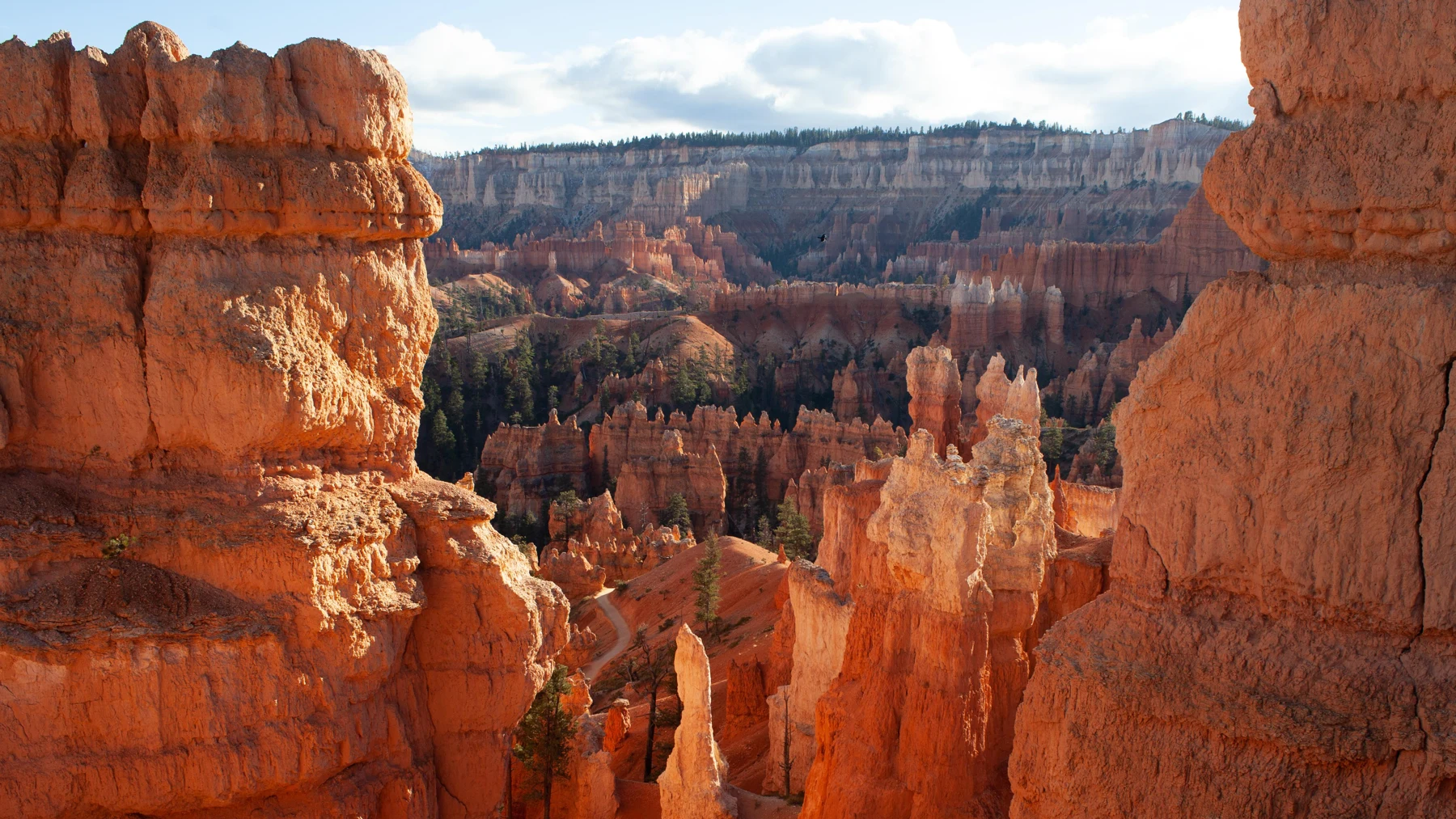
Augie looked. Beyond the overlook stood a whole crowd of orange towers. Some were skinny. Some had lumps, ledges, and funny little hats. Together they looked like a city whose builders had forgotten every window, staircase, and bathroom.
“I think they’re waiting for a bus,” Andy announced.
Ana opened the adventure notebook. “Welcome to our next mystery: who makes the hoodoos?”
The four kids had arrived at Bryce Canyon National Park in southern Utah. After Shenandoah’s blue mountain haze, this landscape seemed to have turned the color knob toward orange. Pine trees dotted the slopes. Far below, pale paths curled through the rock formations.
Allie stayed behind the overlook barrier. “A hoodoo is one of those irregular rock pillars. But nobody stacks them up.”
Andy studied a tower with a wide top. “Nobody? Because that one definitely ordered a hat.”
“Maybe there’s a factory,” said Augie.
“A factory with no building?” Ana asked.
“Outdoor factory.”
She wrote HOODOO FACTORY across a fresh page. Under it she added: FIND THE WORKERS. FIND THE TOOLS. FIND OUT WHAT HAPPENS TO THE LEFTOVERS.
“Find the snack room,” Andy suggested.
“That goes on your page.”
There was no smoke from a chimney and no clanging machinery. Wind stirred the trees. The towers waited quietly.
“Maybe the workers are very small,” Augie whispered.
Allie smiled. “Some of their tools are small enough to fit inside a crack.”
2. The missing-river question
Andy had brought an important piece of evidence from their Grand Canyon adventure: a memory of a river at work far below the rim.
“Grand Canyon has a river,” he said. “So where’s this canyon’s river?”
They looked across a broad, bowl-shaped sweep of cliffs and pillars. No giant river wound through the middle.
“Excellent question,” said Allie. “Despite its name, Bryce isn’t a canyon carved by one big river running through it. These great scooped-out areas are called amphitheaters.”
“Like a theater?” asked Ana.
“Because of the bowl shape.”
Augie waved to the pillars. “Hello, rock audience!”
Andy bowed. “Tonight’s performance: The Sandwich That Disappeared.”
“It has a very short first act,” Ana said.
The park sits along the edge of the Paunsaugunt Plateau, part of the high country of the Colorado Plateau. Allie traced an imaginary tabletop with her hand, then curled her fingers downward to show its edge.
“We’re near the edge of a high land surface. Water, ice, and gravity work on that edge. Different places can have different landscape-building stories.”
“Landscape-unbuilding stories,” Ana corrected. “If the rocks are being taken away.”
That idea stopped Andy mid-bow.
“Wait. The factory doesn’t add towers?”
“It removes the rock around them.”
Augie considered this. “Like eating the bread around the cheese?”
“A surprisingly useful model,” said Allie. “Except the cheese eventually gets worn away too.”
Ana wrote their first discovery: THE TOWERS ARE WHAT REMAINS.
3. Before the towers, a watery beginning
“Before we hire the workers,” Allie said, “we need to know what they’re working on.”
“Rock,” said Andy.
“Very detailed report,” said Ana.
The rocks holding many of Bryce’s famous hoodoos belong to the Claron Formation. Their beginnings reach far back into a landscape of freshwater lakes and surrounding floodplains. Sediment settled in those environments, layer after layer. Over long stretches of time, the deposits became rock.
Augie looked from the dry-looking towers to the sky. “The lake is missing.”
“The old landscape changed,” Allie said. “Much later, uplift raised the region. Weathering and erosion exposed and shaped the rocks.”
“So the recipe is: old wet places, layers, time, rock, lifting, and a lot of taking pieces away,” Ana summarized.
“No oven?” asked Andy.
“No oven in this recipe.”
He looked relieved. “My imaginary kitchen was getting crowded.”
Allie explained that a formation is a named body of rock that geologists can recognize and study. A rock formation isn’t necessarily one perfectly even layer, and the past wasn’t one tidy event.
“It’s more like a long notebook than a single photograph,” she said.
Ana turned back a few pages in their own notebook. There were sketches of glaciers, forests, rivers, and one crumb that appeared to be studying geography.
“A notebook can hold a lot of history.”
Andy brushed away the crumb. “And evidence.”
The kids imagined water where the high plateau now stood. They pictured tiny bits settling, more layers arriving, and time stretching farther than a whole mountain of birthday candles.
“Would the cake be enormous?” Augie asked.
“We are not lighting that many candles,” Allie said.
4. The ice worker clocks in
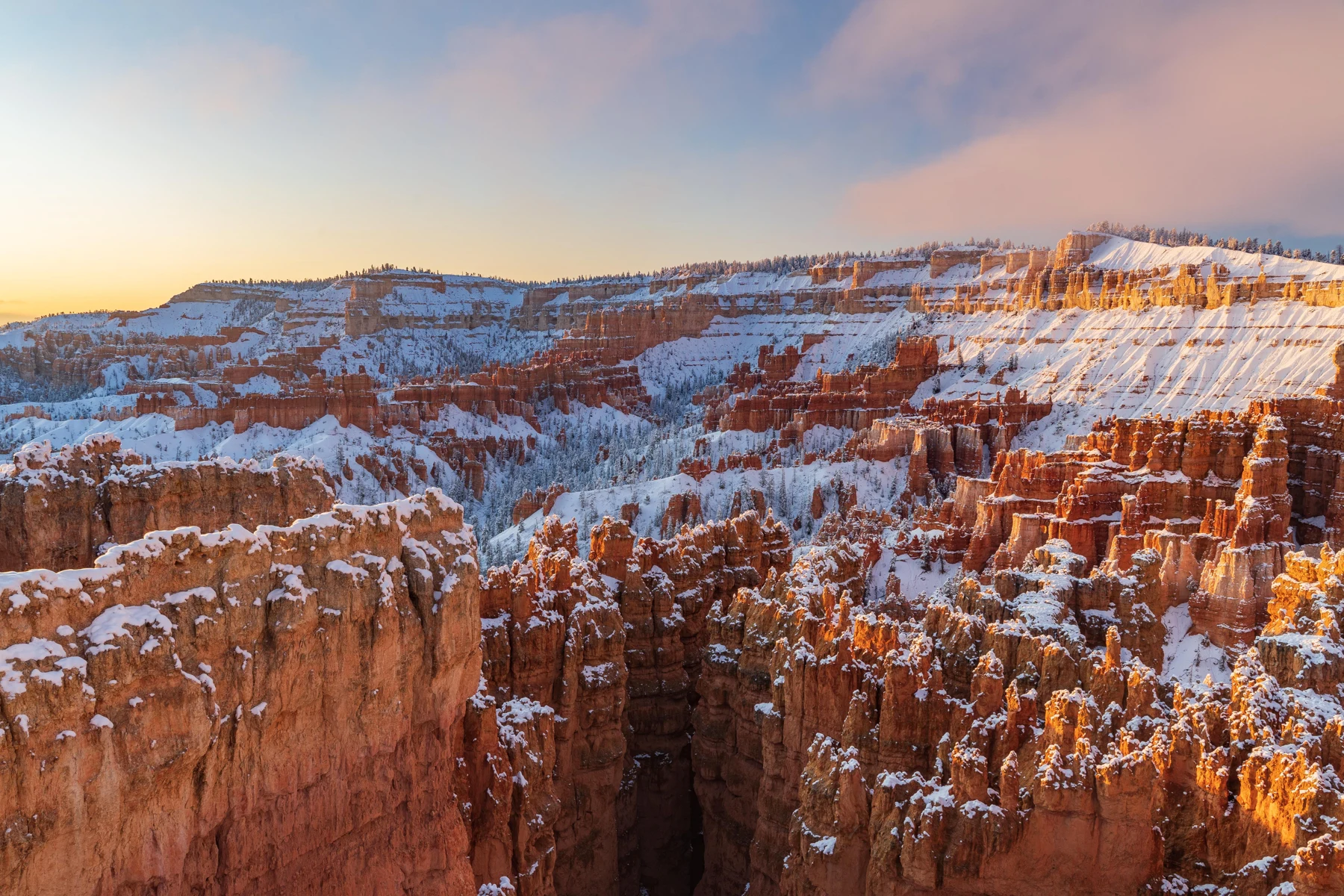
The air felt cool against their cheeks. Bryce’s high elevation helps create conditions in which water can freeze and thaw repeatedly.
“Here comes a worker,” Allie said.
Andy listened. “I can’t hear boots.”
“It doesn’t have feet.”
“Already suspicious.”
Water from rain or melting snow can seep into cracks in rock. When that water freezes, it expands. The growing ice can push against the sides of a crack. Repeated freezing and thawing can help widen the crack and break rock apart. This process is called frost wedging.
Ana drew a crack with a drop inside it, then a slightly wider crack with ice.
“Not to scale,” she announced. “My pencil isn’t a glacier.”
“And this isn’t the same as a glacier carving a valley,” Allie said. “At Mount Rainier, we talked about moving masses of ice. Here we’re investigating water freezing inside cracks.”
“Different ice jobs,” said Andy. “Same chilly uniform.”
Augie peered at a distant wall of rock. “Can we watch it pop?”
“Not like popcorn. The landscape changes over time. We don’t need to see a piece break off to understand the process.”
The kids stayed on the designated path. They could investigate with their eyes and questions without testing the rocks themselves.
Ana added WATER IN CRACKS to the tools list, followed by FREEZING AND THAWING.
“Put down patience,” Andy said. “This factory is extremely slow at filling orders.”
Allie pointed out that cracks help determine where rock breaks. As the plateau edge wears back, narrow walls called fins can remain. Openings may develop in them. When an opening’s roof gives way, isolated pillars can be left behind.
“Fin, window, tower,” Ana said.
“A possible sequence,” Allie replied. “Not a promise that every rock will follow an identical set of steps.”
Andy nodded solemnly. “Some rocks prefer a less organized career.”
5. Rain joins the crew
“Does ice do all the work?” Ana asked.
“No. Rain has more than one job.”
Some of Bryce’s rocks contain calcium carbonate, a mineral found in limestone. Rainwater can be mildly acidic, and over time it can dissolve some of that material. Water also moves loose particles and broken pieces.
“Dissolve, like sugar?” Andy asked.
“That comparison helps us think about material entering water,” Allie said, “but we shouldn’t expect a rock to vanish as quickly as sugar in a cup.”
Augie checked the nearest tower. “Still here.”
“Good inspection,” said Ana.
Different rock layers resist weathering differently. A more resistant layer can sometimes protect less resistant material below it, helping make those strange shapes and caps. Eventually the protecting rock wears down too.
“So the hat isn’t forever,” Andy said.
“Neither is the tower.”
For a moment, everyone looked quietly at the stone crowd. The scene seemed enormous and permanent, but it was one moment in a changing landscape.
Ana drew three little workers: a water drop, a snowflake, and an arrow pointing down.
“Gravity,” she explained. “It helps fallen pieces move downhill.”
“And erosion carries material away,” Allie added. “Weathering breaks down rock in place; erosion moves the material. They work together.”
Andy made a serious face. “I regret to report that the factory is dismantling its own products.”
“That is a terrible business plan,” Ana said.
“It’s a wonderful landscape,” Allie replied.
They decided the factory name could stay, as long as their notebook explained the joke. Hoodoos don’t grow upward like trees. They are carved from existing rock as surrounding material is removed.
Augie dictated the official warning: “Do not water a hoodoo and expect a bigger hoodoo.”
6. The color department
The light shifted as a cloud moved. A pale wall brightened; an orange ridge grew warmer. Farther away, shadows tucked blue-gray folds between the pillars.
“Who paints everything?” asked Augie.
“Nobody with a bucket,” said Allie. “Minerals in the rocks help give them their colors. Iron compounds contribute many of the reds, oranges, and yellows.”
“Rock rust?” Andy asked.
“Rust is a familiar way to think about some iron colors. But the full rock chemistry is more complicated than one rusty nail.”
Ana tried to match the scene with colored pencils. She chose orange, then pink, then cream, then reached for another orange.
“The pencil factory is also busy.”
Allie reminded them that light, shadow, weather, and distance affect what they see. At Shenandoah, distant mountains had looked blue partly because of light scattered in the atmosphere. Here they were also looking at the colors of the rocks themselves.
“Same eyes, different clues,” Ana said.
They made a quiet observation game: find a thin wall, a capped pillar, a shadow, and a tree that looked tiny against a cliff. No one had to lean over a barrier or scramble anywhere to join in.
Andy found a shape that resembled a giant toothbrush.
Augie found a dinosaur wearing a pancake.
“Those are our imaginations,” Allie said. “The geology explains the shapes, and imagination gives us silly names.”
Ana wrote both ideas down. A good adventure had room for facts and pancakes, provided you could tell which was which.
7. A dog with no leash
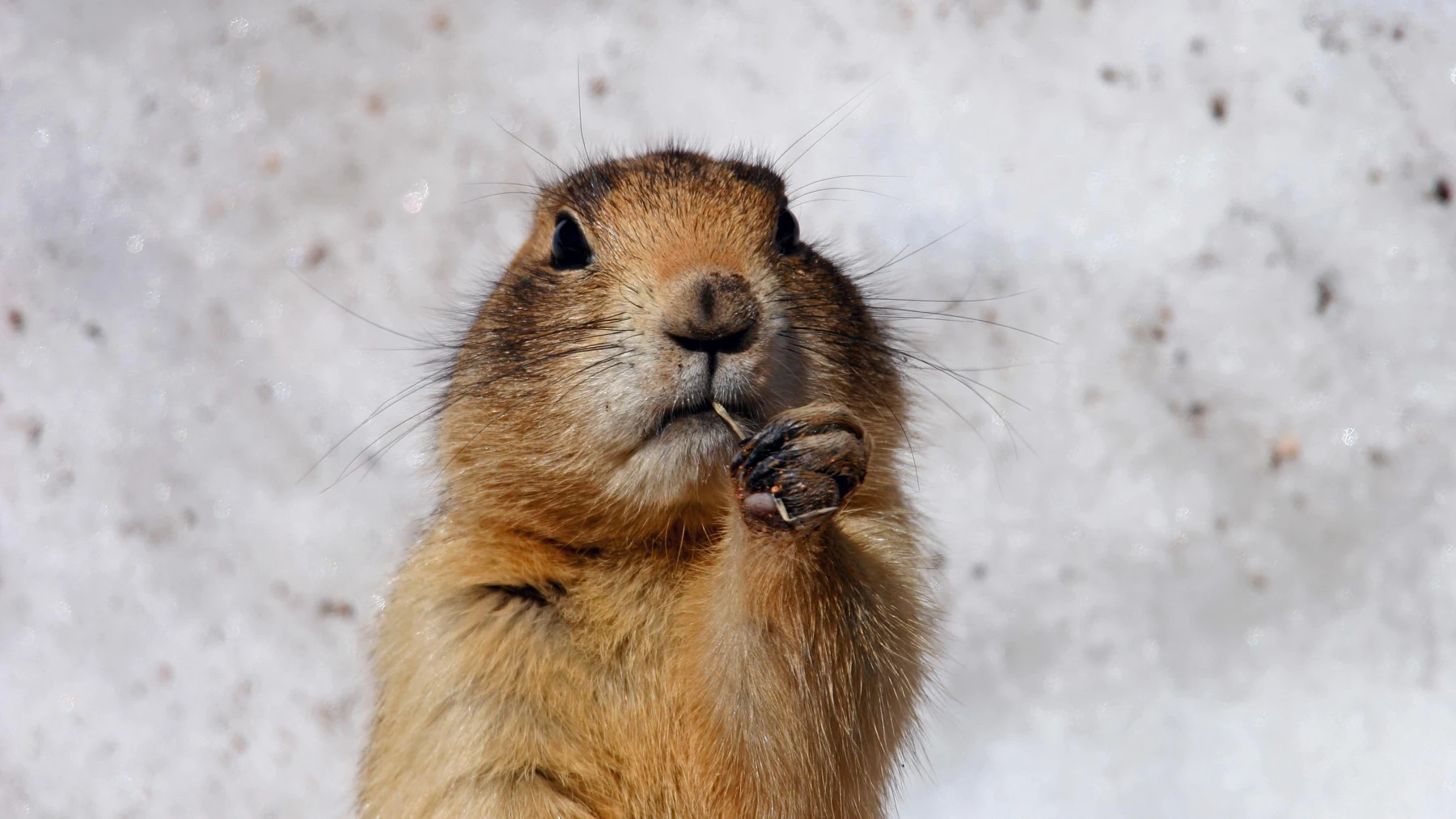

At an educational display, the kids studied a photograph of a small, sandy-brown animal holding food in its front paws.
“Dog,” Augie declared.
“Prairie dog,” Allie said. “A Utah prairie dog.”
Andy examined it. “Very small bark. No collar. Excellent hole.”
Despite the name, prairie dogs are rodents in the squirrel family. Utah prairie dogs live in colonies and spend much of their lives around underground burrows. Their calls help them communicate, including giving alarms.
“So they have neighborhood news,” Ana said.
“Without a newspaper delivery bicycle,” Andy added.
They eat mostly plants, and their lives connect with the wider meadow community. Burrowing changes the soil; prairie dogs are also part of food webs. Underground spaces help provide shelter. During the cold season, Utah prairie dogs spend a long period below ground in hibernation.
Augie tucked his chin into his jacket. “I understand.”
Allie explained that seeing wildlife is never guaranteed. A photograph let them examine an animal closely without moving toward a wild one or disturbing its burrow.
“We keep our food to ourselves and give animals space,” Ana said.
Andy held his snack protectively. “For once, a rule that agrees completely with my sandwich.”
“Not just for the sandwich,” said Allie. “Feeding wildlife changes how animals behave and can harm them.”
Ana added a new notebook question: WHAT DOES THIS PLACE NEED BESIDES ROCKS?
They listed plants, animals, soil, water, and all the connections between them. The hoodoo factory had turned out to be a neighborhood too.
8. More than one kind of story
Inside the visitor center, the kids discovered that people’s connections to this region reach much farther back than the park’s modern name.
“Geology isn’t the only story here,” Ana said.
Allie pointed to information about the park’s American Indian history film, which includes perspectives from Southern Paiute, Hopi, Zuni, Ute, and Navajo people.
“Those are living communities,” she said. “Their own voices matter when we learn about their connections to this place.”
Andy closed the joke page of his notebook. “So we listen.”
They agreed that making up a funny factory story was different from inventing or borrowing someone else’s traditional story. Their imaginary ice workers belonged to their notebook. The histories and traditions of other people deserved careful listening and clear attribution.
Augie added a small ear beside the word LISTEN.
“That’s a useful explorer tool,” Ana said.
Before choosing an outing with their grown-up, the kids checked current park information. A map’s short-looking line could hide a steep descent and a climb back up. High elevation, weather, trail conditions, and everyone’s energy mattered more than completing an ambitious plan.
“Downhill isn’t the end of the story,” Andy said.
“Especially when the car is uphill,” Allie replied.
They picked a manageable way to enjoy the view, carried what they needed, and left the towers exactly as they found them. No rock souvenirs were necessary. Their notebooks were already getting heavy with discoveries.
9. The factory’s night shift
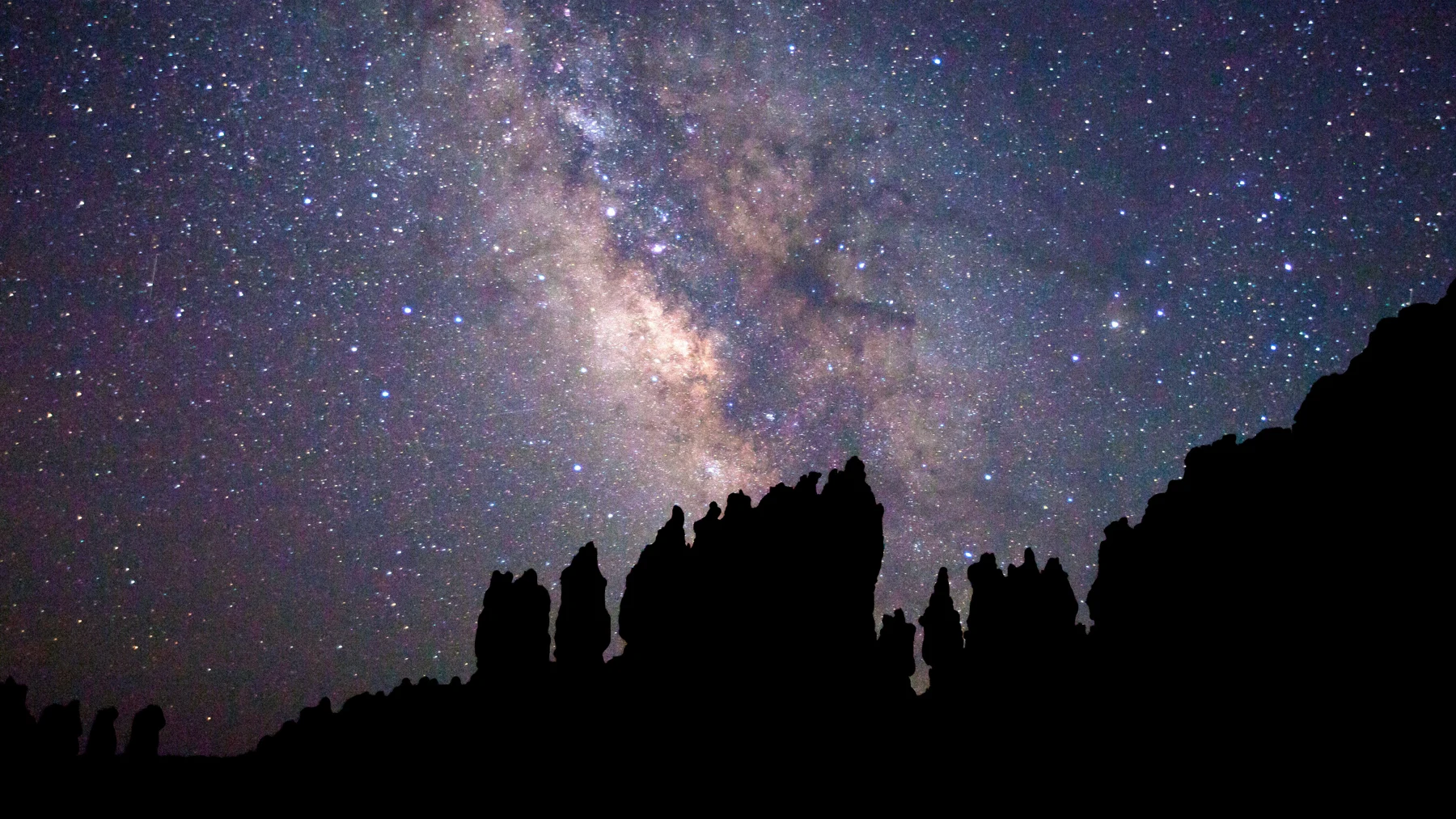

Later, they studied a photograph of stars above the hoodoos. A pale river of light stretched across the sky.
“Now there’s the river!” Andy said.
“The Milky Way,” Allie replied. “Not a river cutting rock.”
Bryce is known for its dark night skies. On suitable clear nights, people can enjoy stars away from bright city lights. But clouds, moonlight, and other conditions change the view. The photograph’s long exposure also revealed detail and color their eyes might not see the same way.
“So a photo is a clue, not a promise,” Ana said.
Their grown-up would decide whether a night outing made sense. Warm clothing, appropriate lighting, a suitable location, and current information would matter. Nobody needed to wander into the dark to finish the mystery.
Augie yawned. “The factory can do night shift without me.”
Ana reviewed the case. Ancient sediments had become rock. The region had risen. Water entered cracks, ice pushed, rain dissolved and moved material, and gravity helped the broken pieces travel downhill. Resistant layers sometimes left surprising caps and shapes behind.
“Many workers,” said Allie. “A lot of time.”
“And no manager,” said Andy.
Augie raised his hand. “I can be manager.”
“What would you do?”
“Snack breaks.”
“Strong leadership,” Ana said.
She turned to the next empty page. Their journey would soon lead to Redwood National and State Parks, where trees rose far taller than the children could imagine.
“One question for the next chapter,” Allie said. “Can a forest drink a cloud?”
Augie sat up. “Does it need a giant straw?”
Andy looked at the sky. “We should pack a very large cup.”
Ana wrote their next mystery beneath the last sketch of Bryce’s towers: THE FOREST THAT DRINKS FOG.
Then she shut the notebook. The hoodoo factory kept working, quietly, long after the kids were ready for bed.
Explorer’s notebook
Keep these discoveries
- A hoodoo is an irregular rock pillar shaped as surrounding rock wears away.
- Bryce’s amphitheaters are not a single large river-carved canyon.
- Many famous hoodoos are in the Claron Formation, with roots in ancient freshwater environments.
- Water expands when it freezes. In cracks, repeated freezing and thawing can help split rock.
- Rain can dissolve some minerals and help move loose material.
- Different resistance to weathering helps create varied shapes.
- Utah prairie dogs are rodents, not pet dogs.
- People’s cultural connections are an important part of understanding the region.
- Landscapes change, even when they seem permanent.
Try it together
- From a designated viewpoint, sketch three different rock shapes. Label observation and imagination separately.
- Point out a wall, a pillar, and a shadow in a park photograph.
- Make a pretend factory staff list: what job does each natural process do?
- Ask a ranger which activities suit your family and current conditions.
- Compare a daytime sky photo and a long-exposure night photo. What can a camera show differently?
Talk about it
- Why is a hoodoo more like a leftover than a growing tree?
- How is ice inside a crack different from a moving glacier?
- What can we learn by listening to people with different connections to a place?
Words for your backpack
Sediment: particles or material deposited by water, wind, ice, or gravity.
Formation: a recognizable, named body of rock.
Frost wedging: rock breaking as water freezes and expands in cracks.
Weathering: the breakdown or alteration of rock in place.
Erosion: the movement of rock or soil material.
Amphitheater: here, a large bowl-shaped sweep of the landscape.