1. A neighborhood under a roof of rock
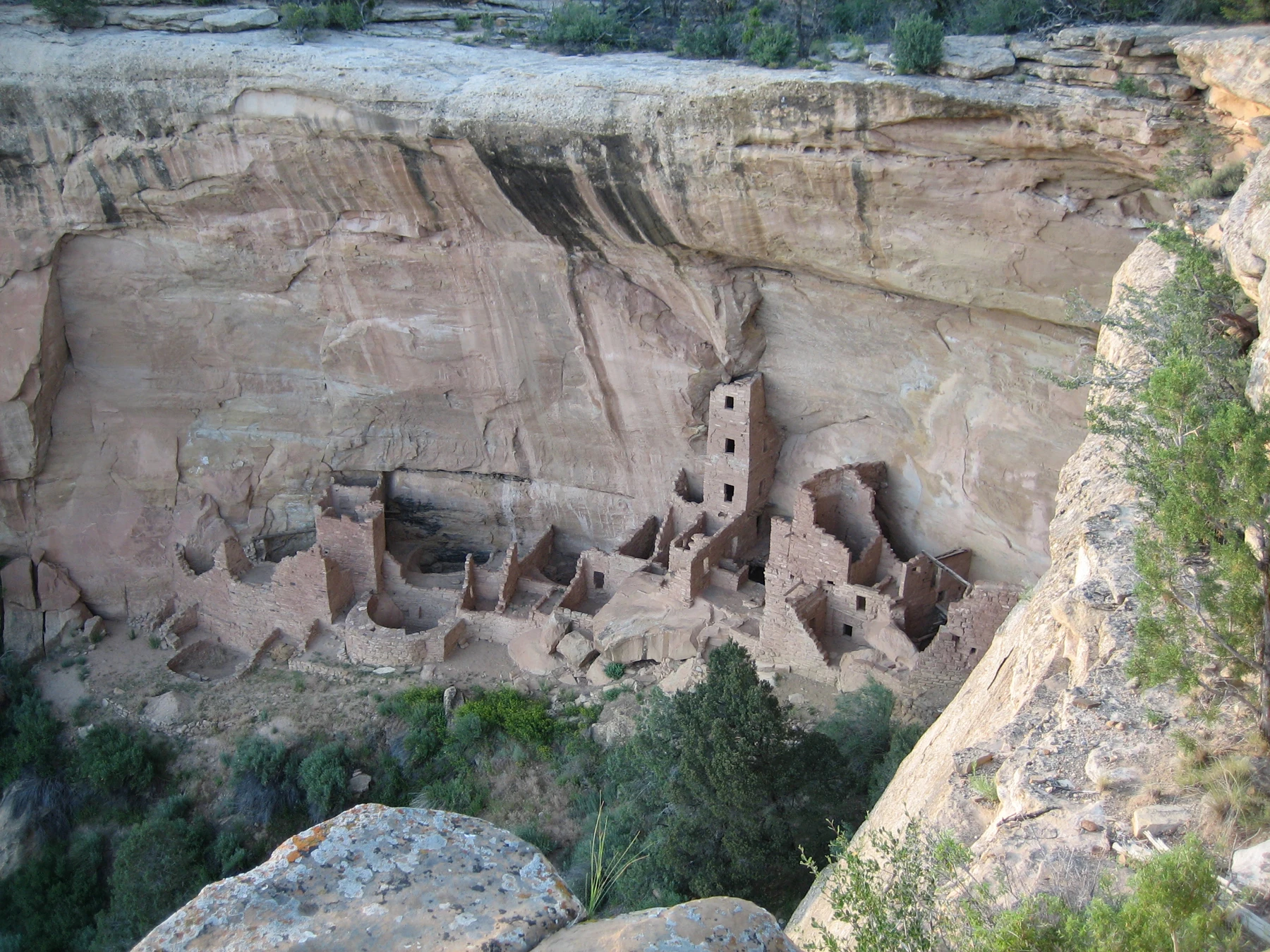
“Somebody forgot the front yard,” Augie announced.
Across the canyon, stone rooms nestled beneath an enormous sandstone overhang. A rounded tower rose above neighboring walls. Sunlight brightened the cliff while deep shade gathered behind the buildings.
Andy studied the view from the marked overlook. “Maybe the front yard is upstairs.”
“Maybe we should find out before you order a trampoline,” Ana said.
The four explorers had reached Mesa Verde National Park in southwestern Colorado. After Crater Lake's hidden water exits, they had another puzzle involving rock and water. This time it involved homes, harvests, and people, too.
Allie opened their notebook. “The Cliff-House Climate Puzzle. Why build here? How did families get food and water? And what can the buildings tell us?”
“First answer,” Andy said. “Excellent roof.”
Their parents reminded them to stay behind the overlook barrier. They would explore through exhibits and permitted viewing areas, following staff advice about which places were open. A cliff dwelling was not somewhere to investigate by finding a shortcut down a canyon.
Augie placed both hands around his pretend binoculars. “I can look without falling.”
The village was called Cliff Palace, but the name could be misleading. These had been people's homes and shared spaces, not a king's enormous vacation house. The builders were Ancestral Pueblo people, ancestors of Pueblo communities living today.
Ana pictured ordinary questions inside those extraordinary walls. Where was dinner? Who needed help? Had anybody seen a missing sandal?
“We notice the cliffs first,” she said. “But the people had whole lives.”
Allie wrote that above the puzzle. It seemed important enough to come before any answer.
Augie contributed a drawing of a house with four very large shoes outside.
“Those are our shoes,” he explained. “We're visiting.”
2. The rock did some building first
At an exhibit, Andy pointed to the curved hollow sheltering a village. “Did people carve that whole space?”
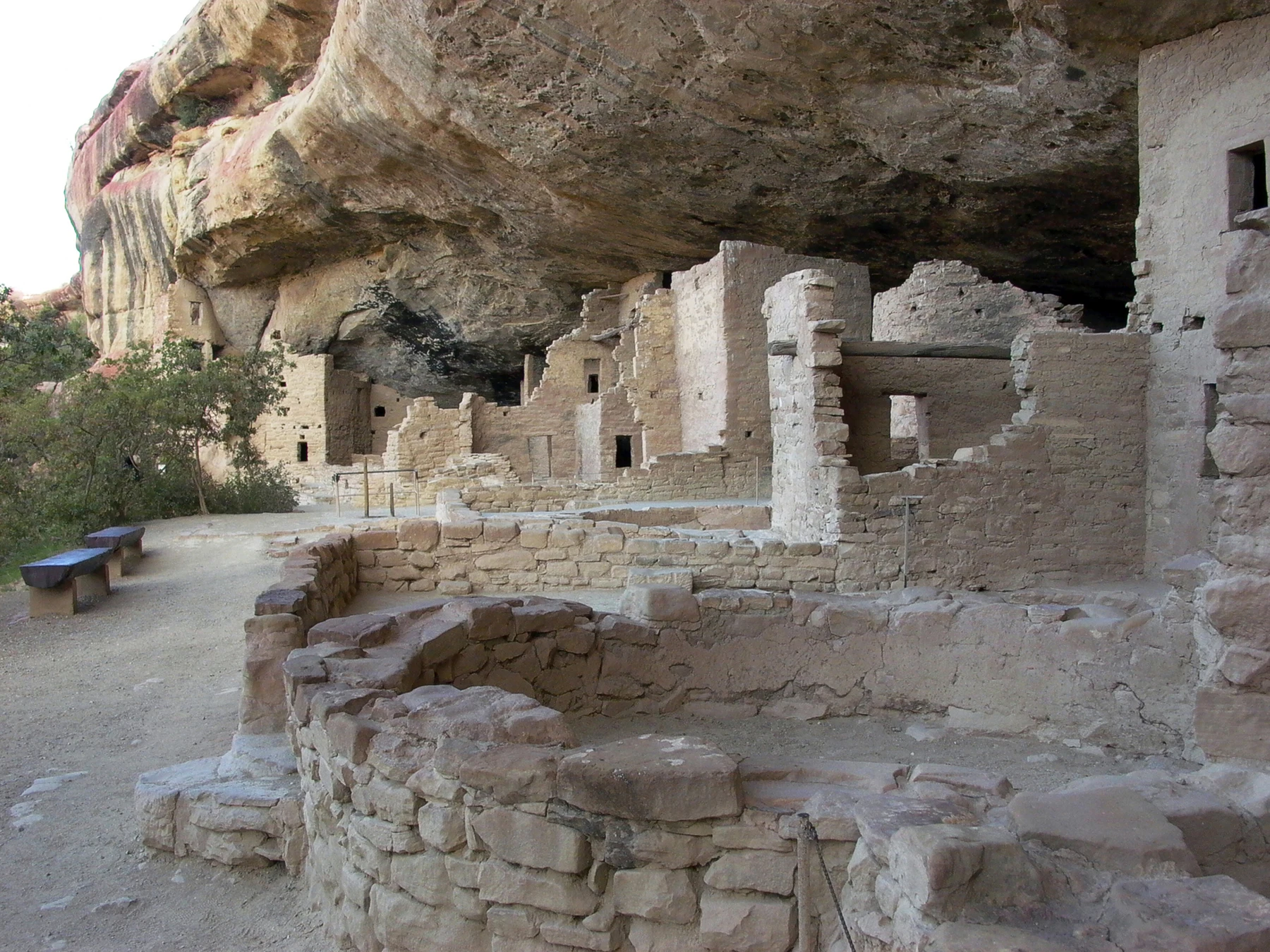
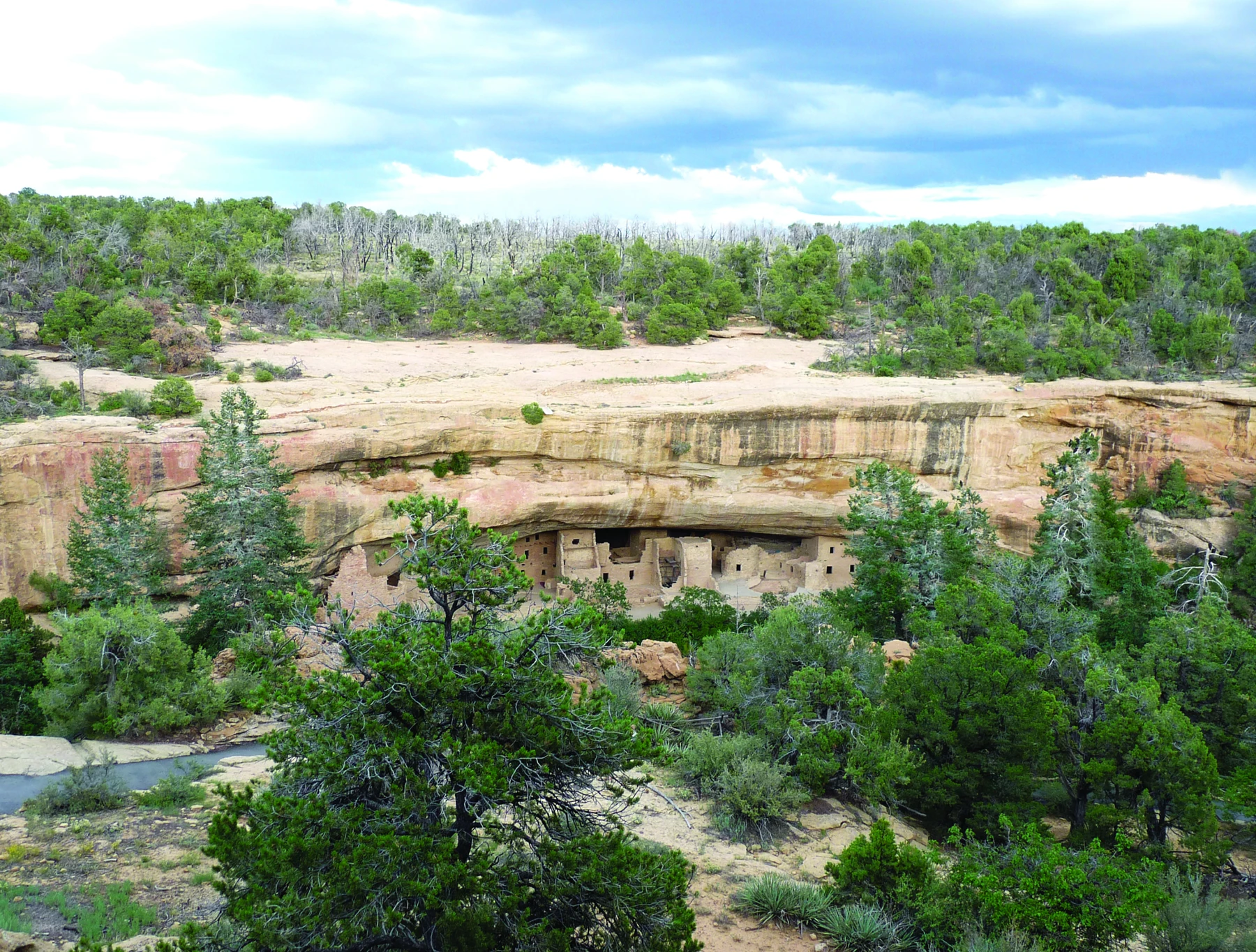
They learned that the large recess was an alcove. Natural processes had shaped it before anyone built rooms there. The sandstone wall and the stone houses had different builders.
“Rock made the roof,” Augie said. “People made the house.”
“That is a useful start,” Allie agreed.
Rain and melted snow could enter tiny spaces in sandstone. Water helped weaken the material holding sand grains together. When water in cracks froze, it expanded, helping loosen rock. Over a long time, pieces broke away and an alcove grew.
Ana held her hands in a shallow curve. “So it isn't an underground tunnel. It's a recess in the cliff face.”
Andy pretended to interview the cliff. “How long until your next room is ready?”
“Longer than your patience,” Ana answered in her best rock voice.
The same processes had not politely stopped when the houses were finished. Rockfall and weathering remained reasons for careful protection and access restrictions. A solid-looking overhang was not a promise that any place beneath it was safe.
Allie drew two labels: natural shelter and human construction. Beneath the second she added planning, skill, materials, and work. Buildings did not simply appear because a cliff offered shade.
Augie drew a tiny rock wearing a builder's hat.
“That's for the first part,” he said.
“And the real builders deserve the other part,” Ana replied.
They imagined fitting rooms into a curved, uneven space rather than starting with a flat rectangle. Andy tried sketching his bedroom inside an alcove. His bed immediately blocked the door.
“Your first building needs a second draft,” Allie told him.
“My pillow has requested a larger budget.”
3. A spring with no faucet
Their next clue seemed unlikely: some cliffside homes stood near water emerging from rock.
“Does the cliff have plumbing?” Andy asked.
“Not pipes,” Allie said, studying the spring diagram. “Layers.”
Water moved down through porous sandstone until it reached a layer of shale that was much harder to pass through. Then it could move sideways and emerge from the canyon wall as a seep or spring. The trip through the rock could take years.
Augie peered at their picture. “The rain went inside and came out over there?”
“Yes,” Ana said. “A very slow journey.”
Andy tapped his wrist. “Your water delivery is running late. By several birthdays.”
At Mesa Verde, without permanent streams and lakes on the mesa, these small sources mattered enormously. The family read about people shaping shallow basins and channels to collect spring water. It required knowledge of particular places and care in using what was available.
Allie added water nearby beside shelter in their notebook.
“But not every alcove had the same supply,” Ana pointed out. “We can't draw one spring and say we've explained every village.”
Their grown-ups agreed. Distance, reliability, season, and the needs of a community all mattered. A photograph could show a building beautifully while leaving its water story almost invisible.
Augie lifted his bottle. “I brought my spring.”
“You brought water someone made safe for drinking,” Allie said. “We don't taste park springs to test our theory.”
Andy proposed a house with a waterfall through the kitchen. Ana asked where the wet socks would go. Andy crossed out the waterfall.
On their diagram, they traced the actual route with a blue pencil: down through sandstone, sideways above shale, out at the cliff.
“An invisible path,” Allie said. “Crater Lake prepared us for this.”
Augie added an arrow pointing to his mouth.
“That part only happens with my bottle.”
4. Dinner was not delivered by ladder
“So if your house is below the rim,” Andy asked, “where do you plant the corn?”
He had drawn a tiny field on a roof. Its corn stalks were taller than the tower.
Ana tilted her head. “Your garden has become a forest.”
The exhibits widened their view beyond the famous cliff houses. Mesa-top fields and communities were essential to the story. Long before the best-known cliff dwellings were built, people had lived in other kinds of homes, including pithouses partly set into the ground and aboveground pueblos.
At Far View, people farmed and lived on the mesa top. Some families remained there even while others moved into alcoves. Mesa Verde's history was not one enormous moving day when everybody carried a chair downhill.
“Different families, different places,” Allie said. “And changes across many generations.”
Corn, beans, and squash were important foods. Much of the corn farming depended on rain and snow rather than irrigated fields. That meant a snowy season or summer rain could matter long after the weather had passed.
Ana thought about the long work between planting and eating: caring for fields, harvesting, drying, storing, preparing meals. A kernel of corn was small. A year of feeding a family was not.
Andy examined a drawing of a granary. “So a storage room can be as important as a bedroom.”
“Especially if you expect breakfast,” Ana said.
Their picnic had taken almost no effort to grow because other people had done that work. Allie set an apple beside her notebook and wrote thank a farmer.
Augie thanked his apple.
“The farmer too,” she prompted.
“Thank you, apple farmer.”
The four began designing an imaginary village on scrap paper. They needed homes, water, fields, paths, and storage. Andy's giant rooftop corn disappeared. In its place he drew a sensible field and a very unsensible corn-shaped mailbox.
“We can keep one joke in the plan,” Allie allowed.
5. The house is part of a bigger system
Ana had a question about the shade. “Does an overhang make every house warm in winter and cool in summer?”
It sounded like a neat answer. It was also too neat.
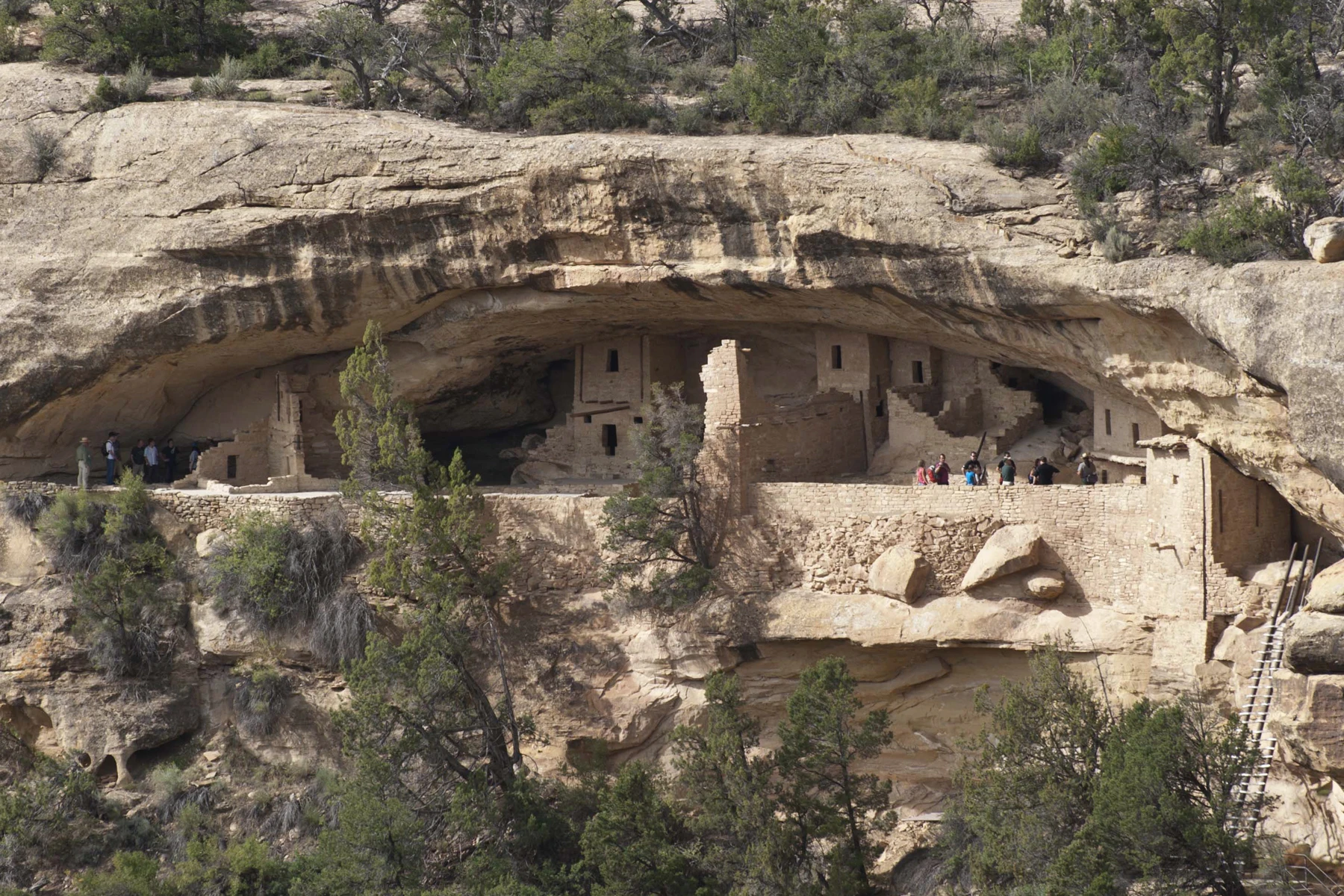
An overhang could offer shelter and shade, but the direction an alcove faced affected how much sunlight reached it. Sunlight also changed with season and time of day. Water access, available space, neighbors, and other needs belonged in the puzzle, too.
They read that Balcony House faced northeast and received little winter warmth from the sun. Nearby springs helped explain why that location could still be attractive.
“So there isn't one perfect house answer,” Allie said.
“Mine has a slide to breakfast,” Andy suggested.
“And a very large repair bill,” Ana replied.
At a picnic table, with their parents, they tried a small model. A folded piece of paper made an overhang above a drawn window. Allie moved a flashlight from a low angle to a high one while Andy watched the shadow change.
They aimed it only at the paper. The sun was not something to stare at for comparison.
Augie leaned over. “The shadow moved!”
“The roof stayed the same,” Ana said. “The light changed.”
They tried rotating the paper house. Now its opening pointed another way. The shadow changed again.
Their model did not reproduce Mesa Verde's weather, stone walls, or all the sun's paths. It simply helped them ask a better question: which opening, facing where, at what time?
Allie returned to their village drawing. “We were looking for a clever house. But the house works inside a larger system.”
“Water,” Ana said.
“Food,” Andy added.
“People,” Allie continued.
“Breakfast slide,” Augie finished.
They agreed to place that last item in the optional column.
6. The wood remembers differently
At another display, the explorers encountered a kind of record that had never used a pencil: tree rings.
Andy looked at the alternating bands. “A tree's striped diary.”
The science of studying dated tree-ring patterns was called dendrochronology. Allie said it slowly. Ana tried it once. Augie decided “tree diary” would do until after lunch.
Researchers compared patterns across wood samples. Tree rings helped place buildings and changes in communities on a timeline. Some old beams had even been reused in later construction, which meant interpreting a date required care.
“So an old piece of wood doesn't automatically mean every wall around it is exactly the same age,” Ana said.
Allie nodded. “Evidence needs context.”
Tree growth could also carry information about conditions during a tree's life. A narrow ring could be a clue to stress, including limited moisture, but one skinny stripe was not a complete explanation of a whole society. Scientists compared patterns and other evidence.
Andy drew five imaginary tree rings in his notebook, varying the spaces between them. “Mine says the tree liked Tuesday.”
“Your tree needs more evidence,” Ana said.
They made a second timeline using only their family: learning to walk, starting school, a remembered birthday, their current journey. Four children could remember different details about one event. A photograph might answer one question while leaving another unresolved.
“So learning history means listening and comparing,” Allie said. “Objects, buildings, scientific records, and the knowledge communities carry.”
Augie pointed at his baby photograph on their parent's phone. “That is me with no shoes.”
“A very secure conclusion,” Andy agreed.
For their park notebook, Allie wrote a rule: Say what the evidence supports. Leave room for what it doesn't tell us.
Andy added a tree with a speech bubble: Please do not make up my Tuesdays.
7. A journey continues beyond the canyon
The family reached a harder question: why had people moved away from Mesa Verde?
Andy started to write “because of drought,” then paused.
“That might be one piece,” Ana said. “But is it the whole picture?”
They learned that in the 1200s, prolonged dry conditions, pressure on resources, and social changes were among the circumstances communities faced. Families did not all make decisions for exactly the same reason. Movement and migration had long been part of life in the region.
“Our family didn't come on this trip for only one reason,” Allie said. “Imagine explaining lots of families across many years with one sentence.”
People moved south, joining or forming other communities. Their skills, traditions, relationships, and knowledge traveled with them. The buildings remaining at Mesa Verde did not mean that the people had vanished.
Augie frowned. “Like when we leave the picnic table. We didn't disappear.”
“Exactly,” Ana said. “And leaving home can matter much more than leaving lunch.”
Their parents helped them read about present-day Pueblo and Hopi communities whose ancestors lived here. Mesa Verde remained an important place of connection and respect. Ute, Navajo, and Apache peoples also had continuing relationships with this landscape.
Allie did not try to squeeze those different communities into one identical story. Learning their names and listening to their own voices would be part of learning more.
Andy erased his one-line answer. He wrote: Drought mattered. People made choices within a changing world. Their story continues.
Ana thought of the rooms across the canyon differently now. The view showed what remained in one place. It could not show every journey that came afterward.
“Maybe the mystery shouldn't be 'Where did everybody go?'” she said. “It should include 'What do descendants want us to understand today?'”
Nobody made a joke for a moment. Some discoveries deserved a little space.
8. A tiny piece with a very large context
On their next permitted path, Andy found himself studying the ground instead of the horizon.
“What if somebody sees a piece of old pottery?” he asked.
“We leave it where it is,” Allie answered. “And tell park staff without disturbing it.”
A small object could hold information through its location and relationship to other things. Moving it, even to arrange a better photograph, could break that connection. The park was also a place of cultural meaning, not a supply of souvenirs.
Ana held up her notebook. “We can collect questions.”
“I have seven,” Andy said.
“You've been collecting very responsibly.”
The same respect applied to buildings. They would not climb walls, lean on fragile masonry, scratch their names, or enter closed areas. Something that had lasted centuries could still be damaged by one careless moment.
Augie tucked his hands behind his back and regarded the view with impressive seriousness.
“My hands are having a rest.”
Their parent suggested another way to notice craftsmanship: sketch one visible pattern of stone shapes from the allowed viewing area. They did not need to touch it to admire it.
Andy began drawing each block as an identical rectangle. Then he looked again. The real walls were more interesting than his first attempt. Different shapes fit together in carefully made courses.
Ana drew spaces as well as stones: doorways, rooms, the shaded area behind them. Allie wrote questions beside her drawing rather than inventing confident answers.
Augie's house had a circle on top.
“Is that a tower?” Andy asked.
“It's my thinking bubble.”
Inside it he had drawn the family's four shoes again.
“Still visiting,” he explained.
9. The answer has more than one room
Before they left, the four looked back toward the canyon. The buildings seemed no less extraordinary. But now the view held more than buildings.
Allie asked each explorer for a piece of the answer.
“The natural alcove came first,” Andy said. “People used skill to build within it.”
“Water could travel through rock and emerge at springs,” Ana added. “Location mattered.”
“Fields and storage were part of home, even when they weren't in the same photograph,” Allie said.
“And breakfast,” Augie contributed.
They had learned to include sunlight and shade without claiming every alcove worked the same way. They had learned to distinguish a good clue from a complete explanation. Most importantly, they had learned that a place with ancient buildings was also connected to living communities.
Their puzzle was not solved by a single clever roof. It was a relationship among people, knowledge, water, food, stone, and a changing climate.
Andy looked at their imaginary village. “Our plan still has a problem.”
Allie examined it. “Which one?”
“The corn mailbox is miles from the breakfast slide.”
Ana closed the notebook. “I recommend walking.”
On the journey onward, their parents mentioned the next park: Dry Tortugas, far out at sea. It had a great brick fort surrounded by water.
Augie sat up. “Is that water good for bottles?”
“Excellent next question,” Allie said.
Andy grinned. “We just learned that a home needs water nearby. Now we get to ask what kind.”
Beyond the car window, Mesa Verde's canyons slipped from view. The explorers carried away drawings, questions, and a little more care for the places they visited.
Their shoes came too.
Augie checked.
Explorer’s notebook
Nine discoveries to take home
- Ancestral Pueblo people built homes and communities at Mesa Verde; present-day Pueblo and Hopi people maintain connections with their ancestors and this place.
- A cliff alcove is a naturally formed recess. The sheltering rock and the human-built rooms have different origins.
- Water moving through sandstone can travel sideways above less-permeable shale and emerge at a seep spring.
- Mesa-top homes, fields, and storage places belong in the story alongside cliff dwellings.
- Corn, beans, and squash were important foods. Much corn farming relied on seasonal rain and snow rather than irrigation.
- An alcove's direction, sunlight, shade, water, and space all matter. No single feature explains every home.
- Comparing tree-ring patterns helps researchers date wood and investigate past conditions; evidence must be interpreted in context.
- Drought was one part of a complicated period of change and migration. People continued their lives in new communities.
- Looking carefully, staying on permitted paths, and leaving objects in place help protect both cultural meaning and scientific information.
Five small adventures
- Design a whole village. On scrap paper, place homes, fields, water, paths, and storage. Explain two tradeoffs. There is no single perfect plan.
- Move a shadow. With an adult, use folded paper and a flashlight to explore how light angle and building direction change shade. Never aim lights into eyes or look directly at the sun. This is a simple model, not a reconstruction of ancient homes.
- Build a timeline. List five events from your family. Ask another person what they remember. Which details agree, and what might a photograph help check?
- Draw without touching. From an allowed viewing area, sketch a building or rock feature. Label one thing you observe and one thing you only wonder about.
- Find a living voice. With a grown-up, explore a Pueblo community's cultural center or official educational resources. Learn the community's name and one thing its members choose to share publicly. Do not copy sacred designs or invent ceremonies.
Talk it over
- Why might a home near a spring be attractive even if its opening received little winter sun?
- What would a photograph of a beautiful house leave out about the work of feeding a family?
- Why is “people migrated and their descendants live today” different from saying a people disappeared?
Words for your explorer pack
- Alcove: a recess formed in a cliff face.
- Porous: containing small spaces that can hold or transmit water.
- Seep spring: a place where groundwater emerges at the surface, sometimes slowly.
- Granary: a place for storing grain.
- Masonry: construction using carefully arranged stone or similar materials.
- Dendrochronology: studying and dating tree-ring patterns.
- Migration: movement to a new place to live.
- Context: the surroundings and relationships that help us understand evidence.