1. The biggest water bottle in the world?
Augie pointed at the ocean. “There. We have enough water.”
Allie looked at the blue water stretching toward the horizon. “Enough for what?”
“Everybody's bottles.”
Andy lifted his own bottle and considered the view. “Refills might be complicated.”
Their family was traveling to Dry Tortugas National Park, almost seventy miles west of Key West, Florida. There was no road for their car to follow. This part of their park adventure required a boat journey, careful planning, and several hats that needed to stay on their owners.
Ana held hers firmly. “Mine is not going on an independent expedition.”
After the cliffside homes of Mesa Verde, the explorers had a new question. There, people valued springs emerging from rock. Here, water surrounded the islands in every direction. Yet the family had packed safe drinking water before leaving.
“Why bring water to a place made mostly of water?” Andy asked.
Allie opened their notebook. The Fort Surrounded by Sea. First mystery: water everywhere, but which water can people drink?
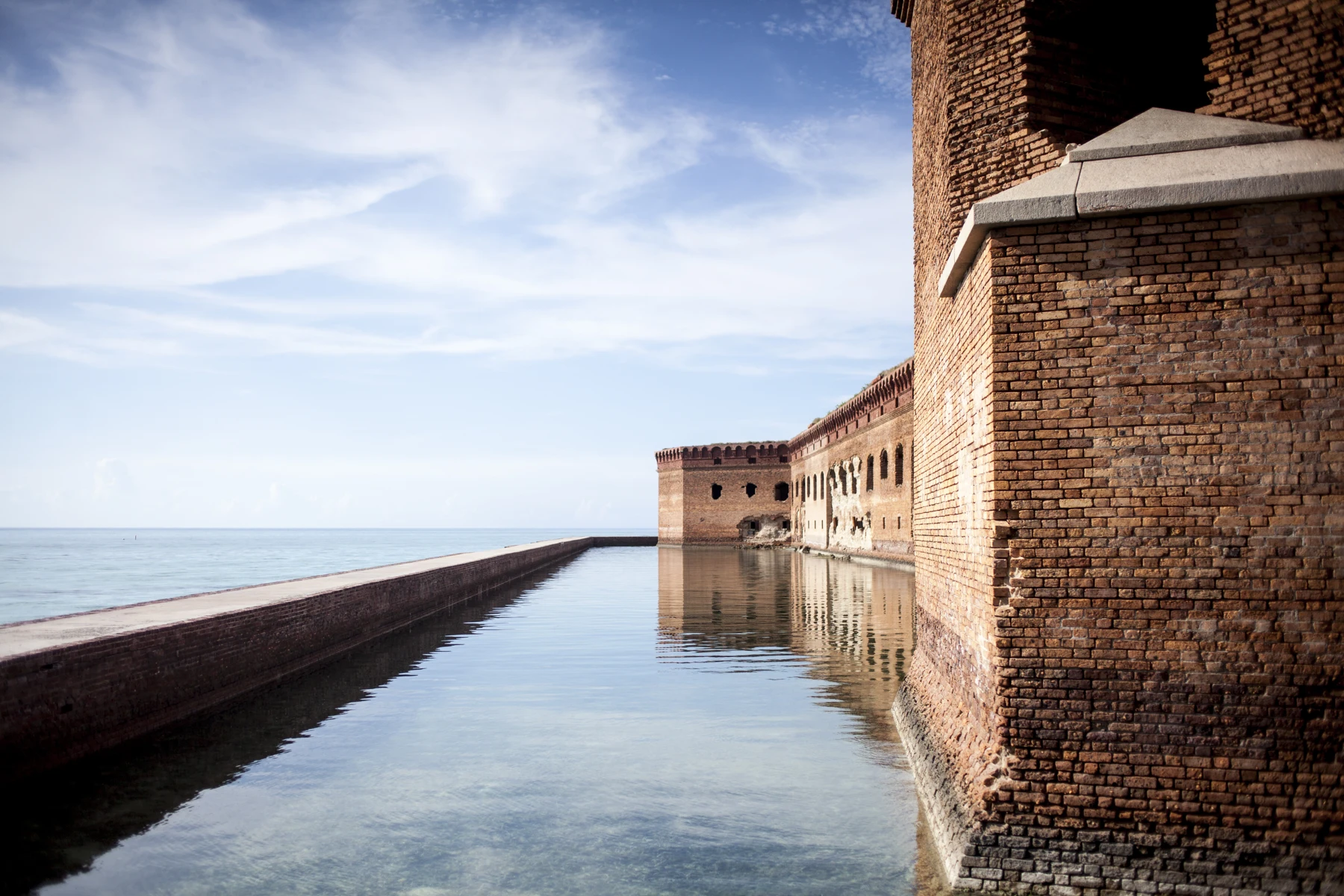
Across the waves, a broad brick fortress appeared on a low island. Fort Jefferson seemed enormous beside the small patch of land beneath it. Around it were pale shallows, darker water, and the long meeting line between sea and sky.
Augie stared. “Somebody built a castle in the bath.”
“A fort,” Ana said. “And a very large bath.”
Their parents checked the day's instructions and kept the children together as they arrived at Garden Key. Exploring this remote place meant following staff guidance, watching the weather, and staying within permitted areas. They did not need to climb every wall or enter the sea to discover its stories.
Andy looked back at the water. “I'm guessing our first answer is salt.”
Allie smiled. “Good clue. Let's see where it leads.”
2. What does dry mean when everything is wet?
The word tortugas meant turtles in Spanish. The islands had been named for turtles, and “Dry” was later used on navigation charts to warn sailors that fresh water was not available there.
“So it doesn't mean dry turtles,” Ana said.
Augie looked relieved. “They can still be wet.”
The ocean contained dissolved salts. It could look clear and beautiful without being suitable drinking water. Allie's bottle and the sea might both contain water, but that did not make them interchangeable.
Andy drew two identical cups in their notebook. One was labeled safe drinking water. The other was labeled seawater.
“Same shape,” he said. “Different contents.”
Ana added a third: mystery water.
“We don't drink that one either.”
Their parents explained that judging water by its appearance was not enough. Even fresh-looking water could need treatment. The family would use the safe supply they had arranged, not investigate by tasting the sea or collecting water around the fort.
Augie carefully put his bottle back in the bag. “This one is my favorite ocean.”
“It is not an ocean,” Andy said.
“It has my name on it.”
Allie drew a line from Mesa Verde's spring puzzle to their new question. In both places, people needed dependable water. The landscape could offer plenty of something that looked useful, while still demanding knowledge, planning, and work.
“Dry is a message to sailors,” she said. “A name can carry instructions.”
Ana imagined a map labeled Bring Your Own Sandwich Islands.
“That would also be helpful,” Andy said.
Their parents pointed to the packed lunch. The family had already taken that advice, even though it was not the official name.
3. A roof that collected more than shade
Inside the permitted part of the fort, the explorers learned about cisterns: storage chambers for water.
Andy looked up. “So rain could be useful before it reached the ground?”
Fort Jefferson's designers had planned to collect rainwater at the top of the fort and direct it down into cisterns beneath the lower level. The building had been designed to catch and store part of its own supply.
Augie held his hat upside down.
“Tiny cistern,” he announced.
“Currently a dry one,” Ana said. “Please put it back on your head.”
The historical system had serious difficulties. Rainfall could be insufficient, and salty material and seawater entering damaged cisterns spoiled much of the supply. Steam-powered condensing equipment was brought in during the Civil War to produce fresh water from seawater.
Allie traced a simple route on paper: rain → collection surface → storage.
Then she drew a question mark beside it. “Catching water is only part of the job. Keeping enough of it, and keeping it suitable for use, matters too.”
At a shaded rest stop, they designed an imaginary rain collector using drawings, not water from the site. Ana's design had a broad collecting surface. Andy's had a covered tank. Allie asked what happened during a long spell without rain.
Augie drew a cloud over his tank and added, “Please.”
“That is an excellent polite cloud,” Ana said. “But it isn't a guaranteed water supply.”
Their little model helped explain why the fort's impressive walls could not solve every problem. A building might resist one danger and still struggle with another.
Andy added a note beside his tank: Plan for trouble before the tank is empty.
“Also,” Augie said, “bring bottles.”
This was becoming his most dependable engineering recommendation.
4. Why put so much fort on so little island?
Fort Jefferson had not been built merely because somebody liked ocean views. Its location mattered to ships traveling through important sea routes. The nearby harbor offered a place where vessels could shelter and support their operations.
Ana looked from the brick walls toward the open water. “The island is small. The place it connects to is huge.”
Allie drew a small dot with several arrows passing around it. “A little place can have a very big job.”
Construction began in 1846. Work continued for decades, but the fort was never completed. During the Civil War, Union naval vessels used the harbor, and the fort also served as a prison.
Andy was surprised. “So unfinished doesn't mean unused.”
“Your half-finished blanket fort gets plenty of use,” Ana pointed out.
“That is a different architectural tradition.”
The family studied the repeated brick arches. Materials and supplies had to reach this remote island. Building here required far more than drawing an impressive plan.
They also learned to ask who had done the work. Soldiers, civilian workers, enslaved people, prisoners, and families were all part of the fort's human history. Their circumstances were not the same. Enslaved people were forced to work and denied freedom. The beautiful view did not make that injustice less real.
Allie paused over the notebook. “We shouldn't tell the building's story and forget the people.”
Ana nodded. “Or pretend everyone chose to be here.”
For a while, the four simply looked. Some of their questions were about engineering. Others were about fairness, freedom, and whose experiences survived in records.
Augie quietly asked whether the workers had wanted to go home.
Their parent said that people's lives and choices mattered, and that learning more meant paying attention to their individual stories. One grand building could contain many very different histories.
Andy wrote a new heading: Look past the walls.
5. The island does not stop at the beach
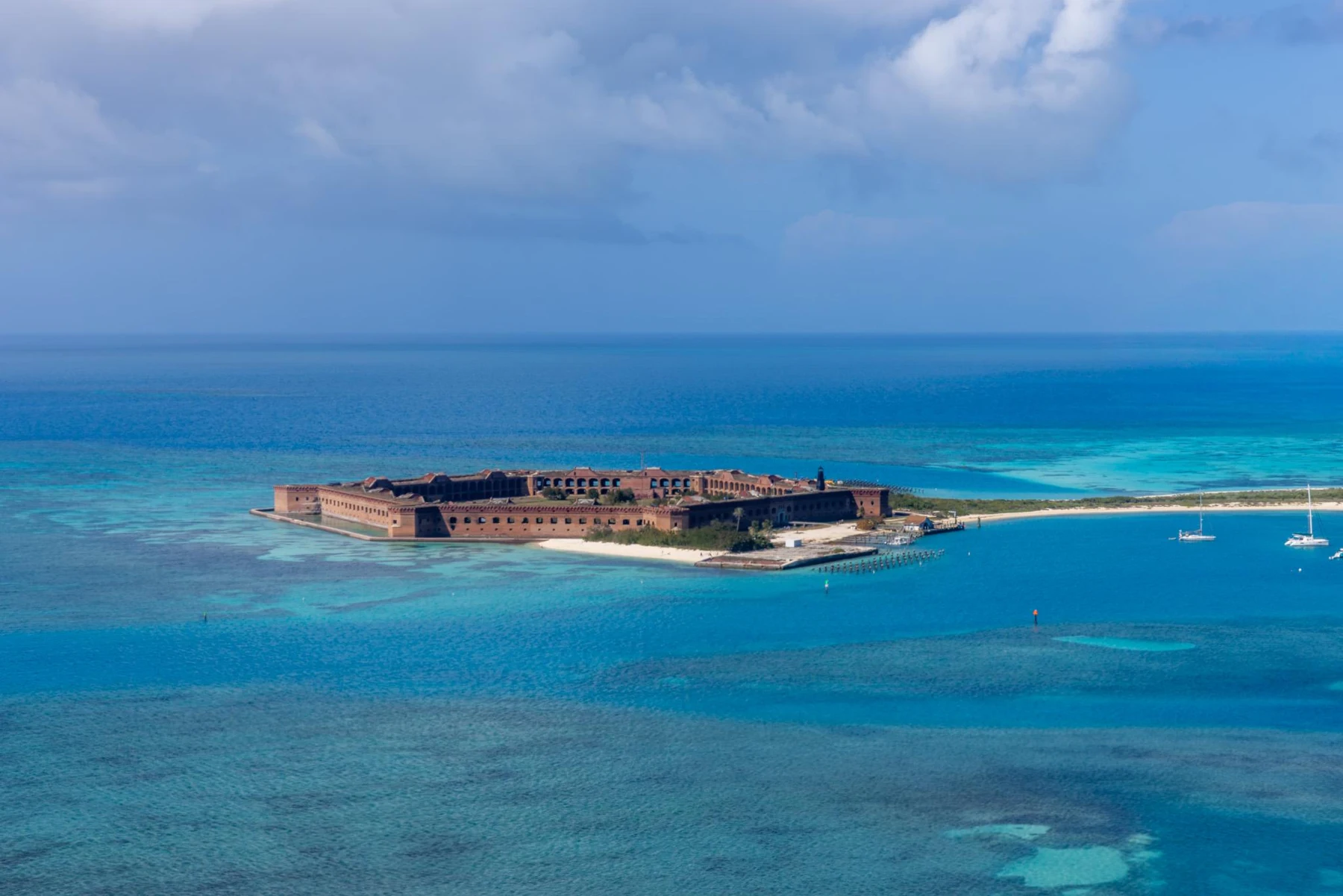
From a safe viewing spot, the explorers looked over the shallows. Colors shifted from pale green-blue to deeper blue farther out. They used the park map to understand where they were rather than guessing water depth from color alone.
Andy placed his finger on Garden Key. “This is where we're standing. Where is the rest of the park?”
Ana swept her hand toward the sea. “A lot of it is out there.”
Dry Tortugas protected much more water than dry land. Its islands were only part of a larger marine landscape that included reefs, seagrass, wildlife, and submerged history.
Augie looked down at his shoes. “We are on the small part.”
“The part your shoes prefer,” Allie said.
They imagined a park map with the water erased. Most of what made the place work would disappear from the drawing. Fish did not stop at the beach because the family had stopped walking.
The same thought changed their view of the fort. Its importance had come from the surrounding sea routes and harbor. Its stone and brick were connected to water, just as the reef's living community was connected to it in a different way.
Andy tried designing a park sign for a fish. It had an arrow pointing in every direction.
“Very comprehensive,” Ana said.
“Difficult to follow,” Allie added.
Their parents reminded them that the inviting colors did not remove currents, changing weather, or other ocean hazards. A marine park was not a swimming pool. The family could learn from the shore, photographs, maps, and staff explanations. Any water activity would require suitable conditions, proper planning, and close adult supervision.
Augie settled on a different expedition: finding every shade of blue he could see without leaving their safe spot.
He ran out of blue pencils first.
6. The builders with no brick deliveries
At an educational display, Ana found the next surprise. Coral might resemble rock or a strange underwater plant, but coral polyps were animals.
Andy leaned closer to the picture. “Tiny builders?”
Many reef-building corals lived in colonies. Their small polyps produced hard skeletons of calcium carbonate. As colonies grew over long periods, they contributed to the structures of reefs.
Augie considered the fort outside. “No tiny trucks?”
“No brick deliveries,” Allie said.
The reef offered spaces where many different marine animals could live. A photograph that first looked like a jumble of shapes became a neighborhood when they began noticing crevices, branches, fish, and shelter.
Ana drew a coral colony beside the fort. “Both can be called structures. But one is built by people, and one grows through living organisms.”
“And neither is playground equipment,” Allie added.
Corals could be harmed by touching, standing, pollution, disease, and unusually warm water. Their parents explained that a colorful photograph was a glimpse of a place and time, not a report proving every part of a reef was healthy today.
Andy crossed out the stepping-stone path he had added to his reef drawing. He replaced it with a viewing bubble safely above it.
Then they learned about seagrass. Unlike seaweed, seagrasses were flowering plants with roots, leaves, and seeds. Their underwater meadows offered habitat and helped hold sediment in place.
“A garden that doesn't need me with a watering can,” Ana said.
Augie made a watering motion anyway.
“For the pretend grass,” he explained.
Allie added two very different neighbors to their notebook: coral animals and seagrass plants. The sea had more kinds of living things than one quick glance could reveal.
Andy wrote beneath them: Look carefully. Leave the neighborhood undamaged.
7. A turtle needs more than an ocean
The explorers had not been promised a turtle sighting. Wildlife was not a show that began when a family arrived. But a photograph of a hatchling gave them plenty to investigate.
“Very small flippers,” Augie observed.
“Very large journey,” Ana said.
Sea turtles lived in the water, but females came onto suitable beaches to lay eggs in the sand. Protecting turtles therefore meant protecting both marine habitat and nesting beaches.
Andy drew an arrow from sea to beach, then another back toward the sea. “The beach isn't just the edge.”
“It is part of the life cycle,” Allie said.
They read about tracks called crawls, left when turtles came ashore. Not every crawl meant eggs had been laid. Trained researchers used several kinds of evidence to study nesting activity.
Ana remembered their Mesa Verde rule. “Say what the evidence supports.”
Augie made a flipper with his hand. “This is evidence that I am pretending.”
Their parents explained that visitors should not approach turtles, disturb nests, dig for eggs, or try to steer hatchlings. Artificial light could confuse hatchlings. Following park directions and reporting concerns to staff were useful ways to help.
Andy had first imagined helping a turtle by carrying it. Now he erased the stick figure holding a hatchling and drew a family standing well away instead.
“Sometimes helping means giving space,” he said.
Allie nodded. “And letting trained people decide what intervention is needed.”
The four compared their own day with a turtle's needs. They had packed water, shade, food, and a safe route home. A turtle needed suitable habitat across different parts of its life, without a parent packing it a lunch bag.
Augie looked at the hatchling photograph again.
“I hope it finds its turtle things.”
They all did.
8. An airport without suitcases
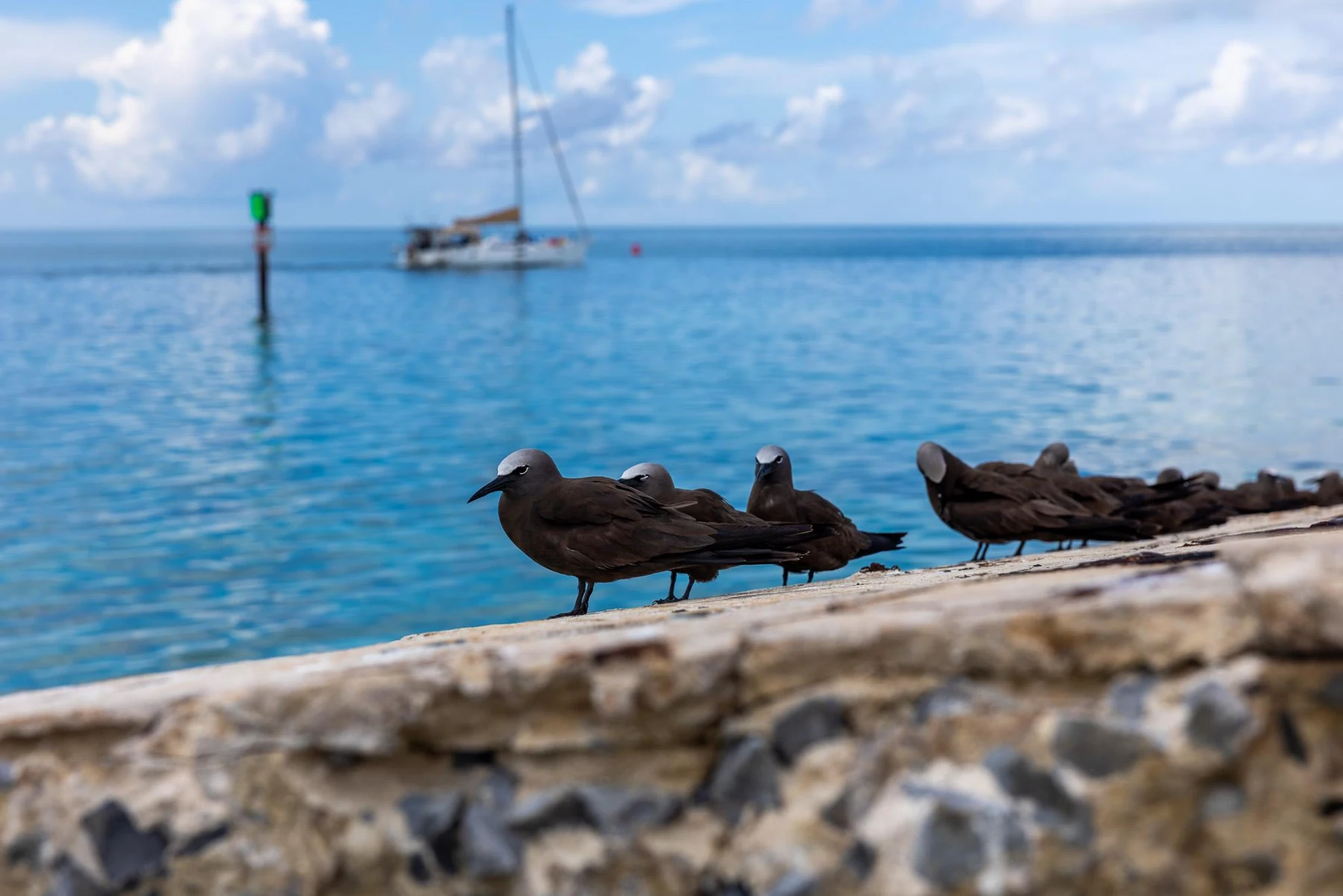
Birds gave Ana a different way to think about the islands. Some nested in the Dry Tortugas. Others stopped during long migrations between distant places.
“So an island can be a home and a stopping place,” she said.
Andy imagined a seabird announcing, “Last call for the flight to somewhere with fish.”
Augie flapped both arms. His parent gently reminded him that actual birds needed space, and so did the person beside him.
The family watched from an allowed area and used binoculars rather than moving closer. Park photographs showed brown noddies and other seabirds using places that could be protected by seasonal or year-round closures.
A strip of sand might look empty from a distance. That did not mean nothing important happened there. Eggs and chicks could be difficult to see, and approaching wildlife could cause harm without leaving an obvious mark.
Allie drew three overlapping circles: rest, food, and space.
“Those are useful for people too,” Andy said.
“Especially space from your bird announcement,” Ana replied.
They compared the park to a stop on a long road journey. A traveler needed more than somewhere to land. The stop had to provide what the traveler needed, and it had to remain available.
Augie inspected the birds in their guide. “Where do they put suitcases?”
“They travel light,” Allie said.
“Lucky.”
The family counted observations rather than trying to count every bird: one resting, one moving, one shape they could not confidently identify. It was acceptable to write unknown.
Ana liked that. Their notebook did not have to pretend to be an expert field guide. It could be a record of honest looking.
Andy added one final observation: no visible suitcases.
This time, everybody agreed the evidence was strong.
9. The supply list that became a story
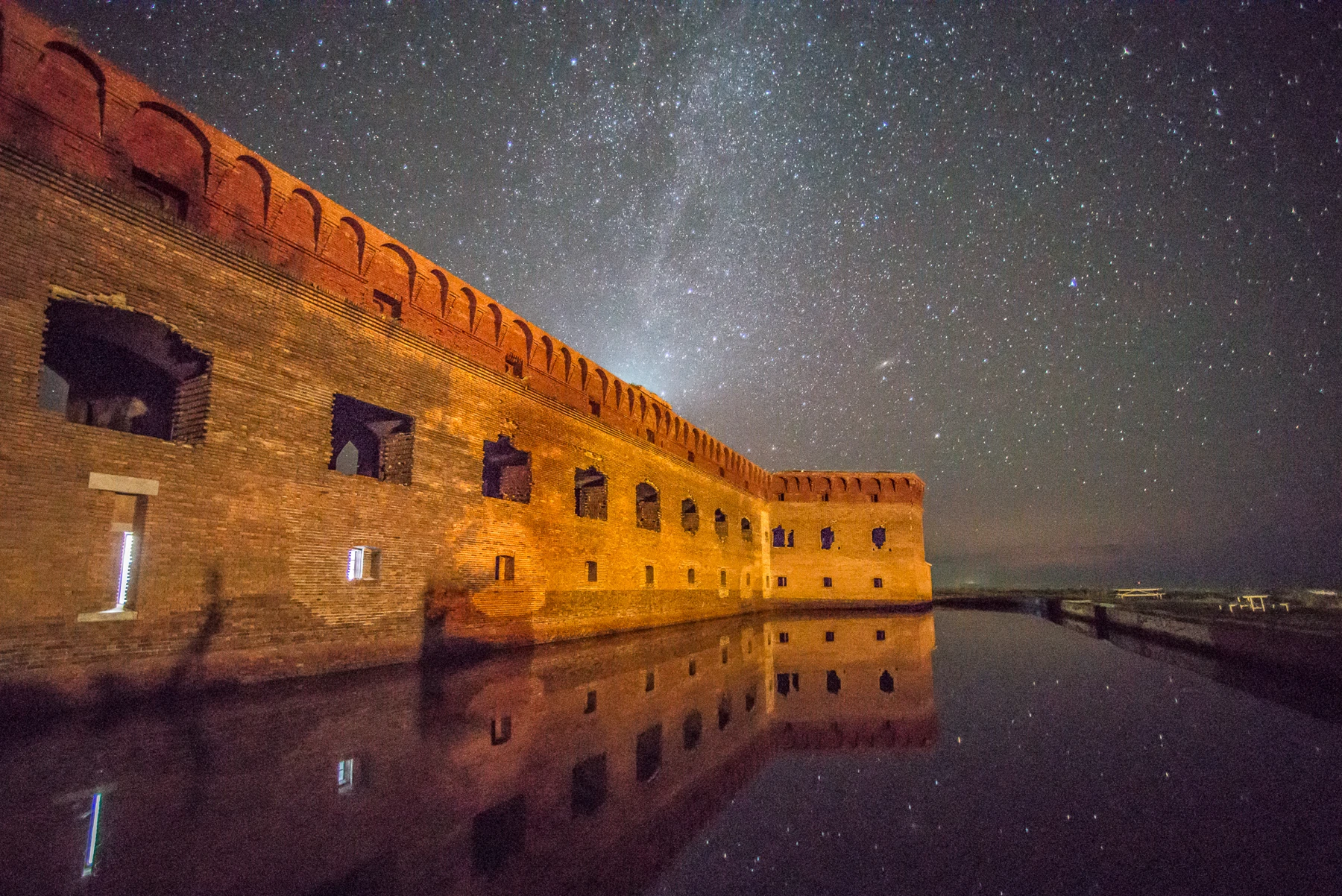
Before leaving, the four returned to their first question. Water had surrounded them all day. Their bottles still mattered.
“All water isn't drinking water,” Augie said, holding his bottle proudly.
“The fort tried collecting rain,” Andy added. “But a good idea still needed a dependable system.”
“The fort was here because of the harbor and sea routes,” Ana said. “Its story doesn't fit inside its walls.”
Allie looked through their drawings. “And the park doesn't fit on its dry land.”
Their notebook now held a rain collector, a coral colony, a seagrass meadow, a turtle's sea-and-beach arrows, and a migrating bird with excellent baggage arrangements.
They also had questions about the people who had lived and worked at the fort. Remembering the human story belonged alongside admiring the architecture.
Andy proposed a new packing list for explorers: safe water, sun protection, questions, patience, and enough humility to write “I don't know yet.”
“Sandwiches,” Augie said.
Ana added them. An incomplete packing list could be a serious matter.
They checked their resting area for wrappers and belongings, leaving wildlife, shells, coral, and historic objects where they belonged. The family followed the day's departure instructions and gathered together for the return journey.
As the fort grew smaller behind them, Allie mentioned their next chapter: Congaree National Park, where trees lived in a forest shaped by floodwater.
Andy laughed. “Springs in cliffs. A fort in the sea. Now trees with wet feet?”
“Water keeps changing the question,” Ana said.
Augie inspected his shoes.
“Mine are dry.”
“For now,” Andy said.
Their parents exchanged the look grown-ups exchange when a sentence could become a prediction.
Allie closed the notebook before anybody volunteered to test it.
Explorer’s notebook
Nine discoveries to take home
- Dry Tortugas lies west of Key West, Florida, and is reached by boat or seaplane rather than by road.
- “Tortugas” means turtles. “Dry” warned sailors that fresh water was unavailable on the islands.
- Clear-looking seawater is not suitable drinking water. Visitors need a planned supply of safe water.
- Fort Jefferson's design included rainwater collection and cistern storage. Historical supply problems required other solutions, including condensing seawater.
- The fort's location mattered because of nearby shipping routes and its harbor. A structure's surroundings help explain its purpose.
- Fort Jefferson's history includes soldiers, civilian workers, enslaved people, prisoners, and families whose experiences differed greatly.
- Coral polyps are animals; seagrasses are flowering plants. Both contribute to marine habitats that need protection.
- Sea turtles need suitable water habitats and nesting beaches. A turtle track does not always indicate a nest.
- Islands can support nesting birds and migrating travelers. Observing from allowed areas and respecting closures helps protect them.
Five small adventures
- Plan a remote visit on paper. List safe drinking water, food, sun protection, necessary medicines, travel arrangements, and a waste plan. With a grown-up, compare your list with current official park guidance.
- Draw a rain collector. Include a collecting surface, a route to storage, and a covered tank. What could fail if it does not rain, the tank leaks, or water becomes contaminated? A drawing is not a guide to making drinking water.
- Design two neighborhoods. Draw a human-built fort and a coral reef. Label one similarity and three differences, including who builds each structure.
- Make a life-cycle map. Show a sea turtle using water and a nesting beach. Add ways visitors can give wildlife space. Use paper rather than approaching a real nest.
- Keep an honest field notebook. From an allowed spot, write three observations and two questions. Include “unknown” when you cannot identify something confidently. A photograph or distant view is enough; you do not need to approach wildlife.
Talk it over
- How can a place surrounded by water have a drinking-water problem?
- Why should a fort's story include the people who built and used it, as well as its design?
- What would a map miss if it showed only Dry Tortugas' dry land?
Words for your explorer pack
- Key: a small, low island.
- Cistern: a storage chamber or tank for water.
- Harbor: a place where vessels can find shelter or anchor.
- Masonry: construction using units such as stone or brick.
- Polyp: a small animal form that includes individual corals.
- Seagrass: a flowering plant adapted to living underwater in coastal environments.
- Migration: regular movement between regions, often with the seasons.
- Habitat: the surroundings that provide what an organism needs to live.