1. The tunnel with the wrong recipe
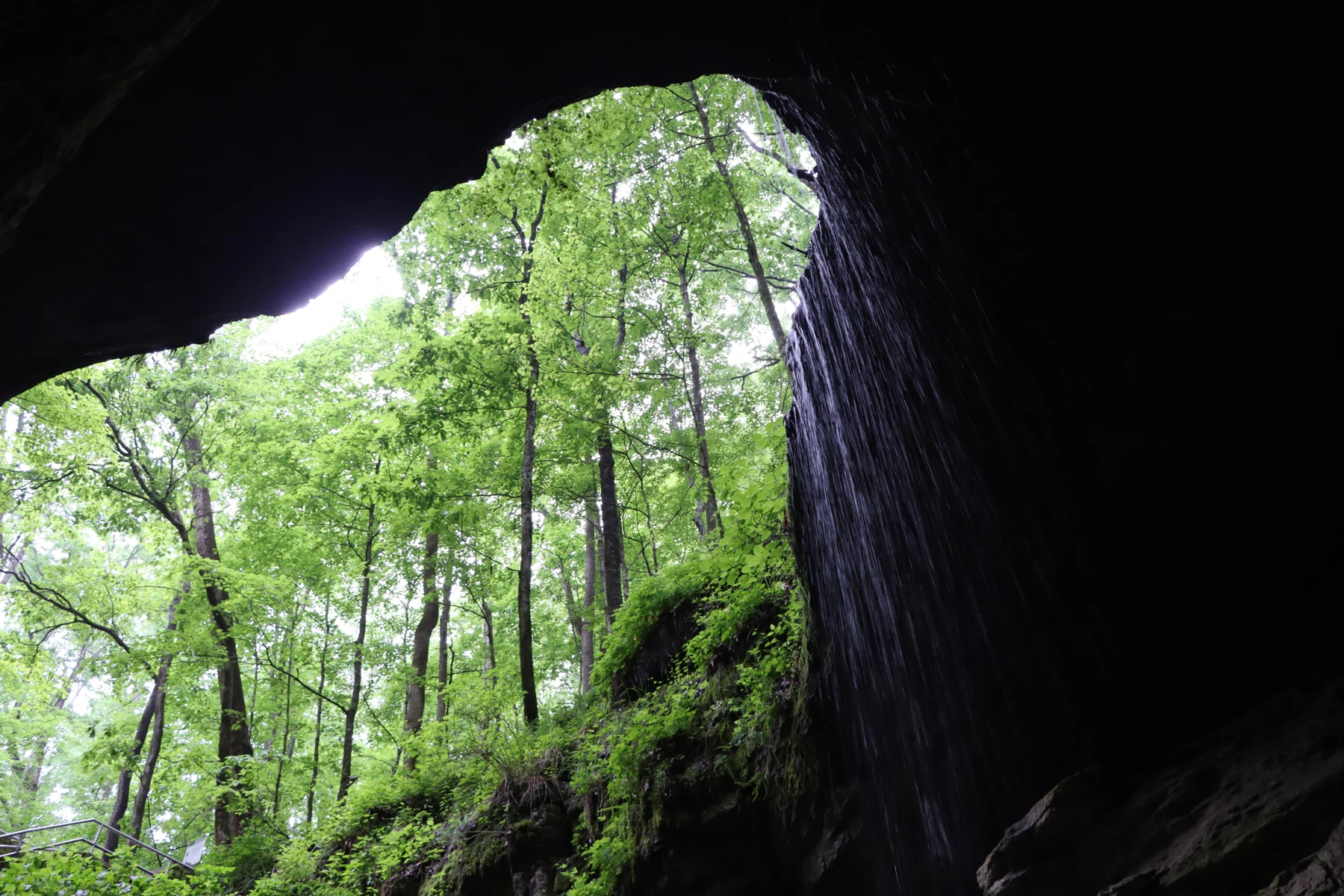
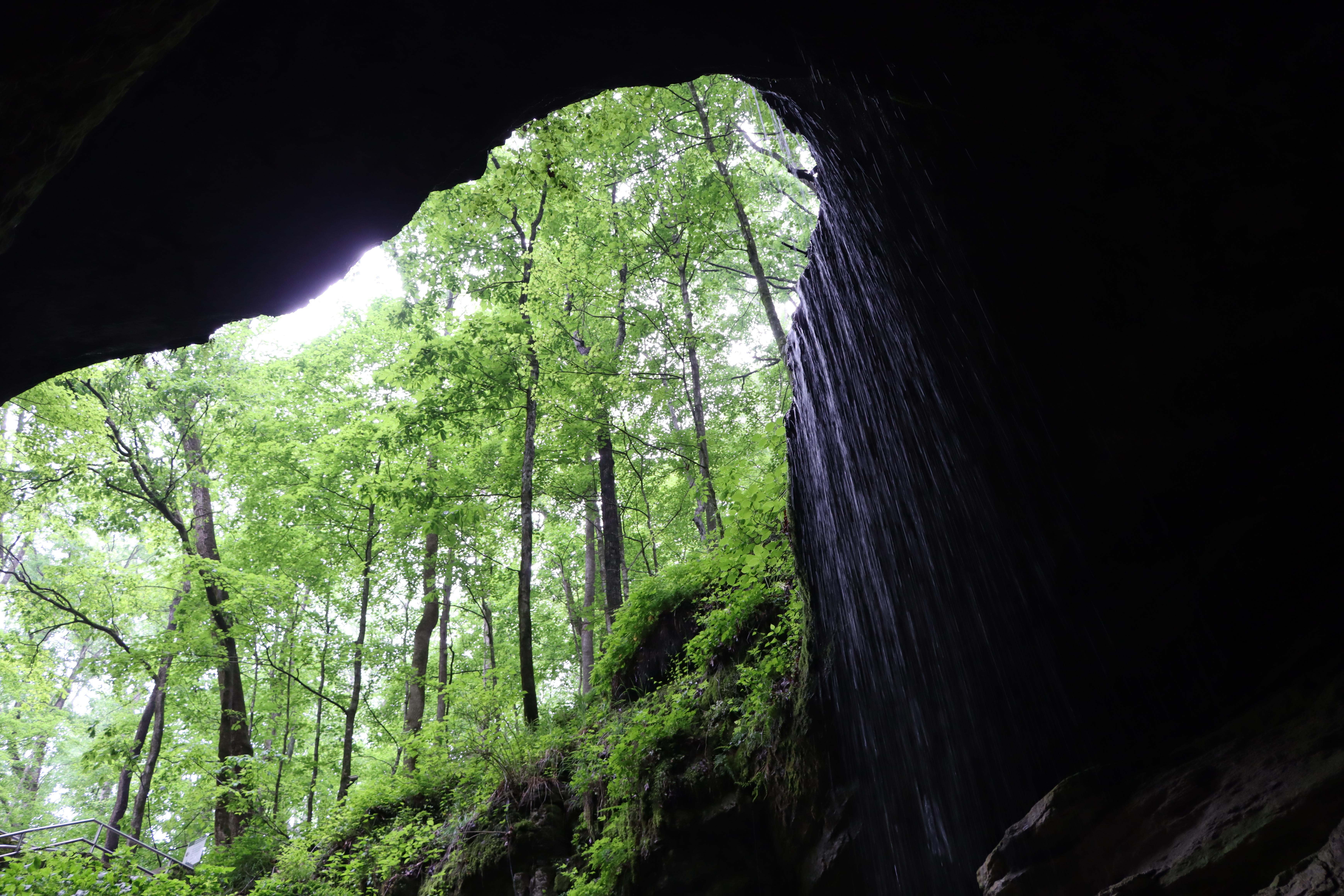
Augie pointed at the cave entrance photograph.
“Lava went home?”
After Hawaiʻi Volcanoes, he knew a tunnel could be left behind when lava drained away. This new cave seemed to have an excellent roof, plenty of darkness, and no train. So far, it looked like a promising match.
“Different recipe,” Allie said.
Andy opened their notebook. “Please tell me it isn’t made with salt and pepper.”
“No seasoning department,” Ana promised.
Their family had arrived at Mammoth Cave National Park in Kentucky. Aboveground were wooded hills and river valleys. Beneath part of that landscape lay a branching world of passages.
The entrance photograph showed daylight, green trees, and falling water beyond a great opening in rock. Augie traced an imaginary doorway in the air.
“Who dug it?”
“That,” Allie said, “is our mystery.”
Mom and Dad had checked the park’s current information and chosen a suitable guided tour. They had compared the route’s distance, stairs, narrow places, and other demands with everyone’s needs. Photographs and exhibits would help them learn about places their tour did not visit.
Andy held up a pencil.
“I am prepared to map the entire cave.”
Ana looked at his one sheet of paper.
“You may need a second sheet.”
“Then I will map the important parts.”
“Such as?”
“Entrance. Exit. Location of lunch afterward.”
Allie wrote THE RAINWATER MAZE on the cover. Under it, she added: HOW CAN WATER MAKE ROOM INSIDE SOLID ROCK?
Augie drew a raindrop with a shovel.
“Small worker.”
“Good start,” Ana said. “But we need to check its actual tools.”
2. An ocean before the forest
The first clue was not water falling from today’s sky. It was an ancient sea.
“Sea?” Andy asked. “We’re in Kentucky.”
“Today,” Allie said.
Long before the modern hills and forest, shallow seas had covered this region. Sediments and calcium-carbonate-rich material accumulated. Over geological time, some deposits became limestone—the rock in which much of Mammoth Cave formed.
Ana drew a blue page with little shell shapes, then another page showing layers of rock.
“Not a photograph of one afternoon,” she explained. “A very simplified history.”
Augie added a fish to the old sea.
“Before the trees.”
“Far before our trees,” Allie agreed.
The children compared the rock’s age with the cave passages’ age. The limestone had existed long before the openings they were studying.
“So the rock didn’t arrive with the rooms already inside?” Andy asked.
“No. A rock’s formation and a cave’s formation are different chapters.”
Ana underlined that idea. They had seen something similar at Bryce Canyon: first the rock, then the processes that shaped it.
Layers above the limestone also mattered. Resistant sandstone and shale helped protect parts of the cave landscape. They influenced erosion and how water reached the limestone below.
“Rock roof over a rock roof,” Andy said.
“Layers with different properties,” Allie replied. “Not one perfectly waterproof lid over the entire park.”
Augie drew an umbrella over a mountain.
Ana added holes and arrows beside it.
“Your umbrella is a comparison. Water still finds routes.”
The cave mystery now had a starting material: limestone with cracks and layers. Next they needed the tool that could change it.
Andy looked at the tiny raindrop shovel.
“I’m beginning to doubt the handle.”
3. The raindrop brings chemistry
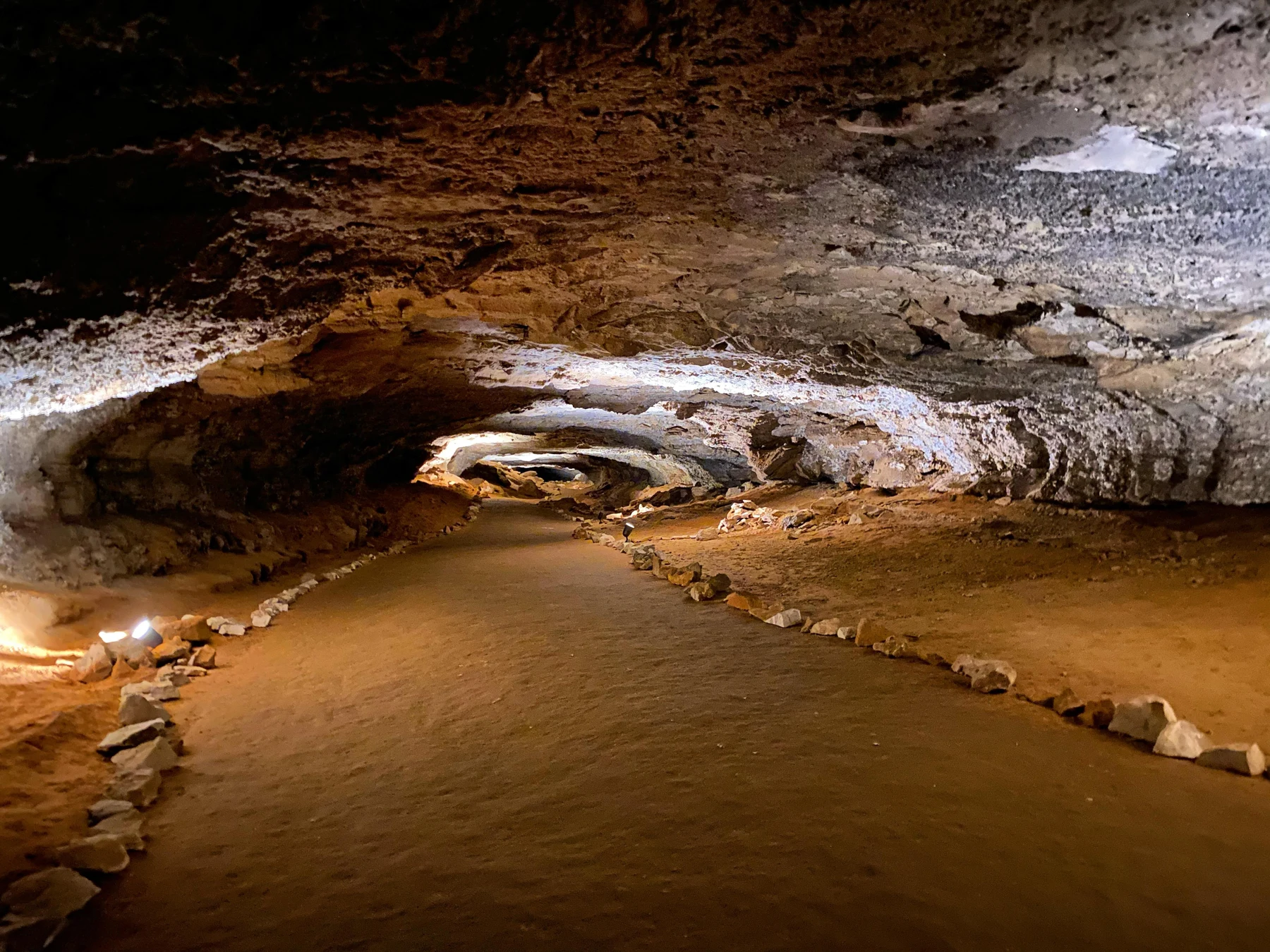

A long passage in another photograph curved away beneath an oval ceiling. It looked too large for anything as small as a drop to have helped make it.
“Tiny worker. Enormous office,” Andy said.
Allie explained that rainwater picked up carbon dioxide from the air and soil. That made a weak acid called carbonic acid. As the water moved through cracks in limestone, it could dissolve some of the rock’s minerals.
“Not a splash that melts a mountain,” Ana said.
“Right. Small changes over a very long time.”
Augie erased the shovel and gave the raindrop a tiny bag.
“Carrying rock away?”
“Dissolved material,” Allie said. “You wouldn’t see little bricks floating in it.”
Water found pathways along cracks and between rock layers. As openings enlarged, more water could pass through them. Flowing underground streams also shaped passages and carried material away.
Andy drew a dot, a thin line, and a larger channel.
“Room renovations. Extremely patient contractor.”
The children called Mammoth Cave a solution cave: an opening system formed largely by water dissolving soluble rock. Its passageways had not been hollowed out by draining molten lava like the tube in their previous chapter.
Ana made two notebook boxes. One showed lava moving beneath its own cooling roof. The other showed water entering and enlarging routes in limestone.
“Similar-looking darkness,” she said. “Different stories.”
Augie pointed at both drawings.
“No trains in either.”
“A completely correct comparison,” Andy said.
But they did not pour anything onto cave walls to test the chemistry. The cave itself was not their experiment tray. Their tools were questions, official information, careful looking, and a pencil that had already drawn three imaginary businesses.
4. The river lowered the downstairs
“If water made the passages,” Ana asked, “why aren’t they all full of water now?”
Andy looked at his shoes.
“An especially important question.”
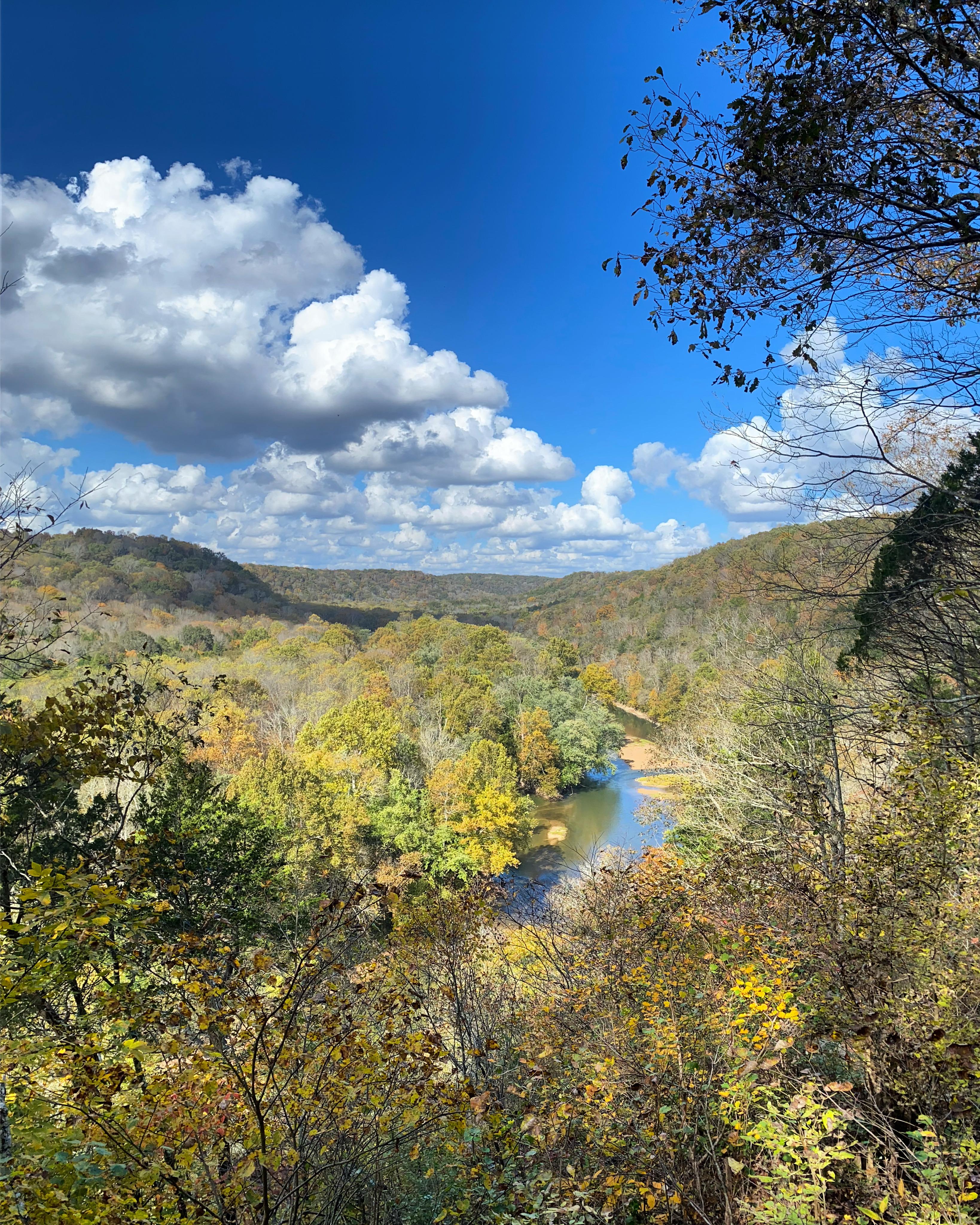
Allie sketched a hill above a river valley. The Green River helped set the level toward which underground water drained. As the river cut its valley deeper over time, cave water could develop routes at lower elevations, leaving older passages above.
“Different floors,” Andy said.
“A useful picture,” Allie replied, “as long as we don’t imagine a neat building with identical rooms stacked on top of each other.”
The real cave had passages of different shapes and histories. Some were broad; others were tall and narrow. Connections, rock breakdown, and flowing water complicated the layout. A flat drawing could hide the up-and-down part of the maze.
Augie drew stairs between two lines.
“Downstairs still working.”
“Water still moves through parts of the system,” Ana said.
The cave and river were not separate worlds. Underground streams carried water toward outlets connected with the surface drainage. Conditions could change near lower passages and entrances.
Mom reminded the kids to follow the guide’s instructions. They stayed together on their permitted route, rather than choosing side passages from the notebook sketch.
Andy crossed out his sign reading SHORTCUT TO LUNCH.
“Unverified shortcut,” he explained.
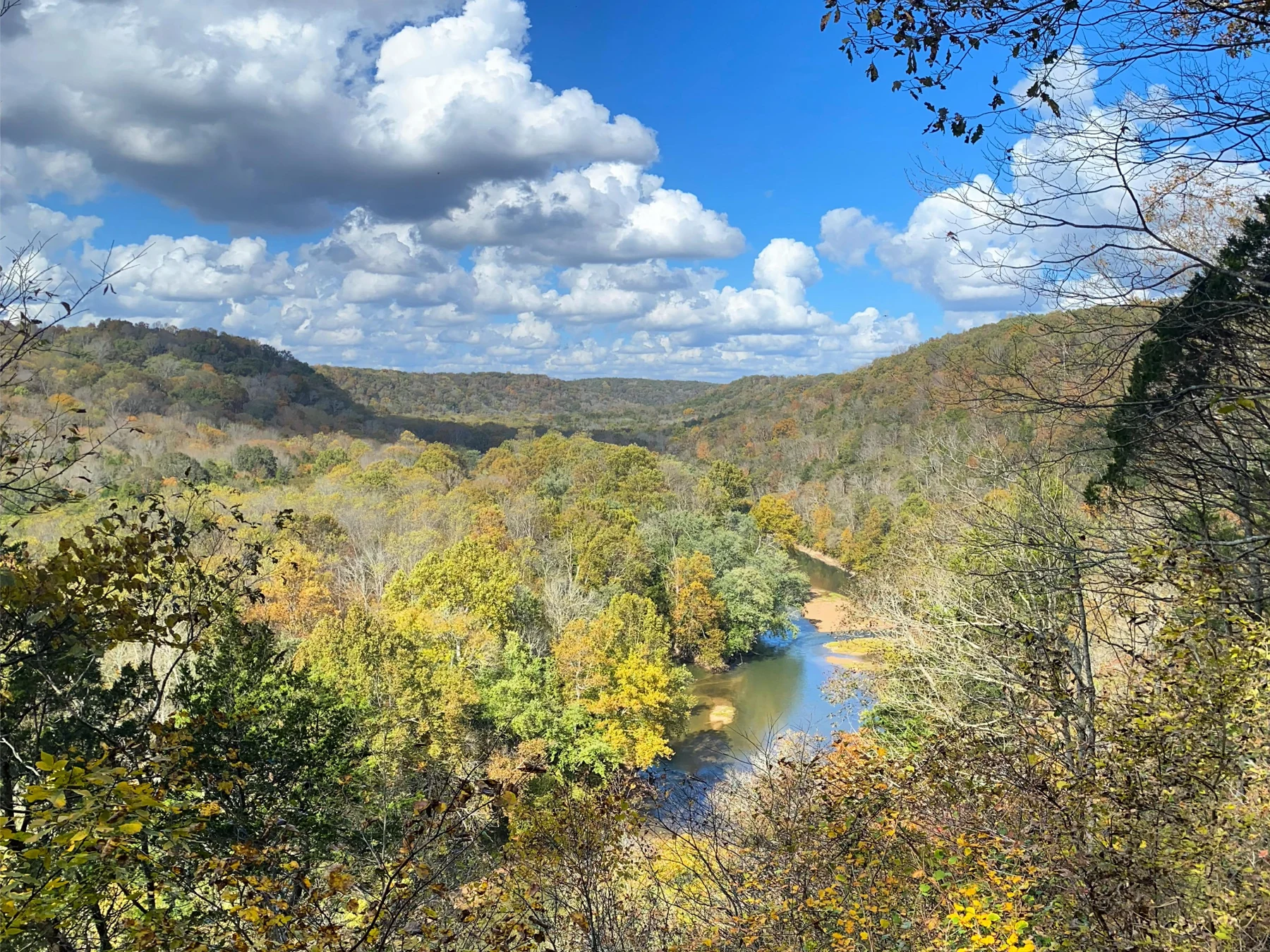
Outside, a photograph of forested hills and a river valley looked peaceful. Yet it helped explain the underground rooms they had been investigating.
Ana drew an arrow through both pictures.
“What happens outside can shape what happens below.”
Augie added a small basement window to the hill.
“Not actually there,” Allie said gently.
“I know. For the drawing.”
5. Water takes away—and puts back
At an exhibit, Andy found a cave photograph with hanging points and rising mounds.
“Now the ceiling is growing teeth.”
“Stalactites,” Allie read. “And stalagmites.”
Ana tried the names slowly. Augie decided the short version was “ceiling ones” and “floor ones.”
That was enough to begin.
Water that had dissolved limestone could later deposit calcium carbonate in a cave. A tiny amount left by one drip was small, but repeated deposition over long periods built formations.
Stalactites hung down from ceilings. Stalagmites grew upward from the floor. Where formations met, they could make a column. Water spreading over surfaces could create sheets of flowstone.
Andy drew a drip wearing a construction helmet.
“So our worker can remove material and deliver it somewhere else.”
“Under different conditions,” Allie said. “Dissolving and depositing are different parts of the story.”
Augie gave his raindrop two bags.
“One in. One out.”
Not every passage was a forest of dripstone. Much of Mammoth Cave was comparatively dry, partly because of the protective layers above. Wetter areas could look very different from a dry passage nearby.
“And Frozen Niagara?” Ana asked, reading another label.
“A flowstone formation,” Allie answered. “The name compares its shape with a waterfall. It isn’t a waterfall frozen into ice.”
Andy shut his imaginary ice-cream stand.
“No snacks underground?” Augie asked.
“Not from the rocks,” Ana said.
They did not touch the formations. These were fragile features with long histories, not handles, climbing holds, or souvenir samples.
Allie added two arrows to the notebook: DISSOLVE and DEPOSIT.
Andy added a final note: CEILING TEETH DO NOT NEED A TOOTHBRUSH.
6. Who orders dinner in the dark?
The guide’s discussion of cave life produced another puzzle.
“If there’s no sunlight down in the dark parts,” Ana asked, “where does the food begin?”
Andy raised his hand.
“I have a sandwich theory.”
“Not a reason to drop crumbs,” Mom said.
The family studied pictures of cave animals and a food-web display. Organic matter could enter with water. Animals moving between the surface and cave brought another connection. Droppings from creatures such as cave crickets could help support other life.
Augie wrinkled his nose.
“Not sandwich.”
“Different menus,” Allie said.
Some animals used caves for only part of their lives. Others could live entirely underground and had adaptations suited to darkness. Certain cave-adapted animals had reduced eyesight and little body pigment. These features developed across generations; an individual animal did not lose its eyes because it spent one afternoon in a cave.
Ana drew a fish with a question mark, then wrote ADAPTATIONS, NOT MAGIC.
“Not every animal we see near an entrance has the same story,” she said.
The children did not expect a parade of bats, cave fish, or shrimp on their route. Educational pictures let them examine small residents closely without disturbing them.
Andy looked at the dark background behind an animal photograph.
“An empty-looking room can have a full food web.”
“And a small amount of food can matter,” Allie added.
The kids kept their belongings contained and followed the park’s cave-protection and biosecurity instructions. Helping protect the habitat included what they carried on their shoes, not just what they could see.
Augie inspected his soles.
“Feet have responsibilities.”
Ana wrote that under the food web.
“It isn’t a scientific term,” she said, “but we should remember it.”
7. The explorers before the tour lights
A display about early exploration changed the children’s idea of “discovering” a cave.
Indigenous people had explored Mammoth Cave thousands of years before European settlers arrived. Archaeological evidence included river-cane torches and other objects left in the passages. People had collected minerals, although the purposes were not all known with certainty.
“So we shouldn’t fill every blank with a guess,” Ana said.
“Allie’s rule for every notebook,” Andy replied.
The park worked with Tribal partners whose connections to the region continued today. The artifacts were evidence of people’s lives, not treasure for a visitor to take.
Augie drew a small lamp beside the torch illustration.
“Different lights.”
Then the family learned about Stephen Bishop, an African American guide and explorer who began working at Mammoth Cave while enslaved. He helped expand knowledge of its passages and drew an important early map from memory.
Andy looked at his own drawing of entrance, exit, and lunch.
“His map had much more on it.”
“His knowledge and skill deserve credit,” Allie said.
Mom explained that slavery meant people were treated as property and denied control over their lives. Bishop’s achievements did not make that injustice acceptable. He later gained his freedom, but telling his story honestly meant including both his work and what he endured.
The children paused over his name. They also learned that other Black guides and their families contributed to the cave’s history across generations.
Ana wrote STEPHEN BISHOP clearly rather than labeling the map simply OLD MAP.
“Names matter,” she said.
Augie added a careful line beneath it.
“Remember who.”
There were many kinds of evidence in this park: dissolved rock, flowing water, animal life, artifacts, maps, and the people whose knowledge helped others understand it.
8. A maze is not a place to get lost
Andy’s cave map had become so crowded that he tried folding one passage behind another.
“Three-dimensional paper,” he announced.
Ana unfolded it before it became a paper airplane.
“Mapping needs more than imagination.”
Modern cave surveyors measured distances, directions, and slopes to record passages and their connections. Scientific work underground required training, equipment, planning, and permission. Their family notebook was a learning sketch, not a navigation tool.
Augie pointed at Andy’s arrow.
“Lunch still that way?”
“After the tour, with our grown-ups.”
They considered what a map could and could not show. A line might represent a passage with uneven ground, stairs, a low ceiling, or a slope. A short-looking route on paper was not automatically an easy one.
Mom had chosen their tour before they arrived and knew its demands. The kids stayed with the group and listened. If another family needed a different experience, surface exhibits, suitable accessible activities, and photographs could still hold a complete adventure.
“Explorer isn’t a test of who can squeeze through the smallest gap,” Allie said.
Andy looked relieved.
“My backpack would win the stuck contest.”
No one shouted to measure an echo or wandered away to see how dark it became. They could notice sound, cooler air, and changing light while respecting the guide and other people.
Ana made a final key for their sketch: arrows for water, dotted lines for imagined connections, and a large label saying LEARNING DRAWING.
Augie added a small person beside the group.
“Everybody together.”
“That,” Andy said, “is the most important location on my map.”
9. The upstairs belongs in the answer
In the daylight again, the children looked at trees with a new question.
“What’s underneath?” Augie asked.
“Sometimes a passage,” Allie said. “But we can’t identify the cave map just by pointing at a tree.”
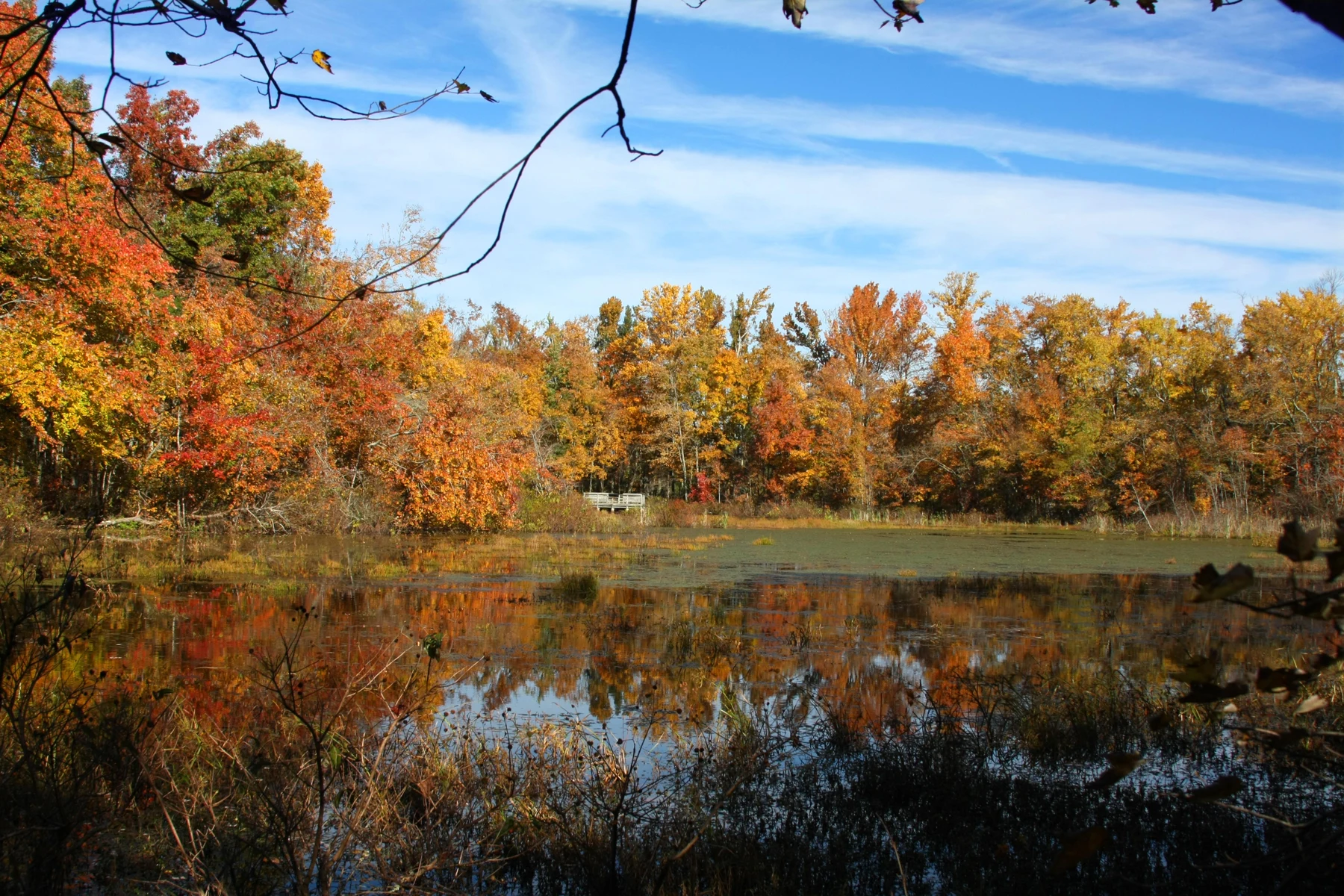
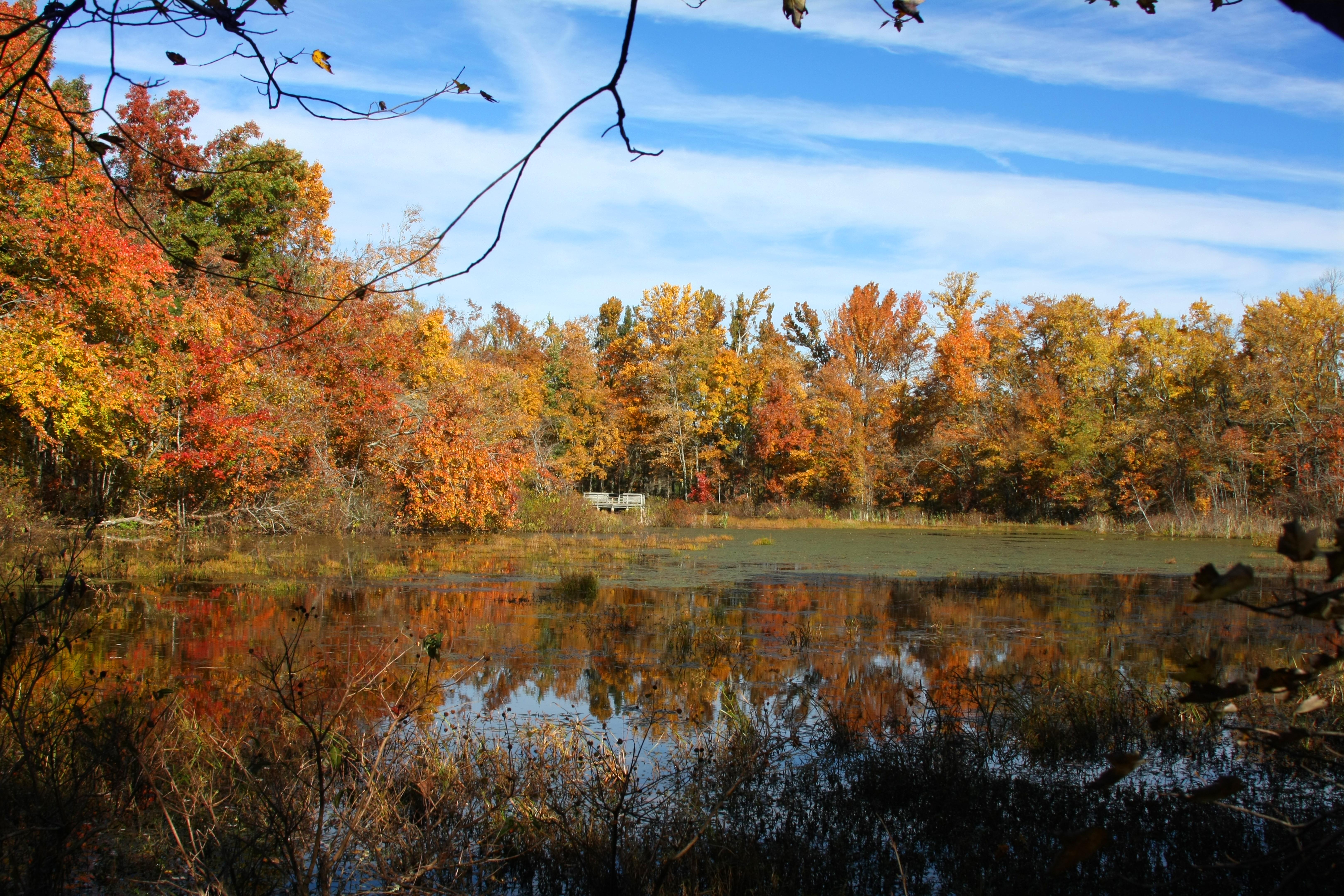
The park’s aboveground landscape was an adventure too. The family could choose a suitable nature walk, a visitor-center activity, or a view of the river. A photograph of Sloans Crossing Pond showed autumn trees reflected in still water.
Andy turned the picture upside down.
“Two forests. One very flat tree trunk.”
“Reflection,” Ana said.
She drew sunlight above their cave sketch and arrows for water moving through the landscape. In karst country, where soluble rock created caves and other drainage features, surface water and groundwater could be closely connected. Caring for the land and water above helped protect habitats below.
Augie removed the shovel from his original raindrop.
“Chemistry tool.”
“Plus moving water, rock structure, and a great deal of time,” Allie said.
Ana read their answer aloud. Weakly acidic water entered cracks and dissolved limestone. Underground flow enlarged and shaped passages. River levels and rock layers influenced the maze. In some places, water later deposited formations.
“Not a drained lava river,” Andy added.
“And not an empty basement,” Ana said. “Life and people belong in the story too.”
Their next chapter would return to California, to Sequoia National Park. After tracing enormous passages from tiny pathways in rock, they would investigate a giant tree’s surprisingly small beginning.
Augie drew a huge tree beside a tiny seed.
“Did the seed know?”
“Know what?”
“How big to get.”
Allie smiled as Ana wrote THE GIANT’S TINY BEGINNING.
Andy closed the notebook.
“Good. My pencil is ready for a mystery with more daylight.”
Explorer’s notebook
Nine discoveries to keep
- Mammoth Cave’s limestone formed long before its cave passages.
- Rainwater and carbon dioxide can form a weak acid that dissolves limestone.
- Water enters cracks and rock layers, gradually enlarging underground routes.
- Mammoth Cave and a lava tube have different formation stories.
- Rock layers and the Green River’s changing valley helped shape the cave system.
- Water can both dissolve minerals and, under different conditions, deposit cave formations.
- Cave food webs connect with water, organic matter, and animals from the surface.
- Indigenous exploration long preceded modern tours; Stephen Bishop and other Black guides made important contributions.
- Protecting the surface environment helps protect the underground world.
Five ways to explore
- Draw two cave recipes: a lava flow leaving a tube, and water dissolving limestone.
- Label ceiling stalactites and floor stalagmites in an official photograph.
- Ask which parts of a cave sketch are measurements and which are guesses.
- Choose a suitable tour or surface activity using current park descriptions and your family’s needs.
- Draw a connection map linking forest, soil, rain, cave stream, animals, and river.
Talk it through
- Why can old rock contain much younger passages?
- How can a dry passage still tell a story about water?
- Why should an explorer’s map include people’s names and histories?
Words for your backpack
Limestone: a sedimentary rock rich in calcium carbonate.
Solution cave: a cave formed largely by water dissolving soluble rock.
Karst: a landscape shaped by dissolution of soluble rock, often with caves and underground drainage.
Stalactite: a mineral formation hanging from a cave ceiling.
Stalagmite: a mineral formation rising from a cave floor.
Survey: careful measurement and recording of places or features.