1. The missing steps
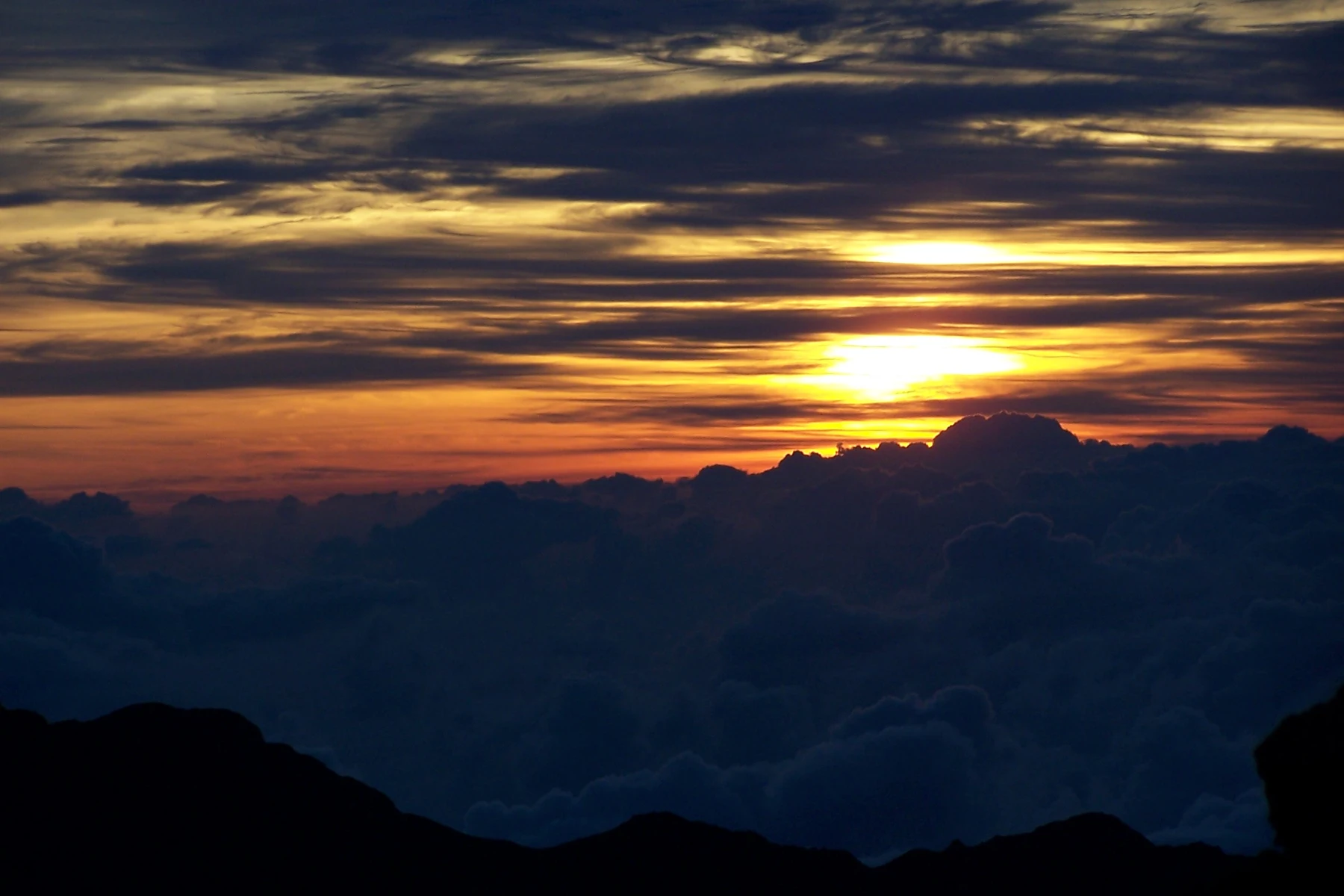
Augie looked out of the car window and announced that somebody had forgotten the staircase.
“What staircase?” Ana asked.
“The cloud one. How do we get on?”
Andy, who was seven and never short of a transport proposal, drew a ladder on the corner of the notebook. Allie gently turned the page back to their actual map.
“We're using the road,” she said. “And nobody is stepping on a cloud.”
After the rock wrinkle of Capitol Reef, the family had traveled to Maui, one of the Hawaiian Islands. Their next park was Haleakalā National Park. This was a new journey requiring its own plans, not a quick drive from Utah across the sea.
Their parents had chosen a short daytime visit in the Summit District. They had checked conditions and prepared for cold, wind, bright sunlight, and the effects of high elevation. Today's plan involved suitable viewing places, easy movements, and plenty of flexibility—not a long descent into the wilderness or a race to catch sunrise.
Ana put on another layer. “I thought Hawaiʻi meant warm.”
“Your jacket has found a counterexample,” Allie said.
At ten, Allie liked collecting questions. Nine-year-old Ana liked testing the answers. Four-year-old Augie liked knowing whether the next stop had a snack arrangement.
Andy glanced between green slopes, drifting clouds, and the higher mountain. He had drawn the island as one beach with one enormous palm tree. That drawing now needed revisions.
Allie opened a fresh notebook page: Why can one mountain have such different worlds?
Augie added three cloud shapes, each with a small step underneath.
“We can keep the staircase as a picture of our questions,” Ana suggested. “We don't have to build it.”
Andy erased the ladder's price tag.
Their parent parked in a designated place. The children stepped out together, keeping close, their jackets rustling.
Augie breathed in, looked around, and whispered, “The upstairs is chilly.”
2. A mountain with several wardrobes
From suitable stopping places, the family noticed that the mountain did not wear the same green covering everywhere. Farther up, shrubs gave way to a more open landscape with scattered plants and volcanic ground.
Allie drew a broad mountain outline. Ana added a question beside each band rather than coloring them all beach-green.
“Height matters,” she said. “So do wind and water.”
The summit rose to 10,023 feet, or 3,055 meters, above sea level. Up here, sunshine could be intense while the air felt cold. A bright sky was not a reason to put away warm layers or sun protection.
Andy put a tiny sun and a tiny jacket side by side in the drawing.
“Two bosses,” he said.
“Both worth listening to,” their parent replied.
They moved slowly. At high elevation, each breath supplies less oxygen than it does near sea level. Their parents watched how everyone felt; nobody needed to prove they could hurry. Feeling unwell would change the plan immediately, with help sought as needed.
Augie decided his feet were using “thinking speed.”
“That is an excellent speed for looking,” Allie said.
A visitor-center display helped them compare the mountain's environments. Conditions changed with elevation and exposure, affecting which plants and animals could live in different places. A wet forest and a dry summit could belong to the same mountain without being the same habitat.
Ana gave their outline a key: water, temperature, wind, and living things. Andy added lunch, then moved it to a separate key for visitors.
Their parent asked whether one morning's weather told them everything about the mountain's climate.
“No,” Allie said. “We need patterns over time, not just what my nose feels right now.”
Augie touched his nose.
“Mine votes jacket.”
That was useful information about Augie. It was not a complete climate report.
3. Where a cloud begins
The cloud question followed them into the visitor center.
Andy pictured clouds waiting in a line at the bottom of the mountain, holding tickets for the upstairs.
Ana examined an educational diagram. “The air moves uphill. The clouds aren't riding little elevators.”
Moist trade-wind air could be pushed upward along the mountain's windward slopes. As rising air expanded and cooled, water vapor could condense into tiny droplets, helping form clouds. The visible cloud was made of droplets, or sometimes ice crystals—not simply invisible water vapor made bigger.
Allie drew arrows up the mountain. Andy drew dots near the arrows.
“Those dots stand for droplets,” she said. “Real cloud droplets are much too small to look like our pencil marks.”
Augie wanted to know why the clouds did not always reach the top.
They learned about the trade-wind inversion: a layer where temperature increased with height instead of following the usual cooling pattern. That stable boundary could limit the upward growth of the moist air below it. Higher ground could therefore be above a cloud layer and relatively dry.
“A lid?” Andy asked.
“A useful first comparison,” Allie said. “But not a hard lid, and not one that stays in exactly the same place every day.”
Ana labeled it air conditions, not a ceiling. Weather could change; the summit was not guaranteed to stand in clear sunshine above clouds on every visit.
They made a second drawing showing cloud reaching farther up. The two pictures helped them remember that the mountain's weather did not have to copy a postcard.
Augie drew a small door in his cloud.
“For the rain,” he explained.
Andy admired the door, then added a label: imaginary.
The notebook staircase was becoming a sequence of ideas: air rises, air cools, droplets form. It had no railings, no tickets, and absolutely no place to put a foot.
4. The crater that needs another explanation
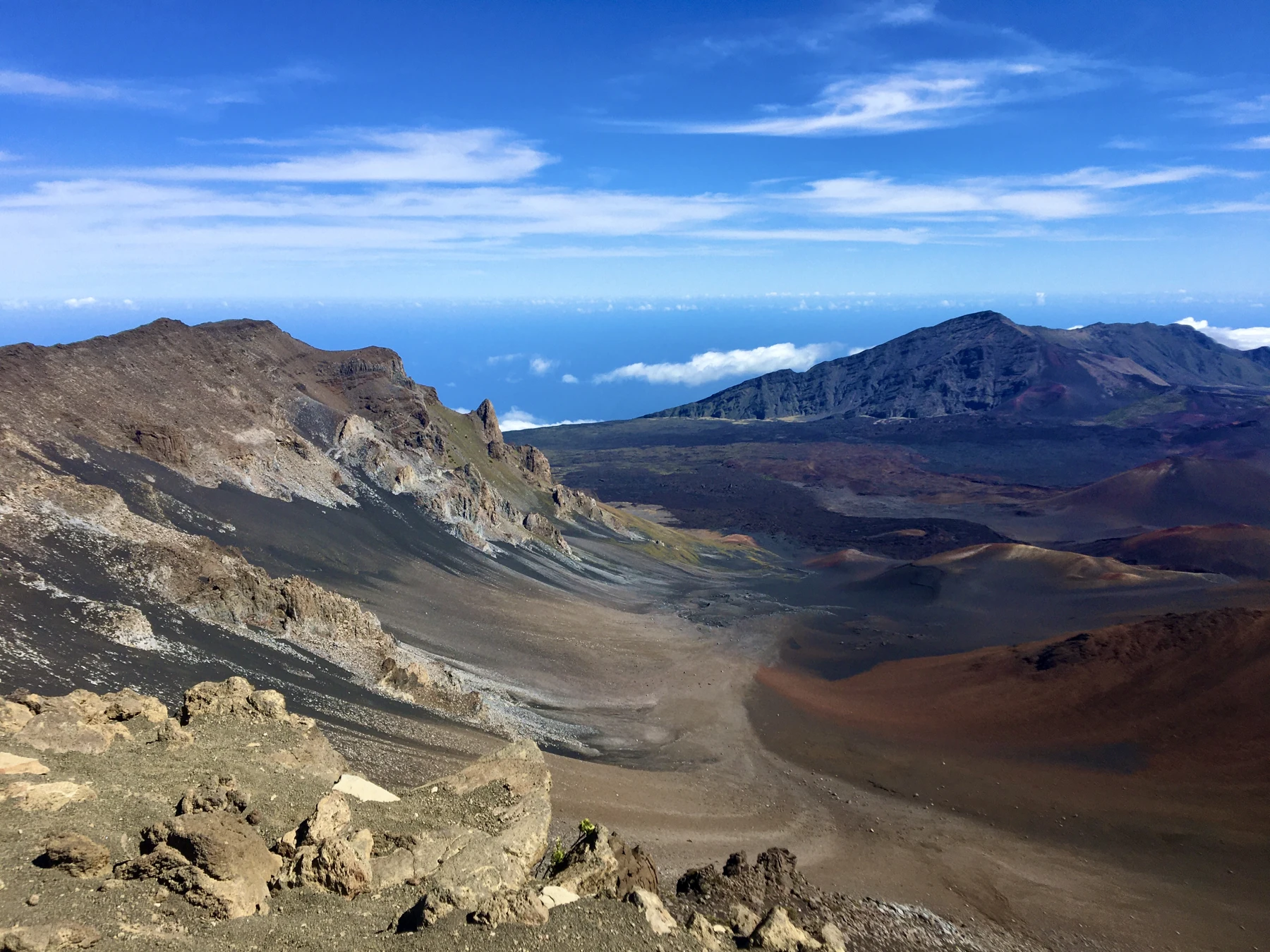
At a designated viewing area, the volcanic landscape opened before them in reds, browns, and dark gray. The children stayed in the permitted area, well away from edges.
Andy stared at the enormous depression.
“That is a very large missing piece.”
A sign and their guide material used the familiar name Haleakalā Crater. But the explanation surprised them. The broad summit depression was largely an erosional valley, shaped as valleys cut back into the mountain and joined. Landslides also played a role. It was not simply one giant hole blasted out in one eruption.
“We've met this problem before,” Ana said. “A name doesn't tell the whole process.”
Allie remembered Capitol Reef's reef. Their list of misleading first impressions was getting longer.
Haleakalā itself was a volcano, built by repeated eruptions. Later lava flows and smaller cinder cones occupied parts of the valley. Both building up and wearing down belonged in the landscape's history.
Andy drew a mountain with a plus sign on one side and a minus sign on the other.
“Adding rock. Removing material.”
“And not all at the same time or in one simple round,” Allie added.
Augie studied the smaller cones. “Little mountains in the big mountain.”
They learned that cinders were fragments thrown out during eruptions. Material piling around vents could build cones. The family could examine the shapes from their viewpoint without hiking down to investigate each one.
Their parent asked whether the absence of flowing lava today meant the volcano could never erupt again.
Ana checked the information. “No. It's not extinct.”
That did not mean their notebook could predict the next eruption. Scientists studied the volcano using evidence and monitoring, rather than Andy's proposed method of asking a cone whether it felt busy.
He wrote question rejected beside the speech bubble.
Augie looked out once more.
“Lots happened before we got here.”
“And the story is still going,” Allie said.
5. The plant wearing silver
The next mystery looked small enough to fit in a flowerpot, but it belonged exactly where it was.
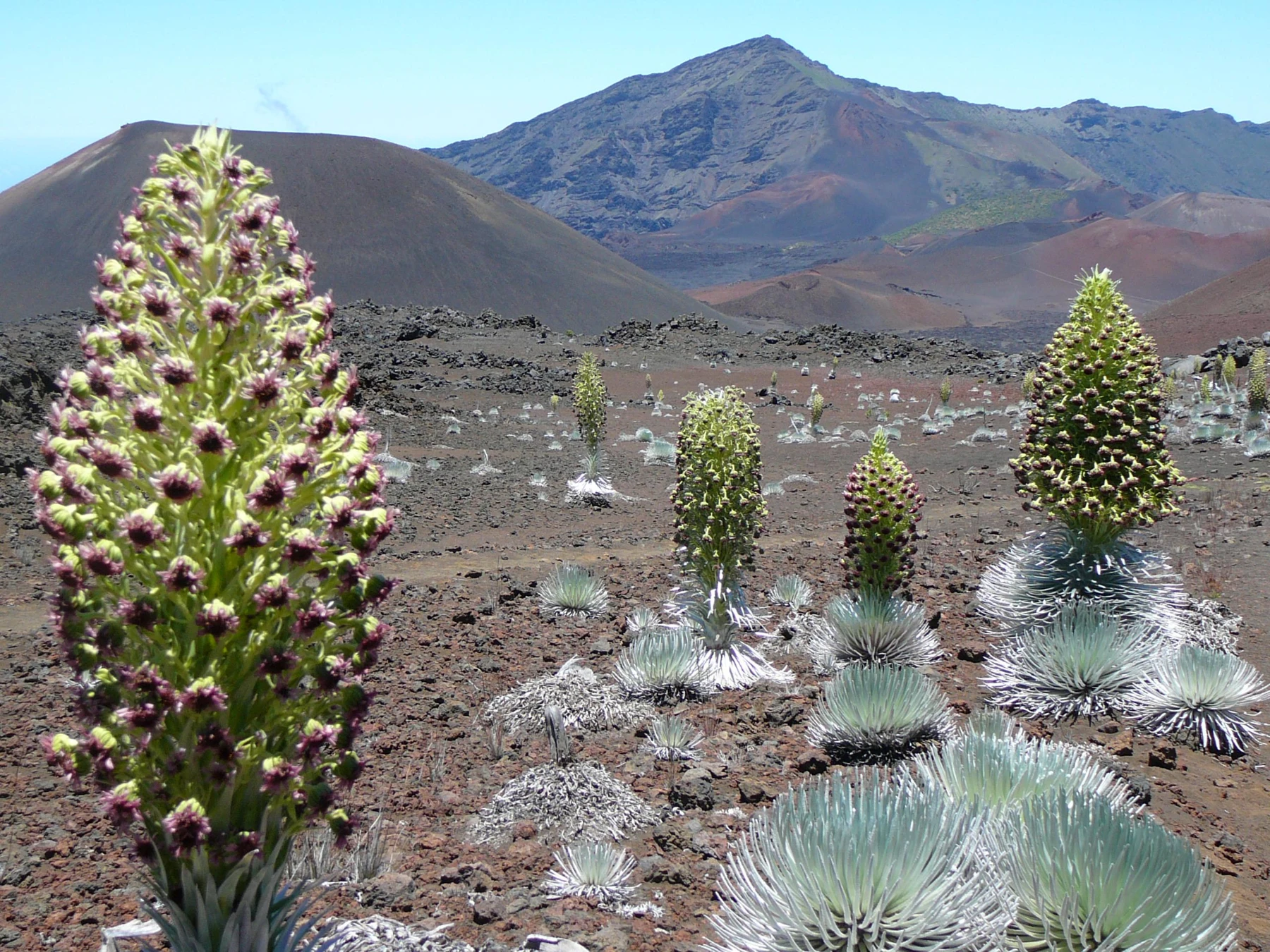
From the established path, the children admired a silvery, spiky rosette: ʻāhinahina, the Haleakalā silversword. Its leaves spread around the center like a carefully arranged star.
Andy kept his hands beside him. “It looks like a plant that dressed for a moon party.”
Ana looked closely without leaning off the path. “What does the silver actually do?”
They learned that the plant's silvery hairs helped reflect intense sunlight. Its fleshy leaves and low rosette form were among the features that helped it survive the summit's demanding environment.
Allie wrote form and function. A feature that looked beautiful could also matter to survival.
Augie tucked his chin into his jacket. “It has its own clothes.”
“The comparison helps,” Allie said. “But a plant doesn't go shopping for a coat.”
Over many generations, populations had evolved in this environment. An individual plant did not decide to turn silver because the day was sunny.
A photograph showed a tall flowering stalk rising above the rosette. Silverswords could grow for many years before their one flowering event; after producing seeds, the flowering plant died. That did not mean every silver rosette they saw would bloom during this visit.
Andy drew a tiny calendar beside his sketch, then put a question mark over the date.
“No appointment we can book,” Ana said.
This particular silversword subspecies was found naturally only on Haleakalā. The children learned the word endemic, which described a natural range limited to a particular place.
That made protecting the plant's home especially important. Its fragile roots extended beyond what a visitor could see. Walking closer for a photograph could damage more than the obvious leaves.
Augie looked at his shoes, then at the path.
“Parking here,” he said.
The children drew the plant rather than collecting any part of it. Their pencils could travel where their feet should not.
6. A goose with its own lunch plans
Back in their visitor materials, Ana found a bird with a black head, a brown body, and pale furrows along its neck.
“Nēnē,” she read. “The Hawaiian goose.”
Andy attempted a neck pattern in the notebook. It looked like the goose had borrowed a striped scarf.
“The real bird doesn't need my scarf,” he said. “It already has excellent neck design.”
Nēnē could be found in grassland and shrubland, including areas along park roads. They ate plant foods such as grasses, leaves, flowers, and berries. They did not need a child's crackers to complete the menu.
Augie held his snack container firmly shut.
“This lunch is not a bird program.”
“Correct,” their parent said.
The family learned that people had helped return nēnē to Maui after they had disappeared from the island. Protecting habitat, managing introduced predators, and careful driving all contributed to their continuing story.
Allie drew three linked circles: bird, habitat, people. One animal photograph could not show all the work needed to keep a population healthy.
Ana added a reminder to leave wildlife space. Watching a bird did not require making it turn around, come closer, or pose beside a child. There was no promise the family would see one in the wild today.
Andy proposed a notebook game: choose the most useful thing a visitor could do.
A: offer a sandwich. B: walk closer. C: keep a respectful distance and let it forage.
Augie pointed to C, then asked whether the goose could also choose C.
“The goose is already doing its own work,” Ana said. “We are the ones being tested.”
Their parent checked that everyone was ready for the next short stop. The children put away the materials. Nobody went looking for a bird in the road.
Andy added a final caption under his drawing: Scarf not included. Wild lunch provided by habitat.
7. The House of the Sun
Allie had saved a question about the mountain's name.
Haleakalā meant House of the Sun. Public park interpretation introduced them to Hawaiian moʻolelo, stories, including the account of Māui slowing the sun. They would learn from the versions and explanations shared by Hawaiian storytellers and park cultural resources, rather than inventing their own ceremony.
Ana closed the notebook for a moment.
“There's more here than a view.”
Their parent nodded. The summit was sacred to Native Hawaiians, and connections with this land continued in living knowledge, practice, and community. Hawaiian culture was not simply a collection of old stories to decorate a vacation.
The family kept their voices quiet, left stones and structures alone, and followed the permitted route. They could be curious guests without treating every place as somewhere to play.
Augie whispered that his questions were using small voices.
“Questions can be big,” Allie whispered back. “The volume can stay small.”
They learned the word mālama, to care for. Ana thought about the difference between saying a place was important and acting as though it was.
“Staying on the path is part of our care,” she said. “So is not taking anything.”
Andy looked down at a loose fragment of volcanic rock. He left it exactly where it was.
“It belongs in the mountain's collection.”
Their parent suggested another way to show respect: pronounce names carefully, listen to what people chose to share, and accept that not every cultural place or practice was offered for visitors to enter or copy.
Allie wrote only after they had stepped aside in an appropriate place. Her page had a heading and several questions for later learning, not an invented translation of things she did not understand.
For a while, the family simply watched the changing light.
Augie did not ask the sun to wait for them. He had noticed that they were visitors in a much larger story.
8. The downstairs on another day
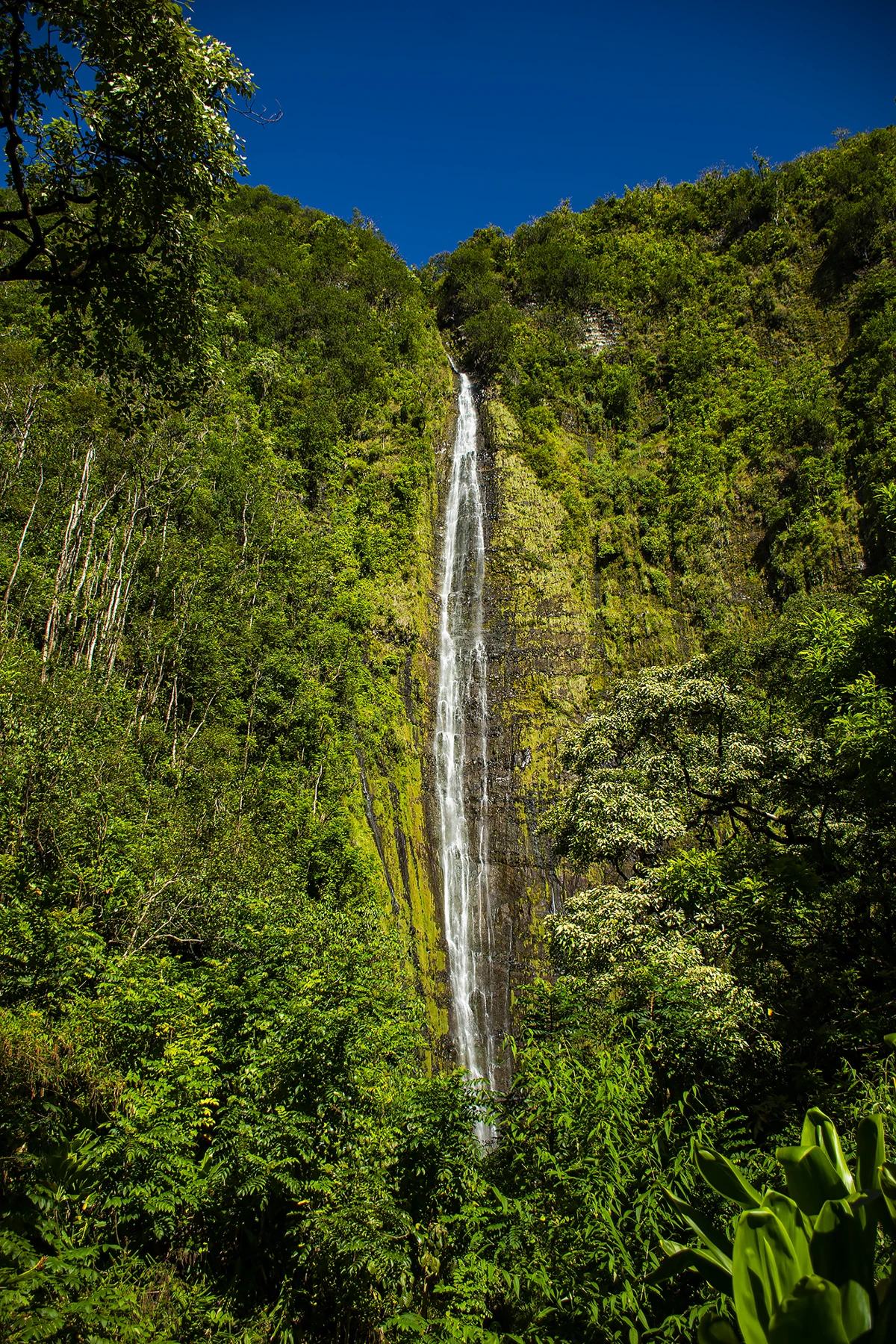
The map showed another district: Kīpahulu, on the wetter, windward coast.
Andy drew an elevator between the summit and the sea.
Ana pointed to the real roads. “This is not another stop just below our viewpoint.”
The Summit and Kīpahulu districts had separate road approaches. The family would not attempt both as a quick combined outing. Today, photographs and educational materials would help them compare places without pretending their car could travel through the map.
A photograph of Waimoku Falls showed water descending a tall green cliff. After the open volcanic ground above, the vegetation seemed to fill every spare corner.
Augie looked from one photograph to another. “Same park?”
“Yes,” Allie said. “Very different conditions.”
The coast was generally milder and wetter than the summit. Waterfalls, streams, plants, and the nearby ocean helped make the difference visible. But green scenery alone could not tell them whether a stream was safe, whether a trail was open, or what preparation a real visit required.
Their parent pointed out that flash floods and rockfalls were hazards in this district. Beautiful pools and waterfalls were not an invitation to enter water or stand beneath falling water. A future outing would follow current park advice, designated routes, and all closures.
Andy replaced his elevator with two separate planning boxes.
“Two visits. Two plans.”
Ana liked that much better.
The children learned that Kīpahulu was also a living cultural landscape. The relationships among land, water, people, and the ocean mattered here as well as above.
Allie joined the mountain outline to the coast with a broad arrow. Unlike Andy's imaginary elevator, the arrow represented a connection, not a road.
Augie added a small raindrop.
“The downstairs has its own weather.”
“And its own questions,” Ana said.
Their map was no longer one beach, one palm tree, and a short ladder. It had become a whole mountain's worth of learning.
9. Four steps that stay on paper
As the family prepared to leave, Allie returned to the first page.
“Have we found the cloud staircase?”
“Not one to climb,” Ana said. “A way to connect the changes.”
They made four broad steps on paper. The lowest held the sea and moist air. The next held rising air, cooling, and clouds. A higher step held changing vegetation. The last held the open summit, with notes about cold, sun, wind, and specialized life.
Their parent reminded them that the real mountain was not a perfect set of levels. Boundaries varied, weather changed, and one simple drawing left out many details.
Andy put a little uneven edge on the steps.
“So we remember it isn't a building.”
Augie added a sign: paper feet only.
Allie asked what each explorer would keep in mind.
“The crater has an erosion story,” Ana said. “Volcano doesn't explain every shape by itself.”
“The plant isn't wearing silver just to look fancy,” Andy said. “And its roots need room even where we can't see them.”
“The mountain is someone's sacred place,” Allie said. “Our visit needs care.”
Augie considered his page. “Clouds are not pillows.”
“That may be our most useful transport discovery,” Ana replied.
Everyone checked pockets, wrappers, jackets, and bottles. Their parents were ready to follow the planned route down, adjusting for conditions. The children stayed buckled in and watched from their seats as the landscape changed again.
Their next chapter would take them to Petrified Forest National Park, where a stone log would present another puzzle about appearances, evidence, and time.
Andy drew a tree wearing rock shoes.
Ana smiled. “Keep that as your first idea. We'll investigate.”
Augie looked back toward the mountain.
The staircase remained in the notebook. The clouds continued their own journey. And the four explorers carried a better question than the one they had arrived with: not simply what a place looked like, but how its land, weather, life, and people belonged together.
Explorer’s notebook
Nine discoveries to take home
- Haleakalā National Park is on Maui in Hawaiʻi. The summit reaches 10,023 feet (3,055 meters) above sea level.
- Elevation, exposure, and moisture help create different environments on the same mountain.
- Rising moist air can cool enough for water vapor to condense into cloud droplets.
- The trade-wind inversion can limit rising moist air, helping explain why the summit is often above a cloud layer. That view is not guaranteed.
- Haleakalā is a volcano, but its broad summit depression owes much of its shape to erosion and landslides; later eruptions added lava and cinder cones.
- The Haleakalā silversword has features suited to its demanding environment and fragile roots that need protection.
- Nēnē have their own natural foods. Space, careful driving, and habitat protection help them more than visitors' snacks.
- Haleakalā is sacred to Native Hawaiians. Living cultural connections deserve respect and care.
- The wetter Kīpahulu coast and the Summit District need separate visit planning, appropriate preparation, and current safety information.
Five small adventures
- Draw a mountain of questions. Sketch coast, slope, cloud band, and summit. Label temperature, moisture, wind, and living things. Add a note that your diagram simplifies a variable landscape.
- Watch clouds from a safe place. With a grown-up, observe from a window or suitable sheltered location. Sketch the visible shapes and changes. Never look directly at the sun or remain outside during hazardous weather.
- Pair a feature with a job. Draw a silversword from a photograph. Link its silvery hairs, fleshy leaves, or rosette form with a function described by a reliable source. Keep imaginative accessories in a separate drawing.
- Make two visit plans. Use official park information with a grown-up to compare the Summit and Kīpahulu districts. List preparation, suitable activities, and reasons to change each plan. A map connection is not necessarily a road connection.
- Build a visitor-care checklist. Include clean footwear and gear, established paths, wildlife space, quiet respect for cultural places, and leaving rocks and plants where they belong. Choose one action to explain to another explorer.
Talk it over
- Why can a sunny summit still require warm clothing and sun protection?
- What is the difference between invisible water vapor and a visible cloud?
- How can volcanic eruptions and erosion both help explain the same landscape?
- Why should we learn about cultural meaning as well as geology when visiting a park?
Words for your explorer pack
- Elevation: height above a reference level, often sea level.
- Windward: facing the direction from which the wind comes.
- Condensation: a change from water vapor to liquid water.
- Inversion: an atmospheric layer where temperature increases with height.
- Erosion: removal and transport of material by processes such as moving water.
- Cinder cone: a mound built around a volcanic vent by erupted fragments.
- Endemic: naturally restricted to a particular geographic area.
- Mālama: a Hawaiian word meaning to care for.