1. Who ordered the giant boots?
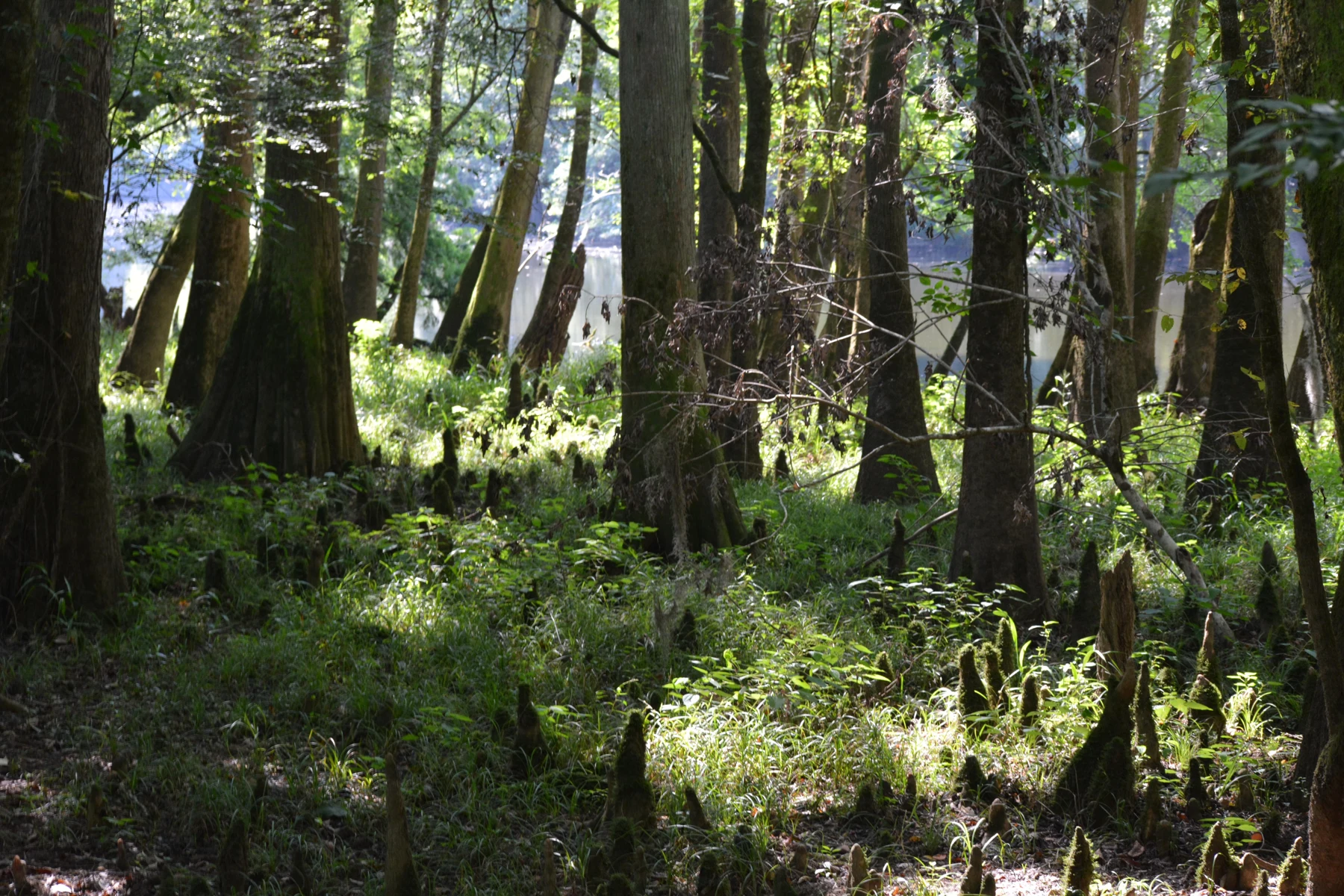
Augie stopped at the edge of the family's permitted walking route and looked at a tree.
“That one needs boots.”
The trunk widened toward the ground, spreading into a broad base. Beyond it, other trees rose through the green forest. Between them stood knobby wooden shapes that looked like an audience of very small, very patient people.
Andy inspected them from the path. “Maybe those are its spare feet.”
Ana shook her head. “Trees would lose an unreasonable number of socks.”
After Dry Tortugas and its fort surrounded by seawater, the four explorers had arrived at Congaree National Park in South Carolina. Water was still part of the mystery. Here, however, it could spread through a forest instead of surrounding a tiny island.
Allie opened their notebook. The Trees With Wet Feet. How can water help a forest instead of simply drowning it?
Their parents had checked current conditions and asked which routes were suitable that day. The family would follow open paths and boardwalk sections, respecting any closure signs. They would not wade onto a flooded route to see what happened next.
Augie checked his own shoes. “Mine are still dry.”
“Excellent scientific observation,” Ana said. “Let's keep it that way.”
The place was much more than a collection of trees standing in puddles. The park protected an old-growth bottomland forest, part of a landscape shaped by rivers, changing water levels, and a very long history of people and other living things.
Andy looked upward until his hat tipped backward.
“There is a lot of forest above the forest.”
Allie wrote that down too. To solve their puzzle, they would need to look up, look down, and imagine water moving through places where they could not currently see it.
Augie contributed one final instruction: “Don't forget the boots.”
2. The river has a much wider address
At the visitor center, Ana traced a river on the park map. Then she pointed to the broad area beside it.
“So this land is connected to the river, even when it isn't underwater?”
That was the idea of a floodplain: low ground beside a river or stream that could be covered when water rose. The river's usual channel was only part of the story.
Andy imagined writing an address. “Mr. River, one long watery street, plus a neighborhood when it rains.”
“Please don't mail anything into it,” Allie said.
Floodwaters from the Congaree and Wateree Rivers could move through the bottomland forest, bringing sediment and nutrients. The water did more than wet the trunks. It helped shape the ground and the conditions in which plants grew.
Ana added arrows across their map. “The forest and rivers exchange things.”
“Like me and Andy exchange crackers,” Augie suggested.
“Except the forest does not complain about the broken ones,” Andy said.
Their parents helped explain a useful difference. Some places stayed wet for long periods; others flooded periodically and later became drier. The word “floodplain” did not mean that every square foot was a permanent pond.
Allie drew two pictures of the same patch of forest: water between the trees in one, exposed ground in the other. Both could belong to the same place at different times.
“Then a photograph can tell the truth and still leave out half the story,” Ana said.
Andy added a tiny mailbox to both drawings. The river's address had changed, but its connection to the neighborhood had not.
Augie wanted to know whether fish ever visited the trees.
“That is a better question than whether trees wear boots,” Allie said.
He considered this generous assessment.
“I can have two good questions.”
3. Rain somewhere else can become water here
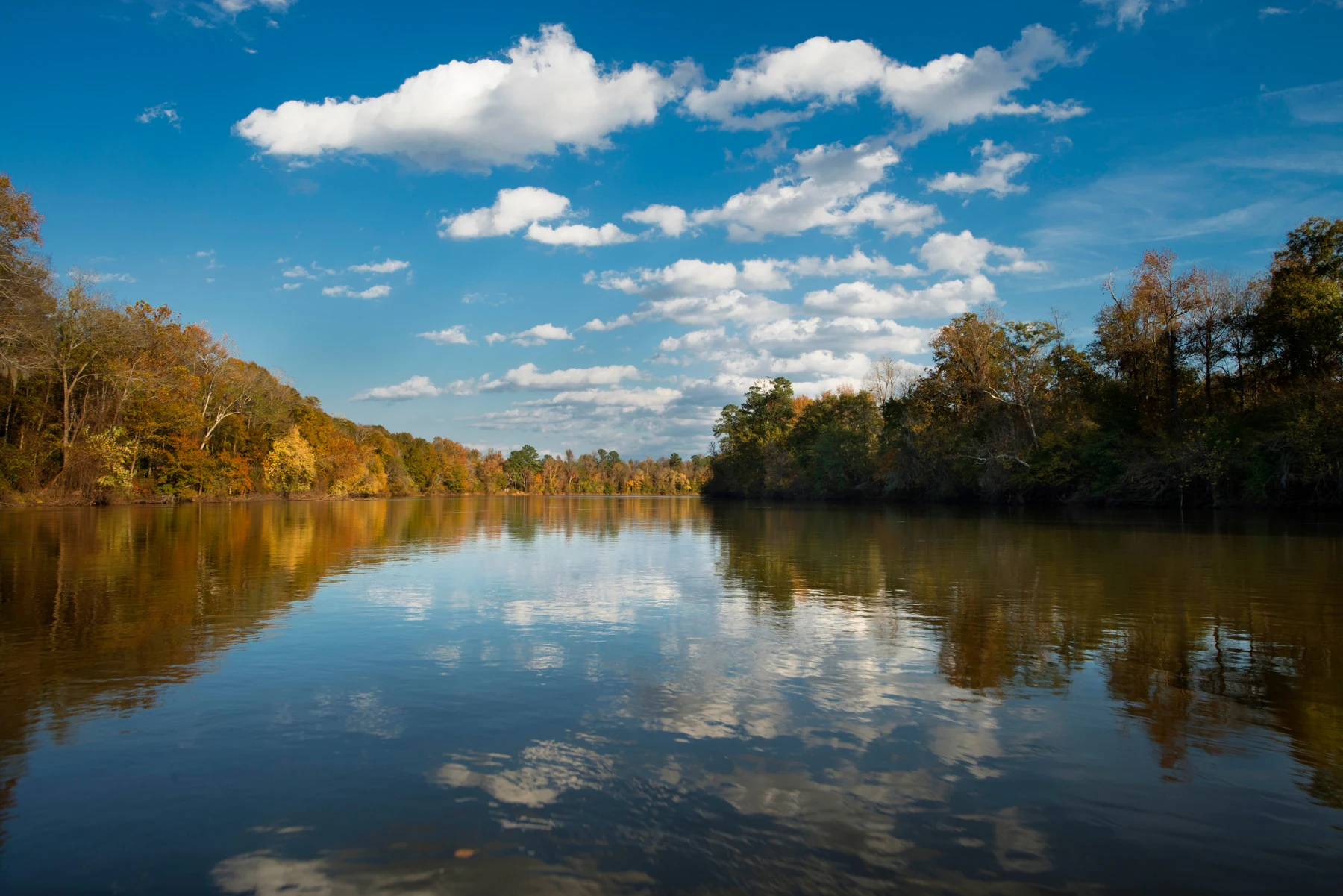
The sky above the family was not a complete forecast of what the river would do.
“All the water doesn't have to fall right on this tree,” Allie said, looking at the larger map.
Rain could fall upstream and move through streams and rivers before reaching another place. An area of land draining toward a shared waterway was a watershed.
Andy drew a raindrop at the top of a page and a river at the bottom. “A drop can have a travel itinerary.”
“Without a suitcase,” Ana said, remembering the birds of Dry Tortugas.
At a picnic table, their parent helped them make a simple paper model. They gently crumpled scrap paper, opened it partway, and studied its ridges and valleys. No water was needed. They imagined where a drop would move downhill and which low lines might join.
Augie placed his finger on a little valley. “This is the water road.”
Andy chose a high ridge. “Mine is the scenic route.”
“Gravity has some feedback,” Ana told him.
The model did not reproduce Congaree's land or predict a real flood. It showed why places far apart could be connected. Their parents used official conditions and forecasts for actual decisions, not a paper mountain or a glance through the car window.
Allie added upstream matters to their notebook.
That thought changed their earlier adventures too. A canyon's river, a lake's water supply, and a forest flood could involve much more land than one view revealed.
Andy suggested drawing every place their imaginary raindrop had visited. The page became crowded almost immediately.
Ana turned it over. “The planet has declined to fit on one sheet.”
Augie drew the drop a happy face.
“It likes traveling.”
4. The knee committee
The knobby shapes near the cypress trees were called knees. They grew upward from parts of the root system.
Andy bent his own knee, then looked back at the wooden ones. “Mine is considerably more bendy.”
“Please don't demonstrate on the tree,” Ana said.
Bald cypress could grow in wet environments that challenged many other trees. Its wide base and unusual roots made it an excellent subject for looking closely. Looking did not mean stepping off the route, testing a knee as a stool, or climbing onto roots.
Augie pointed to a cluster. “A tree meeting.”
Allie gave the drawing a title: The Knee Committee.
Then came the difficult question: what exactly did the knees do?
Over time, scientists had proposed different explanations, including roles involving support or gas exchange. The question was not settled by the shape alone. Their parent helped them distinguish the firm observation—knees were connected to the roots—from proposed explanations of their functions.
Andy started writing “tree snorkels,” then stopped.
“We can say it looks like that,” Ana said. “But not that we've proved it.”
Allie divided the notebook into two columns: we can observe and we want to investigate. The knees went in both, with different sentences.
Augie wanted a third column: funny names.
“That is permitted,” Allie said, “as long as it doesn't replace the other two.”
They learned something else surprising about bald cypress. Although it had soft, needlelike leaves, it shed them seasonally. A tree with needles did not automatically stay green all year.
Andy drew a cypress with an enormous laundry basket.
“For the fallen leaves?” Ana asked.
“No. All those missing socks.”
The Knee Committee remained silent. This was probably wise.
5. A little higher can be a lot different
At first, the forest had looked fairly flat. Then the explorers began noticing small differences: a low depression, a slightly raised patch, a change in the plants growing nearby.
Ana remembered the giant cliff walls of earlier parks. “Here, important height changes can be much smaller.”
On a floodplain, a modest change in elevation could affect how often ground flooded and how long it remained wet. Different tree communities occupied different conditions. Cypress and tupelo belonged to wetter low places, while other trees grew on higher ground.
Andy drew two houses on his paper model, one in a shallow dip and one on a little ridge.
“Same neighborhood,” he said. “Different puddle schedule.”
Allie liked the phrase but changed the label to different flooding conditions for the science section.
Their parents explained that roots, like the rest of a living plant, needed to exchange gases for respiration. Flooded soil could make oxygen harder to obtain. Trees varied in their ability to tolerate wet conditions, and even a flood-tolerant tree did not need every imaginable amount of water forever.
“So the answer isn't 'all trees love swimming,'” Ana said.
“Good,” Augie replied. “They don't have towels.”
The forest was a patchwork, not a single identical floor with a single identical tree. Water, soil, elevation, light, and the history of each place helped determine what could grow there.
Allie drew several overlapping patches rather than dividing the forest into neat stripes. Real boundaries could be more complicated than the lines in a notebook.
Andy added a towel shop to his imaginary map.
“Scientific status?” Ana asked.
“Unconfirmed business opportunity.”
6. Old-growth does not mean everybody is old
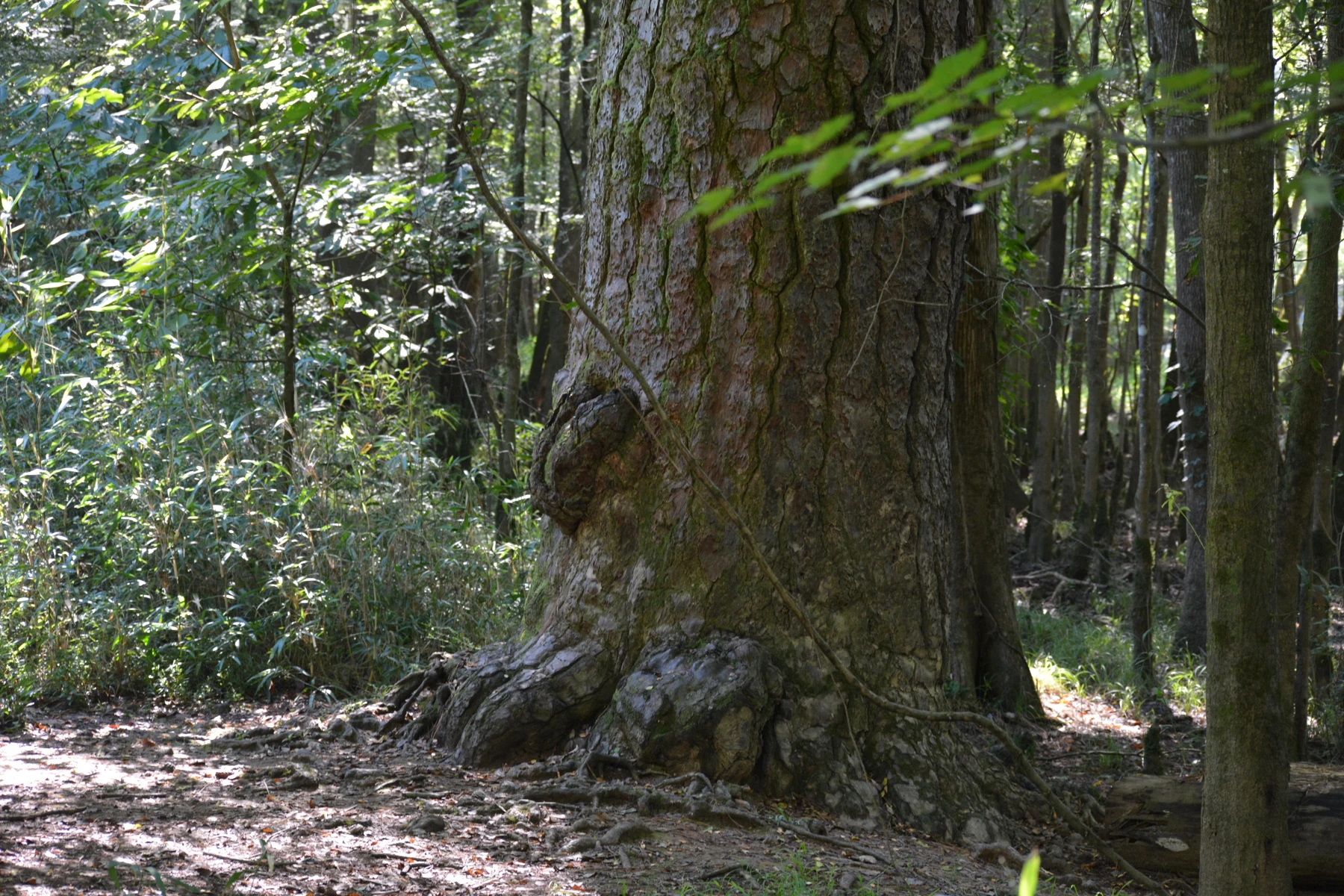
The trees above them made Andy feel that he had accidentally become smaller.
“Have I shrunk?” he asked.
Ana considered him. “Your questions are the usual size.”
Congaree was known for very large trees. But an old-growth forest was more than a lineup of giant trunks, and it did not mean every tree had the same birthday.
At an exhibit, the family explored pictures of a forest with large living trees, younger trees, standing dead trunks, fallen wood, and openings in the canopy. Time and natural disturbances created a changing structure.
“Old-growth isn't old and finished,” Allie said. “It is still changing.”
A large tree could fall in a storm and open space for more light. New growth could respond. A fallen trunk could provide habitat and become part of decomposition, as fungi and other organisms helped return materials to the ecosystem.
Andy drew a sign on a log: Still working. New department.
Ana smiled. “That is a much better label than useless wood.”
They did not pull bark off or poke into cavities to check for residents. From their allowed route, they could notice textures, openings, fungi, and signs of change without disturbing them. A standing dead tree could also be hazardous, one reason to follow staff advice and stay alert to conditions.
Augie inspected a picture of a seedling. “This one is little.”
“Yes,” Allie said. “Young trees belong in an old forest too.”
He seemed pleased by this arrangement.
Andy compared the forest to a town with tall buildings, small houses, empty lots, and renovation projects. The comparison was imperfect, but it helped him stop thinking of a forest as one object.
Ana added her own correction: “Except the logs don't need building permits.”
“Very efficient administration,” Andy said.
7. Listen for the neighbors
The family paused at a suitable spot on their route and tried an experiment: one quiet minute.
“No talking?” Andy asked.
“One minute,” Allie confirmed.
Augie held up one finger and whispered, “Starting now.”
Without their own conversation, little sounds became easier to notice. A rustle. A bird call. Leaves moving. Something they could hear without identifying.
Ana sketched a sound map with the family in the center. She put marks where sounds seemed to come from rather than drawing an animal every time she heard a noise.
“Unknown rustle,” she wrote.
Andy nodded. “Could be the chairman of the Knee Committee.”
“The minute is over,” Allie said, which was probably fortunate.
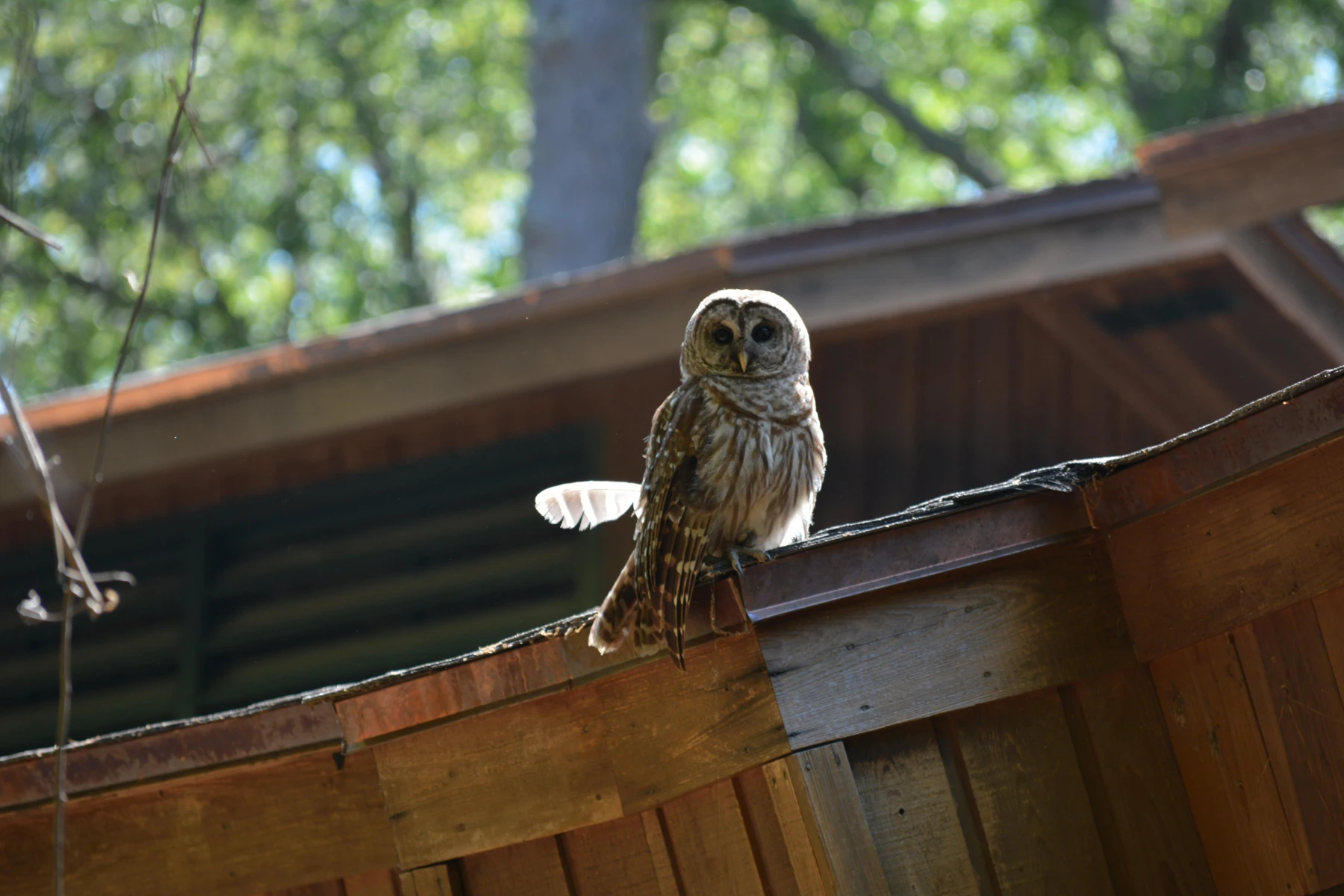
A photograph of a barred owl at the visitor center gave them another forest neighbor to discuss. Birds and other animals used different parts of the forest. Trunks, canopy, wet ground, and water each offered possibilities for shelter or food.
They had not earned an owl sighting by learning its name. Wildlife could be out of sight, resting, moving elsewhere, or simply unnoticed. The family used binoculars and photographs rather than calling animals closer or offering food.
Augie drew an owl looking down at four people.
“What is it thinking?” Ana asked.
“Those explorers need lunch.”
Their parent agreed with the owl's imaginary assessment. At their break, the family kept food and wrappers contained. A small dropped snack was still something to clean up, not an invitation to start a wildlife restaurant.
Allie added habitat is more than scenery beneath the sound map.
Andy added unknown is an acceptable answer.
Augie added an owl sandwich. Ana clarified that it was a sandwich shaped like an owl, not made from one.
The notebook was becoming quite specific.
8. The forest has human chapters too
The enormous trees made it tempting to imagine a place with no people in its history. The exhibits corrected that impression.
Indigenous people had used this river landscape for thousands of years. Later histories included farming, logging, people seeking freedom from enslavement, and people working to protect the forest.
Ana looked at the map again. “The forest could be a place to get food, a place to work, or a place of refuge.”
“And those aren't all the same experience,” Allie said.
Their parents helped explain the word refuge: a place offering shelter or safety. For people escaping enslavement, difficult terrain could provide concealment, though seeking freedom involved grave dangers. The family did not turn those real experiences into a pretend chase or game.
Augie quietly asked, “They wanted to be safe?”
“Yes,” their parent said. “And free.”
The explorers also learned that today's protected forest had not survived simply because nobody had ever wanted its trees. Parts of the area had been logged, and the remaining forest's future had once been uncertain. People who valued it had worked to protect it.
Allie added care can change a place's future.
Andy thought about how long a tree took to grow and how quickly it could be cut down. “Protecting something can mean thinking much farther ahead than lunchtime.”
“A considerable achievement for us,” Ana said gently.
They left the exhibit with more questions about the people whose lives belonged to the landscape. The forest's story included nature and history together, rather than one replacing the other.
Augie drew a large tree with a small family beside it.
“We are the visiting chapter,” he explained.
Allie decided that was worth writing exactly as he had said it.
9. Water, light, time—and a little patience
One final display showed a different Congaree scene: tiny lights blinking in a dark forest. The family was visiting in daylight, so the lights were something to learn about, not a show they expected that afternoon.
Congaree had a synchronous firefly species called Photuris frontalis. Fireflies were beetles, and their light signals helped them communicate, especially when finding mates. The coordinated flashing occurred during a short seasonal period rather than every night of the year.
Andy pictured a firefly holding a tiny schedule.
“Blink. Blink. Important beetle meeting.”
Ana remembered the fireflies of their Smokies adventure. “Similar wonder, but we shouldn't assume the species or flashing pattern is the same.”
Allie nodded. Their notebook had taught them to notice differences as well as connections. Protecting firefly habitat mattered even on ordinary days when visitors saw no lights at all.
Before leaving, they returned to the first mystery.
“Why can this forest have wet feet?” Allie asked.
“Because it's connected to rivers,” Andy said. “Floodwater carries things and changes the conditions.”
“Different places stay wet for different amounts of time,” Ana added. “Different trees can tolerate different conditions.”
“And old forests have young trees,” Augie said. “And knees.”
Their complete answer included water, soil, light, time, living communities, and the people who cared for the place. It could not fit inside a single puddle.
Their parents mentioned the next park on their journey: Great Sand Dunes. Enormous piles of sand brought a new landscape to imagine and new questions to pack.
“Will it need giant boots?” Augie asked.
“We'll investigate,” Allie said.
Andy closed the notebook. “First, I propose we check whether our own feet need lunch.”
“Feet don't eat lunch,” Ana replied.
“Mine have traveled a long way. They may have developed ambitions.”
Augie checked his shoes one more time. Dry, present, and making no requests.
A very successful expedition.
Explorer’s notebook
Nine discoveries to take home
- A floodplain is low ground beside a waterway that can be covered when water rises; it need not remain underwater all year.
- Floodwaters connect Congaree's forest with the Congaree and Wateree Rivers, carrying sediment and nutrients.
- A watershed links land and waterways. Rain upstream can affect water levels somewhere else.
- Cypress knees grow from the root system. Their precise functions remain subjects for investigation; a funny resemblance is not proof.
- Bald cypress sheds its needlelike leaves seasonally. Not every tree with needles stays green all year.
- Small differences in elevation and wetness can help create different plant communities.
- An old-growth forest includes change, younger trees, fallen wood, and varied habitats as well as large old trees.
- Congaree's human history includes Indigenous use, forced labor and freedom seeking, logging, and conservation.
- Fireflies are beetles. Congaree's synchronous species and seasonal activity should not be confused with an all-year light show.
Five small adventures
- Make a paper watershed. Gently crumple scrap paper, open it partway, and trace imaginary downhill water routes. Which valleys join? This model cannot predict a real flood.
- Try a sound map. With a grown-up, pause in a safe place for one quiet minute. Mark sounds around a center dot. Write “unknown” when you cannot identify a source; do not use calls to lure wildlife.
- Draw a changing forest. Include a large tree, a seedling, a fallen log, and an opening in the canopy. Add one question about each.
- Separate observation from explanation. Write one thing you can see, one possible explanation, and one question you still have. Keep funny names in their own column.
- Check a route before a visit. With a grown-up, read current official conditions and a trail map. Find out how flooding or repairs might change a plan. Never enter floodwater to test your prediction.
Talk it over
- How could a forest photograph showing dry ground and another showing water both be accurate?
- Why might a small change in ground height matter to a tree?
- Why is an old-growth forest more than a collection of old, tall trees?
Words for your explorer pack
- Floodplain: low land beside a river or stream that can flood.
- Watershed: land that drains toward a shared waterway or outlet.
- Sediment: particles such as sand, silt, or clay carried or deposited by water and other processes.
- Nutrient: a substance organisms need for growth and life.
- Canopy: the upper layer formed by tree crowns.
- Decomposition: the breakdown of dead organic material.
- Refuge: a place offering shelter or safety.
- Synchronous: occurring with coordinated timing.