1. Please welcome the sand
Andy faced the dunes and raised an imaginary microphone.
“Ladies and gentlemen, tonight's performer has approximately a billion feet.”
“Grains,” Ana said. “And it's morning.”
Augie waved. “Hello, sand.”
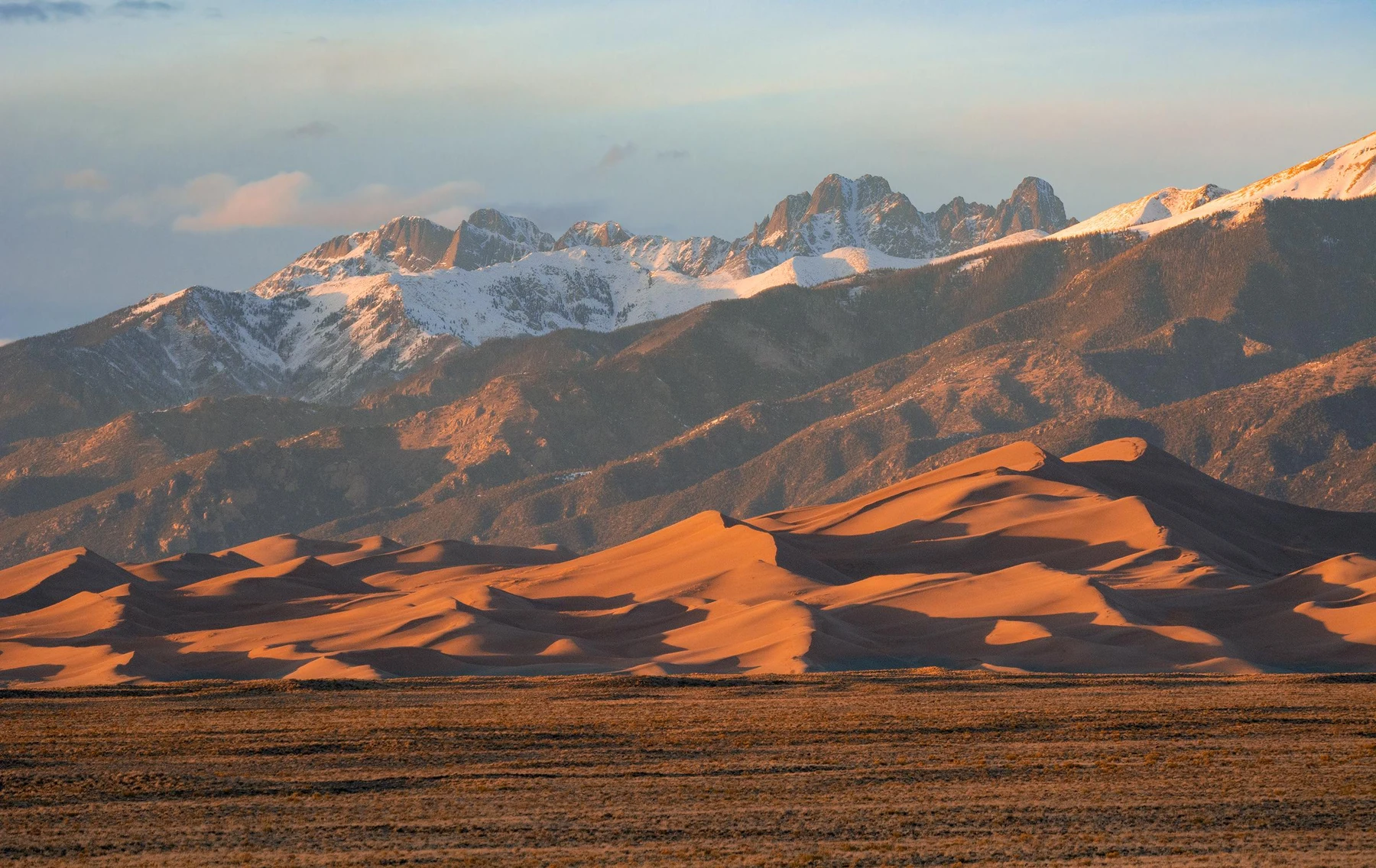
The four explorers had reached Great Sand Dunes National Park and Preserve in Colorado. After Congaree's floodplain trees, the landscape looked astonishingly different. Pale ridges rose in front of the Sangre de Cristo Mountains, with grassland spreading across the foreground.
Allie had found something intriguing in the park's educational material: sometimes sand here made a deep humming or booming sound.
Not a bird above the dunes. Not somebody playing a speaker behind them. The moving sand itself could produce sound.
Augie looked suspiciously at the nearest slope. “Does it know my song?”
“We need to investigate before taking requests,” Allie said.
Their parents had checked conditions, weather, and suitable places for a short exploration. The family had water, sun protection, and closed-toe shoes. They would stay together and keep their plans flexible rather than treating the highest dune as an appointment they had to reach.
Andy opened the notebook to a clean page. The Singing Sand Experiment. Question: how can a pile of tiny grains make a big sound?
Ana added a second question: Does every sound in sand come from the same thing?
That was important. Andy's shoes made little scrapes. A breeze rustled nearby grass. Augie's bottle clicked against his bag. There were already plenty of sounds without a dune giving a concert.
They paused to listen.
For the moment, the sand offered no song.
“Maybe it's shy,” Augie whispered.
“Or,” Allie said, “maybe the conditions matter.”
2. A mountain made of travelers
Before solving the sound, they needed to understand what a dune was doing here.
Andy studied the enormous ridges. “Did somebody deliver the beach to the wrong state?”
“This is not an ocean beach,” Ana said. “We have visited one. There are differences.”
Allie pointed toward the mountains and valley on their map. Over long periods, water had carried sediment into the San Luis Valley. Ancient lakes and later smaller bodies of water helped gather and sort material. When sand became exposed, wind could move it.
The grains had histories. The dune was not a mountain made from one solid slab of rock. It was an accumulation of countless small pieces that could move relative to one another.
Augie inspected the surface from beside his parent. “Little travelers.”
“Without suitcases,” Andy said.
Ana gave him a look. Their imaginary suitcase joke had traveled through several parks already.
At an exhibit, they compared pictures of large stones, sand, and finer sediment. Different sizes behaved differently under wind and water. A gust that moved a grain would not necessarily carry a big stone away.
Andy drew a pebble with an airline ticket. The flight was canceled.
The family's first useful model was simply a drawing: mountains and water → valley sediment → wind-moving sand. Allie kept it broad, leaving room for the landscape's long and complicated history.
“A diagram can help,” she said. “But three arrows don't explain every grain.”
Augie drew a grain with a question mark over it.
“This one forgot where it started.”
Ana smiled. “Then we should be careful about claiming we know.”
The dunes were beginning to look less like stationary hills and more like a great gathering of travelers, paused in shapes that could change.
3. The wind changes its mind
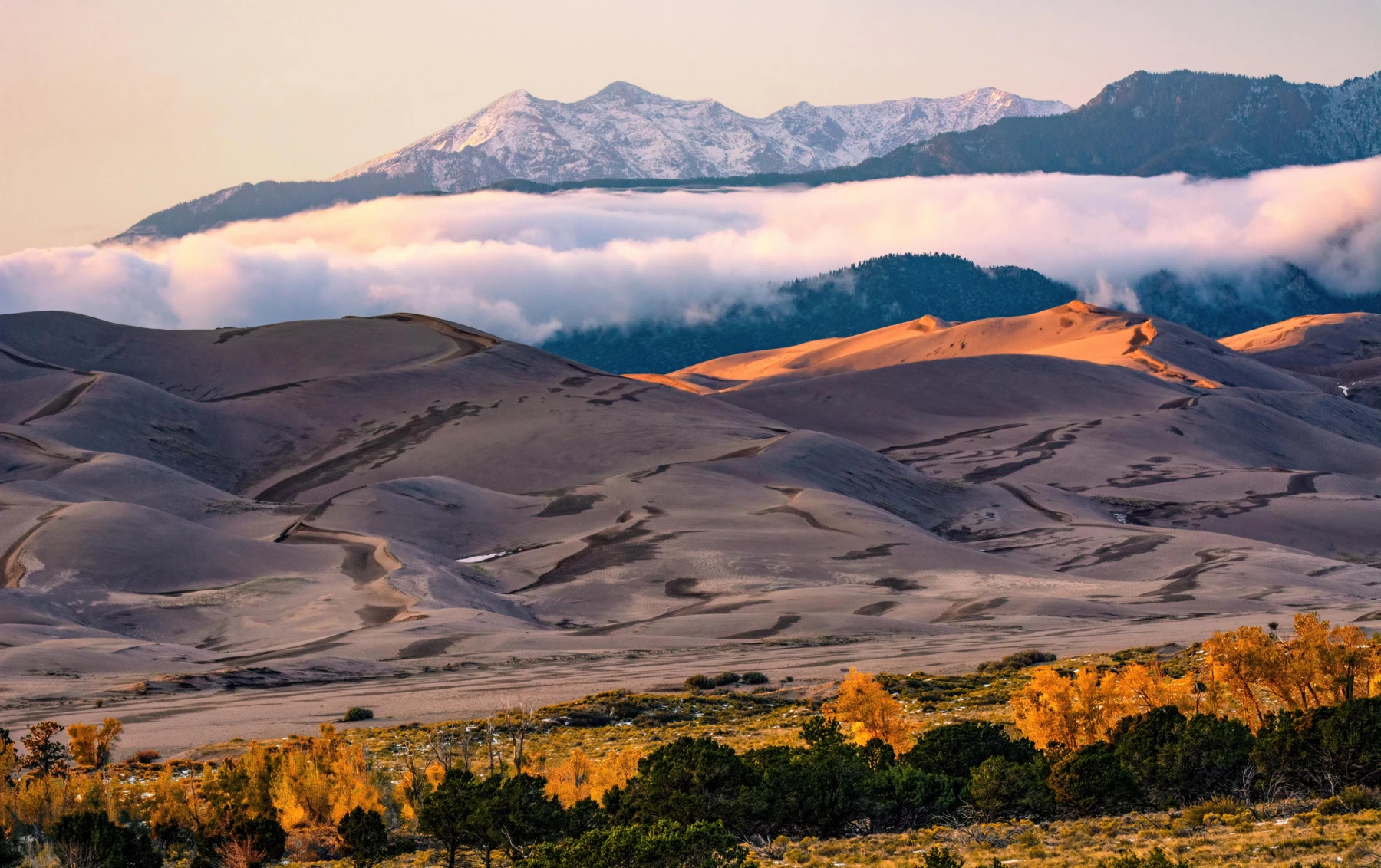
From their viewing spot, the four noticed long crests, bright slopes, and darker shaded faces. Andy tried to draw one continuous ridge and ran out of page.
“The dune has declined to fit,” he announced.
Ana suggested using a smaller drawing rather than a larger notebook.
The family learned that winds did not always blow the same way. Prevailing winds pushed sand toward the mountains, while opposing storm winds could move crests back the other way. Those changing directions helped build the dunes' impressive forms.
Allie drew arrows approaching a sand ridge from two sides.
“Like two people making a bed,” Andy said. “Except both keep pulling the blanket toward themselves.”
“And the blanket is several million tiny pieces,” Ana added.
Different arrangements of wind could create different dune shapes. Some dunes reversed their crests with opposing winds. Star dunes had ridges extending in several directions from a summit.
Augie drew a star with sand-colored points.
“A useful name,” Allie said. “But the shape is best understood from above, not by expecting a perfect star at your feet.”
The family did not launch anything to inspect it. Photographs and maps could provide a view they did not have from the ground.
Andy put three arrows around his imaginary dune and asked what would happen if the wind changed again. The others proposed possibilities, then admitted their paper was not a forecasting machine.
“Wind, sand supply, plants, and the land all matter,” Allie said. “One arrow isn't the whole recipe.”
Augie thought recipes required a bowl.
Ana pointed toward the valley. “An unusually large mixing bowl.”
Andy pretended to read a recipe: “Add sand. Stir for a very long time. Do not attempt with the kitchen fan.”
Their parent strongly approved the final instruction.
4. The recording and the very ordinary shoe
Back with the park's educational resources, the family listened to an NPS recording of singing sand at a comfortable volume.
The sound was low and strange: a sustained hum or boom, rather than the quick little crunch Andy had heard under his shoe.
Augie widened his eyes. “The sand has a giant tummy.”
“That is one description,” Ana said. “Now let's find the explanation.”
Under suitable conditions, a layer of sand sliding down a dune could generate vibrations and sound. Scientists studying singing dunes had investigated how the relative motions of many grains could become coordinated. The explanation involved moving grains and their interactions, not a hidden singer living beneath the surface.
Allie wrote many small movements → a larger sound.
Andy asked whether any sand in any box would do it.
“No,” Ana said. “Hearing a recording from this place doesn't mean a handful at home will behave the same way.”
Grain properties, dryness, and the way the sand moved mattered. Their experiment would compare evidence, not promise to turn a sandbox into an instrument.
They made a listening chart: footstep scrape, wind or grass, and booming-dune recording. Beside each, they wrote what was moving and what they could actually hear.
Augie added Andy talking.
“Do we need that category?” Andy asked.
“It is the loudest sample.”
The chart helped them avoid an easy mistake. Sounds in the same landscape could have different causes. The deep dune recording was not simply every footstep amplified.
They would not trigger a steep sand slide to test the idea, and they would not dig a deep hole to search for the performer. Listening, looking, and comparing a reliable recording were enough for their investigation.
Andy drew a dune with a tiny microphone.
Ana labeled it imaginary equipment.
Listen with a grown-up: the NPS singing-sand recording →
5. An experiment that can say “not today”
Allie proposed a fair question: “What have we learned if we don't hear the dunes boom outside?”
Andy thought about it. “That our visit was too short?”
“Possibly,” Ana said. “But not necessarily.”
A sound might require conditions that were not present where and when they listened. Their failure to hear it during one short visit would not prove that it never happened.
They planned a quiet observation from an appropriate spot approved by their parents. No shouting at the slope. No speaker playing a pretend answer. No racing onto steep dunes to make something happen.
Augie cupped one hand behind his ear.
“I am ready for science.”
They heard a breeze, their own breathing, and a distant voice. Andy heard his jacket rubbing against his bag. They did not hear a clear dune boom.
Allie wrote exactly that: No booming sound identified during this observation.
Ana nodded. “Better than 'the dunes are broken.'”
Andy added a note underneath: No refund requested.
At their rest stop, they compared the notebook result with the recording. One was evidence of what had been recorded under other conditions. The other described what their family had heard during their own brief observation. The two did not contradict each other.
Their parent helped them separate three things: the question, the observation, and the interpretation. An interesting experiment did not need to end with the answer somebody hoped for.
Augie inspected their chart.
“Can I write 'not today'?”
“Yes,” Allie said. “That is sometimes an excellent scientific sentence.”
He wrote a large N, then asked for help with the rest.
Andy decided the imaginary dune concert poster needed a small notice: Performances depend on sand, motion, and circumstances.
Ana suspected the ticket office would be very quiet.
6. The creek that helps return the sand
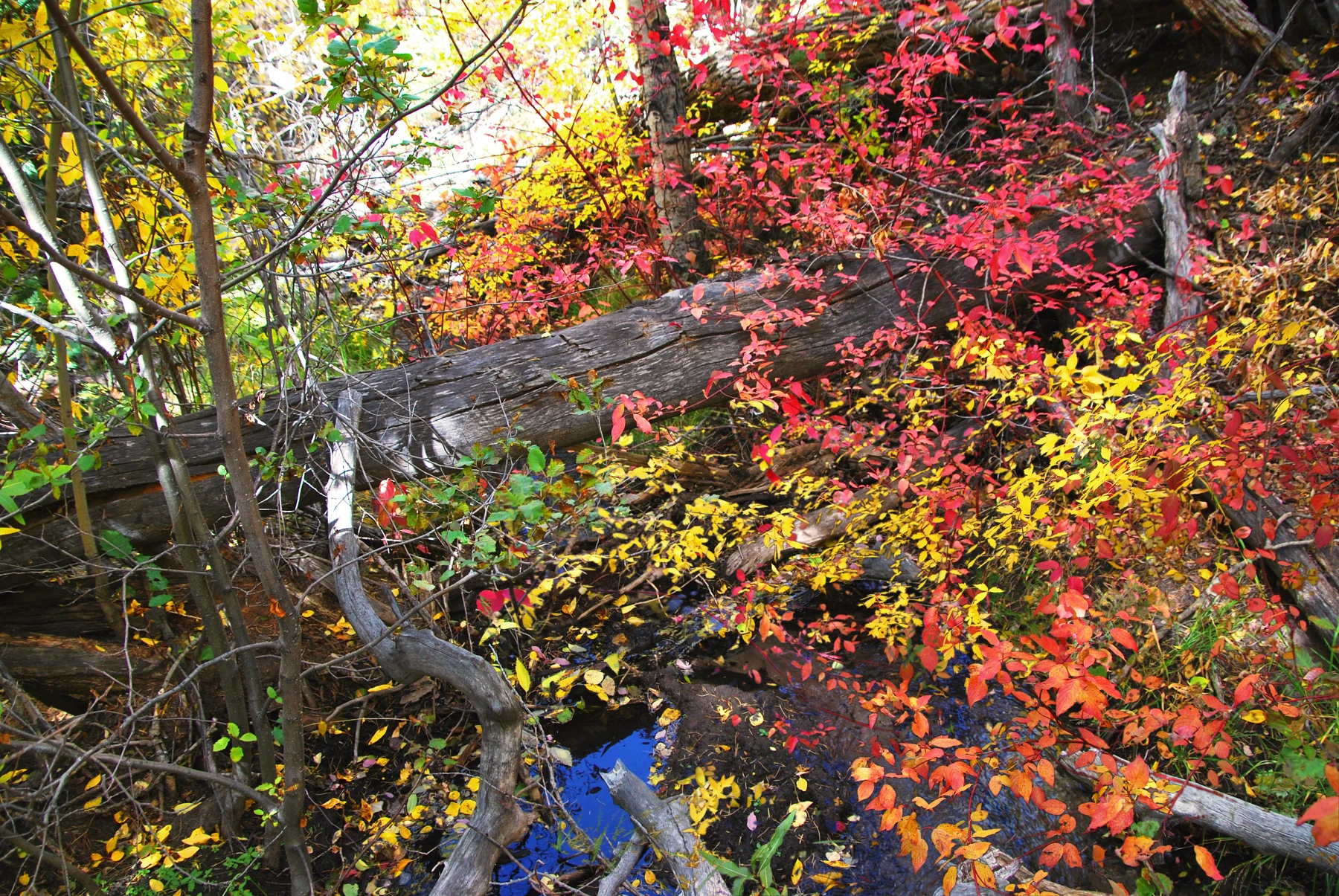
Water reappeared in their investigation, even though the scene looked much drier than Congaree.
“Water again?” Andy said. “It is following us.”
“More likely we're noticing it,” Ana replied.
Medano Creek and Sand Creek were part of the dunes system. Flowing water could capture sand along the mountain side of the dunefield and carry it back toward the valley, where wind could move it again.
Allie drew a loop instead of a one-way arrow: wind → dunes → creek → valley → wind.
“A sand return service,” Andy said.
Augie wanted to put a stamp on it.
They also learned about surge flow. Under the right combination of water, slope, and a mobile sandy bed, sand formations could temporarily hold back water and then break down, sending pulses downstream.
The family used a park video to see this process. It was not an ocean tide arriving in Colorado, and it did not happen whenever anybody walked up to the creek.
Their parents checked current information rather than relying on a calendar or an old photograph. Snowpack, weather, and flow varied. A visitor might find water near the dunes in some conditions and a dry creek bed in others.
“So another honest 'not today' might belong here,” Ana said.
Allie nodded. “A place can work differently at different times.”
They pictured rain and snow high in the mountains, water moving through streams, and some water continuing below the surface. The dunes belonged to a much larger water system than the dry-looking top layer suggested.
Augie drew his grain of sand riding around the loop again.
“It forgot its stop.”
“Or it has a very long return ticket,” Andy said.
They did not need to dam a real creek or collect its sand to understand the diagram. Their pencils were doing enough construction for one day.
7. The empty sand is not empty
At first, the dunefield had seemed almost bare. A closer look at the park's wildlife material changed that impression.
A Great Sand Dunes tiger beetle had an iridescent head and a patterned back. It was a predator adapted to sandy habitat, not a miniature tiger with a very serious disguise.
Andy studied the picture. “The name had raised different expectations.”
Ana drew a beetle beside a tiger, carefully labeling which was which.
Some insects were endemic to the Great Sand Dunes region: their natural range was restricted to that area. A habitat that looked repetitive to a visitor could be a very particular home to a small animal.
Augie peered at the sand without leaving his parent's side. “Tiny houses?”
“Tiny lives,” Allie said. “We don't have to see all of them to know the habitat matters.”
The family would not chase beetles, dig out burrows, or lift plants to discover what hid beneath them. Photographs allowed close inspection without turning an animal's day into an obstacle course.
Their notebook acquired a new comparison. Andy's shoes were useful for protecting his feet, but they were very large from a beetle's point of view.
Ana drew one shoe above a beetle with an enormous question mark.
“That is why looking where we step is useful,” she said.
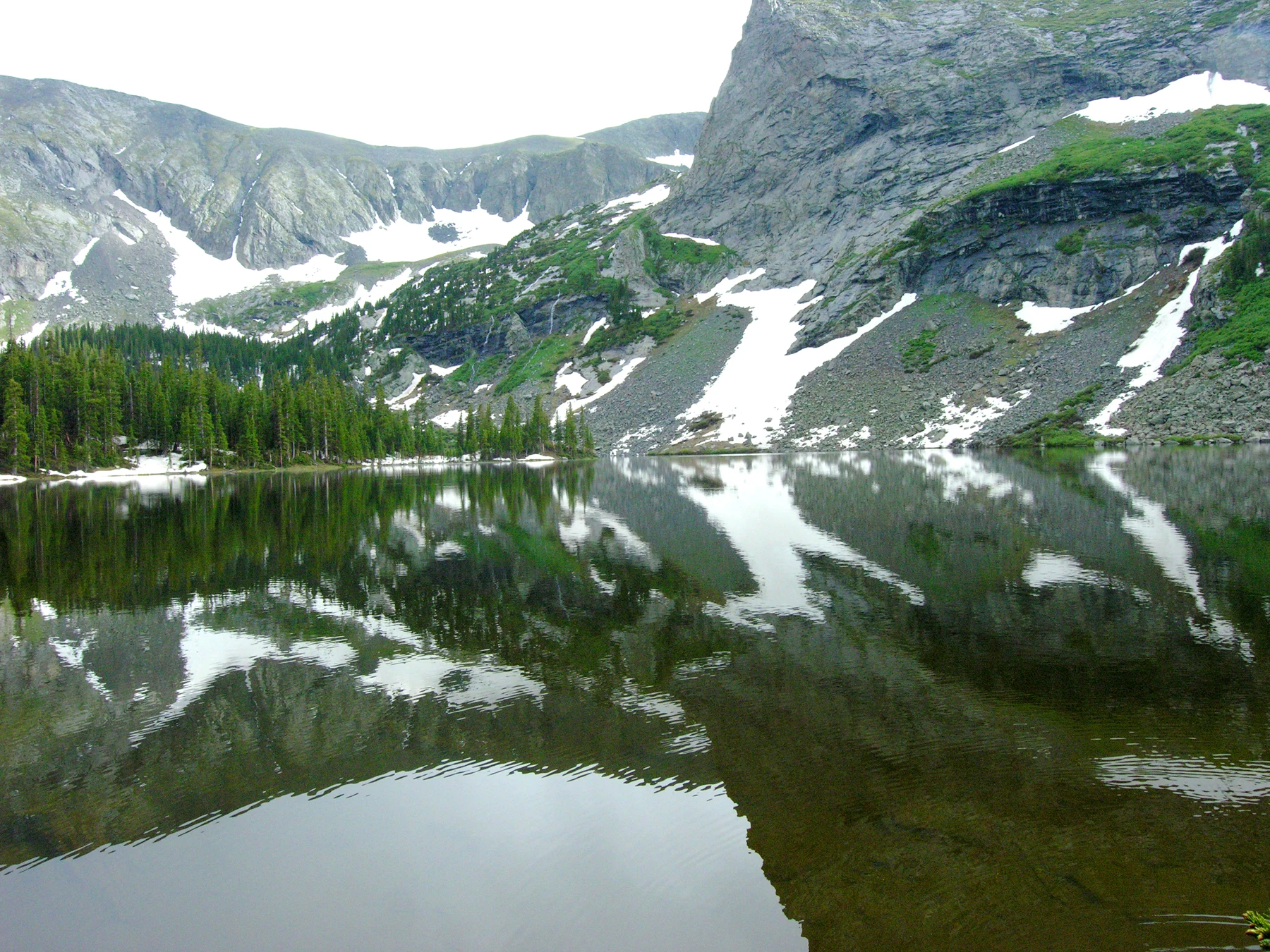
The park and preserve also included grasslands, wetlands, forests, alpine lakes, and high mountain environments. The dunes were the famous centerpiece, not the whole collection of habitats.
Allie opened a photograph of an alpine lake. Water and rock filled a scene far removed from their imagined endless sandbox.
Augie considered the mountain picture.
“Does that part sing?”
“Different questions for different places,” Ana said.
Andy proposed an album called Great Sand Dunes: Featuring Several Other Landscapes.
Allie decided it was a promising title with limited commercial potential.
8. More than a spectacular playground
The family also learned about people whose connections to this landscape began long before it became a national park.
Ute, Jicarilla Apache, Navajo, and other affiliated tribal communities maintained relationships with the Great Sand Dunes region. The park's resources linked to community voices and explained how consultation helped share knowledge and guide care for the place.
Ana looked at their notebook full of jokes. “We are visiting somewhere that is also somebody's homeland.”
Allie added that sentence beside their map. The family's adventure was one way of meeting the place, not the only way of understanding it.
They would learn from what communities chose to share publicly, rather than inventing a traditional story to explain the singing sand. A funny imaginary dune microphone belonged to Andy's drawing, not to anyone else's cultural history.
Augie wanted to know whether people had different names for the dunes.
“Yes,” their parent said. “And those names can reflect different languages and relationships with the landscape.”
They kept the question for further learning instead of trying to squeeze all those relationships into one quick answer.
Outside, light and shadow changed the shape of the view. The ridges looked softer from one angle and sharper from another. Their photographs would record a moment, not everything the place had been or would become.
Andy thought about a grain moving between valley, creek, and dune. Ana thought about the people who knew this landscape through generations. Allie thought about how much their notebook still did not contain.
Augie looked at his shoes.
There was enough sand in one of them to begin a small additional chapter.
They emptied their footwear only where appropriate before leaving, and took no sand as a souvenir.
Andy proposed a photograph of the shoe instead.
“A historic record of your discomfort,” Ana agreed.
9. The concert report
Before the family left, Allie asked for the expedition's results.
“Sand is made of little travelers,” Augie began.
“Wind can move grains and shape dunes,” Andy added. “But water helps make and maintain the larger system too.”
“Moving sand can produce a booming sound under suitable conditions,” Ana said. “That doesn't mean every scrape is the same sound, or every visit includes it.”
Allie closed their experiment chart. They had heard the recorded phenomenon, compared it with other sounds, and made an honest note about their own observation. Their experiment had produced questions and evidence without needing to stage a dune avalanche.
Andy drew a final concert review: Excellent landscape. Unpredictable performer. Would listen again.
Their parents suggested one more category: how well the explorers had looked after themselves and the place.
Water bottles used. Shoes kept on. Weather checked. No deep holes. Wildlife left undisturbed. Sand left in the park. Plans changed when needed.
Augie requested a check mark for not losing his hat.
Ana granted it.
The next adventure would take them to Canyonlands National Park, where rivers had cut a maze through rock. That sounded like another story in which water had been busy for much longer than their family could watch.
“Will the rocks sing?” Augie asked.
“We'll start by listening,” Allie said.
Andy pretended to announce the next performance. Ana lowered his imaginary microphone.
“First we should find out what's actually happening.”
The dunes stretched behind them, full of shifting grains, hidden moisture, small lives, and more questions than one notebook could hold.
Augie waved goodbye.
The sand did not reply.
“Not today,” he said, perfectly satisfied.
Explorer’s notebook
Nine discoveries to take home
- Great Sand Dunes National Park and Preserve lies in Colorado beside the Sangre de Cristo Mountains.
- Dunes are accumulations of movable sand grains, not solid rock mountains.
- Water delivered sediment to the valley; wind moved exposed sand toward the mountains.
- Opposing and changing winds help create different dune forms, including reversing and star dunes.
- Under suitable conditions, a sliding layer of sand can generate a sustained humming or booming sound. An ordinary footstep is not automatically the same phenomenon.
- A brief observation without a boom does not disprove recorded singing sand. Describe what you actually observed.
- Medano Creek and Sand Creek help recycle sand. Surge flow is a water-and-sand process that requires suitable conditions, not a guaranteed daily attraction.
- Sandy habitats support specialized living things, including endemic insects. The wider park and preserve also protect wetlands, forests, and alpine environments.
- Affiliated tribal communities maintain living connections with this landscape; their publicly shared knowledge is part of learning about the place.
Five small adventures
- Make a sound-evidence chart. With a grown-up, compare the linked NPS singing-sand recording with a quiet everyday sound. Use a comfortable volume. Describe duration and character; do not assume they share a cause.
- Write a “not today” result. Observe a safe outdoor spot briefly. Record what you noticed and what you did not detect. Explain why your observation has limits.
- Draw a sand journey. Link mountains, valley sediment, wind, dunes, and streams. Include more than one route or loop. Keep real sand and water where they belong.
- Design a paper dune. Sketch a crest and arrows from two directions, then a star dune with several ridges. These are thinking tools, not predictions of exact landforms.
- Change your scale. Draw a shoe and a small insect from the insect's point of view. How might careful visitors avoid disturbing tiny habitats?
Talk it over
- Why can a trustworthy recording and a quiet visit both be accurate evidence?
- How does water help explain a landscape that looks dry?
- What is the difference between a funny imagined explanation and a scientific explanation supported by evidence?
Words for your explorer pack
- Grain: a small particle of material.
- Sediment: loose particles transported or deposited by processes such as water or wind.
- Dunefield: an area containing many dunes.
- Crest: the upper ridge of a dune or hill.
- Vibration: repeated back-and-forth motion.
- Surge flow: pulsing streamflow associated with changing sand formations in a mobile creek bed.
- Endemic: naturally restricted to a particular region.
- Observation: something noticed or measured, distinguished from its possible explanation.