1. An appointment with some missing ice
“We are here to interview the ice,” Andy announced.
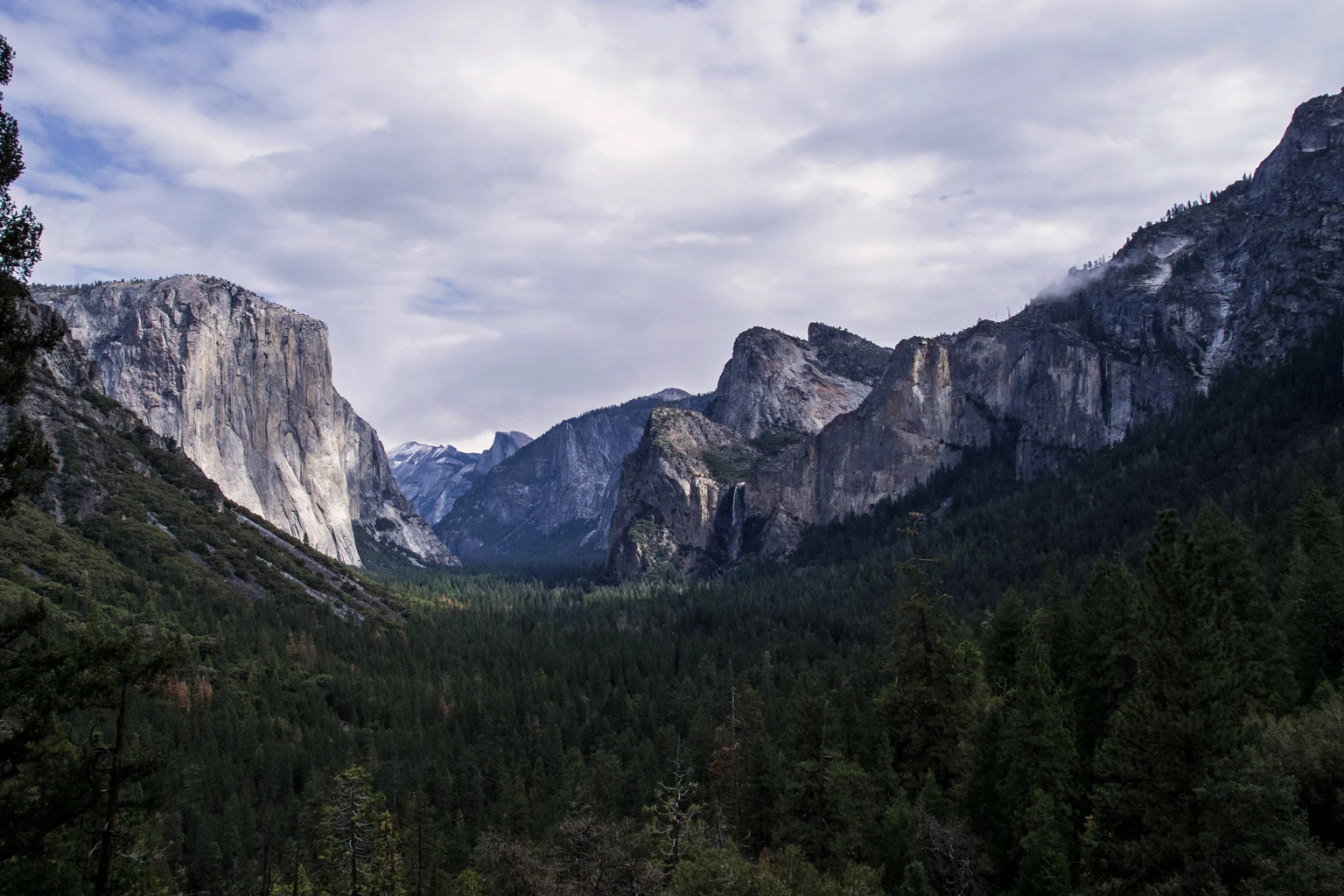
He stood beside his parents at a designated viewpoint in Yosemite National Park, California. Ahead, Yosemite Valley stretched between enormous granite walls. Trees covered the valley floor, and a waterfall dropped from a cliff in the distance.
There was one problem with Andy’s appointment.
“I don’t see any ice,” said Ana.
“Perhaps it’s late,” suggested Allie.
Four-year-old Augie checked behind Mom’s water bottle. “Not here.”
At Grand Canyon, the children had investigated missing rock. Now their notebook held a new question: How could a glacier shape a valley if the glacier wasn’t here anymore?
Allie, ten, drew two empty toolboxes. Ana, nine, labeled the first WATER and the second ICE. Seven-year-old Andy drew a tiny hammer between them.
“Neither one uses that,” Ana said.
“It’s for the interview table.”
Mom and Dad had planned several relaxed days, choosing short walks and learning stops that suited everyone. They would check weather, access, and conditions before each outing. They did not need to climb a famous cliff or reach every waterfall to understand the valley.
Augie pointed upward. “That wall has no door.”
“It has plenty of clues,” Allie said.
The family would begin by looking, then test their ideas against park exhibits. No one could ask a vanished glacier what it had done. But perhaps its work had left a signature large enough for even a small explorer to read.
Andy opened his imaginary appointment book.
“Dear Ice,” he said. “You have missed your meeting. We shall investigate without you.”
2. A river starts a shape; ice changes the furniture
From a safe viewing area, Allie traced the valley’s outline in the air. Its steep walls stood above a broad floor. This did not look quite like the narrower river-cut shapes they had studied at Grand Canyon.
Ana made a V with two fingers, then curved her hands into a U.
“These are comparisons,” she warned. “Not every valley is a perfect letter.”
“Good,” said Andy. “Otherwise a mountain would need spelling lessons.”
Park explanations described rivers cutting valleys before repeated glaciations greatly reshaped them. Thick masses of moving ice had widened and deepened parts of the landscape, working across more of a valley’s sides and floor than a narrow river channel.
“So water started the room,” Allie said, “and ice moved the furniture?”
“And scratched the floor,” Ana added.
A glacier was not an ordinary stream that froze solid one cold night. It formed as snow accumulated and changed into ice over time. Under its own weight, a sufficiently thick mass could move. Rock carried within and beneath it helped scrape and grind the ground.
Augie held up a cold-looking pebble in his drawing. “The ice packed scratchy luggage.”
They stayed with observations from the viewpoint rather than trying to reach a polished slab or steep slope. The notebook gained three clues: a broad valley, steep walls, and evidence explained by moving ice.
Andy erased his hammer.
“Too small for this employee,” he admitted.
The missing glacier had answered their appointment, in a way. It had left a landscape instead of a note.
3. The rock that cooked underground
At an educational stop, Ana studied a photograph showing the crystals in granite. The rock had a speckled appearance, rather like a countertop that had become extremely ambitious.
“Did someone build the cliffs from kitchen worktops?” Andy asked.
“An expensive kitchen,” Allie said.
Much of Yosemite’s characteristic bedrock was granitic rock. It had formed when magma cooled slowly beneath Earth’s surface, allowing mineral crystals to grow. Later geological processes and erosion exposed rock that had once been underground.
Augie looked from the photograph to the window.
“The ground took its lid off.”
“Over a very long history,” Mom said. “Not all at once.”
The children compared this with Grand Canyon’s sedimentary layers. Those layers often recorded sediment accumulating in ancient environments. Granite told a different kind of formation story. A cliff’s present shape and the origin of its rock were separate questions here, too.
Allie added a page titled HOW THE MATERIAL FORMED beside another titled HOW THE LANDSCAPE CHANGED.
“We keep needing both,” she noticed.
Andy nodded. “A table can be made of wood and later chewed by a dog. Different investigations.”
“We don’t have a dog,” Ana reminded him.
“Then our table is extremely fortunate.”
The museum explanation also mentioned fractures in the rock. These breaks influenced how rock could separate and how landforms developed. Granite was strong, but not an uncrackable block. Water, ice, gravity, and time could work with those weaknesses.
Their first toolbox drawing now needed another page. The valley’s story had started long before the glacier arrived with its scratchy luggage.
4. Half a dome, but not half an explanation
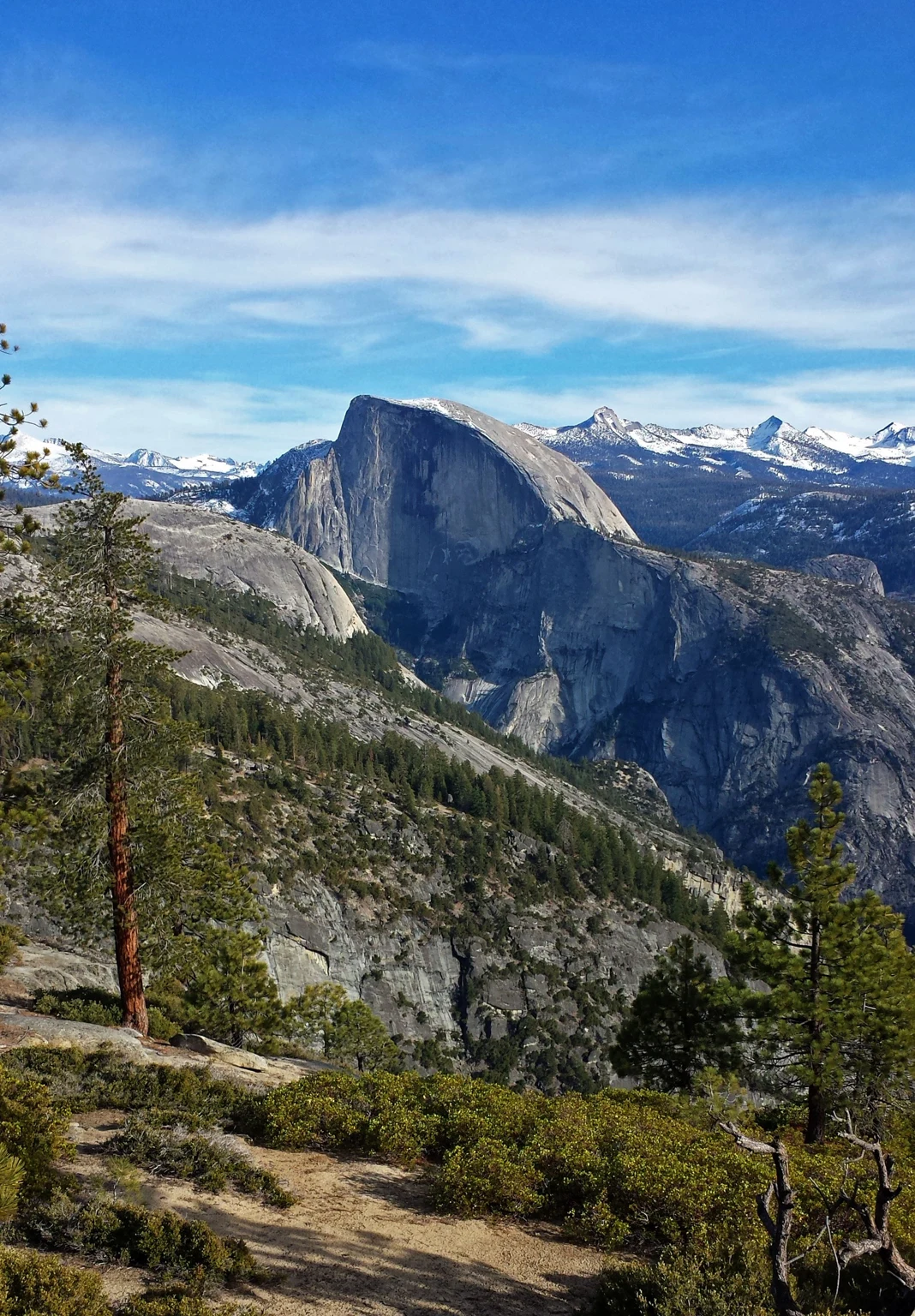
Half Dome raised an obvious question.
“Who took the other half?” Andy asked.
Allie smiled. The family had found another missing-rock case without even trying.
From their viewpoint, the landmark combined a rounded surface with a steep face. Its name made it tempting to imagine one complete, perfectly round dome sliced in two by a glacier with a bread knife.
“But a name isn’t the whole geological explanation,” Ana said.
Park resources explained that Half Dome’s form involved the character and fractures of its rock, erosion, and glacial processes. The glacier story was more complicated than a giant scoop neatly removing half of a finished sphere. The glaciers had worked along its sides and exploited weaknesses in the rock, but had not passed over its summit. Its rounded top could not be explained as a surface simply polished by ice.
Andy crossed out a drawing labeled ICE’S SANDWICH CUTTER.
“It was a magnificent drawing,” he said sadly.
“You can keep it in the jokes column,” Allie told him.
They learned about exfoliation: sheets of rock could separate along curved fractures. Dome shapes reflected several processes acting on fractured granite over time. The children did not need to memorize every technical detail to understand the important lesson: famous names and useful comparisons still needed evidence.
Augie turned his paper around. His dome looked like a hat.
“Mountain lost its hat?”
“Possible in a cartoon,” Ana said. “Not our scientific conclusion.”
Dad pointed out that rockfall continued to change Yosemite’s cliffs. A beautiful wall was still part of an active landscape. The family would obey closures and signs, not linger beneath steep faces just because their notebook was getting interesting.
Allie underlined still changing. Ancient history did not mean finished history.
5. The waterfall’s enormous upstairs cupboard
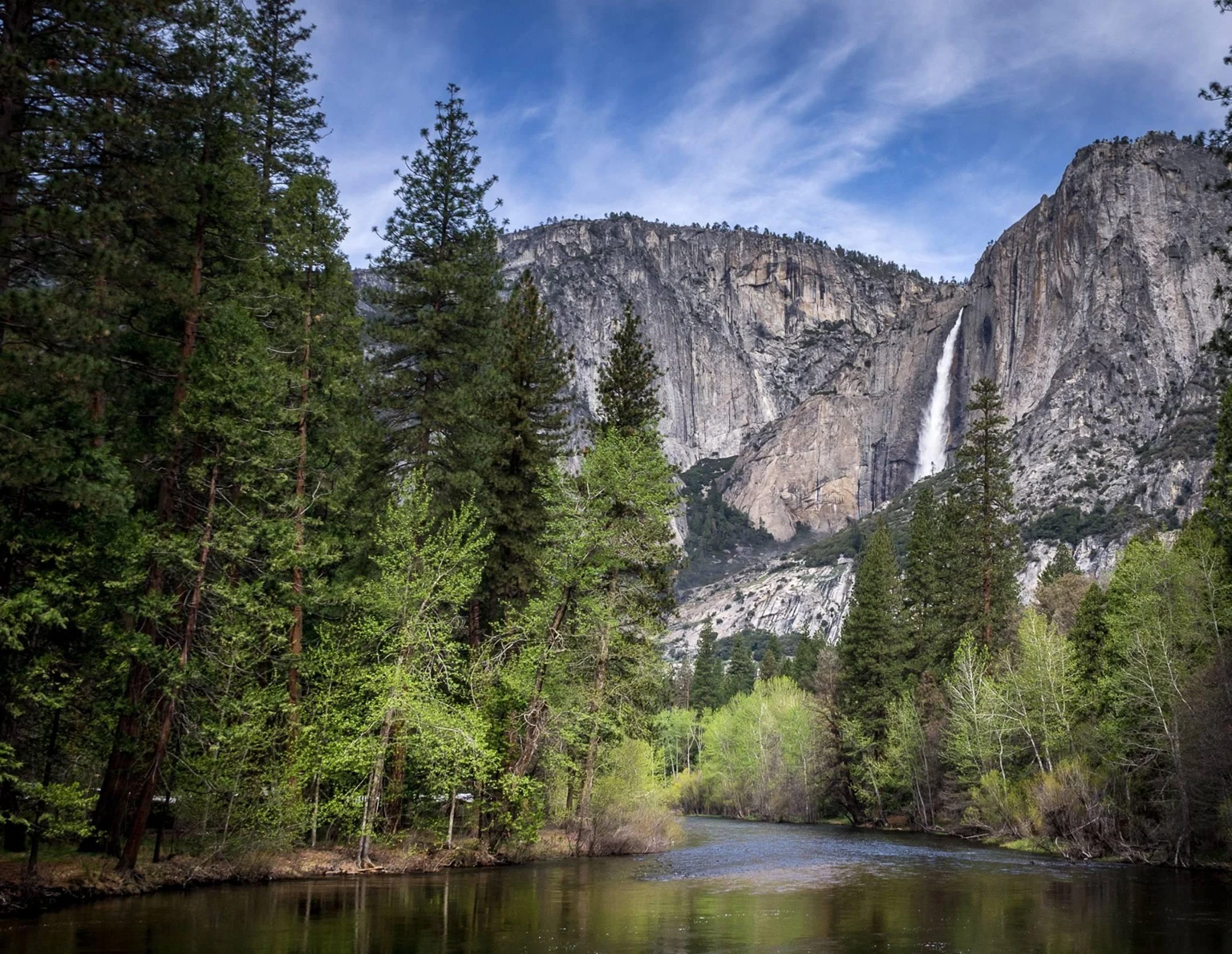
Near a suitable waterfall viewing area, Andy held up his bottle.
“This runs out,” he said. “Why doesn’t that?”
The waterfall spilled down the rock while fine spray shifted in the air. They stayed on the maintained route and away from slippery rocks and stream edges. A good question did not require wet shoes.
“Sometimes waterfalls do dwindle,” Ana said. “The amount of water changes.”
Yosemite’s waterfalls often flowed most strongly in spring, when mountain snow melted. Snowpack stored water during colder months. As conditions warmed, melting snow supplied streams that eventually reached falls and the river system.
“So the mountain has an upstairs water cupboard,” Allie said.
“With a very slow door,” Andy added.
The comparison worked only so far. Snowmelt depended on weather and the amount of accumulated snow, and different waterfalls had different drainage areas and flow patterns. A photograph from another season did not guarantee what this family would see.
Augie studied Andy’s bottle. “Can we put snow in it for next year?”
“Not without changing several parts of our plan,” Mom said.
Allie drew snow, a stream, a cliff, and the Merced River. She connected them with arrows rather than treating the waterfall as water appearing from nowhere.
Their visit happened in the story’s spring season. At home, they could compare park images from other times of year. A quieter waterfall would not mean somebody had forgotten to turn it on.
“Dear Waterfall,” Andy dictated. “Your cupboard explanation has been accepted. Please do not send us the plumbing bill.”
6. A little valley left upstairs
The height of some waterfalls led them back to their original glacier question.
“Why does the stream arrive so far above the valley floor?” Allie asked.
At an exhibit, they found an explanation involving a main valley and smaller side valleys. Larger glaciers could erode their valleys more deeply than smaller glaciers feeding into them. After the ice retreated, a side valley’s floor could remain high above the main valley.
“A hanging valley,” Ana read.
Augie looked concerned. “What holds it up?”
“It isn’t hanging from string,” Allie said. “The name describes where its floor is compared with the main valley.”
Water flowing out of such a side valley could plunge over the resulting steep drop. Bridalveil Fall was a Yosemite example of a waterfall associated with a hanging valley.
Andy drew two elevators that had stopped on different floors.
“Again, comparison only,” Ana reminded him.
“Of course. There are no elevator buttons on the mountain.”
They returned to the two-toolbox drawing. Ice had helped shape the cliff and valley arrangement. Flowing water used that landscape now. One process could create conditions that another process later worked within.
Allie liked that more than a competition between water and ice. They were not choosing the strongest tool and declaring the other useless. They were reconstructing a sequence with overlapping parts.
Augie added a small broom to the picture.
“What’s that for?” Andy asked.
“After all the furniture moving.”
Ana laughed. Then she drew a real arrow showing sediment moving with water, so the notebook contained both the joke and the useful idea.
7. The forest is not a spare room
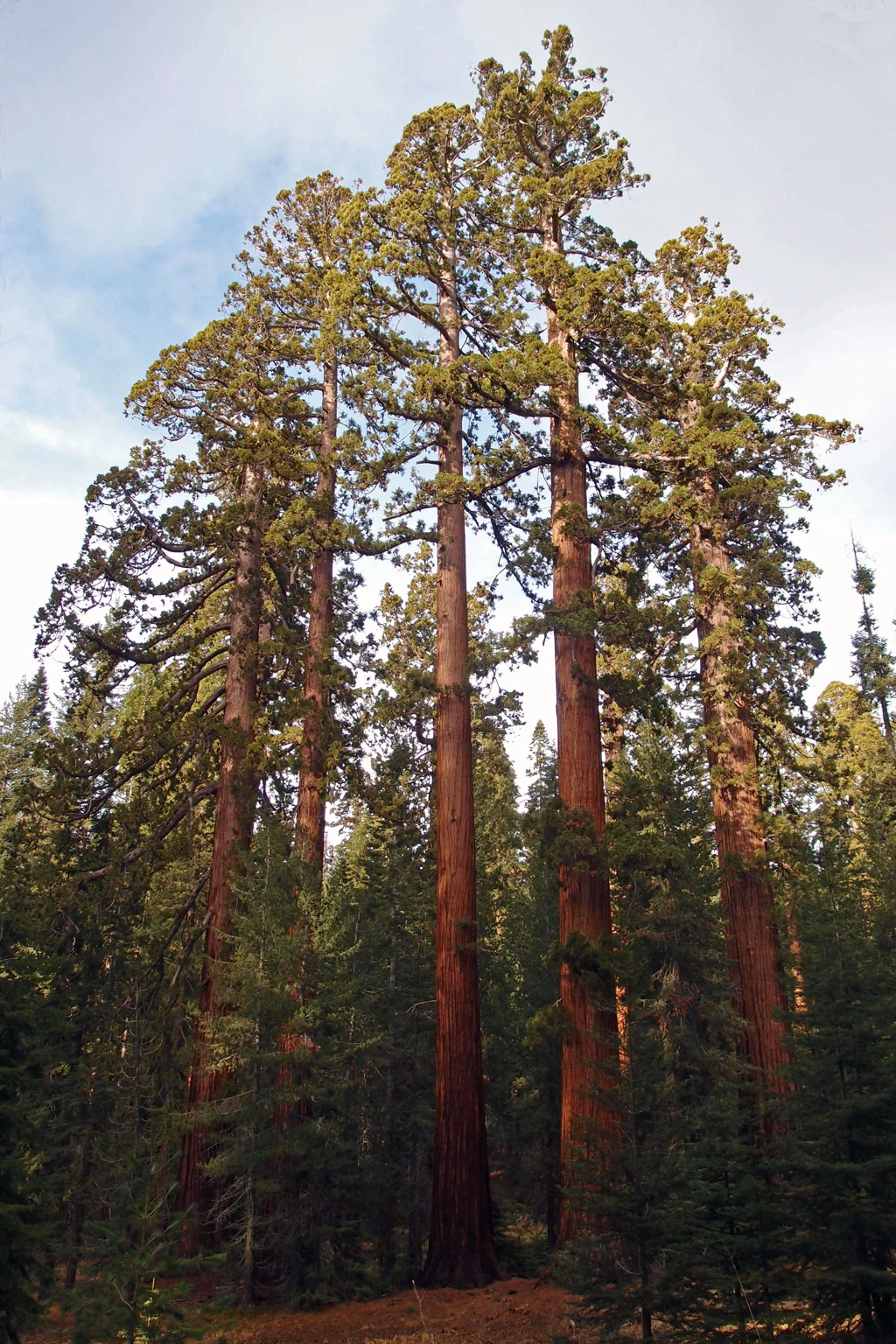
On a different day, the family chose an appropriate forest walk. They had checked the route and access with park information before setting out. There was no requirement to link every far-apart Yosemite attraction into one enormous day.
The children had been learning about the giant sequoias protected in Yosemite’s groves. A tree’s trunk could be astonishingly large, but its needs still included water, space, light, soil, and suitable conditions for new seedlings.
“It looks too big to have been a seed,” Andy said.
“You used to fit in a very small blanket,” Ana replied.
“I remain impressive.”
Park learning materials explained that fire had an important role in giant sequoia ecosystems. It could reduce competing vegetation and expose mineral soil that helped seedlings become established. That did not mean every fire was helpful in the same way or that children should light an experimental one.
Mom pointed out the distinction between learning about a natural process and trying to recreate it. Fire management required specialist decisions, conditions, and care.
Allie drew a tiny seed beside a large trunk. She left plenty of blank space between them for the years and processes her pencil could not show.
Augie contributed a small umbrella. “For the baby tree.”
“The forest has its own system,” Ana said. “We can help by staying on the route and protecting roots.”
They observed without stepping into protected ground or taking pieces of bark. A forest was habitat, not an empty room filled with impressive decorations. Its smallest beginnings mattered along with its largest trunks.
8. Who belongs in the story?
In Yosemite Valley, the family spent time with cultural interpretation about the people whose homelands included this place. They learned that Miwok and Paiute peoples, among others connected with Yosemite, had histories and continuing relationships that a scenery photograph could not contain.
Allie remembered their Grand Canyon page about listening.
“We should bring that page into every park,” she said.
“Not as the same story,” Ana replied. “As the same reason to listen.”
They looked for information shared through Tribal voices and park partnerships. They did not invent a legend to explain a cliff or treat different communities as if they were interchangeable.
Andy considered the phrase untouched wilderness, which he had seen in an old description of a different place.
“That can leave out people who were here,” he said.
“And people connected with it today,” Allie added.
The family learned that caring for landscapes could involve knowledge and practices developed across many generations. National park history included difficult events and displacement as well as protection. They would keep learning from appropriate sources rather than trying to squeeze everything into one cheerful sentence.
Augie drew an ear beside the page, then added a second one.
“Correct number this time,” Andy observed.
“These are mine,” Augie said. “You draw yours.”
At their break, Dad followed the park’s food-storage guidance. Yosemite’s bears were American black bears, even when their coats looked brown or cinnamon. The children did not need a bear encounter to learn how keeping food secure protected wildlife.
Andy wrote one final rule: NO INVITATIONS TO OUR PICNIC.
Ana added, Especially accidental ones.
9. The interview, finally completed
Back at a protected viewpoint, Allie opened the notebook to its first page.
“How could a glacier shape the valley if it isn’t here now?”
“By being here before,” Augie said.
“An excellent beginning,” Ana told him.
They assembled the evidence. Granite had formed underground. Rivers had cut earlier valleys. Repeated glaciations reshaped parts of the landscape, leaving broad valleys, steep walls, and other clues. Waterfalls and rivers continued working after the great valley glaciers retreated. Rockfall and weathering kept changing the scene.
“So the valley has more than two tools,” Andy said.
“Yes,” Allie agreed. “The two toolboxes helped us start. They don’t have to contain the whole answer.”
She wrote GOOD MODELS CAN BE IMPROVED beneath the drawings. Ana added their snowpack arrows. Augie signed the glacier interview with a large icy-looking zigzag.
“What did the ice say?” Mom asked.
“Mostly scraping noises,” Andy answered. “We have translated.”
Allie closed the book, then opened it again. Their next park was Rocky Mountain National Park, where elevation would bring a different puzzle: why did tall trees give way to a landscape of much smaller plants?
“Perhaps the trees get tired of climbing,” Andy suggested.
Ana smiled. “That goes in the guesses column.”
Augie patted the blank page. “We should ask a little plant.”
Their missing-ice appointment had ended with a valley full of evidence. The next interview would be with something small enough to overlook, but strong enough to live high in the mountains.
Explorer’s notebook
What we discovered
- Yosemite National Park is in California’s Sierra Nevada.
- Much of its characteristic bedrock is granitic rock formed as magma cooled underground.
- Rivers shaped earlier valleys; repeated glaciations greatly changed parts of the landscape.
- Glaciers can widen and deepen valleys, leaving broad U-shaped forms and steep walls.
- Hanging valleys help explain why some side streams become waterfalls above a deeper main valley.
- Snowpack stores water, and spring snowmelt often supplies strong waterfall flows. Conditions vary by season and year.
- Rockfall, weathering, streams, and other processes continue to reshape Yosemite.
- Giant sequoia ecosystems have important relationships with fire, but fire management requires specialist care.
- Indigenous peoples maintain continuing connections to Yosemite. American black bears live here and need people to store food correctly.
Try your own Yosemite adventure
Plan with a grown-up. Check current access, weather, closures, accessibility, food-storage guidance, and the suitability of each route. These are options across a visit, not a one-day itinerary.
- Compare valley shapes from a designated viewpoint with park geology exhibits or the park’s online learning material.
- Choose a short, open waterfall-viewing route suitable for everyone, staying away from slippery rocks and fast water.
- Draw a snow-to-stream-to-waterfall diagram and compare photographs from different seasons.
- Explore an accessible, appropriate grove route when conditions allow, or learn about giant sequoias through exhibits and photographs.
- Seek cultural interpretation shared by Yosemite’s Tribal partners and ask about Junior Ranger activities.
Three questions for the road
- Why is a glacier different from a stream that freezes overnight?
- How can ice from the past help explain a waterfall flowing today?
- Which of the children’s comparisons helped, and where did the comparison stop being accurate?
Useful words
- Granite: An igneous rock with visible mineral crystals, formed by slow cooling underground.
- Glacier: A lasting mass of ice that moves under its own weight.
- Hanging valley: A side valley with a floor higher than the main valley it joins.
- Snowpack: Snow accumulated on the ground, storing water until it melts.
- Exfoliation: Separation of sheets of rock along curved fractures.
- Habitat: The surroundings that provide living things with the conditions they need.