1. A hole with a very large question
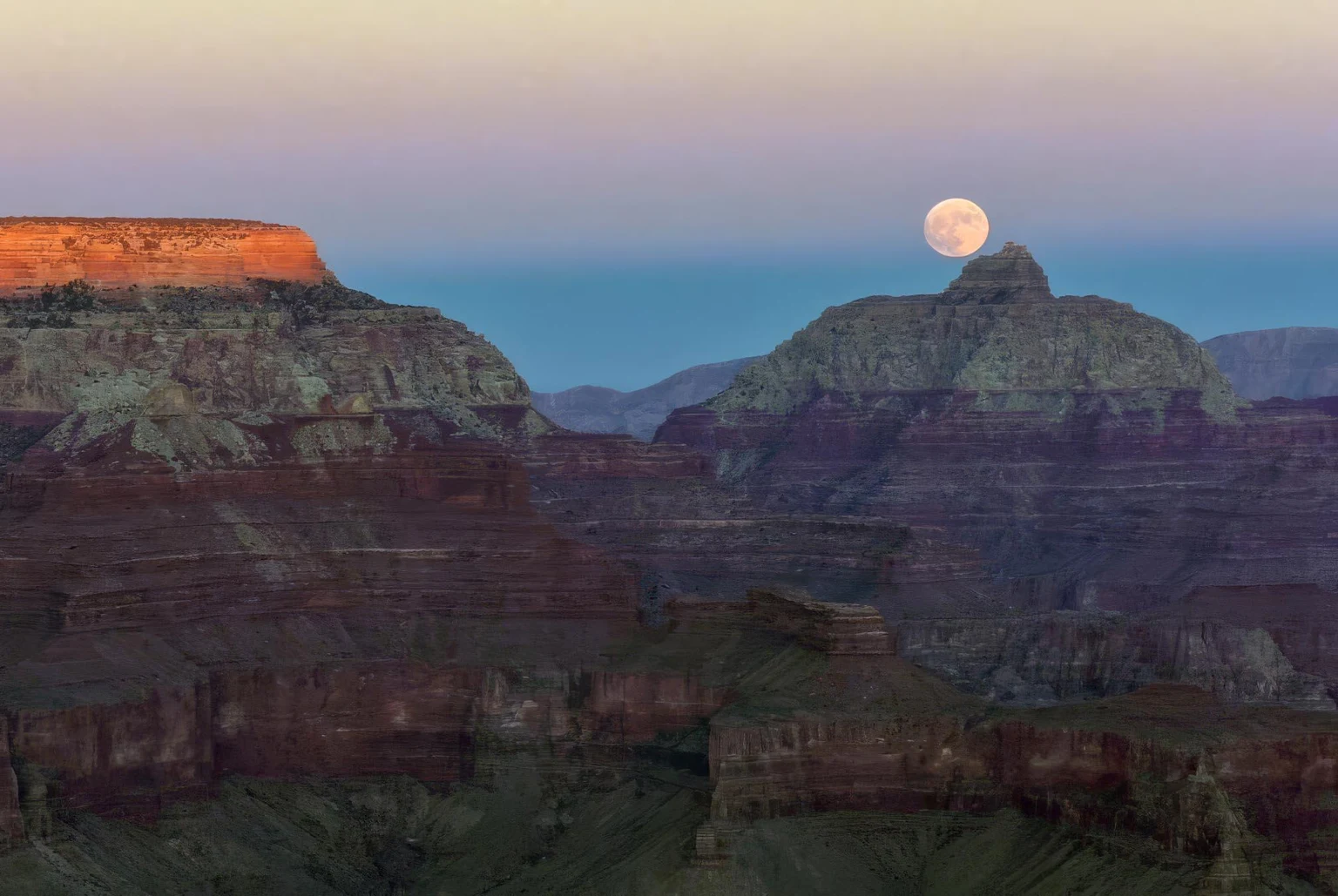
At Yellowstone, Augie had investigated water that went up. Now he stood beside Mom at a protected overlook in Arizona, studying a place where almost everything seemed to go down.
“Water has been busy,” he announced.
Below the rim, the Grand Canyon opened into ridges, towers, shadowed side canyons, and cliffs striped with different colors. Allie, ten, tried to fit it into her notebook. She drew one line, frowned, and turned the page sideways.
“Still too small.”
“Use Dad’s notebook,” suggested seven-year-old Andy. “He writes smaller.”
Nine-year-old Ana leaned toward the drawing, keeping her feet safely behind the barrier. “You can’t solve a space problem with tiny handwriting.”
Four-year-old Augie offered his notebook. It contained a purple circle and a drawing of something he called a traveling potato.
Mom and Dad had planned an unhurried South Rim visit: short stretches of rim walking, a museum, plenty of breaks, and choices that could change with weather or tired legs. Nobody was going to the river and back today. Nobody needed to climb a railing for a better view.
Andy looked from one side of the canyon to the other.
“If there used to be rock in the middle,” he asked, “where did all of it go?”
Allie stopped drawing. That was better than a picture problem. That was a case.
She wrote: MISSING: A VERY LARGE AMOUNT OF ROCK.
“Reward?” asked Andy.
“Understanding,” said Ana.
Augie considered this. “Can understanding come with lunch?”
2. The river that looked too small
At another safe viewpoint, Dad helped them locate a distant glimpse of the Colorado River. From so high above, the water seemed much too small for the job Andy had accused it of doing.
“That?” Andy said. “That little ribbon?”
“The river is far below us,” Ana replied. “Distance makes it look smaller.”
Allie remembered Zion. There, too, a river had seemed an unlikely builder of a huge canyon. They had learned to include time in their explanation.
“Water doesn’t have to finish before bedtime,” she said.
“Lucky water,” said Andy.
The Colorado River carried sediment: particles ranging from fine material to larger pieces that could move when flowing water had enough energy. Sand and gravel could help wear rock as they traveled. Material also arrived from side streams and canyon slopes.
Augie rubbed two imaginary pebbles together. “River has scratchy pockets.”
“Useful picture,” said Allie. “But we need more than one tool.”
Rain could wash loose material downhill. Rock could crack and break through weathering. Gravity pulled pieces down slopes. Tributaries cut side canyons, joining a much larger drainage system. The river carried material onward rather than storing every broken piece beside the place it came from.
Ana drew arrows on their sketch: some down the slopes, others along the river.
“The missing rock wasn’t taken away in one enormous delivery truck.”
Andy imagined the truck trying to reverse out of the canyon.
“Beep,” he said quietly. “Beep. Beep. This might take six million years.”
Their first answer was many processes, many journeys, a very long time.
But the stripes in the cliffs still needed explaining.
3. A cake nobody baked
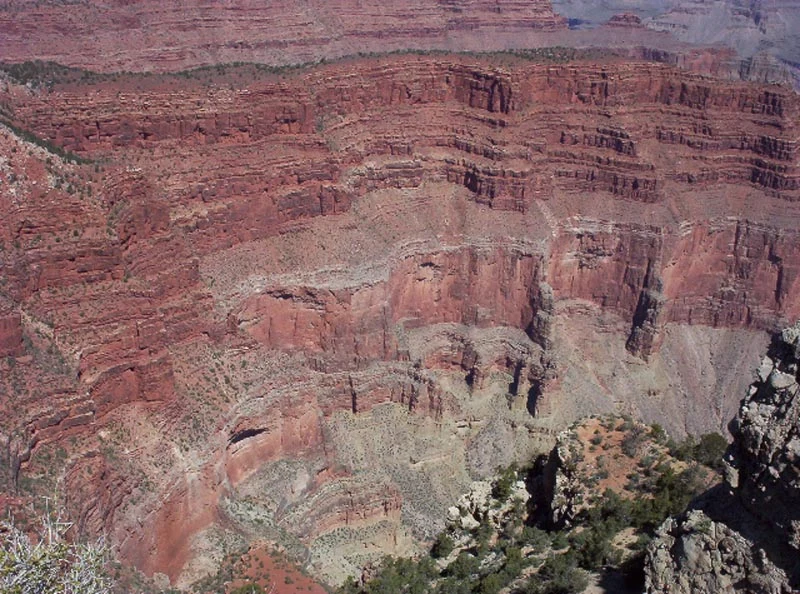
At Yavapai Geology Museum, the family studied the canyon through the windows and compared the view with exhibits. Allie liked being able to look from an explanation to the actual landscape without having to invent a mountain in her head.
“The canyon looks like a layer cake,” Andy said.
“Please don’t lick the geology,” Ana told him.
The layers recorded different ancient environments. Sediment had accumulated in seas, on coastal plains, in deserts, and in other settings. Burial and changes over time turned much of that sediment into sedimentary rock.
Allie pointed to a pale band near the top. The Kaibab Limestone had formed in an ancient marine environment. Some rocks preserved evidence of living things from those seas.
“So Arizona had an ocean address?” Ana asked.
“This place had different environments long before today’s landscape,” Dad said.
Andy looked toward the dry-looking canyon. “The ocean has moved out and taken the sofa.”
Their cake comparison needed an improvement. Rock layers were not icing squeezed from giant tubes. Their thicknesses, textures, fossils, and relationships supplied evidence about how they formed. Different rocks also resisted erosion differently, helping produce cliffs and slopes.
Ana drew a steep step beside one layer and a gentler slope beside another.
“A staircase with different materials,” she suggested.
“A cake with stairs,” Andy decided.
Augie drew a door at the bottom. “For the baker.”
Allie wrote comparison only beside it. She wanted to remember which parts of the notebook were evidence and which parts had been added by an imaginary employee with an oven.
4. The shell with the wrong postcode
Their next clue came from fossils. In photographs and displays, the children saw preserved traces and remains of ancient organisms. Marine fossils in canyon rocks included shell-bearing animals, corals, and other creatures associated with long-vanished seas.
“Were fish swimming over our heads?” Augie asked.
“Not over this exact canyon,” Ana said slowly. “The canyon wasn’t here in its present shape when those sediments formed.”
Allie put a star beside that distinction. They had been mixing two stories: the making of the rocks and the later cutting of the canyon.
A rock could be far older than the valley exposing it. Cutting a slice from an old loaf did not make the bread the same age as the cut.
Andy considered this example carefully. “Finally. Geology that understands toast.”
The children did not go hunting for a fossil to carry home. Fossils and rocks belonged where they were protected, and an interesting find was something to show a grown-up or ranger without disturbing it. A photograph or sketch could travel in the notebook instead.
Augie drew a shell and gave it a speech bubble: I WAS HERE BEFORE YOUR SHOES.
“Before all shoes,” Ana said.
Andy looked down. “Mine are quite old.”
“Not that old.”
Allie added another arrow to the case: ancient environment → sediment → rock → later exposure. There were gaps and complications, but the order helped them avoid imagining a modern canyon full of seawater merely because they had seen a marine fossil.
Their missing-rock mystery was turning into a time mystery too.
5. Taking a walk through an impossible afternoon
The Trail of Time gave them a way to think about numbers too large for a birthday cake. Along its main timeline, one meter represented one million years of geological history. The family chose a manageable stretch rather than treating the whole route as a compulsory assignment.
Andy looked at his shoes with new respect.
“My feet have become time machines.”
“They still need to stay on the path,” Mom said.
Displayed rock samples connected parts of the timeline with layers visible in the canyon. Allie noticed that the oldest rocks exposed deep in the canyon were vastly older than the familiar upper sedimentary layers.
“Does the canyon have one age?” she asked.
Dad shook his head. The ages of individual rocks, episodes in the landscape’s development, and the carving of the modern canyon were different questions. Scientists used evidence to reconstruct a complicated history; not every detail had a single simple answer.
Park explanations placed much of the carving of today’s canyon within roughly the last five to six million years. That was an enormous interval for a family, but much shorter than the history recorded by some of the rocks.
Ana held one finger close to another. “Young cut, old ingredients.”
“Ancient toast,” said Andy.
Augie took three careful steps. “Am I older now?”
“By a few seconds,” said Allie.
He looked relieved. Becoming three million years old before lunch would have complicated his next birthday. The family’s snack supply was not prepared for that many candles.
6. The missing pages inside the missing rock
At an exhibit, Ana found a word that sounded as though somebody had fallen asleep on a dictionary: unconformity.
Andy tried it. “Uncomfy… uniform… I need a smaller word.”
“It can mark a gap in the rock record,” Allie read.
Some material might have eroded away before younger layers formed above it. In other cases, sediment had not been deposited during an interval. A sequence of rocks did not preserve every moment of Earth’s past like an uninterrupted video.
Ana opened the notebook to a blank page.
“Suppose our adventure book lost a chapter. We would know something was missing, but we couldn’t recover every conversation just by looking at the next page.”
“I would remember my best joke,” Andy said.
“You would remember twelve versions.”
Augie peered at the blank page. “Maybe the river borrowed it.”
Allie smiled, then wrote not every gap has the same story. They should not use one new word as an answer to every geological puzzle.
She found this surprisingly exciting. Science was not only a collection of completed answers. It included questions, evidence, different explanations, and honest limits on what could be known.
Their original question had been about material removed while a canyon grew. Now they had discovered that erosion could also remove parts of an older rock record before the modern canyon existed.
“Two kinds of missing,” Ana said.
Andy drew a detective badge for the notebook.
Augie added a tiny cushion. “For the uncomfy word.”
7. A home, not an empty puzzle
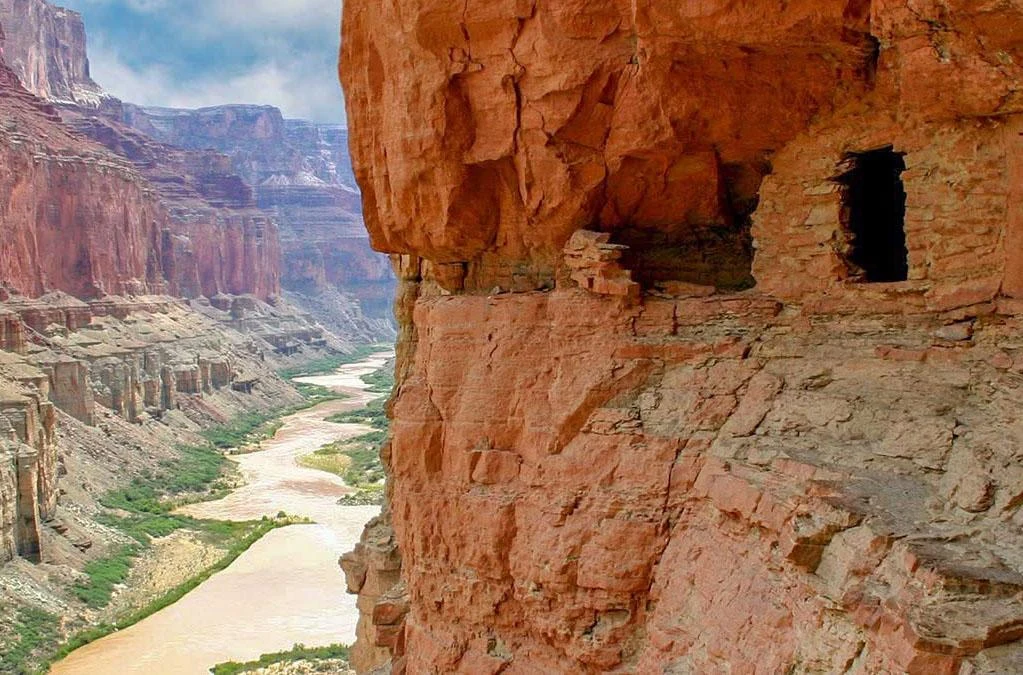
Later, the family spent time with park material about the canyon’s Traditionally Associated Tribes. Names included the Havasupai, Hualapai, Hopi, Navajo Nation, and others with enduring connections to this landscape.
Allie nearly wrote people who lived here long ago, then stopped.
“That sentence leaves out people today,” she said.
Ana nodded. “And their knowledge isn’t just another clue for our game.”
The canyon was a homeland and a place of continuing cultural importance. The family could learn through information shared by Tribal communities and park partners without pretending that one story spoke for everybody.
Andy looked back at their MISSING ROCK heading.
“Our notebook makes it sound as if we discovered the whole place.”
“We discovered some things about it,” Allie said. “That’s different.”
She added a second heading: PEOPLE, PLACE, AND CONTINUING CONNECTIONS.
Mom explained that national park protection was one part of the canyon’s history, not its beginning. The children would listen carefully, respect places and objects, and leave archaeological materials undisturbed, just as they would leave fossils.
Augie drew four little ears beneath the heading.
“Listening equipment,” he explained.
Andy examined them. “We have eight ears.”
“These are the spare ones.”
Nobody invented an ancient legend to fill the page. They wrote down the names they had learned and a question to explore at home: Whose own words can help us understand this place better?
The missing-rock case had room for geology, but their adventure needed room for people too.
8. A canyon with more than one neighborhood
On another short rim walk, Ana noticed trees. She had imagined Grand Canyon as nothing but bare, hot rock, yet the rim around them supported woodland.
“A canyon can have an upstairs neighborhood,” she said.
Changes in elevation, moisture, exposure, and temperature helped create different habitats. The North Rim and South Rim were not identical environments, and conditions down toward the river could differ greatly from those on the rim.
Dad reminded them that pleasant rim weather did not tell them what a long inner-canyon hike would feel like. Descending could be deceptively easy; returning uphill required effort. Their family would enjoy this visit from appropriate rim routes.
Andy watched a squirrel approach a busy area.
“That one seems to know where lunch lives.”
“And it needs to find its own food,” Ana said.
They kept snacks packed and gave wildlife space. Even an animal that looked familiar could bite, and feeding changed its behavior. Augie put both hands on his own sandwich when they stopped for a break.
“This is a private sandwich.”
Allie drew three small habitat boxes instead of coloring the entire canyon one shade of brown. She did not label them as an exact map; they were reminders to look for variety.
A shadow crossed a distant cliff. Light changed its colors while the rock stayed where it was.
“We have also solved the moving-paint mystery,” Andy announced.
“No,” Ana said. “We’ve noticed another question.”
Allie opened a fresh page. A good adventure could finish one case without running out of things to wonder about.
9. The verdict, with room for another park
Near the end of their visit, the family returned to a protected overlook. The canyon had not become smaller or easier to fit on paper. The children, however, had acquired better questions.
Allie read the case aloud. “Where did the missing rock go?”
“Downhill, downstream, and onward,” Ana said. “Not all at once, and not by one process.”
“The river carried material,” Andy added. “Weathering broke rock. Gravity moved pieces. Side streams helped. Time did a very long shift.”
“And no giant truck,” Augie said firmly.
They arranged the discoveries in order: rocks formed in different ancient environments; a landscape changed and rose over a complicated history; rivers and other processes cut and widened canyons, revealing older material. The rocks’ ages and the canyon’s development were related stories, not the same number.
Allie did not write everything solved. She wrote our first explanation, improved by evidence.
Andy objected that this was a long name for a detective badge.
“Then your badge can say ‘Still curious,’” Ana suggested.
Augie approved. His traveling potato was still curious too.
Back beside their parents, the children compared their Yellowstone notes with the new pages. There, heat beneath the ground had helped explain extraordinary water. Here, water had helped reveal extraordinary ground.
Their next chapter would lead to Yosemite, where waterfalls and a glacier-shaped valley would offer another set of clues. Would ice leave the same signatures as a river?
Andy closed the notebook. “We should interview the ice.”
“Politely,” said Ana.
Augie tucked his pencil away. “And bring it a jacket.”
Explorer’s notebook
What we discovered
- Grand Canyon National Park is in northern Arizona. The Colorado River flows through the canyon.
- Rock layers preserve evidence of ancient environments, including seas and deserts.
- Many sedimentary rocks formed long before the canyon that exposes them.
- Moving water carries sediment. Weathering, gravity, tributaries, and other processes also reshape the landscape.
- Much of today’s canyon was carved during roughly the last five to six million years; its wider geological history is complicated.
- An unconformity represents a gap in the geological record, caused by erosion, non-deposition, or both.
- Elevation and other environmental differences support a variety of habitats.
- Tribal Nations maintain enduring connections with Grand Canyon. Its human history did not begin with national park designation.
Try your own Grand Canyon adventure
Choose activities with a grown-up and check current weather, access, accessibility, closures, and ranger guidance. These are possibilities across a visit, not a one-day itinerary.
- Compare the real canyon view with geology exhibits at Yavapai Geology Museum.
- Explore a suitable stretch of the paved Trail of Time and investigate its displayed rocks and timeline.
- Sketch cliff and slope shapes from a designated viewpoint without approaching an unprotected edge.
- Ask about an age-appropriate ranger activity or Junior Ranger booklet.
- Learn from cultural information shared by the park’s Tribal partners. Observe wildlife without feeding or approaching it.
Three questions for the road
- Why can a rock be much older than the canyon exposing it?
- What evidence would help explain an ancient sea in a place that looks dry today?
- How did the children improve their first explanation of the missing rock?
Useful words
- Sediment: Loose particles of rock and other material.
- Weathering: Processes that break down or change rock where it is.
- Erosion: Removal and movement of rock or sediment by water, ice, wind, or gravity.
- Tributary: A stream or river that flows into another.
- Fossil: Preserved remains or evidence of past life.
- Unconformity: A surface representing a gap in the geological record.