1. A road with no place for wheels
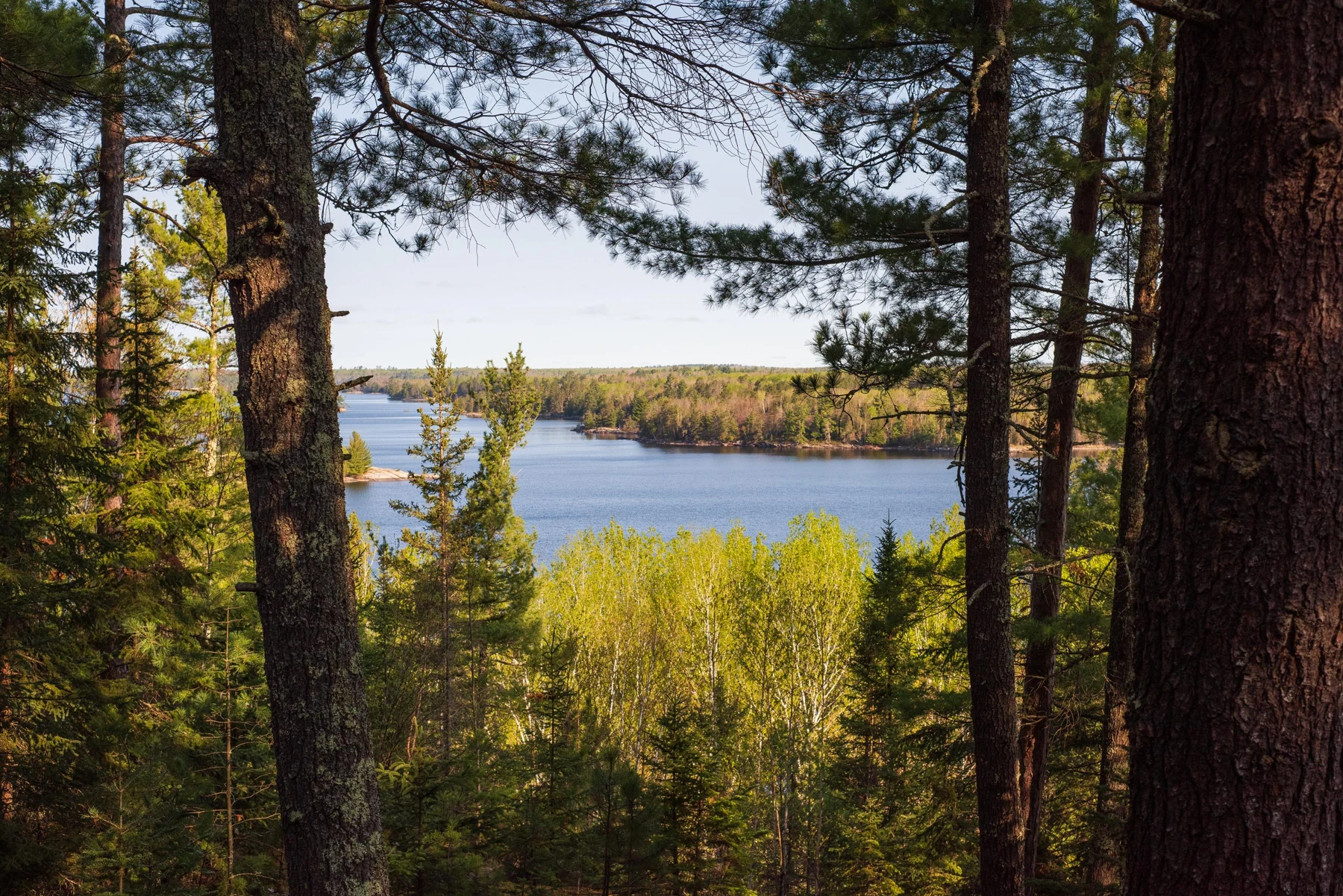
Augie had drawn a boat with a question mark on its bow after their Channel Islands adventure. Now, on a later family journey to northern Minnesota, he added wheels.
“Emergency wheels,” he explained.
Andy considered the design. “What if the lake has traffic lights?”
Ana opened their park map. “Before we invent a boat intersection, let's find out where we're going.”
They were visiting Voyageurs National Park, a place where lakes spread between wooded shores and rocky islands. Their parents had planned a manageable visit beginning around the Rainy Lake Visitor Center. A prearranged daytime boat outing, led by an experienced operator, would depend on suitable conditions. The rest of their exploring could happen on shore, with photographs, maps, and interpretation opening windows onto places they would not visit.
Ten-year-old Allie wrote their question at the top of a notebook page: How can a lake be a highway?
Nine-year-old Ana drew a small box for things they still needed to learn. Seven-year-old Andy drew a tollbooth. Four-year-old Augie supplied a driver wearing flippers.
“All excellent starting questions,” Allie said, looking mainly at the words rather than the flippers.
Their first landscape photograph showed forest and water together. There was no painted lane running through the trees. Yet the lakes made routes possible where a car could not simply drive across.
Their parent pointed out that people had been traveling these waters long before the national park existed. Learning about that history would take more than drawing blue lines.
Augie removed the wheels from his boat.
“Keeping them in the spare-parts box,” he said.
Allie gave the notebook a second column: What makes a route useful?
Andy suggested snack stops.
“Important to this crew,” Ana agreed. “But we should probably add knowledge, suitable equipment, and somewhere safe to go.”
The lake outside looked like one great open space. Their map suggested that understanding it would require much closer attention.
2. Four lake names and one very bad shortcut
Rainy, Kabetogama, Namakan, and Sand Point were the park's four large lakes. Smaller lakes and waterways added more blue to the map.
Andy drew a straight pencil line across several islands.
“Fastest route.”
“Your boat is currently driving through a forest,” Ana observed.
He bent the line around an island, then stopped at a narrow place between two shorelines.
A channel was a passage of water. A bay was a part of a lake reaching into the land. An island had water around it, while a peninsula remained connected to a larger land area. Allie helped Augie trace those shapes on their paper, well away from the real shoreline.
“Blue has more shapes than I thought,” he said.
Their parent explained that a visitor map was useful for understanding places, but it was not automatically a suitable navigation chart. Shallow rocks might lie below the surface. Changing water levels could change hazards, and not every hazard had a marker. A phone showing a dot could not replace the operator's knowledge, appropriate charts, equipment, and judgment.
Andy looked at his straight line again.
“Excellent pencil route. Terrible boat route.”
Before their planned outing, the adults checked the forecast, conditions, and arrangements. Everyone would wear an appropriately fitted life jacket and follow the operator's instructions. They had drinking water, layers, sun protection, and a plan that could change.
Augie pointed to his jacket. “My floating waistcoat.”
“Life jacket,” Ana said. “A very important proper name.”
The children would not be practicing navigation alone, testing hidden rocks, or deciding which channel looked adventurous. Their part was to listen, remain in their places, and observe.
Allie added something beside the first question: a highway was more than empty space. It involved routes, destinations, knowledge, and responsibility.
Andy erased his tollbooth. It was blocking a peninsula anyway.
3. The oldest passenger isn't in the boat
From their designated place aboard, the children watched wooded shorelines pass. Bare rock interrupted the trees in rounded edges and pale surfaces.
Augie searched for something very old.
“Grandpa?”
“Older,” Allie said.
“The boat?”
“Much older.”
“The sandwiches?”
Their parent checked the lunch bag with theatrical concern.
The rock beneath this landscape had a history reaching back billions of years. Some park rocks were about 2.8 billion years old. Ancient volcanic activity, heat, pressure, and other geological processes had helped make and change them. Their present shapes were another part of the story.
Much later, huge moving ice sheets had scraped the landscape and exposed ancient bedrock. As the ice retreated, meltwater filled low areas. Rock history and lake history belonged to different stretches of a very long timeline.
Andy drew an old rock wearing reading glasses.
Ana added a label: the glasses are our contribution.
Allie stretched a line across the page, putting rock formation far from the much later ice-age changes. She left a tiny space near the end for the children, their boat, and the world's most carefully checked sandwiches.
“So the glaciers didn't make the old rock from scratch,” Andy said.
“Right. They changed and uncovered the landscape,” Allie replied.
Nobody needed to climb a wet rock ledge to understand the idea. The family could use interpretation, photographs, and views from places chosen by the adults.
Augie placed a dot at the end of Allie's timeline.
“Us?”
“Us.”
He added a smaller dot.
“My lunch.”
Their parent smiled. “Geologically brief, we hope.”
The lake highway now had a foundation. Its story began long before anyone gave the water a name, carried cargo over it, or wondered whether a boat needed wheels.
4. The highway already had experts
Back on shore, the children turned their blue route into a history page.
The park's name referred to voyageurs, French-Canadian workers who transported goods by canoe in the fur trade. The French word meant travelers. But their journeys did not mark the beginning of people knowing this landscape.
Ojibwe communities knew these waters, built canoes, provided food, and participated in trade. The wider region had a much longer Indigenous history. Bois Forte Ojibwe relationships with the land and water were an essential part of this story, not a small footnote beside somebody else's boat.
Ana moved the voyageurs' heading farther along their paper timeline.
“We started the page too late.”
Allie added a question: Whose skills made travel possible?
Birch-bark canoes combined materials carefully: bark, a wooden framework, roots used for fastening, and resin for sealing. Knowledge mattered at every stage, from construction and repair to reading conditions and finding a route.
Andy examined the materials list.
“So a tree isn't already a boat. You need to know a lot.”
“Especially which parts and how to use them,” Ana said.
The family would not peel bark from living trees to make a souvenir. They could study public interpretation and draw a canoe on paper.
Their parent helped explain another part of the history. Colonization, disease, loss of land, and pressure from settlers had harmed Indigenous communities. The story could include cooperation and exchange while also recognizing those harms.
Augie looked at their timeline. “People now, too?”
“Yes,” Allie said.
Their parents found the Bois Forte Band's own Heritage Center website for future reading. It presented an ongoing culture and history through the community's own museum. It was elsewhere in the region, not an extra stop magically squeezed into this afternoon.
Andy put a large arrow at the end of the timeline.
It meant keep learning, not everybody disappeared when this page ended.
Ana approved. That was a much better use of an arrow than his shortcut through a forest.
5. The boat that had to go for a walk
Andy had expected every lake-highway problem to involve paddling.
Then he learned the word portage.
A portage was a carrying route over land between waterways or around an obstacle. Along historic canoe routes, crews sometimes carried their boats and cargo instead of paddling through rapids or continuing on an impossible water route.
Augie stared at their canoe drawing.
“The boat goes for a walk?”
“The people do the walking,” Ana explained. “The boat has a difficult afternoon.”
Voyageur crews worked together. Paddlers had different jobs in guiding, powering, and steering a canoe. Loads were heavy, trips could be exhausting, and bad weather could interrupt travel. Songs could help crews keep a rhythm, but singing did not make a dangerous crossing safe.
Andy began a song about carrying crackers.
It included the word crackers six times and no useful instructions.
Their parent suggested a dry-land thinking game at their rest table. Four folded paper squares represented bundles. A paper canoe sat on one side of a drawn obstacle, with another waterway on the far side. The children could plan the order of moving their paper pieces.
No heavy lifting, real portage, or boat handling was involved.
Ana asked where the supplies should go while the pretend crew returned for another load. Allie asked whether they had remembered the empty boat. Andy had transported lunch twice and forgotten every paddle.
Augie held up the missing paper paddles with deep professional disappointment.
“Small problem,” Andy admitted.
“Large consequence,” Ana replied.
They rearranged the pieces and tried again. This time their plan had an order, a place for each item, and a check at the end.
Their parent asked whether completing a paper puzzle meant they were ready to lead a real canoe expedition.
“No,” said all four children, although Augie still wanted a badge for finding the paddles.
Allie returned to the chapter's question. The lake highway depended on people understanding how water routes and land routes fitted together. A journey could require teamwork, patience, and knowing when not to paddle.
Andy kept the cracker song. Every expedition needed at least one questionable artistic achievement.
6. The engineer with orange teeth
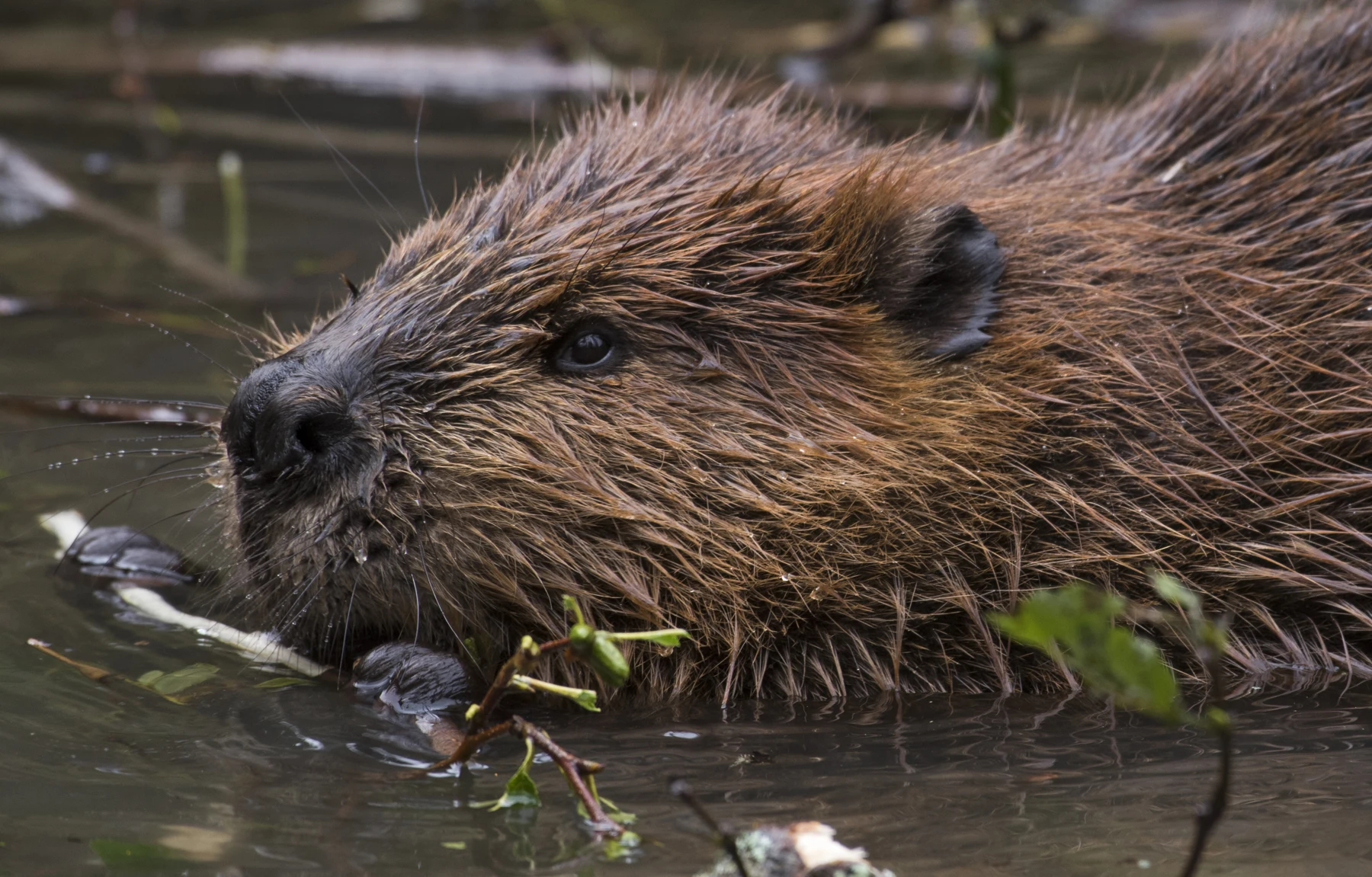
The next traveler in their investigation wore no life jacket and carried no trade bundle.
It had fur, a broad tail, and teeth made for gnawing.
“A beaver,” Andy said. “Finally, somebody who can supply the wood.”
The children studied a close photograph of a beaver chewing a twig. The caption identified its location as Denali in Alaska: a useful portrait of the same species, not a claim that this particular animal had appeared beside their Minnesota table.
Voyageurs had beavers of its own. They could change small streams by building dams that held back water and formed ponds. A lodge was the shelter where a beaver lived; a dam and a lodge were different structures. Beavers could also build lodges along large lakes without damming the entire lake.
Augie looked at the park map.
“No giant wall across all the blue?”
“Correct,” Allie said. “That would be a very different project.”
Their parents showed them how a pond could become habitat for other animals as well. The children remembered their prairie-engineer notebook from Theodore Roosevelt. Different animals could change habitats in different ways.
Andy drew a beaver beside a prairie dog. Both wore imaginary hard hats. Ana put a firm line around the hats so nobody confused them with anatomy.
Then they separated two meanings of cargo. To historic traders, a beaver pelt had been a valuable product. To a living beaver, fur was part of its body, helping it live in its environment. European demand for fur had affected animals and people far from the people buying fashionable goods.
Their parent let that thought settle without turning the animal into a joke.
Augie eventually pointed at the drawn beaver's hat.
“This part is still silly.”
“Yes,” Allie agreed. “That part is ours.”
The children would observe real wildlife from a respectful distance. They would not approach a lodge, walk on it, or try to make a beaver slap its tail for entertainment.
Andy added a work notice to the paper dam: No visiting inspectors required.
7. A bird that doesn't need our boat
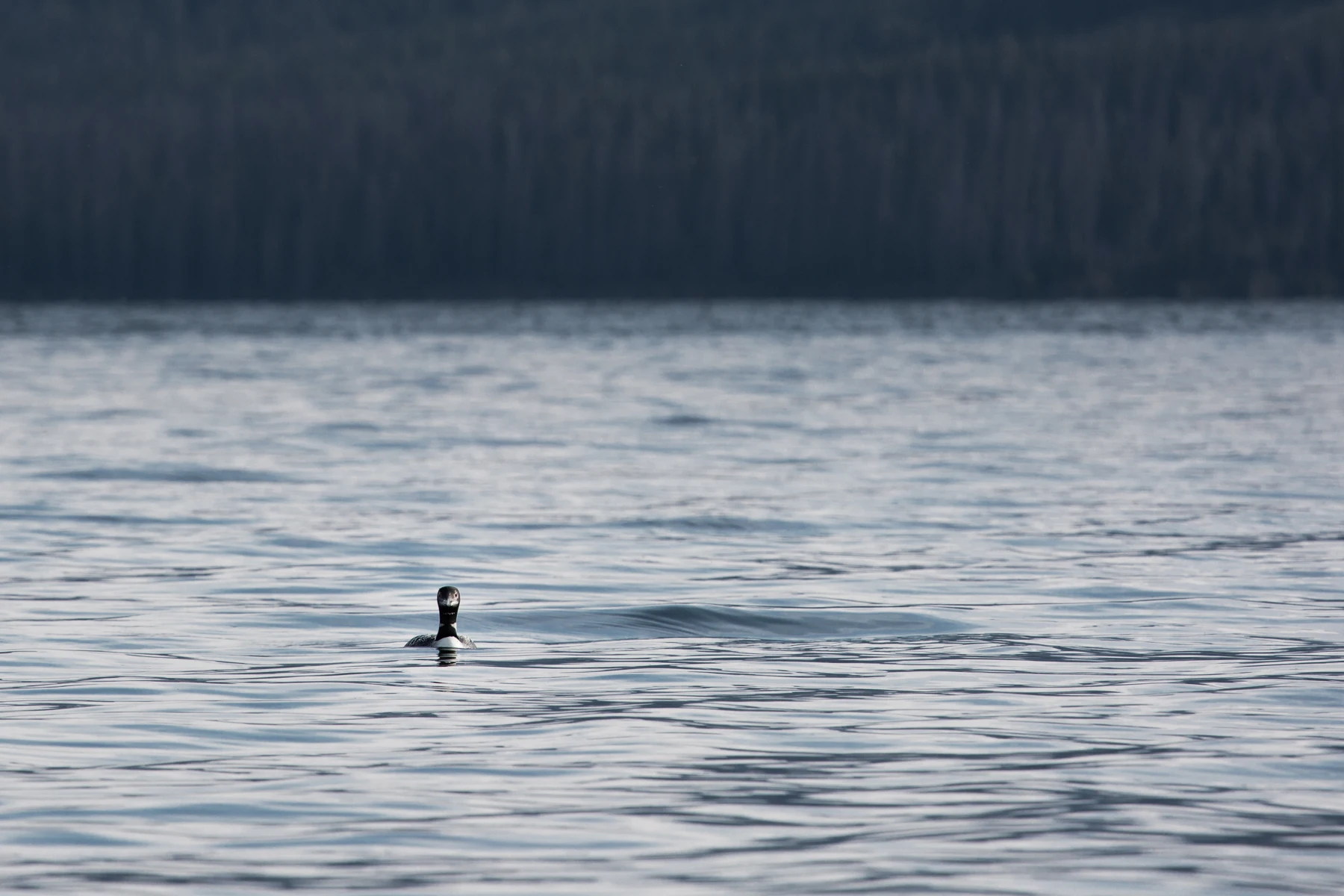
A recorded loon call in the learning materials made Augie look up.
“Who brought a lake trumpet?”
Ana checked the identification. A common loon could make calls that carried across water. Its black-and-white breeding plumage looked very different from a plain brown duck.
The children compared the guide with a photograph from Yellowstone. The picture helped them study the bird's shape; it did not change where their family was visiting. Loons also belonged to the Voyageurs landscape.
A loon's feet sat far back on its body, helping it swim and dive for food. That arrangement was less convenient for walking on land. Its nesting places near the water could be vulnerable to waves and changes in water level.
Andy drew a pair of flippers on a person trying to climb stairs.
“Good for one job. Less good for another.”
“An imperfect comparison, but a useful question,” Allie said.
They talked about how a boat's wake could reach a shore after the boat had passed. A visitor might feel far away from wildlife while still affecting it.
Their parent pointed out that watching responsibly meant more than avoiding a collision. Operators needed to follow rules, control wakes appropriately, and keep clear of wildlife and nesting areas. The children would never approach a nest to improve their view.
Augie put his imaginary lake trumpet away.
“Quiet looking.”
Allie liked that phrase.
On a short, suitable shore outing with their parents, the children noticed broad leaves and needle-bearing branches among the trees. Their guide described the park as a meeting area between northern boreal and temperate deciduous forests. Different habitats helped make room for different living things.
Ana made a list of ways to investigate without demanding that animals perform: look, listen, compare a guide, ask a question, and let an uncertain identification remain uncertain.
Andy added do not honk at the loon.
“That was included in quiet looking,” Ana said.
“Some rules deserve their own line.”
Augie gave it a very serious tick.
8. The passengers nobody invited
At the end of their daytime outing, Allie remembered the shoe inspection from Channel Islands.
“Can lake travelers carry unwanted passengers too?”
Their parents explained that aquatic plants, animals, or other organisms could travel on equipment or in leftover water. Some introduced species could cause harm in a new environment. Even a tiny amount of water could carry things a person might not notice.
Andy drew a miniature passenger waving from a puddle inside a boat.
“No ticket,” Augie said.
“No invitation either,” Ana added.
Clean, drain, dry was a useful reminder. Adults and operators needed to follow the destination's current inspection, cleaning, draining, drying, and disposal requirements. The children could help notice visible debris and remind the family to check, while trained people and adults handled equipment, hot water, or other specialized tasks.
They would not pour water, release bait, or move living things from one lake into another as an experiment.
Ana made three paper boxes and asked Andy to match a reason to each action. Cleaning removed attached material; draining removed leftover water; drying helped stop organisms surviving in damp places. The boxes were a reminder, not a substitute for detailed instructions.
Augie examined their drawing of the unwanted passenger.
“He needs to stay in his own story.”
Their parent agreed that preventing a problem could be much easier than trying to repair its effects later.
Allie joined this page to their island notebook. The places were different, but the useful habit traveled: check what you might accidentally carry.
Andy added questions are allowed to travel.
“Also our own rubbish,” Ana said. “That definitely comes back with us.”
The family checked their rest place for scraps and belongings, secured food appropriately, and packed up. Nobody had to find a new animal to make the visit count.
Their questions had gained several new passengers already. Fortunately, questions fitted inside a notebook without needing a livewell, a trailer, or a bucket of lake water.
9. A highway above the highway
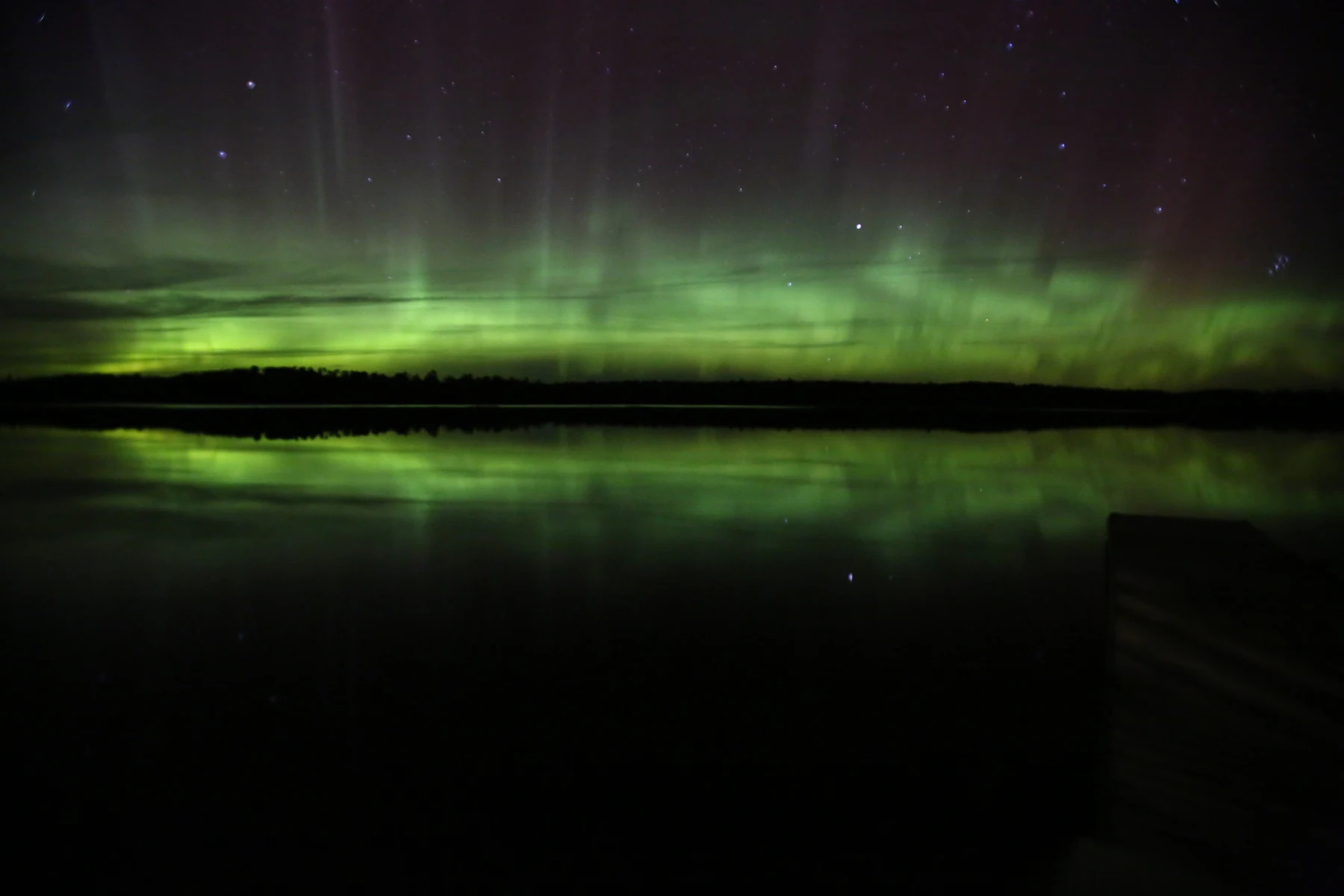
Later, the family looked at a photograph of northern lights over Voyageurs.
Green light stretched above dark trees and water. Augie traced the shape in the air.
“Another route?”
“A different kind of pattern,” Allie said.
Auroras happened when energetic particles interacted with gases high in Earth's atmosphere. They were not reflections of green lake plants. Seeing them required suitable conditions; a beautiful photograph was no promise that the sky would repeat the display that night.
Andy asked whether the lake had ordered extra lighting.
Ana wrote no with unusual speed.
Voyageurs' dark skies also made it a place to appreciate stars. Bright artificial light could hide fainter objects from view. Weather and moonlight mattered too.
Their parents had a simple evening option: if everyone had energy and conditions were suitable, they could look up together from a designated, road-accessible viewing area. They would stay away from shore edges and use the light needed to move safely. There would be no night boat trip added to the plan.
Augie yawned in the middle of his own astronomy question.
“Bed is also a destination,” their parent said.
Nobody needed to stay awake until something spectacular appeared.
Before closing the notebook, Allie asked whether they could finally answer the first question.
“A lake can connect places,” Ana said. “But people need knowledge, equipment, and a suitable route.”
“And sometimes the boat goes for a walk,” Andy added.
“The people carry it,” Augie corrected, delighted to be the expert on this particular detail.
Their page now included ancient rock, water, Indigenous knowledge, historic work, living habitats, and visitors' choices. The blue spaces were no longer empty spaces between interesting things. They were part of what connected the story.
Their next chapter would take them to Black Canyon of the Gunnison National Park, where a river and steep canyon walls would raise a new question about carving rock.
Andy drew a river holding a spoon.
Ana smiled. “Put it in the first-ideas box.”
The lake highway had carried the children to a better question. The next landscape was already waiting on the page.
Explorer’s notebook
Nine discoveries to take home
- Voyageurs National Park is in northern Minnesota, with lakes, islands, forests, and rocky shores.
- Rainy, Kabetogama, Namakan, and Sand Point are its four large lakes. A visitor overview map is not a complete navigation guide.
- Ancient rocks and much later glacial changes tell different parts of the landscape's history.
- Ojibwe knowledge, canoe building, trade, and continuing relationships belong at the heart of the waterways' human story. Bois Forte culture is living, not only historical.
- Voyageurs transported goods by canoe. Portaging meant carrying boats and supplies over land along parts of a route.
- A beaver dam holds back water; a lodge is a shelter. A lake-dwelling beaver need not dam the entire lake.
- Loons are adapted to diving. Shoreline nests can be affected by waves, water levels, and disturbance.
- Clean, drain, dry is a reminder to follow current requirements that help prevent aquatic hitchhikers moving between waters.
- Dark skies offer opportunities to appreciate stars and sometimes auroras, but weather, timing, and other conditions determine what is visible.
Five small adventures
- Draw a paper lake highway. Invent islands, a peninsula, a bay, and a channel. Draw possible connections and explain why a straight line might fail. Label it an imaginary thinking map, never a navigation chart.
- Plan a paper portage. Use a folded-paper canoe and light paper bundles on a table. Decide how to move them around a drawn obstacle, then check for forgotten paddles. Do not carry a real boat or heavy loads for this activity.
- Make a layered timeline. Put ancient rock formation, later glacial changes, long Indigenous histories, fur-trade travel, and your own visit in order. Explain that the spaces on your paper are not necessarily to scale.
- Compare an animal's tools. Use photographs to compare a beaver's gnawing teeth and a loon's diving body. Draw how each helps the animal live. Add a separate box for your imaginary inventions.
- Collect questions, not objects. With a grown-up, make three columns: something you observed, something a reliable source explained, and something you still wonder. For an outdoor visit, leave natural and cultural objects in place and keep wildlife undisturbed.
Talk it over
- What can a simple visitor map tell you, and what important things might it leave out?
- Why does the waterways' history begin before the voyageurs named in the park's title?
- How can a boat affect an animal even after it has passed?
- What useful habits connect the Channel Islands shoe check with the Voyageurs equipment check?
Words for your explorer pack
- Channel: a passage of water between land areas or connecting waters.
- Bay: a part of a lake or sea reaching into the land.
- Peninsula: land connected to a larger land area, with water around much of its edge.
- Portage: a route or action involving carrying a boat and supplies over land.
- Bedrock: solid rock beneath soil and other loose material.
- Wake: waves left behind by a moving boat.
- Lodge: the shelter of an animal such as a beaver; it is different from a dam.
- Aurora: light produced high in the atmosphere through interactions involving energetic particles and atmospheric gases.