1. A neighborhood without fences
Augie arrived on St. John with a drawing of a house balanced on a coral branch. The house had blue shutters, an enormous snack cupboard and a front door opening directly into the sea.
Andy examined it. “We may need a different foundation.”
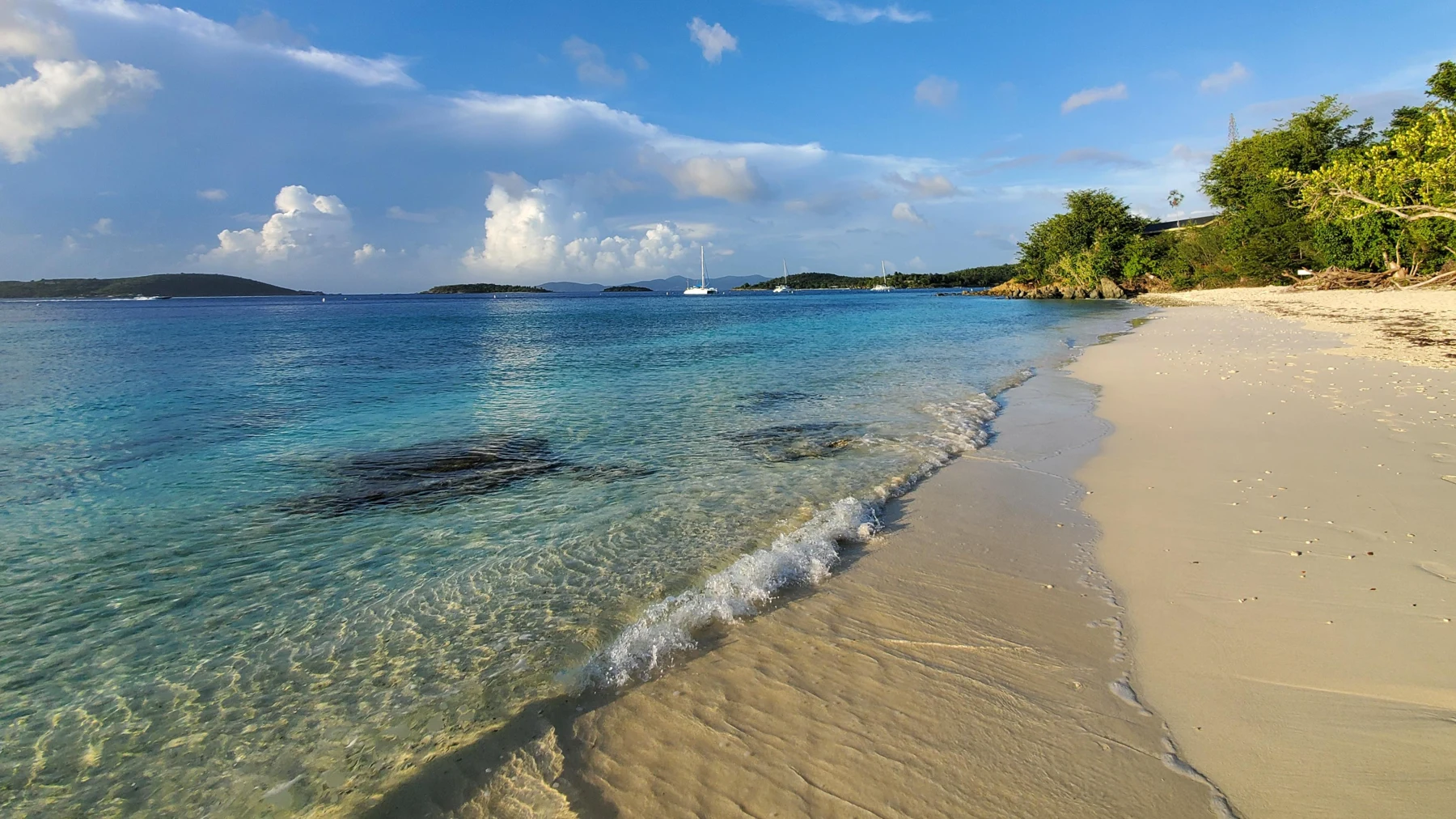
The family had reached Virgin Islands National Park in the U.S. Virgin Islands. Green hills rose above bays of blue and turquoise water. Waves folded onto a pale beach, and the underwater world disappeared beneath a surface that looked almost like colored glass.
“The ocean turned on tropical mode,” Augie announced.
Allie opened their notebook from White Sands. Their last investigation had followed gypsum into a closed basin. Here, the sea was very much present, and their next mystery was called The Islands Built by Reefs.
Ana put a question mark beside the title.
“How much do reefs build?” she asked. “And how do the other habitats fit into the story?”
Their grown-up had planned short, suitable shoreline explorations and time with park information. The children would use photographs and exhibits to investigate marine life and places beyond their own route. Nobody needed to snorkel offshore to ask a good underwater question.
Allie divided a page into reef, seagrass, mangrove shore and island land.
“A coastal teamwork mystery,” she said.
“Where are the fences?” Augie asked.
“There aren’t neat fences between these habitats,” Ana replied. “That may be the important part.”
Andy drew a fish swimming across the page from one box toward another. Then he paused.
“We should explain the arrows before letting every fish visit every box.”
Allie smiled. Their Biscayne investigation had taught them that useful habit. This time, they would look more closely at how the island’s shores, living habitats and people belonged to one larger story.
2. Start below the pretty picture
Before investigating the reef, Ana returned to Augie’s house drawing.
“What is holding up the island itself?”
“The coral construction crew?” Andy suggested.
“Let’s check.”
Park geology information described St. John’s volcanic foundation. Ancient volcanic activity, uplift, sedimentary deposits and later changes had all contributed to the island’s history. St. John was not simply a pile of modern coral grown from the seabed to the hilltops.
Allie drew a rocky island with a reef beside its shore.
“The island’s foundation and the reef’s work need separate explanations,” she said.
Augie moved his house onto the land and gave the coral its own underwater neighborhood.
“Better arrangement.”
Their title had started a question rather than supplied the whole answer. Reefs could build underwater structures, contribute material to beaches and influence what happened along coasts. That was important work without crediting them with every rock in a volcanic island.
Andy remembered the traveling volcanic rocks at Pinnacles and the fossil reef in the Guadalupe Mountains. Similar-looking cliffs, islands or beaches could have different beginnings.
“We can’t borrow a whole explanation just because the scenery looks familiar,” he said.
Ana added two labels: geological foundation and living coastal system.
The labels helped organize the investigation, but the stories still connected. The shape of the land affected where sheltered water and different habitats occurred. Living communities could change the shore in turn.
Augie drew a little bridge between the labels.
“For the connections.”
“A bridge for ideas,” Allie said. “The fish can keep swimming.”
Their first discovery was already useful: a chapter title could invite them to look closer, but the evidence still had the final word.
3. Tiny animals, substantial construction
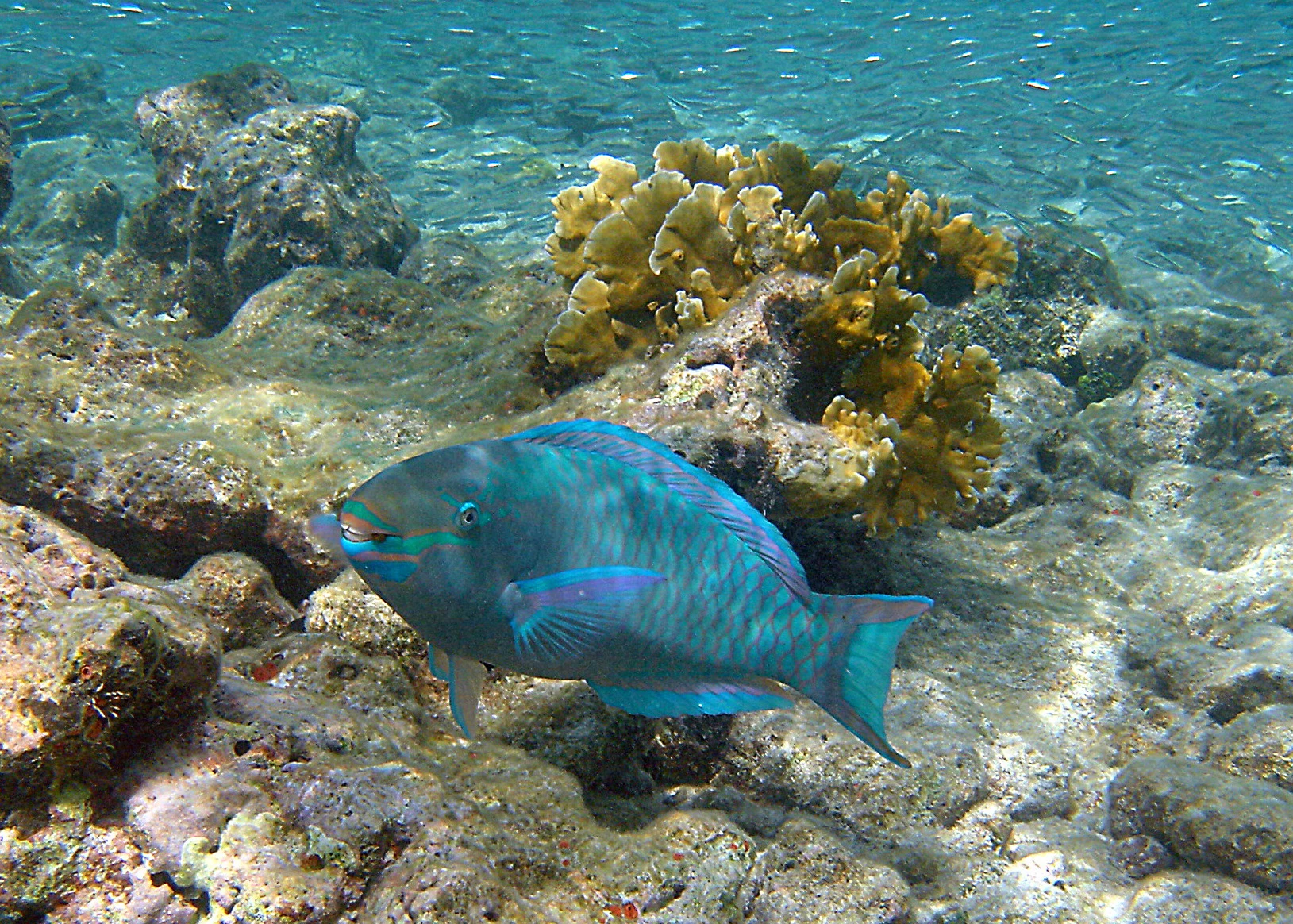
In a park photograph, a bright parrotfish swam through a shallow reef scene. The children first noticed its color, then the many surfaces and spaces around it.
“Rainbow fish,” Augie said.
“With a very interesting neighborhood,” Allie added.
Coral polyps were animals. Many corals lived in colonies, and stony corals produced hard calcium carbonate skeletons. As generations grew, died and left material behind, they helped build reef structure.
Andy drew a tiny builder beside a much larger framework.
“An impressive project for somebody without a wheelbarrow.”
The living tissue and the hard skeleton were different parts of the explanation. A coral colony might look like a rock or branching plant from a distance, but its appearance could mislead a new observer.
Ana remembered Biscayne. Many shallow-water reef-building corals lived with microscopic algae in their tissues. The algae used sunlight in photosynthesis and supplied food to their coral partners. The corals provided a protected environment and materials the algae could use.
“Roommates who share useful things,” Andy said.
“A partnership,” Allie agreed.
Reefs offered hiding spaces, feeding places and surfaces for many organisms. Fish, invertebrates, algae and other residents interacted in ways that no single postcard could show completely.
Augie put a small sign beside his coral drawing: Already occupied.
That was a useful reminder for visitors. Living coral could be damaged by contact from hands, feet, fins or equipment. Their family would learn through careful observation and leave the residents undisturbed.
The photograph showed a moment and a place, not a guarantee that every reef looked like that now. Heat stress, disease, storms and physical damage could change coral communities.
Ana wrote their next question: What does the reef need from the places around it?
The tiny builders belonged to a much larger system.
4. A meadow with an underwater address
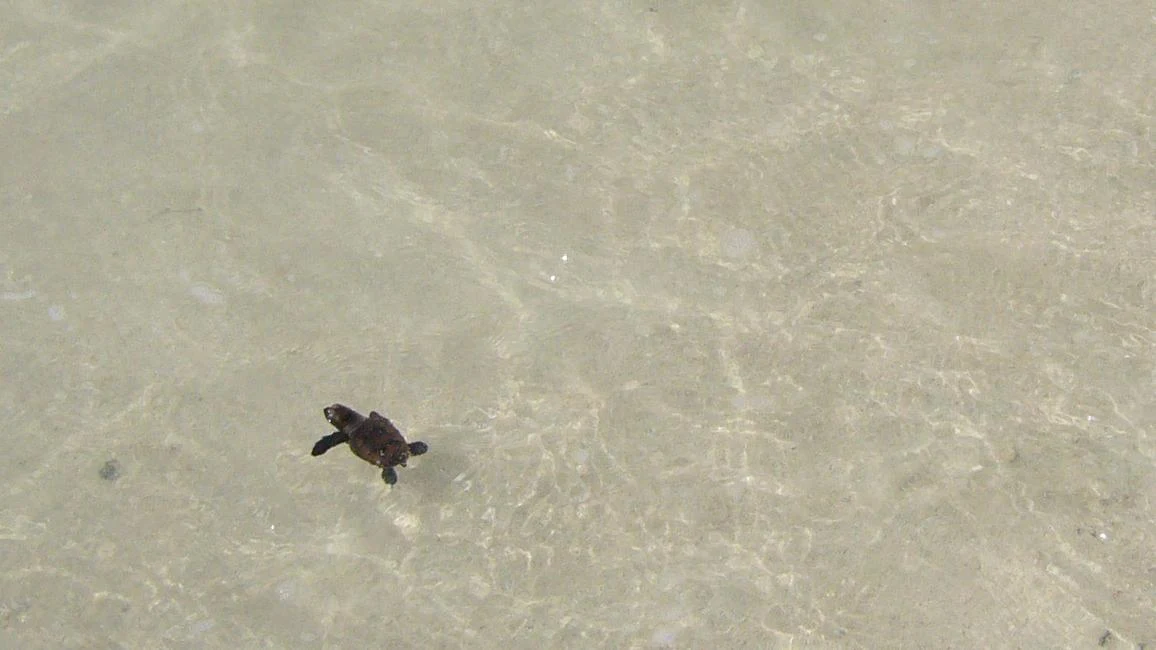
A turtle photograph introduced the next habitat. The animal belonged to a marine world where seagrass meadows could provide food and shelter for many residents.
Augie studied the turtle. “It brought its own roof.”
“Excellent luggage arrangement,” Andy said.
Seagrasses were flowering plants adapted to life underwater. They grew leaves, roots and spreading underground stems called rhizomes. Their rooted meadows differed from the seaweeds the children sometimes drew as loose ribbons.
Allie sketched a patch of seagrass with roots below the surface of the sediment.
“The roots matter even when the leaves get most of the photograph.”
The plants helped stabilize sediment, reducing the movement of loose material. Their leaves and the organisms living on them supported food relationships. Some animals ate seagrass; others fed on tiny organisms associated with it.
“So the meadow has more than one menu,” Ana said.
Some fish used reefs for shelter and visited seagrass areas to feed. Others used different habitats at different stages of life. These connections made protecting a single patch of habitat an incomplete solution.
Andy drew a fish with two labeled arrows: resting place and feeding place.
“We should identify a real species before pretending every fish follows this route,” he said.
Allie approved. Their drawing illustrated a possible relationship, not a universal fish timetable.
Boat anchors and propellers could damage seagrass and its roots. A mark below the surface could matter long after the boat moved away. The children understood why a quiet-looking stretch of water could still need careful decisions.
Augie added another sign: Underwater meadow. Please don’t mow.
Ana smiled. “Especially with a propeller.”
They had found a second part of the coastal team: plants that supported life while helping hold the bottom together.
5. Trees that make room for fish
Their next investigation began with a drawing of mangrove roots. Allie made looping arches reaching into shallow water. Andy supplied a tiny fish between them.
“A tree with underwater rooms,” he said.
Mangroves grew along suitable sheltered shorelines, where salty or brackish water created conditions that many ordinary land trees could not tolerate. Red mangroves were especially recognizable by their prop roots.
The submerged root spaces could shelter young fish and support many other organisms. Above the water, branches could provide places for birds to rest, feed or nest.
Augie drew a bird upstairs and a fish downstairs.
“A very busy tree.”
Roots also slowed moving water and trapped some sediment. That could influence water clarity and the shape of the shore. The mangrove was part of the boundary between land and sea, but the boundary was a living place rather than a simple line on a map.
Ana drew a dot of sediment and an arrow toward the root tangle.
“This arrow means settling,” she said. “The fish arrow means movement. We should keep them different.”
The children could see why mangroves, seagrass and reefs often appeared in the same conservation discussion. Clearer water could help sunlight reach underwater plants and the algal partners of many corals. Shelter in one habitat could support animals that later used another.
Allie also remembered that these benefits had limits. A mangrove forest could not magically remove every pollutant or protect every shore from every storm.
“Helpful relationships,” she wrote. “Not unlimited superpowers.”
Andy quietly removed a cape from the mangrove drawing.
They would leave real roots, branches and wildlife untouched. The family did not need to climb through a mangrove to understand that it was somebody’s habitat.
Augie left the upstairs bird in place. “The tree already has enough visitors.”
6. Waves, sand and the island next door
Back beside the shore, Allie watched a small wave fold onto the beach. The water moved up the sand, paused and slipped back.
“Where does the reef fit into this view?” she asked.
Reef structure could reduce some incoming wave energy before waves reached parts of a coast. Its effect depended on the reef, water depth, conditions and the shape of the shoreline. It was one part of coastal protection, not an invisible wall that stopped the sea.
Andy drew a wave becoming smaller as it crossed a shallow reef profile.
“A simplified picture,” Ana reminded him. “We’d need measurements to describe a particular beach.”
Reefs and other marine organisms could also contribute carbonate material to beach sediment. Broken shells, coral skeleton material and other grains could become part of a beach. Sand from weathered island rocks might be present too.
Augie looked down. “A beach can have several ingredients.”
“Exactly,” Allie said. “Just like we learned at White Sands: sand tells us about grain size, and we still need to investigate the material.”
The children did not declare that every pale grain beneath their feet was a piece of coral. They could enjoy the connection without inventing a mineral identification for every speck.
Ana added a longer arrow from the island hills toward the bay. Rain running off land could carry soil and other material downhill. Excess sediment could cloud the water or settle on living surfaces.
“The land belongs on our ocean map,” she said.
Andy connected the reef, meadow, mangrove and hillside drawings.
“A neighborhood with no fences.”
Augie made a round loop around all four.
“A habitat group hug.”
Allie liked the comparison. The real connections were more complicated, but now they could explain why caring for the shore meant looking both underwater and uphill.
7. The forest has human history too
The island’s land habitats deserved their own page. Park information described forests ranging from drier to moister communities. A tropical island did not automatically mean rainforest everywhere.
“Tropical describes where we are,” Ana said. “We still need to ask about rain, soil and seasons.”
Allie thought of the shade, leaves and roots on the slopes. Forest vegetation helped shape living spaces on land, while the hills and their drainage connected with the coast.
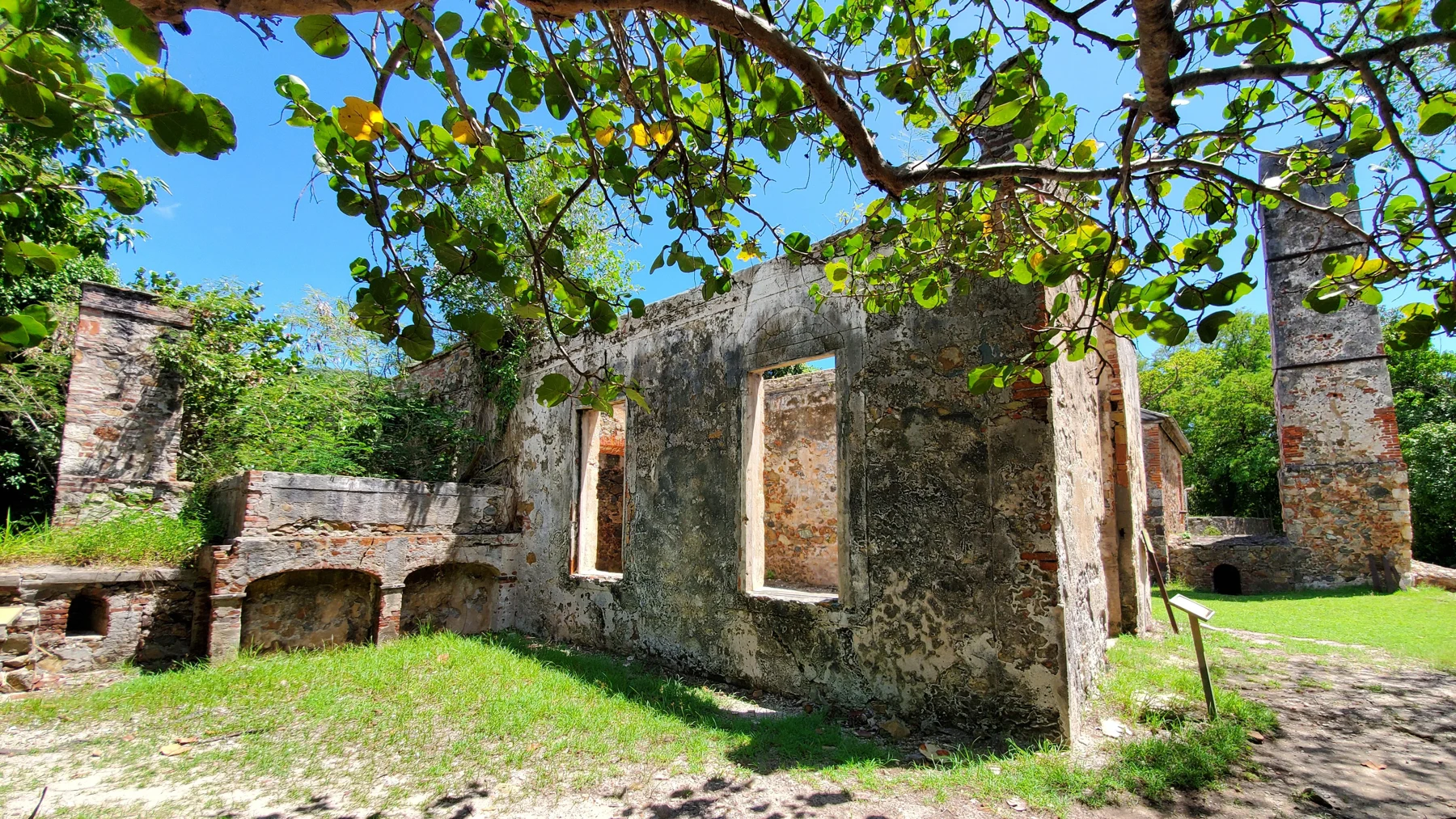
Then the family studied a photograph of plantation ruins among trees. Stone walls, openings and old building remains added another kind of evidence to the landscape.
Andy set down his joke pencil.
“Who lived and worked here?”
Park interpretation described a long human history, including Indigenous communities before European colonization. Later sugar plantations relied on the forced labor of enslaved Africans. At places such as Annaberg, the buildings and their interpretation helped tell that painful history.
Their grown-up explained that enslaved people were treated as property and denied freedom. Their labor, skills, family lives and resistance belonged at the center of the story, rather than disappearing behind the names of plantation owners.
Ana wrote people, not scenery beside the photograph notes.
The children could appreciate the island’s beauty while listening honestly to its history. An attractive view did not make the past fair, and an old wall was more than an interesting shape for a holiday picture.
Allie added a question: Whose experiences are we hearing, and what else should we learn?
The family used exhibits and photographs for this part of the investigation. They would respect historic structures, keep to designated routes at any site they visited and leave artifacts undisturbed.
Augie drew the notebook itself beside the wall.
“For remembering carefully,” he said.
The island’s story included living communities, geological beginnings and people whose histories deserved attention in their own right.
8. A reef needs more than one kind of care
At a table, the children spread their habitat drawings into a row. Andy tried covering everything except the coral.
“If we protect this picture,” he asked, “have we protected the reef?”
Ana uncovered the rest. “We would miss a lot.”
The coral needed suitable conditions in the water around it. Fish and other organisms used connected habitats. Material arriving from land could affect the bay. Heat, disease, storms and direct damage created different challenges that could combine.
Allie drew two columns: things visitors can do and work that needs wider cooperation.
Visitors could leave coral untouched, avoid disturbing seagrass and roots, secure rubbish and observe wildlife without feeding or chasing it. Boaters needed to follow park guidance that prevented anchors and equipment from damaging the bottom.
“Our hands can help by staying away from the coral,” Andy said.
“And our rubbish can stay in the bag,” Augie added, pressing down a wrapper before the breeze could claim it.
The wider work included research, monitoring, managing runoff and cooperation beyond the edge of one beach. A tidy picnic spot helped, but it did not solve every stress on a marine ecosystem.
Ana returned to their evidence notebook. Repeated observations could show changes when scientists used suitable methods and compared like with like. One beautiful underwater photograph was not a complete health report.
They also separated their own visit from what they had learned through pictures. They had observed the shore and island landscape. The photographs helped them investigate species and habitats they could not identify from where they stood.
“Observed, learned, still wondering,” Allie read.
Andy gave the three columns a small check mark.
Augie added one final instruction to his fish drawing: No sandwich delivery.
Wildlife had its own food relationships to continue. Their family’s job was to be thoughtful visitors to an already occupied neighborhood.
9. The title becomes a better question
At the end of the visit, Allie returned to their chapter title: The Islands Built by Reefs.
“Did modern corals build all of St. John?” she asked.
“No,” Ana answered. “The island has a volcanic foundation and a longer geological history.”
“Then what did the reefs build?”
Andy pointed to the underwater framework. “Structures and habitats. They also contribute material to shores and can influence wave energy.”
Augie added the seagrass and mangrove drawings. “And they have neighbors.”
Their investigation had improved the title’s meaning. It reminded them to examine how reefs helped shape island coasts, not to give one group of animals credit for every hill, tree and beach grain.
The living system included many kinds of work. Corals contributed structure. Seagrasses helped stabilize sediment and supported feeding and shelter. Mangroves created root habitats along suitable shores. Forests, hillsides and human decisions affected the surrounding water.
“We started with a house on a coral branch,” Allie said. “We ended with a much better map.”
Ana placed the human-history page beside it. The people of the island were not an extra decoration at the edge of the nature story. Their lives and relationships belonged in the learning too.
Augie removed the giant snack cupboard from his original house.
“Too heavy for the drawing?” Andy asked.
“No,” he said. “I’m moving it to our picnic.”
Next in their park order was Kenai Fjords National Park in Alaska. There they would investigate moving ice and the shapes it left in coastal mountains.
Andy looked from the turquoise water to the next title. “The ocean is getting a mountain-sized freezer.”
“Another kind of coastal story,” Ana said.
Allie closed the notebook. Beyond the beach, reef, meadow, roots and shore continued their connections. The sea surface hid much of the work, but the explorers now knew how to ask what belonged beneath it—and what belonged beyond the picture.
Explorer’s notebook
Nine discoveries to keep
- Virgin Islands National Park includes land and marine habitats on and around St. John in the U.S. Virgin Islands.
- St. John has a volcanic foundation and a complex geological history. Modern coral reefs did not build the entire island.
- Coral polyps are animals. Stony coral skeletons help build underwater reef structure across generations.
- Many shallow-water reef-building corals live with microscopic algae that supply food through photosynthesis.
- Seagrasses are flowering plants with roots and rhizomes. Meadows stabilize sediment and support food and shelter relationships.
- Mangroves provide shoreline and root habitats, trap some sediment and support animals above and below the water.
- Reefs can reduce wave energy and contribute carbonate material to shores, with effects that depend on local conditions.
- Forests, hillsides, runoff and human decisions connect land with coastal waters. The island also has a long Indigenous and colonial history, including slavery and resistance.
- Protecting connected habitats requires thoughtful visiting, research and wider cooperation. A photograph alone cannot establish present ecosystem health.
Five family adventures
- Map a coastal neighborhood: Draw an island hillside, shore, mangroves, seagrass and a reef. Add separately labeled arrows for animal movement, sediment, food or wave energy. Include a key and one question mark. Explain that the drawing simplifies a particular coast and is not a boating or swimming map.
- Give each habitat a job card: Make cards for reef structure, rooted meadow and mangrove shoreline. List a useful role beside each, then connect two cards with a relationship you can explain. Avoid giving any habitat unlimited protection powers or sending every fish through every habitat.
- Look through changing water: With a grown-up, place a picture behind a sealed clear container of clean tap water. Compare it with a second sealed container containing water and a little clean sand after gentle mixing. Watch the sand settle and discuss visibility. The model introduces suspended particles, not all marine pollution or real reef chemistry. Keep sand out of drains and natural waterways.
- Separate foundation from neighbors: Draw a rocky island in one color and a living reef beside it in another. Add seagrass, roots and beach material with labels. Explain why the geological foundation, reef growth and present habitats are connected but need different parts of the story.
- Make an honest photo notebook: Choose a landscape or historic-site photograph. Write three things you can observe, two facts learned from a reliable source and one question the picture cannot answer. For a historic place, include a question about the people whose lives it represents. Keep observation, interpretation and uncertainty separate.
Four questions for the road
- Why would it be misleading to say that modern corals built all of St. John?
- How might a fish depend on more than one coastal habitat?
- How can a change on an island hillside matter to a reef below the water?
- Why should a visit include both careful nature observation and honest attention to human history?
Eight words for your explorer kit
- Polyp: An individual coral animal, with a mouth surrounded by tentacles.
- Colony: A group of connected individuals, such as many coral polyps living together.
- Symbiosis: A close relationship between different kinds of organisms; many corals and their algal partners benefit one another.
- Seagrass: A flowering plant adapted to living submerged in seawater.
- Rhizome: A horizontal plant stem, often underground, from which roots and shoots can grow.
- Mangrove: A coastal tree or shrub adapted to salty or brackish environments.
- Sediment: Loose particles, such as sand or silt, that can move and settle.
- Runoff: Water moving over the land surface, sometimes carrying soil and other material toward lower ground and the sea.