1. The smallest person with a hard hat
Augie had drawn a prairie dog wearing a yellow hard hat.
He had begun the picture after their stone-log investigation at Petrified Forest. Now the family had traveled to western North Dakota, and he was ready to find out whether the hat was necessary.
“Do they have tiny diggers?” he asked.
Andy looked at the prairie outside. “Possibly parked underground.”
Ana turned to Allie. “We should investigate before he adds a fuel station.”
The four explorers had arrived at Theodore Roosevelt National Park, a landscape of grasslands, layered hills, and the Little Missouri River. Their parents had chosen a manageable South Unit visit with suitable stopping places, rest, and time to watch from a respectful distance. Maps and photographs would help them learn about other parts of the park.
Allie opened the notebook. At ten, she liked an unanswered question. Nine-year-old Ana preferred an answer that survived checking. Andy, seven, had already designed an underground garage. Four-year-old Augie had supplied its only employee.
Their first question was simple: Can a small animal change a big landscape?
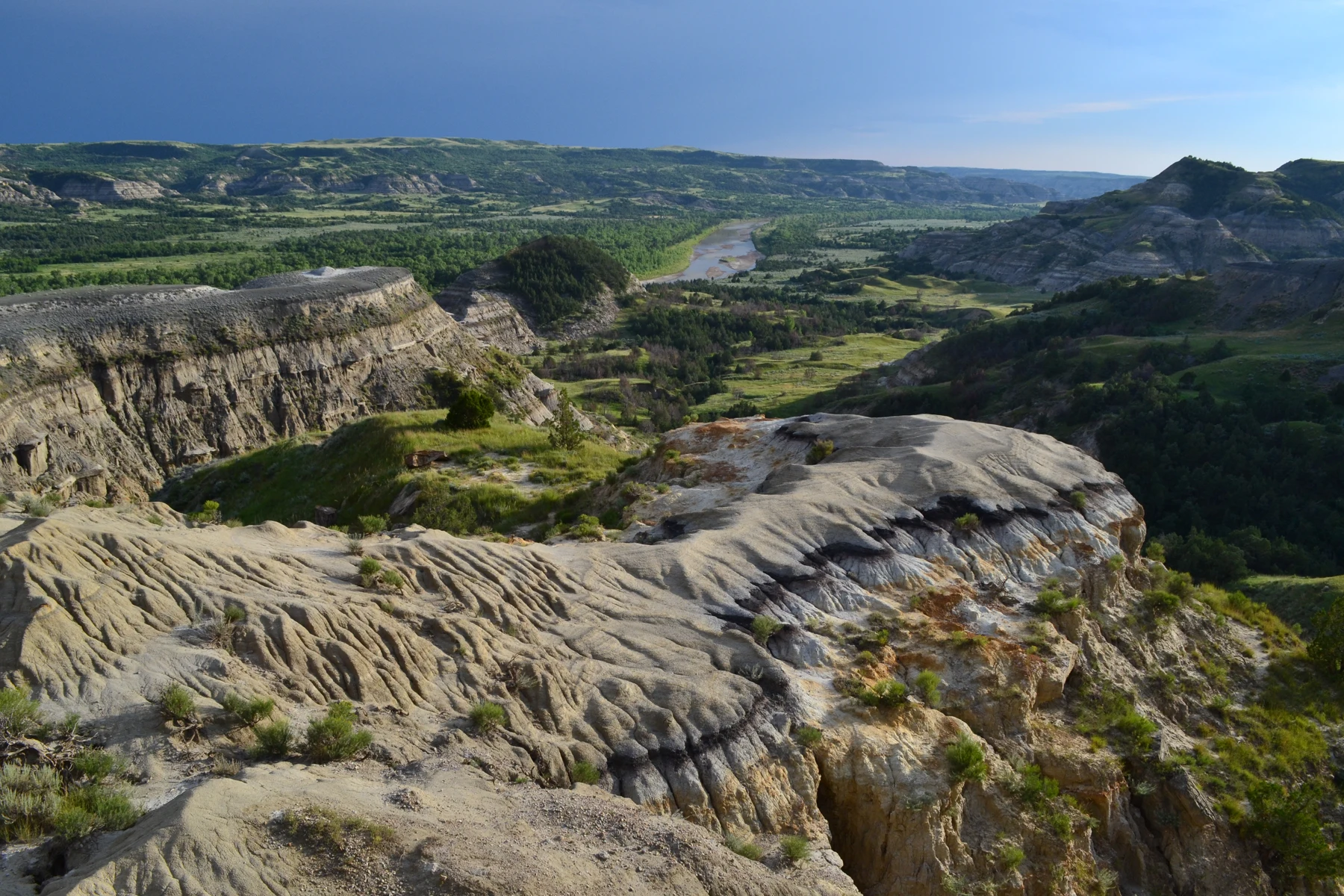
A photograph of River Bend Overlook in the North Unit showed a broad valley, trees, grass, and banded buttes. That was a different district, not a viewpoint the family had somehow reached from their South Unit stop. The map kept their actual route honest.
Andy circled the little prairie dog in Augie's drawing.
“This one is going to change all that?”
“Maybe not all by itself,” Allie said. “Let's find out what it actually does.”
Their parents checked the weather and packed water, sun protection, and extra layers. The prairie could be windy, exposed, and surprisingly changeable. They would stay on established routes, keep out of burrows, and give all wildlife room.
Augie put a question mark on the hard hat.
The engineering inspection was ready to begin.
2. A town without a bakery
At a safe viewing place chosen by their parents, the children watched a prairie dog colony from a distance. Little heads appeared, disappeared, and appeared somewhere else.
“An underground town,” Andy said. “Where's the bakery?”
“Probably not in the evidence,” Ana replied.
Black-tailed prairie dogs were not dogs. They were rodents in the squirrel family. Their bark-like calls helped explain the name, while their black-tipped tails supplied another clue.
Augie looked at the drawing. “No dog biscuits.”
“Definitely no feeding,” their parent said. “Their food comes from their habitat.”
Interpretive information showed that burrows could have tunnels, chambers, and more than one entrance. The visible holes were only part of the animals' home. A visitor looking down from above could not see the whole arrangement.
Allie sketched a side view on paper. Ana labeled it a simplified burrow idea, not a map of this colony.
Andy wanted a bedroom, an escape route, and a cupboard for prairie lunches. He also added a lift.
“Some of these are known functions,” Allie said. “The lift is your invention.”
He moved it into a separate imaginary-design box.
They learned that prairie dogs lived in social groups, with activities including maintaining burrows, watching for danger, and raising young. Calls could alert other prairie dogs to threats. But the family could not translate a distant squeak into an exact sentence about Andy's hat.
Ana wrote we hear a call on one side of the page. On the other she wrote we do not know the exact message.
Augie whispered a greeting from where he stood. He did not call loudly, approach, or try to make an animal perform.
Their parent reminded them that a burrow entrance was not a place for fingers, feet, cameras, or snacks. Other animals could use burrows too, and the ground needed to remain undisturbed.
Andy closed the fictional bakery.
The real town already had plenty going on.
3. The lawn mower with whiskers
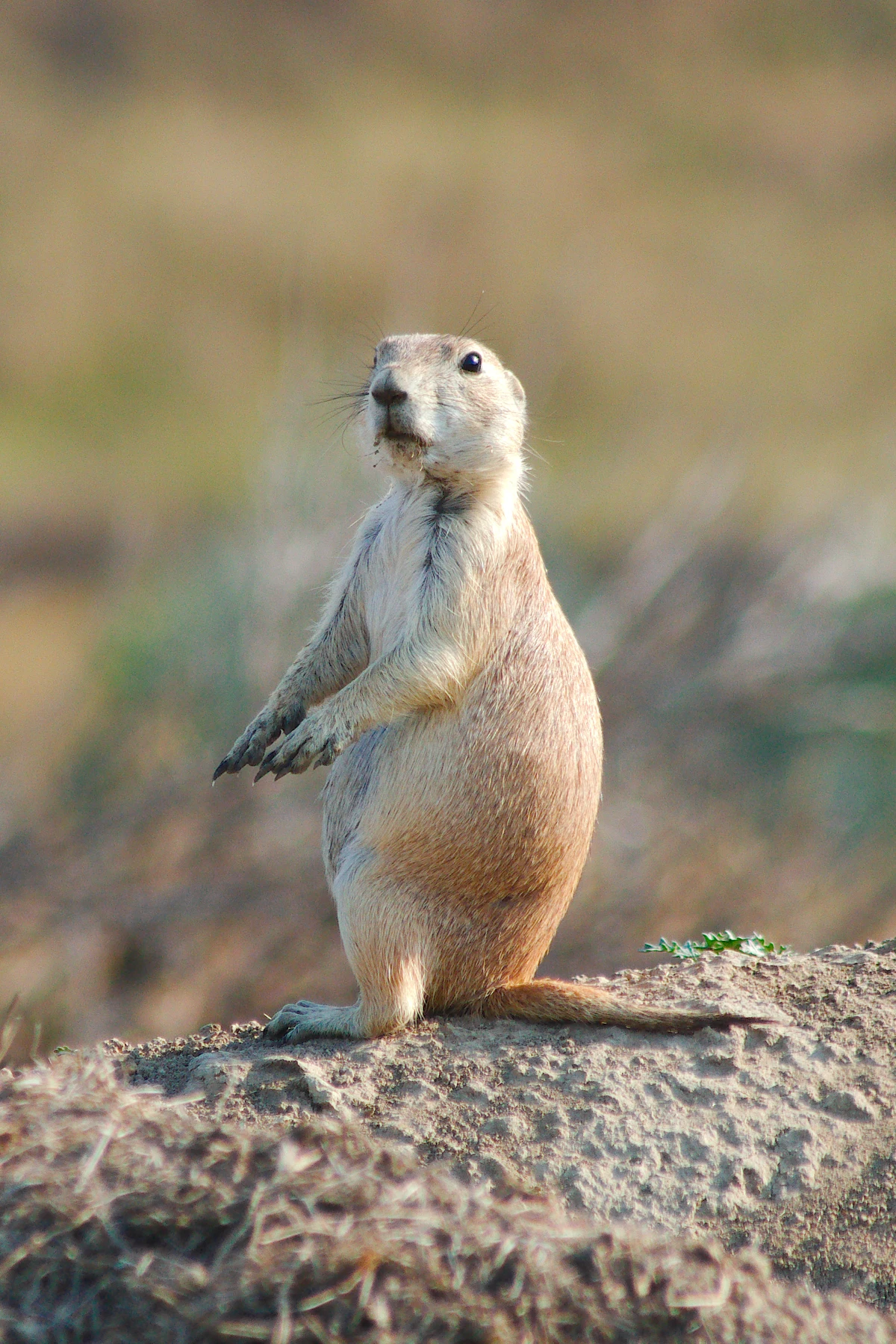
Ana noticed a difference between vegetation around the colony and taller growth farther away.
“Can eating change what grows?” she asked.
Allie checked their guide. Prairie dogs clipped plants for food and also kept the ground around them more open, helping them see approaching danger. Their activities could change the height and mixture of vegetation.
Andy drew a prairie dog pushing a lawn mower.
“Wrong equipment,” Ana said.
“Excellent whiskers, though.”
The family learned that forbs were flowering, non-grass plants—not a special flavor of grass. Both grasses and forbs could be part of a prairie dog's diet. Changes in grazing could help favor some plants over others and produce patches with fresh growth that attracted other grazers.
“Not every patch everywhere doing the same thing,” their parent added. “Soil, rain, season, and how heavily an area is grazed all matter.”
Allie made room for those conditions beside their arrows.
They returned to the chapter's question. Prairie dogs did not have to plan a park to alter it. Digging and feeding changed the surroundings, with consequences for other living things.
Scientists could call an animal that physically changed habitat an ecosystem engineer.
Augie touched the little hard hat in his drawing.
“So the hat is pretend. The changing is real.”
“Exactly,” Allie said.
At a table later, they made two imaginary prairie squares on paper. One held tall pencil strokes; the other held shorter strokes and several different plant shapes. They added labels explaining possible relationships, rather than claiming the pictures predicted every colony.
Andy tried to draw a blade of grass requesting a haircut.
Ana supplied the caption: plants do not make appointments.
Their model had no moving parts, but their thinking had moved. A small animal's influence did not end at the edge of its fur. Its meals and its digging could change conditions beyond its own body.
Augie colored the hard hat yellow again, just to make sure everybody knew which part was imaginary.
4. Who else uses the neighborhood?
The next page needed more animals.
Prairie dogs were food for predators such as coyotes, badgers, and hawks. Burrows could also offer shelter to other creatures; burrowing owls were one example associated with prairie dog towns. The family learned about these connections through interpretation, not a promise that every animal would appear during their short visit.
Andy drew a tiny rental notice over a tunnel.
Ana shook her head. “The prairie dogs aren't advertising apartments.”
“The owl might appreciate the paperwork.”
Allie put arrows between plants, prairie dogs, predators, and shelter. Some arrows meant food; others meant habitat. They needed a key so the arrows did not all look as if they meant somebody ate somebody else.
Augie pointed to the burrow arrow.
“The owl is not eating a house.”
“An important correction,” Ana said.
They also learned keystone species: a species whose effects on its community were especially large compared with what its size or abundance might lead someone to expect. Prairie dogs could have that kind of influence through several different relationships.
It was not the same as saying every species always benefited, or that all grassland places responded identically. The family could appreciate a connection without turning the whole prairie into a simple story where everybody agreed.
Andy wanted to rescue every prairie dog from every predator.
Their parent helped him think it through. Predators also belonged to this system and needed food. Watching wildlife did not mean choosing a favorite side and interfering.
Augie drew a large bracket around the whole page.
“Everyone has a day.”
Allie liked that more than Andy's proposed security fence around the paper prairie dog.
The food-web page was becoming complicated. That was a clue in itself. When a small animal changed one part of the habitat, the effects could travel through relationships the children had not noticed at first.
Ana gave their page a new title: more than one neighbor.
5. A bison does not need an invitation
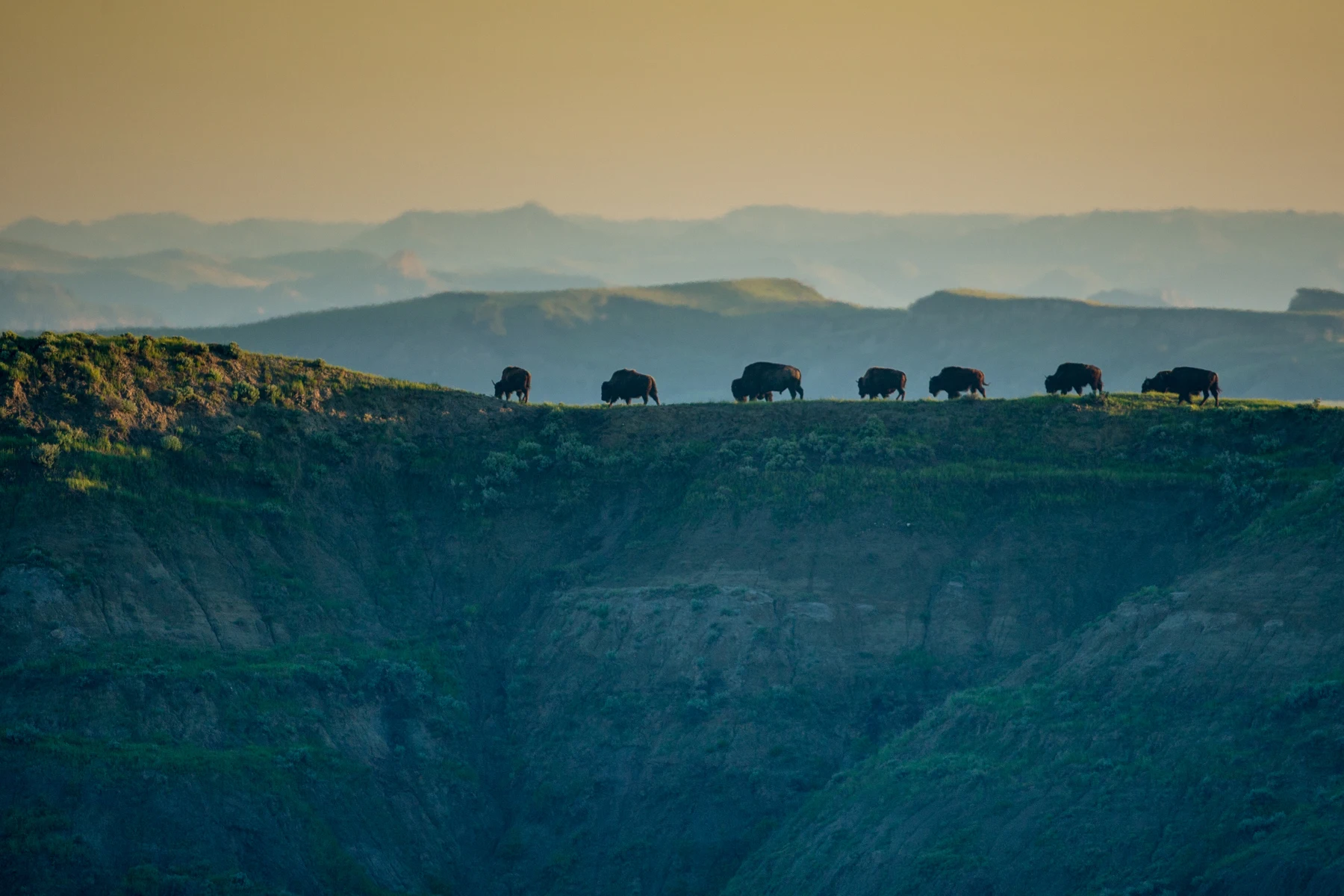
A bison photograph made Andy stop drawing small things.
He began an enormous shoulder hump that almost pushed the prairie dog off the page.
“Different size of engineer,” he said.
Bison fed mainly on grasses and other herbaceous plants. Grazing, moving over the ground, and wallowing could change patches of prairie. They could visit prairie dog towns where fresh plant growth offered good forage, linking the two animals' activities.
Ana drew an arrow from plants to bison, then another from grazing back toward the vegetation.
“A loop,” Allie said. “Not just a line of things being eaten.”
Augie asked whether the prairie dogs had invited the bison for dinner.
“No invitations,” their parent said. “Animals responding to food and their surroundings.”
The children admired the photograph without treating it as a suggestion for how close to stand. Bison were wild, powerful, and unpredictable even when they appeared relaxed.
Their parents followed park guidance: at least 25 yards, about 23 meters, from bison, with more space whenever needed and no approach that disturbed their movement. Distance was a minimum, not a target for getting the closest possible picture. If animals blocked a route, the plan would change.
While traveling, the family stayed in the vehicle when wildlife required it, watched quietly, and let animals have the right of way. Nobody needed a photograph beside a horn.
Andy drew a camera with a long zoom lens.
“That brings the picture closer,” Ana said. “Not us.”
Allie compared the prairie dog and the bison. Both changed the prairie, but their scale, behavior, and effects differed. Neither was operating a landscaping business.
Augie removed a small tie Andy had drawn on the bison.
“Too much uniform.”
“Fair,” Andy admitted.
The notebook kept its useful ideas—grazing, habitat, connections—and returned all pretend office supplies to the margin.
6. Who engineered the badlands?
The layered hills raised a much bigger question.
“If prairie dogs move soil,” Andy asked, “did they dig all these valleys?”
Ana looked across the badlands. “We may be giving the little engineers too large a contract.”
The rocks told a story extending far beyond today's colonies. Ancient rivers had deposited sediment in a region that once included wetter, forested environments. Much later, the Little Missouri River and its tributaries cut into the layers, while weathering, runoff, and gravity continued reshaping them.
Allie remembered Petrified Forest. Rock layers could preserve evidence of an earlier environment very different from the landscape visitors saw today. That did not make the two parks the same age or give them identical histories.
“Same kinds of questions,” she said. “Different evidence to investigate.”
Some layers resisted erosion better than others, helping form slopes, ledges, and capped hills. The children could look for patterns from their designated viewpoint without climbing fragile ground to test it.
Augie pointed to a hill in the photograph.
“A rock hat.”
“That can be a useful shape comparison,” Ana said. “Unlike your prairie dog hat, this one is actually there.”
At their next rest stop, Andy drew three scales: a burrow, a patch of grazed grassland, and a river valley. Allie added different processes beside each.
The diagrams helped them avoid one explanation swallowing every other explanation. Digging animals changed soil and habitat; flowing water helped carve the larger badlands. Time and scale mattered.
Their parent reminded them that wet clay could become slippery and slopes unstable. They would use established routes and current advice, rather than decide that a good-looking hill was safe to climb.
Augie put the largest valley beside a very small prairie dog.
“Not all his work.”
The engineering mystery had acquired a second question: Which process can explain which change?
7. The river's green neighborhood
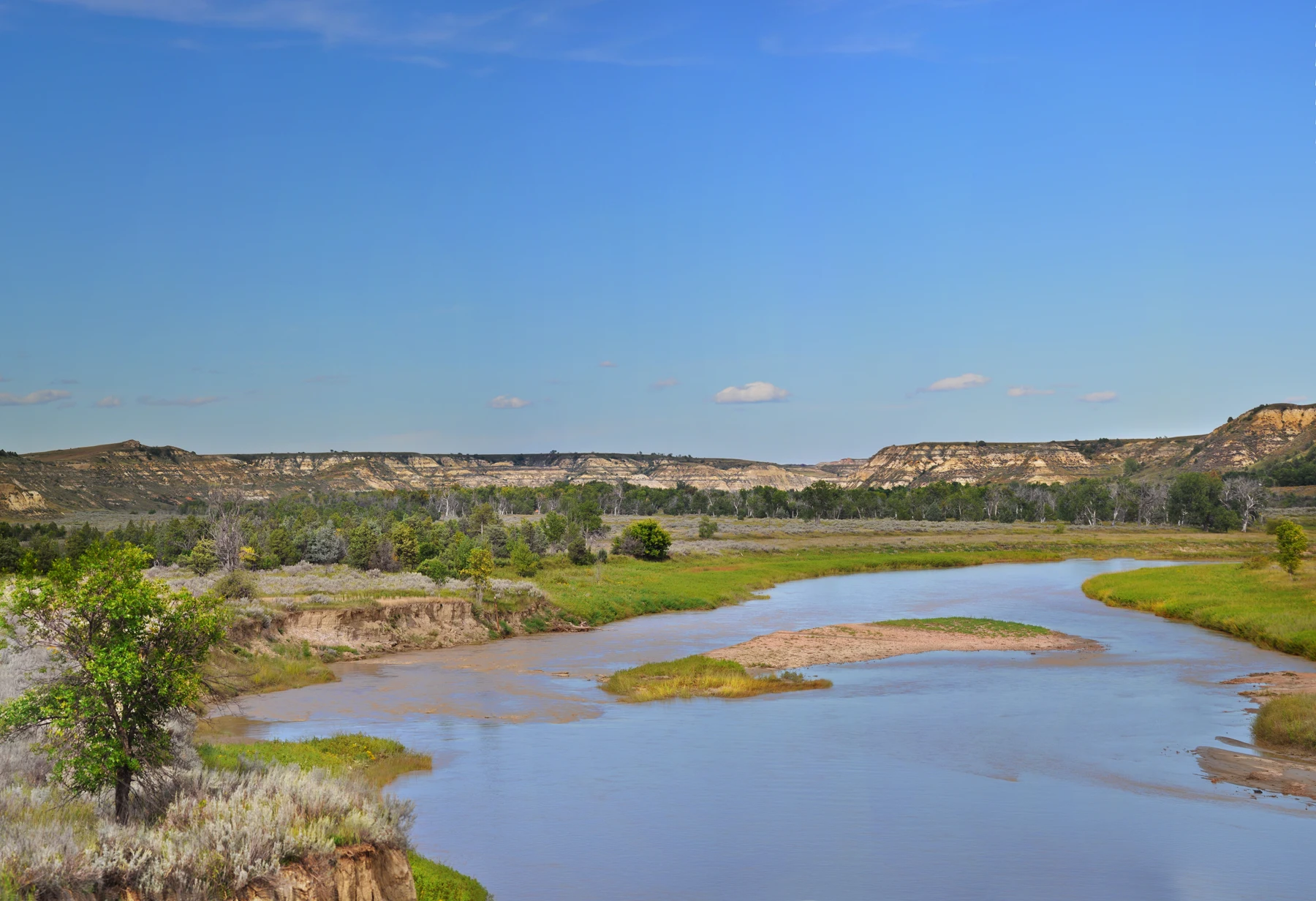
A photograph of the Little Missouri River showed greener banks between layered hills.
Andy drew the river as a ribbon. Ana added plants along the sides, then asked why the vegetation differed from the open prairie.
Water availability helped create different habitats. The river corridor could support trees and other plants suited to conditions along its banks. The park was not one uniform field of grass repeated all the way to the horizon.
Allie drew a simple habitat map with three patches: open prairie, riverbank, and exposed badland slopes. Their guide helped them keep it a broad comparison, not a prediction that every plant or animal would stay neatly inside a colored border.
“Animals don't read my crayons,” Andy said.
“They may respond to food, shelter, and water instead,” Ana replied.
The river was also moving material through the landscape. Sediment could be carried, deposited, and later moved again. A still photograph of a bend could not show its whole history or establish that a crossing was safe.
Their family would not wade into the river to complete a notebook diagram. They had their own drinking water from appropriate sources and a suitable route planned.
Augie drew a bridge on paper, then paused.
“Imaginary?”
“Unless the actual map shows it,” Allie said.
He put it in the margin, beside Andy's now-retired underground lift.
Their parent asked where the habitat arrows should stop.
Ana thought about the park boundary. “The fence or map line doesn't make everything outside stop being connected.”
Allie added arrows leaving the page. Water, animals, weather, and people's decisions could link this park with a wider region.
Andy wanted more paper. For once, the request was scientifically reasonable.
Augie supplied the back of his hard-hat drawing. The little prairie engineer now had a whole river system behind it.
8. A park name is not the beginning
At the visitor center, the family turned from animal engineering to human history.
The park's name honored Theodore Roosevelt, whose time ranching in the Dakota badlands influenced his conservation ideas. He had come here before becoming president. His experiences were an important part of the park's story, but not its beginning.
Ana drew a long line before Roosevelt's name.
“People already knew and used this land.”
They learned about relationships involving Mandan, Hidatsa, Crow, and other Indigenous peoples. Different communities had their own histories, knowledge, and spiritual connections with the badlands. Those connections continued in the present.
Allie added several headings rather than giving every community one identical description. Bison, plants, rivers, travel, and sacred places meant more than a list of things visitors could see in an afternoon.
Their parents helped them recognize another part of the history: settlement and the destruction of bison herds had harmed Indigenous communities as well as wildlife. Conservation was not just a cheerful story about one famous person saving an empty landscape.
Andy considered the notebook page.
“We need room for more voices.”
“Yes,” Allie said. “And time to listen.”
They would use publicly shared interpretation and community resources, leave cultural objects and structures untouched, and respect places not offered for visitors to enter or copy. A question did not automatically grant access to an answer or a sacred practice.
Augie put his pencil down and watched his siblings finish the headings.
“Big page,” he said.
“A bigger story than one page,” Ana replied.
Before leaving the display, Allie added a question for future reading: Who has cared for this place, and whose experiences are included when its story is told?
The question belonged beside their wildlife notes. Caring for land involved people and histories, not only a count of animals or an attractive view.
Andy made his notebook cover slightly larger in the next drawing. It was his practical solution to a useful problem.
9. The inspection report
At their final rest stop, the children reviewed the prairie-engineering question.
Augie placed the yellow-hat prairie dog in the center.
“Hat: pretend. Digging: real.”
Ana added: “Clipping plants changes vegetation. Burrows change space and shelter. Other animals can be affected.”
“Bison graze too,” Andy said. “And their effects connect with the little animals' effects.”
Allie joined their ideas with arrows. They had started by looking for one small animal with a job title. Now they could see relationships among soil, plants, grazers, predators, water, and people.
Their parent asked whether that meant the family should help by digging an extra burrow or cutting some grass.
All four children said no.
“Our imaginary engineering stays on paper,” Ana said.
In the real park, their useful contributions were less dramatic: observe without disturbing, avoid feeding wildlife, keep space around animals, use suitable routes, leave natural and cultural objects in place, and learn before making assumptions.
Andy prepared a paper inspection report. It had three boxes: what we saw, what reliable information helped explain, and what we still want to know.
Augie gave it a large tick, although he could not yet read all the words.
“Approved for more questions.”
The children did not conclude that the prairie was finished or perfectly balanced forever. Weather changed, populations changed, and conservation required continuing work and attention. Their notebook described connections, not a machine with a guaranteed setting.
As the family packed up, they checked for wrappers, pencils, hats, and water bottles. The actual prairie dogs kept their own schedules. No tiny worker came to collect a salary.
Their next chapter would take them to Channel Islands National Park, where an island fox would raise new questions about size, isolation, and belonging.
Andy started drawing a fox beside a very large suitcase.
“First idea,” Ana reminded him.
He nodded and labeled it.
Augie watched the grass move in the wind.
The prairie engineers did not need hard hats. The visiting explorers needed looking eyes, patient feet, and enough room in their notebook for the things they had almost missed.
Explorer’s notebook
Nine discoveries to take home
- Theodore Roosevelt National Park is in western North Dakota, with separate units and varied grassland, river, and badland habitats.
- Black-tailed prairie dogs are rodents in the squirrel family, not dogs.
- Their burrows, social behavior, and warning calls help them live in colonies; visitors see only part of their underground world.
- Digging and clipping vegetation change habitat. This is why prairie dogs can be called ecosystem engineers.
- Prairie dogs affect other species through food, shelter, and vegetation changes; their influence can make them a keystone species.
- Bison also change prairie patches through activities such as grazing and wallowing. Keep at least 25 yards (about 23 meters) from them, and more space when needed.
- The larger badland valleys have a different explanation from burrows: sediment deposition, weathering, erosion, and river activity over long periods.
- River corridors help create habitat variety and connect places beyond park boundaries.
- Roosevelt's ranching and conservation story is one part of a landscape with much older and continuing Indigenous relationships.
Five small adventures
- Draw an imaginary burrow. Include entrances and chambers on paper, then label what comes from reliable information and what you invented. Never investigate a real burrow with hands, feet, objects, or a camera.
- Make two prairie patches. Draw taller vegetation beside a differently grazed patch. Add questions about plant types, fresh growth, soil, rain, and season. Treat it as a thinking model, not a prediction of every colony.
- Build a connection map. Link plants, prairie dogs, bison, a predator, and a burrow. Use different arrow styles for food and shelter, and explain the key.
- Compare scales. Draw a burrow, a grazed patch, and a river valley. Identify a process that helps explain each, and one explanation that would be too small or too simple.
- Write a visitor inspection report. Make three columns: what you observed, what reliable information explains, and what remains uncertain. Add one respectful action you could take during a visit.
Talk it over
- How can feeding and digging change a place even when an animal has no plan to help its neighbors?
- Why are a food arrow and a shelter arrow different?
- Why does a calm-looking bison still need plenty of space?
- Whose histories should we learn alongside the story of the person named in a park's title?
Words for your explorer pack
- Colony: a group of animals living together in an area.
- Burrow: a tunnel or underground shelter made by an animal.
- Forb: a herbaceous flowering plant that is not a grass or grass-like plant.
- Ecosystem engineer: an organism whose activities physically change habitat.
- Keystone species: a species with an especially large influence on its ecological community relative to its abundance or size.
- Graze: feed on grasses or other low-growing plants.
- Tributary: a stream or river that flows into another.
- Conservation: caring for and protecting natural resources and living communities over time.