1. The paintbrush investigation
Augie had brought the paintbrush drawing from their Mount Rainier notebook.
“Found the tool.”
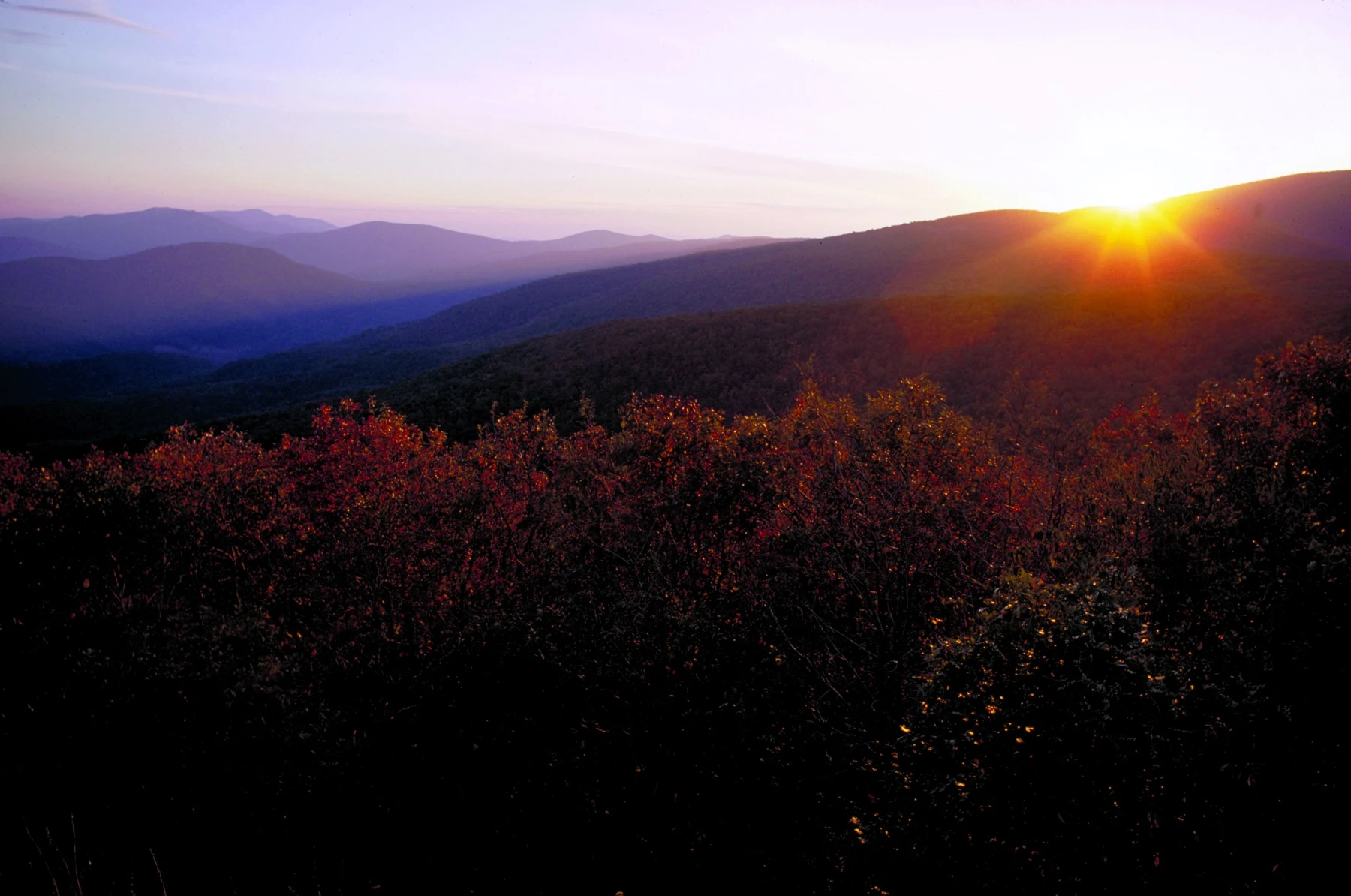
Andy examined the photograph of overlapping mountain ridges. The nearest slopes were green. Farther away, the hills faded toward blue.
“Someone painted the back ones,” he decided. “Very tidy. No paint on the sky.”
Ana leaned closer. “Or something changes the way we see them.”
Their family’s book journey had returned to the Appalachian Mountains, this time to Shenandoah National Park in Virginia. Instead of Rainier's snowy cone, they found long wooded ridges and valleys. Skyline Drive followed the mountain crest through the park, with designated overlooks for stopping to look.
Dad parked before anyone began serious detective work. Mom had checked weather, road conditions, suitable trails, and park guidance. They had water, layers, comfortable footwear, snacks, and time for breaks. Their plan mixed short walks with viewpoints, photographs, and exhibits; it did not require reaching every place in the guide.
From an overlook, the children could make out different layers of landscape.
“The front trees haven't changed color,” Allie said.
“Perhaps the painter ran out,” Andy replied.
Augie drew a tiny bucket labeled BLUE. Then he added a very long ladder.
“No climbing required,” Mom said.
Allie opened the case: WHY DO DISTANT GREEN MOUNTAINS LOOK BLUE?
Ana drew an eye, a mountain, and the space between them.
“We should investigate all three.”
Andy looked at the empty space.
“Air. Our most difficult suspect to put in a jar.”
2. The clue between your eyes and the mountain
At an educational display, they learned that looking into the distance meant looking through air. A farther ridge had more atmosphere between it and the children than a nearby tree did.
Tiny particles and molecules scattered light, sending some of it in new directions. That affected the colors and contrast reaching their eyes. The mountains did not need blue leaves to look bluish from far away.
“So the view includes the stuff between us,” Ana said.
“An invisible photo filter?” Andy asked.
“A comparison,” Allie said. “Not a phone app floating over the valley.”
Forests could contribute to the effect. Trees released natural compounds into the air. After chemical reactions, some helped form tiny airborne particles called aerosols. The word did not mean a can of blue spray paint.
Augie crossed the paintbrush off his suspect list.
“Trees have no hands.”
“An excellent observation,” Andy said solemnly.
The details mattered. The familiar blue appearance of distant ridges was not proof that every hazy day was simply a forest doing something beautiful. Dust, smoke, and human-made pollution could also affect visibility. Weather and moisture changed the picture too.
Ana drew several arrows pointing toward the word VIEW.
“We can't measure air quality just by deciding whether we like the color.”
Allie nodded. Scientists used instruments to learn what was in the air and how conditions changed. The park monitored air quality near Big Meadows; the family could consult current information instead of guessing.
Andy wrote: SUSPECTS INCLUDE AIR, LIGHT, DISTANCE, AND PARTICLES. PAINTER RELEASED WITHOUT CHARGE.
Augie added a smile to the paintbrush.
“Going home.”
3. The mountains have an older story
Once the color mystery had a promising explanation, Andy asked a different question.
“Why are these mountains wearing soft, round shoulders? Rainier looked pointier.”
Allie refused to diagnose a whole mountain from one silhouette.
“Let's check the rock history.”
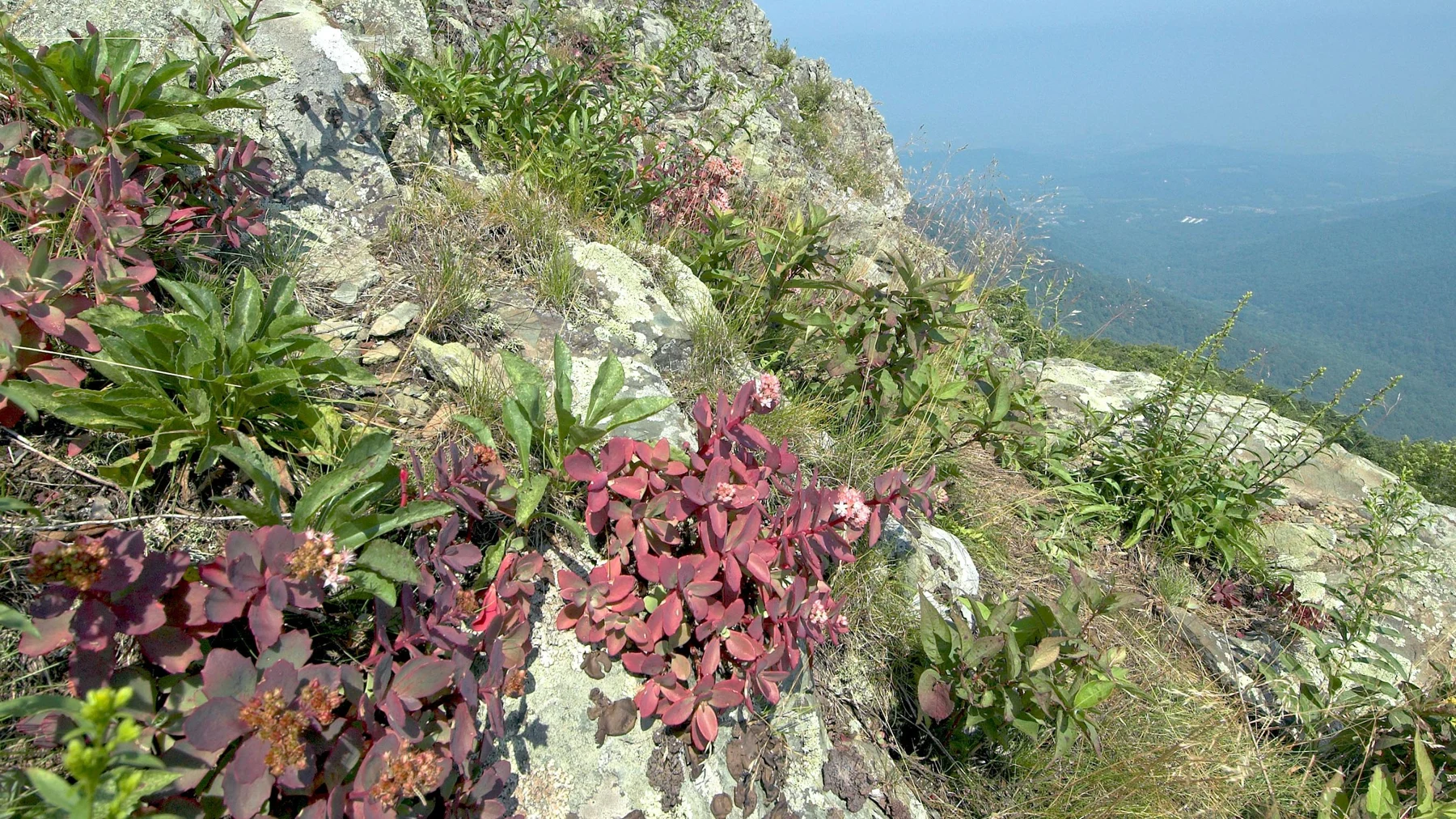
The Appalachians recorded ancient episodes of mountain building. Colliding landmasses had folded, fractured, and lifted rock. Later weathering and erosion removed enormous amounts of material. Shenandoah's landscape contained rocks far older than the modern scenery around them.
Some of the park's basement rocks were more than a billion years old. Other formations recorded ancient lava flows and sediments deposited in environments very different from today's forest.
Andy stared at the number.
“My birthday candles would need their own mountain.”
“You don't turn a billion,” Ana said. “The rocks already did.”
Not every rounded mountain was rounded for exactly the same reason. Rock strength, fractures, water, slope, and a long history of erosion all mattered. A gentle-looking outline did not mean that the trail beneath it would be gentle.
Their guide introduced greenstone: rock formed from ancient basalt that had been changed by heat and pressure. Greenish minerals helped give it its name.
Augie frowned.
“Green stone. Blue mountain.”
“Different questions,” Allie said. “A rock's minerals and a distant view through air are different clues.”
Andy wrote a useful rule: DO NOT MAKE ONE COLOR EXPLAIN EVERYTHING.
The children compared photographs instead of scratching rocks, collecting samples, or climbing cliffs. One page could hold a billion-year history. Their pockets did not need to.
Ana added a tiny birthday cake beside the oldest rock.
“No candles,” she said. “Fire restrictions.”
4. The forest has more than one floor
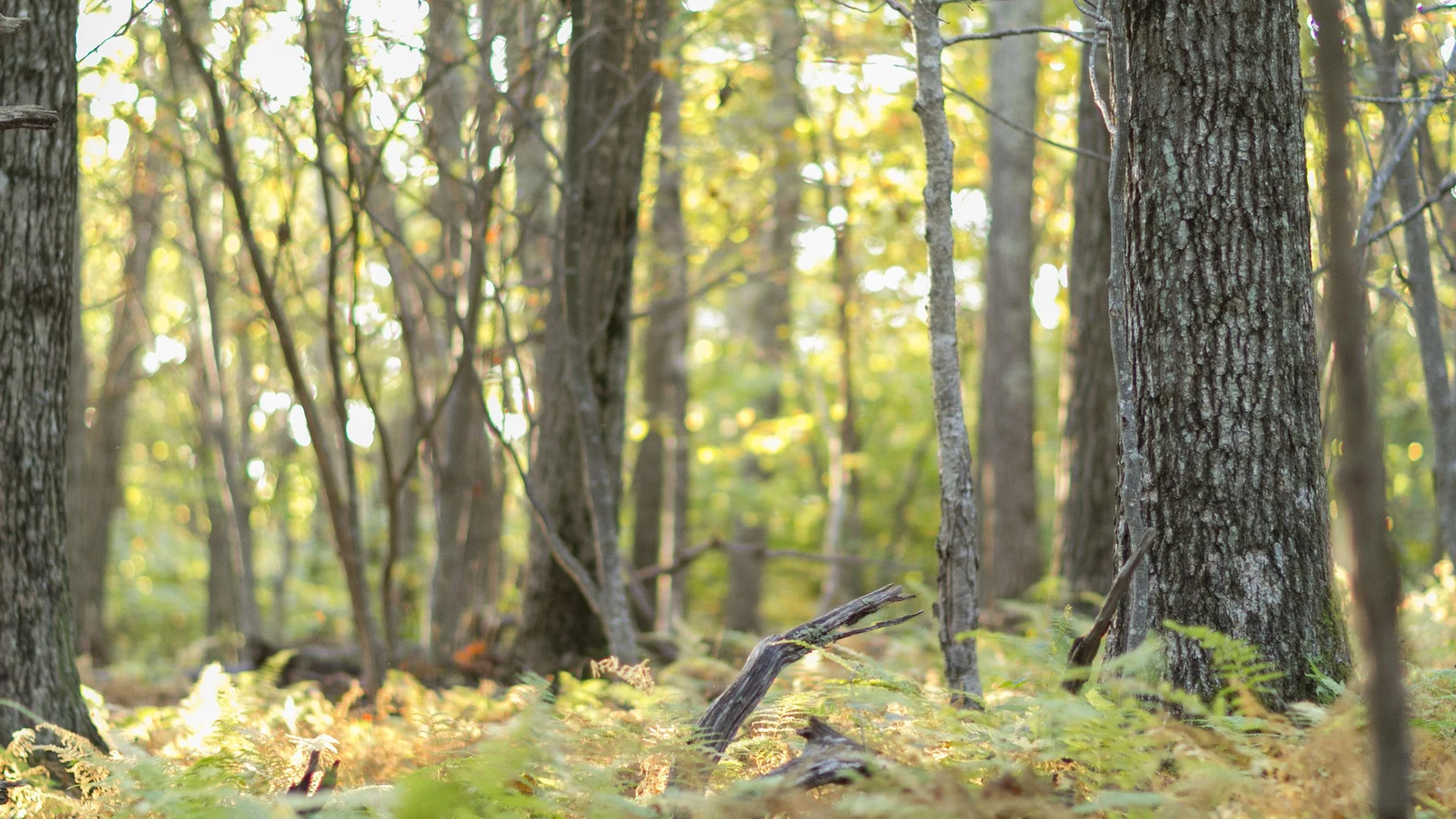
On a suitable established trail, the children left the broad view behind and looked nearby.
“Now the mountains are mostly trees,” Andy said. “The blue department has closed.”
Above them was the canopy, the leafy roof made by taller trees. Beneath it were smaller trees, shrubs, and other plants. At their feet, fallen leaves and wood helped create another busy world.
Ana watched a leaf move in the breeze.
“The forest isn't just a collection of trunks.”
Fungi, microbes, and small animals helped break down dead material, returning nutrients to the ecosystem. A fallen log could be habitat as well as something slowly becoming part of the soil.
Augie pointed at one from the path.
“Tree apartment.”
“Many residents. No doorbell,” Andy said.
The children left logs, bark, and stones undisturbed. They could learn about hidden residents from pictures without removing anyone's roof.
Allie looked at a patch of young trees in a historical comparison photograph. Parts of today's forest had grown back on land once used for homes, fields, orchards, or other human activities.
“So forest can return,” she said. “But it doesn't mean the place had no history before the trees.”
Ana wrote succession in the notebook: the changing communities of living things in a place over time. It was not one rigid schedule or a promise that every patch of land would follow identical steps.
Andy tried to organize a forest timetable.
“Monday: small plants. Tuesday: enormous oak.”
“Too fast,” Allie said.
“Wednesday?”
“Still too fast.”
Augie drew a seed wearing pajamas.
“Needs time.”
Under the trees, time was working at several speeds: a leaf fluttering, a log decaying, a forest changing, and ancient rock weathering beneath it all.
5. The water takes the stairs
A waterfall photograph interrupted Andy's imaginary forest schedule.
“Someone opened another mountain faucet.”
They remembered Yosemite's mountain-faucet joke, but this waterfall had its own setting. Shenandoah's streams ran down slopes, finding routes through cracks and across different rocks. Where a stream met a steep drop or resistant ledge, water could fall and tumble in cascades.
Many of the park's waterfalls occurred where streams crossed ancient volcanic rock of the Catoctin Formation. The children did not need an active volcano beneath the falls: the lava had hardened long ago.
“Old lava, new water,” Ana said.
“Very old staircase,” Andy added.
Allie sketched a ridge with rain falling on either side. A watershed was the area of land that drained toward a shared outlet. Ridges could divide drainage areas; water on opposite slopes might begin different journeys.
“A mountain can be a sorting desk,” she said.
Augie drew two drops with backpacks.
“Going different ways.”
Mom reminded them that a photograph did not show every hazard beside a waterfall. Wet rocks could be slippery, and steep banks and drop-offs deserved care. They would use an appropriate trail or viewing place if conditions and the family's abilities suited it; otherwise, the picture was enough.
Andy labeled his drawing: LOOKING POSITION, NOT SPLASHING POSITION.
They also learned that protecting water meant caring for the land above it. Soil, vegetation, rocks, and things carried from upstream could affect a stream's condition.
Ana connected their air-quality page to the watershed sketch.
“Even air and water aren't separate cases.”
Allie smiled. “Our detective board is becoming a whole park.”
6. A tiny neighbor with no lungs
At an exhibit, Augie found an animal small enough to fit beside his enormous paintbrush drawing.
“Baby lizard?”
“Salamander,” Allie read. “An amphibian, not a lizard.”
The Shenandoah salamander lived in a very limited mountain habitat within the park. It belonged to a family of salamanders without lungs, absorbing oxygen through its skin and the lining of its mouth.
Andy looked at his elbow.
“Mine doesn't do the whole breathing job.”
“Different animal,” Ana said. “Different adaptations.”
The salamander needed moist places even though its mountain slopes could look rocky and dry. Spaces among rocks and soil helped provide shelter. The conditions a person noticed while standing on a trail were not necessarily the conditions in a tiny protected crevice.
Augie drew a small sign: GOOD LITTLE HIDING PLACE.
Scientists studied the species and its habitat. The children would not search by pulling up rocks or peeling logs. Finding an animal was not more important than leaving its home intact.
“All the salamanders we see in the park aren't automatically this species,” Allie added.
Andy put a large question mark beside a generic salamander sketch.
“Identity not confirmed. No tiny passport.”
They learned another surprising fact: this species did not need a pond stage for its young. Hatchlings emerged from eggs as miniature salamanders rather than beginning an aquatic larval life.
Augie drew a small salamander beside a bigger one.
“Same outfit.”
“Still different individuals,” Ana said.
The color case had led them from distant mountains to a creature whose entire world could depend on shade, moisture, and a small space between rocks.
Andy added one final sentence: BIG VIEWS ARE NOT THE ONLY BIG REASON TO CARE.
7. The opening in the forest
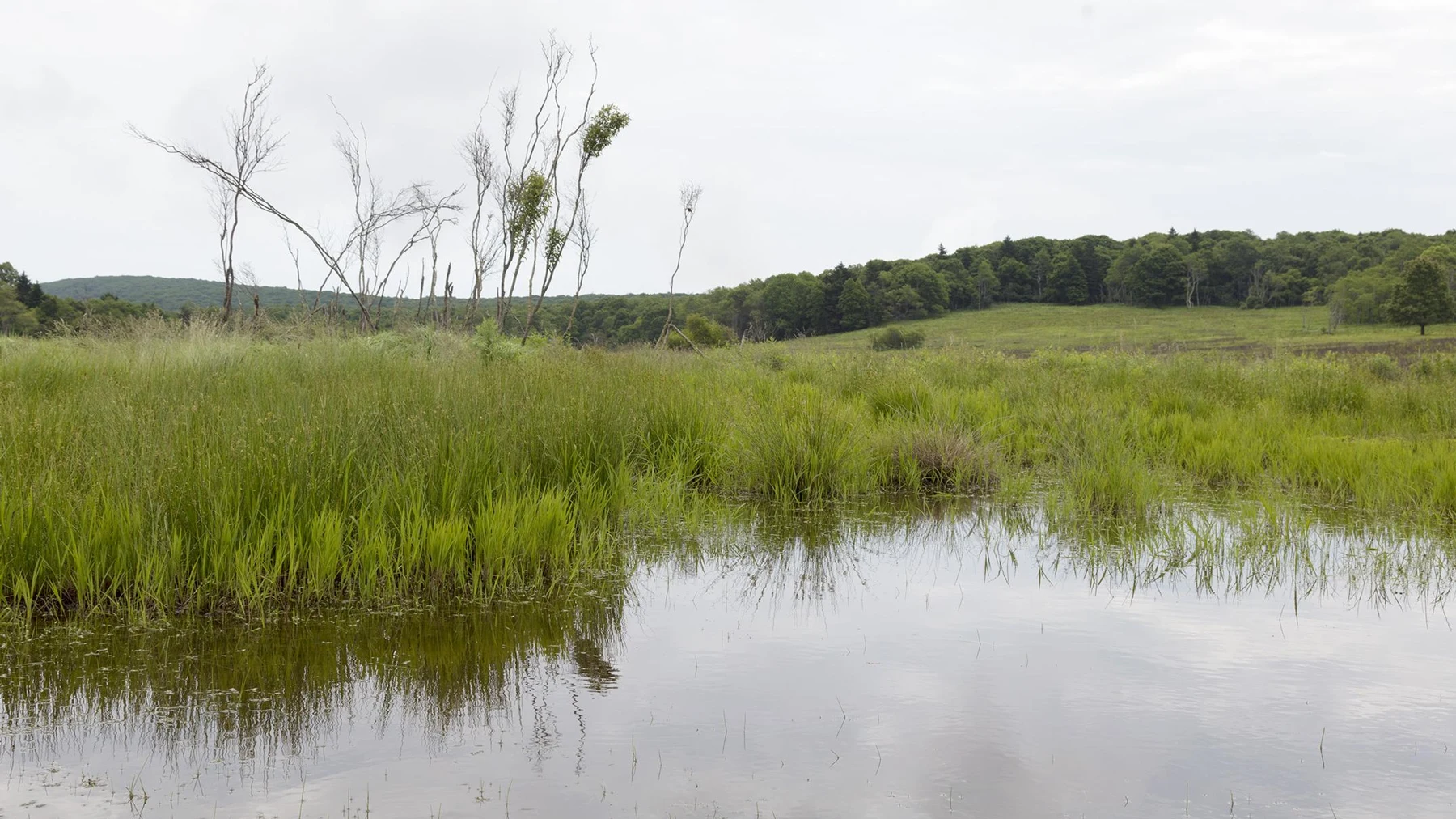
The guide's photograph of a wet meadow seemed to offer another puzzle.
“If so much of the park is forest,” Andy asked, “why isn't everything covered in trees?”
“Different habitats,” Ana said. “Different histories.”
Shenandoah included open meadows, wetlands, rocky outcrops, and streams as well as forest. Wet ground, thin soils, exposed rock, human land use, and management could all influence where trees grew. No single explanation fit every opening.
They studied Big Meadows through park material. Its open landscape had a long history and needed active care to retain its particular character. Carefully planned prescribed fire was one tool trained park staff could use; it was not permission for visitors to burn anything.
Augie drew a ranger holding a clipboard.
“Grown-up job.”
“A trained specialist job,” Allie said.
Ana traced the outline of grasses and other plants in their wetland photograph. Water near the surface could create conditions different from a dry slope only a short distance away.
“The park is a patchwork,” she said.
Andy drew a quilt with a forest square, a rocky square, and a soggy square.
“Do not put the soggy square on my bed.”
Each habitat could offer different food and shelter. The children used binoculars and photographs to look for patterns without chasing wildlife or stepping through fragile wet ground.
Augie placed a tiny imaginary frog on the quilt.
“Likes that square.”
“Perhaps,” Allie said. “But we check the animal and its needs before assigning rooms.”
Andy crossed out his new job title, WILDLIFE HOTEL MANAGER.
“Apparently I need more training.”
8. The view has people in it, too
At a historical exhibit, the children saw a photograph of a mountain home.
Ana looked back at the forest photograph.
“There were communities here.”
Indigenous peoples had used and cared for the Blue Ridge and surrounding valleys for thousands of years. Later, mountain families farmed, tended orchards, worked, and built lives in places that became part of the national park.
The creation of Shenandoah involved displacement. Many residents had to leave their homes and communities. Forest growing over an old field did not erase that loss.
Andy stopped making jokes long enough to read the exhibit carefully.
“A green place can hold a difficult story.”
“Yes,” Allie said. “We should learn people's stories as carefully as we learn the rocks.”
They would listen to historical accounts and living Indigenous voices without inventing a single story for everyone. Remains of buildings and other cultural features were evidence to respect, not playgrounds or places to collect souvenirs.
Their next photograph showed work on the park's roads and overlooks. Civilian Conservation Corps workers had helped build trails, walls, and other features. A landscape that felt peaceful today had also been shaped by people's labor and decisions.
Ana added a human-history page to the notebook.
“Not a blank background for our adventure.”
Even the name Shenandoah raised questions. Several meanings had been proposed; the children would not print a charming translation as if it were certain.
Augie drew a question mark beside the name.
“This one stays?”
“For now,” Allie said. “Not knowing is better than pretending.”
Andy gave their notebook a new department: THINGS TO KEEP LEARNING.
It was already running out of space.
9. The blue case closes, for now
Back at an overlook, the nearest trees still looked green. The distant ridges faded into the air between them and the family.
Augie checked the paintbrush drawing one last time.
“Not needed.”
Ana explained their answer. Light traveled through the atmosphere. Scattering and haze changed how distant ridges appeared. Forest emissions could contribute tiny particles, while weather, smoke, dust, and pollution could affect what they saw as well.
“No blue paint,” Andy said. “A very complicated view.”
Allie wrote: TO UNDERSTAND A LANDSCAPE, LOOK AT THE LAND, THE LIVING THINGS, THE AIR BETWEEN YOU, AND THE STORIES THAT CAME BEFORE YOU.
Their mystery had grown into several connected discoveries. Ancient lava could become rock beneath a waterfall. Forest could return to a former field. A small animal could breathe in a way that Andy's elbow definitely could not.
“Please stop testing that,” Ana told him.
“I am breathing normally. With extra curiosity.”
Augie drew the salamander beside a distant ridge and gave it a tiny magnifying glass.
“All detectives.”
On the next page, orange stone towers crowded a natural amphitheater. Bryce Canyon National Park would take their questions west again.
Andy studied the tall shapes.
“Someone left a whole crowd of stone people waiting.”
“Hoodoos,” Allie read.
Augie tried the word and laughed.
“Who do?”
“That,” Ana said, “sounds like our next case.”
Allie wrote THE HOODOO FACTORY across the empty page. The paintbrush retired. A very different set of tiny tools was about to begin work.
Explorer’s notebook
Nine discoveries to keep
- Shenandoah National Park is in Virginia's Blue Ridge, part of the Appalachian Mountains.
- Distant ridges can look blue because viewing them involves light traveling through the atmosphere, not because all the trees or rocks are blue.
- Natural forest compounds can help form airborne particles. Dust, smoke, pollution, and weather also affect visibility; appearance alone does not measure air quality.
- The park contains ancient rocks recording mountain building, lava flows, and earlier environments. Weathering and erosion continue to change the landscape.
- A forest includes canopy, smaller plants, soil, fallen wood, and organisms that recycle nutrients. Some forests have regrown over former fields and homesites.
- Streams move water and sediment downslope. A watershed is land draining toward a shared outlet; ridges can separate drainage areas.
- The Shenandoah salamander is a lungless amphibian with a very restricted mountain habitat. It absorbs oxygen through its skin and mouth lining.
- Meadows, wetlands, rocky outcrops, and forests offer different habitats. Each opening in the trees does not have the same cause or history.
- The landscape holds Indigenous histories, mountain communities, displacement, and the work of park builders. Trees do not erase human stories.
Five ways to explore thoughtfully
- With a grown-up, check current park guidance, weather, road conditions, and air-quality information before choosing suitable routes and stopping places.
- Use a designated Skyline Drive overlook to compare nearby trees with more distant ridges. Stay back from edges, and let the driver stop safely before looking closely.
- Compare rock textures through exhibits and photographs. Leave natural rocks and cultural features in place rather than collecting clues in your pockets.
- Look at forests, meadows, and streams from appropriate established routes. Leave logs and stones undisturbed, keep out of fragile wet ground, and watch wildlife from a distance.
- Learn about mountain residents and Indigenous histories through park resources and community voices. Follow the evidence, including uncertainty, rather than inventing a neat ending.
Talk it through
- Why can the same ridge look different on different days? What information would you need before deciding whether the air is healthy?
- How could a forest hide evidence of an old field or home? Why should a nature story also include human history?
- What might be different between the air on a sunny trail and the tiny space beneath a rock? Why should we study that idea without moving a wild animal's shelter?
Words for your field notebook
- Scattering: light being redirected as it interacts with molecules or particles.
- Aerosol: tiny solid particles or liquid droplets suspended in air; not necessarily something from a spray can.
- Visibility: how clearly and how far we can see through the atmosphere.
- Watershed: an area of land draining toward a shared outlet.
- Succession: changes in a community of living things over time.
- Amphibian: an animal in the group that includes frogs, toads, salamanders, and caecilians; different species have different life cycles.