1. Somebody has shortened the trees
Augie had come prepared to interview a little plant.
He had a pencil, a notebook, and a question he considered very polite: “Why are you down there?”
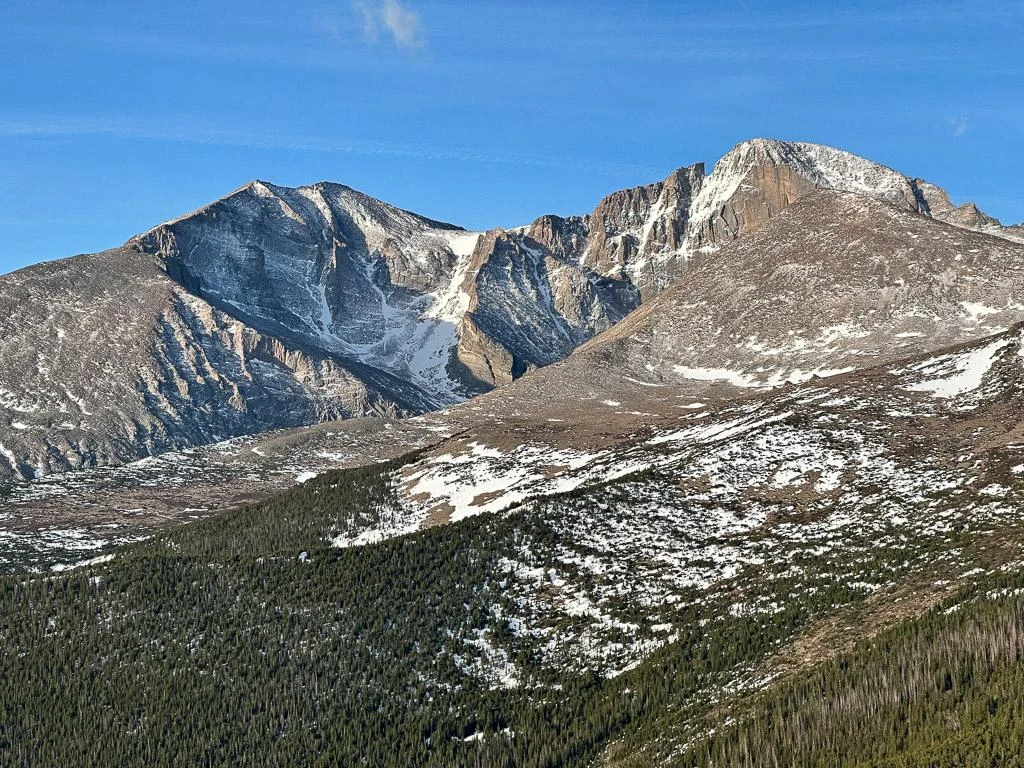
At Yosemite, the children had puzzled over a valley shaped by missing ice. Now, in Colorado’s Rocky Mountain National Park, they were investigating something easier to overlook. As the family looked toward higher slopes, the forest seemed to become patchier and shorter. Beyond it lay open country beneath an enormous sky.
Andy studied the view from a designated stopping place beside his parents.
“Somebody has been cutting the mountain’s hair.”
Allie opened the notebook. “That is a guess.”
“A stylish guess,” said Andy.
Ana drew a tall tree, a crooked tree, and a small clump of flowers. “Why do the plants change as we go higher?”
Ten-year-old Allie made that their case heading. Ana, nine, volunteered to collect observations. Seven-year-old Andy appointed himself Inspector of Suspicious Haircuts. Four-year-old Augie would interview the small witnesses.
Mom and Dad had planned a relaxed visit with lower-elevation stops, learning time, and only short outings suited to everyone. High-country roads and trails depended on season and conditions. They would use park photographs and exhibits whenever an actual stop was unsuitable.
The mountain did not owe them a summit. The mystery did not require one.
Augie opened his notebook to a drawing of a flower wearing boots.
“Ready,” he said.
“Those are enormous boots,” Ana observed.
“It’s a very brave plant.”
2. A mountain with several neighborhoods
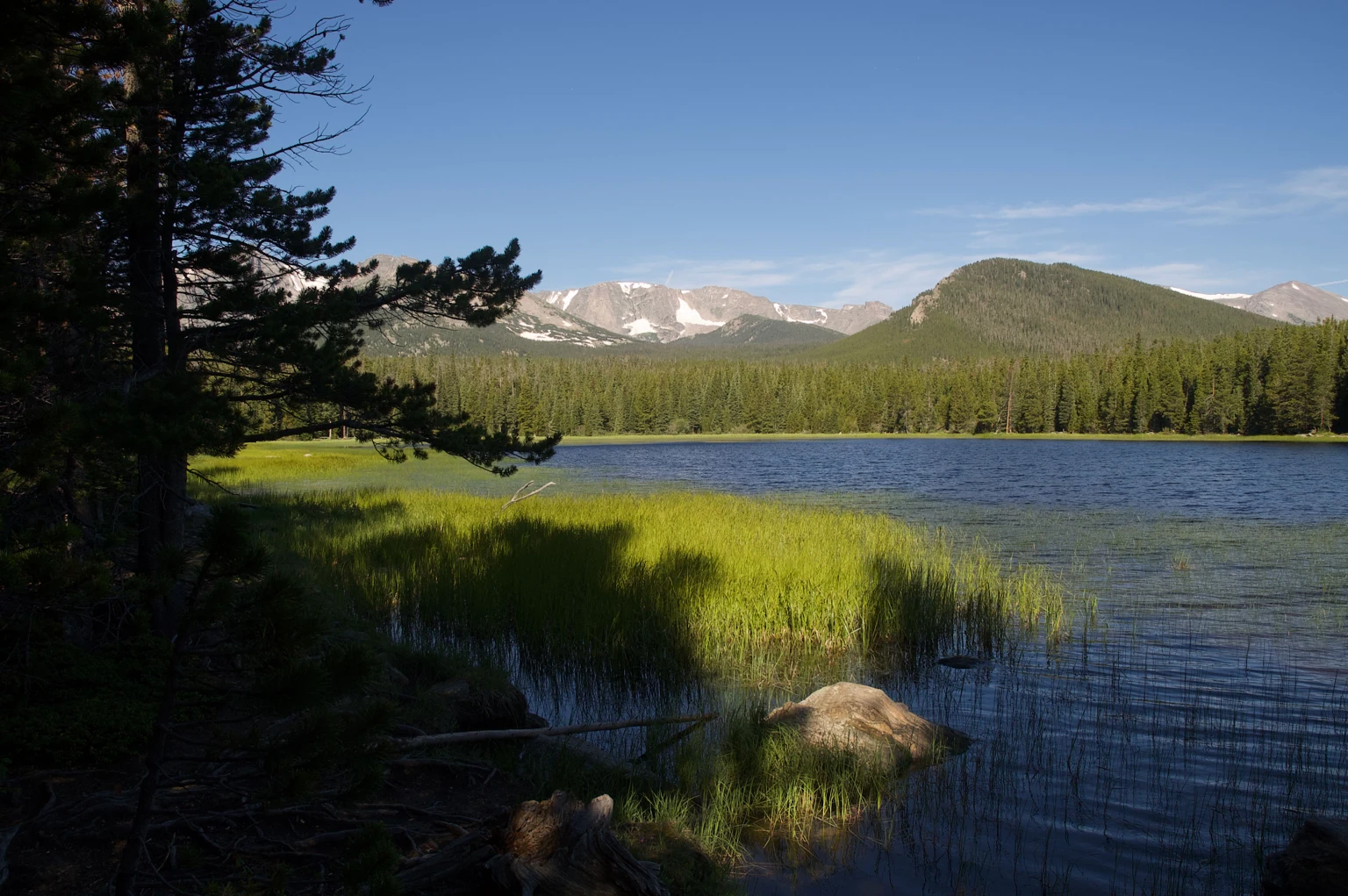
Their first clues came from lower down, where tall trees stood around open meadows. Through park information, the children compared the montane, subalpine, and alpine environments. These were useful names for different ecological neighborhoods, not fences that every plant had agreed to obey.
“Montane,” Andy repeated. “Sounds like a toothpaste.”
“Please don’t brush with a pine tree,” said Ana.
Elevation influenced temperature, growing conditions, and the kinds of plants that could thrive. Moisture, slope direction, wind, soil, and local shelter mattered too. A sunny hillside and a shaded slope could support different conditions even at similar heights.
Allie drew a mountain with three broad bands, then made the edges wavy.
“Approximate,” she explained. “Nature didn’t use a ruler.”
Augie made his own boundary wiggle around a rock. “This part is being shy.”
The children learned that the montane ecosystem included forests and meadows. Higher, the subalpine environment often supported dense spruce and fir forests. Above the limit of upright tree growth, alpine tundra held much smaller plants.
Andy pointed at Allie’s drawing. “So the mountain has upstairs neighbors.”
“And no elevator,” Ana said.
Dad reminded them that a road journey could cross very different environments without giving their bodies or the weather permission to behave the same way everywhere. They would take their time and change plans whenever necessary.
Their first improvement was simple: different heights can mean different living conditions.
But that did not yet explain why a short plant could succeed where a tall tree could not. Augie tapped the flower in his notebook.
“We still need the interview.”
3. The crooked witnesses
Photographs and exhibits showed trees near treeline that looked as though a giant had leaned on them. Some grew low and dense. Some had branches shaped by exposure rather than the neat outline Andy expected from a Christmas card.
“Tree has had a difficult hairbrush,” Augie said.
Ana found a name: krummholz, a word meaning crooked wood.
Andy tried it three times. On the fourth attempt, he sounded as though he were politely clearing his throat.
“I shall call them the crooked witnesses.”
Cold and strong winds made growing upright difficult. Wind could damage exposed shoots, and blowing ice crystals could add abrasion. Growth close to the ground or in sheltered places could escape some of the harshest exposure. Snow cover could also protect portions of low-growing trees during winter.
Allie drew a rock and a small sheltered patch behind it.
“The same mountain can have tiny differences in conditions,” she said.
“So a rock can be a windbreak,” Ana added. “It doesn’t need a guest room.”
The treeline was not a perfectly sharp stripe, and it did not sit at exactly the same elevation everywhere. The children compared patches and transitions instead of searching for a magical line where every tall tree instantly stopped.
Andy crossed out his haircut theory.
“No scissors found,” he reported.
Augie leaned toward an exhibit photograph. “Is the tree still a tree if it’s tiny?”
“Yes,” Allie said. “Its shape doesn’t erase what it is.”
Ana put a star beside that answer. They had nearly confused an unusual appearance with a different identity. The mountain was teaching them to inspect their assumptions as carefully as their evidence.
4. A flower that preferred the downstairs seat
When current conditions allowed a suitable short stop, the family observed alpine plants from the maintained surface. Nobody stepped onto a cushion of vegetation for a closer photograph. The little plants’ home was not a carpet made for shoes.
Augie crouched beside Mom on the path.
“Hello,” he told a small clump of plants. “Why are you down there?”
The plant did not reply. Ana consulted the park’s explanation instead.
Many alpine plants grew close to the ground. Low shapes reduced exposure to strong wind. Some formed tight cushions; some had small leaves or fine hairs. Different species had different features, so the children could not give every plant one identical survival story.
Andy held his hand low beside his own knee, without touching the vegetation.
“Downstairs seat. Less wind in your face.”
“Useful comparison,” Allie said. “Plants aren’t choosing seats like people, though. These are features that help them survive.”
Short growing seasons also mattered. Many alpine plants were perennials, living for more than two years. They could draw on established roots and stored resources rather than starting their whole life again each spring.
Augie looked at his boot-wearing flower. He erased the boots.
“What changed?” asked Mom.
“It doesn’t need to walk away. It needs good roots.”
They still did not know the name of every plant they saw. Allie sketched leaf shapes and flower colors, keeping what we observed separate from what we identified.
Their little witness had answered through its form, its surroundings, and information gathered by people who studied it. Inspector Andy awarded it a very small imaginary medal.
5. The animal with a winter pantry
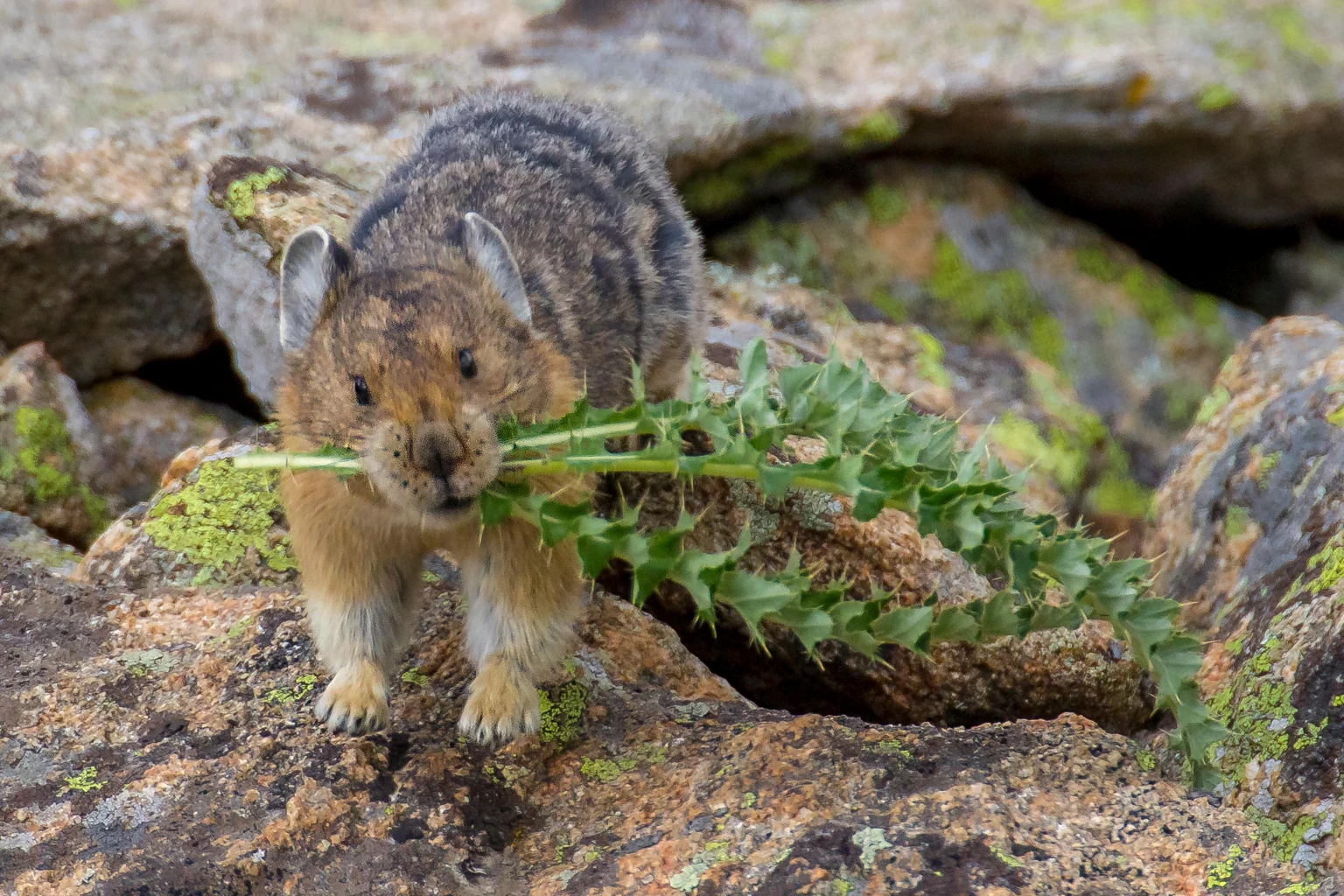
A park photograph showed a compact animal sitting among rocks with vegetation in its mouth. Round ears stood above its face. Its body looked as though it had been designed to fit snugly into a pocket.
“A very serious gardener,” Andy decided.
“A pika,” Ana read.
American pikas were relatives of rabbits and hares, not tiny bears and not rodents. They lived around rocky slopes and used spaces between rocks for shelter. They gathered plant material into stores often called hay piles, helping provide food for winter.
Augie examined the picture. “It made a salad cupboard.”
Allie remembered Yosemite’s snowpack water cupboard. Their notebook was becoming extremely well furnished.
Pikas did not hibernate through winter. They remained active beneath the insulating snow and among rocks, using stored food. Cool, sheltered spaces were important parts of their habitat.
“So little doesn’t mean helpless,” Ana said.
“Or unemployed,” Andy added. “That one has shopping to do.”
The children learned about yellow-bellied marmots too. Marmots prepared for winter differently, feeding during the warmer months and hibernating. Two animals could share a high-country landscape without sharing the same winter strategy.
Allie divided a page into store food and stay active and build reserves and hibernate. She did not draw either as a rule for every animal with fur.
They would watch wildlife from a respectful distance if they encountered it. Finding a pika was a possibility, not an assignment. Nobody would scramble across unstable rocks or offer a snack to make the photograph happen.
Andy closed the imaginary picnic invitation list.
“Pika has its own cupboard,” he said. “We should respect the menu.”
6. The mountain that sends water in different directions
At an exhibit about the Continental Divide, Augie pointed at a line on a map.
“Is that the mountain’s zipper?”
“It marks a drainage divide,” Allie read. “Water on different sides can flow into different river systems.”
Andy held his hands like a roof. “Raindrop chooses left. Another chooses right.”
“Gravity does much of the choosing,” Ana said.
The Continental Divide ran through Rocky Mountain National Park. On the western side, water could join the Colorado River system, connected with drainage toward the Pacific side of the continent. East-side waters joined river systems connected with the Atlantic side, including through the Gulf of Mexico.
It was a big idea for a line that could pass across an ordinary-looking ridge.
Allie drew a rounded high point and arrows down opposite slopes. Dad reminded her that real watersheds contained complicated networks, and water could be stored, evaporate, or be moved by people. The sketch explained drainage direction, not the guaranteed travels of every drop.
Augie drew one drop in bed.
“That one became snow.”
“Excellent complication,” Ana said.
Snow stored water in the mountains. Its melting helped supply streams and rivers. The alpine plants’ neighborhood was connected with places far below, even if those places could not be seen from a high viewpoint.
Andy stared at the map again.
“Small drop. Enormous family tree.”
“River network,” Allie corrected.
“My version has branches too.”
Their mystery had begun with shrinking trees. Now it included water moving outward through an enormous landscape. The high country was not an isolated roof above the world. It was connected to the world below.
7. Rocks remember the ice too
From a suitable lower-elevation viewpoint, the family compared the shapes of valleys and distant rocky basins with images in park material. Yosemite had taught them to ask about earlier ice. Rocky Mountain offered more places to test the idea.
Glaciers had carved and reshaped parts of these mountains. Bowl-shaped basins called cirques, broad valleys, and deposited rock material were among the clues geologists used to reconstruct past glaciation.
Andy drew a scoop beside a mountain.
“That is a comparison,” Ana said before he could speak.
“I was going to write that myself.”
Allie noticed how easily a familiar explanation could take over. They should not assume every hollow was made by ice merely because ice had made some hollows. Rock structure, flowing water, weathering, gravity, and other processes also mattered.
Mom asked what would make their glacier explanation stronger.
“Several clues that fit,” said Ana. “And information about this particular place.”
“Not just a scoop-shaped drawing,” Allie agreed.
Their parents had chosen an appropriate route with time to turn back. A lake photograph or distant mountain view could help them learn without making a long climb part of the day’s plan.
Augie drew a bowl, then put an enormous imaginary pika in it.
“Wrong scale,” Andy said.
“Jokes column,” Augie replied promptly.
Allie laughed. The youngest explorer had learned the notebook rules. A funny picture could stay funny while the evidence remained carefully labeled. They could remember Yosemite’s discoveries without forcing every new mountain into the exact same story.
8. A tiny garden with a very long history
Later, Ana looked again at her plant sketches. The small cushions had seemed almost empty from a distance. Up close, without leaving the path, their variety had filled a page.
“Small plants,” she said, “large amount to notice.”
Alpine vegetation could grow slowly, and damage from footsteps could last a long time. Staying on maintained surfaces protected living things the family might never identify by name. Respect did not have to wait for a perfect label.
Andy examined the soles of his shoes.
“Official plant-protection equipment,” he announced, then placed them firmly on the path.
Park interpretation also reminded the family that the mountains had long human histories. Ute and Arapaho peoples, among other affiliated communities, had enduring connections to this region. High places were not empty simply because the children had arrived without seeing a house.
Routes across the mountains carried histories of travel and knowledge. The family would learn from Tribal voices and park partners, respecting cultural places and objects rather than turning everything into a collectible clue.
Augie drew a path that continued beyond the edge of his paper.
“Where does it go?” Allie asked.
“Past our drawing.”
Ana liked that answer. Their notebook was a small view of a much bigger story.
When weather changed, their parents ended the outdoor part of the day. They could continue the investigation indoors. Mountain conditions could change quickly, and an exposed place was no place to insist on one more sketch.
Andy packed his pencil. “Inspector of Suspicious Haircuts accepts an indoor desk.”
Augie carried the flower drawing carefully. The little witness had earned a dry ride.
9. The verdict from the little witness
At a sheltered table, Allie placed the three original drawings in a row: tall tree, crooked tree, little plant.
“Was someone shortening the forest?” she asked.
“Not with scissors,” Andy said. “Our suspect was a bad explanation.”
Ana assembled the better one. Growing conditions changed with elevation and exposure. Cold, wind, and a short growing season limited upright tree growth. Near treeline, sheltered patches and low, crooked trees showed a transition. Above it, plants with suitable forms and life histories could persist in alpine tundra.
“Little can work,” Augie said.
Allie wrote that at the top of the final page. Then she added that no single feature explained every species, and their wavy ecosystem boundaries were still only a model.
Their discoveries stretched beyond plants: pikas stored food, marmots hibernated, snow supplied streams, and the Continental Divide separated great drainage systems. Older glaciers had left clues in the land. People maintained connections that the family’s short visit could only begin to explore.
Andy awarded himself a new job title: Inspector of Better Questions.
Ana approved it, provided he did not print badges for every squirrel.
Their next chapter would take them east to Acadia, where the Atlantic Ocean would put a different clock beside the shore. Rocky Mountain’s flowers worked within short summers. What would live where the water repeatedly arrived and disappeared?
Augie drew a little pool.
“Fish bathtub?”
“Guess column,” said Allie, smiling.
Andy opened the notebook again. “We should interview the ocean.”
“Bring a bigger appointment book,” Ana said.
Explorer’s notebook
What we discovered
- Rocky Mountain National Park is in Colorado and includes several ecosystems across a large elevation range.
- Elevation, temperature, wind, moisture, exposure, and local shelter influence where plants can grow.
- Treeline is a transition, not a perfectly straight boundary at one exact height.
- Krummholz describes low, crooked tree growth shaped by harsh conditions near treeline.
- Many alpine plants stay close to the ground; different species have different features that help them survive.
- Pikas store plant food and remain active in winter. Yellow-bellied marmots hibernate.
- The Continental Divide separates drainage toward different major river systems.
- Glaciers left landforms that help scientists investigate the mountains’ past.
- Alpine vegetation needs protection from trampling. Indigenous peoples maintain enduring relationships with these mountains.
Try your own Rocky Mountain adventure
Plan with a grown-up and check current access, altitude considerations, weather, road and trail conditions, closures, and accessibility. These are possible activities across a visit, not a one-day route.
- Compare a meadow, forest, and alpine landscape through appropriate viewpoints, exhibits, or park photographs.
- Observe small plants from a maintained route and sketch their shapes without picking or stepping on them.
- Look for wildlife from a respectful distance, or compare park photographs of pika and marmot winter strategies.
- Use a map or exhibit to trace drainage on opposite sides of the Continental Divide.
- Ask about Junior Ranger learning and interpretation shared by the park’s Tribal partners. Choose lower-elevation or indoor activities whenever they better suit the family or conditions.
Three questions for the road
- Why might growing low help a plant in a windy alpine environment?
- How do a pika and a marmot prepare for winter differently?
- What evidence helped the children replace their first explanation with a better one?
Useful words
- Elevation: Height above sea level.
- Treeline: The transition near the upper limit of tree growth in a region.
- Krummholz: Low, crooked tree growth associated with harsh conditions near treeline.
- Perennial: A plant that lives for more than two years.
- Watershed: Land that drains toward a common body of water.
- Cirque: A bowl-shaped basin carved by a glacier near the head of a valley.