1. Augie opens the appointment book
At Rocky Mountain, Andy had suggested interviewing the ocean. Now the ocean had answered with a noise much too large to fit inside a notebook.
SHHHHH. Rumble. SHHHHH.
“Please speak one at a time,” Andy told it.
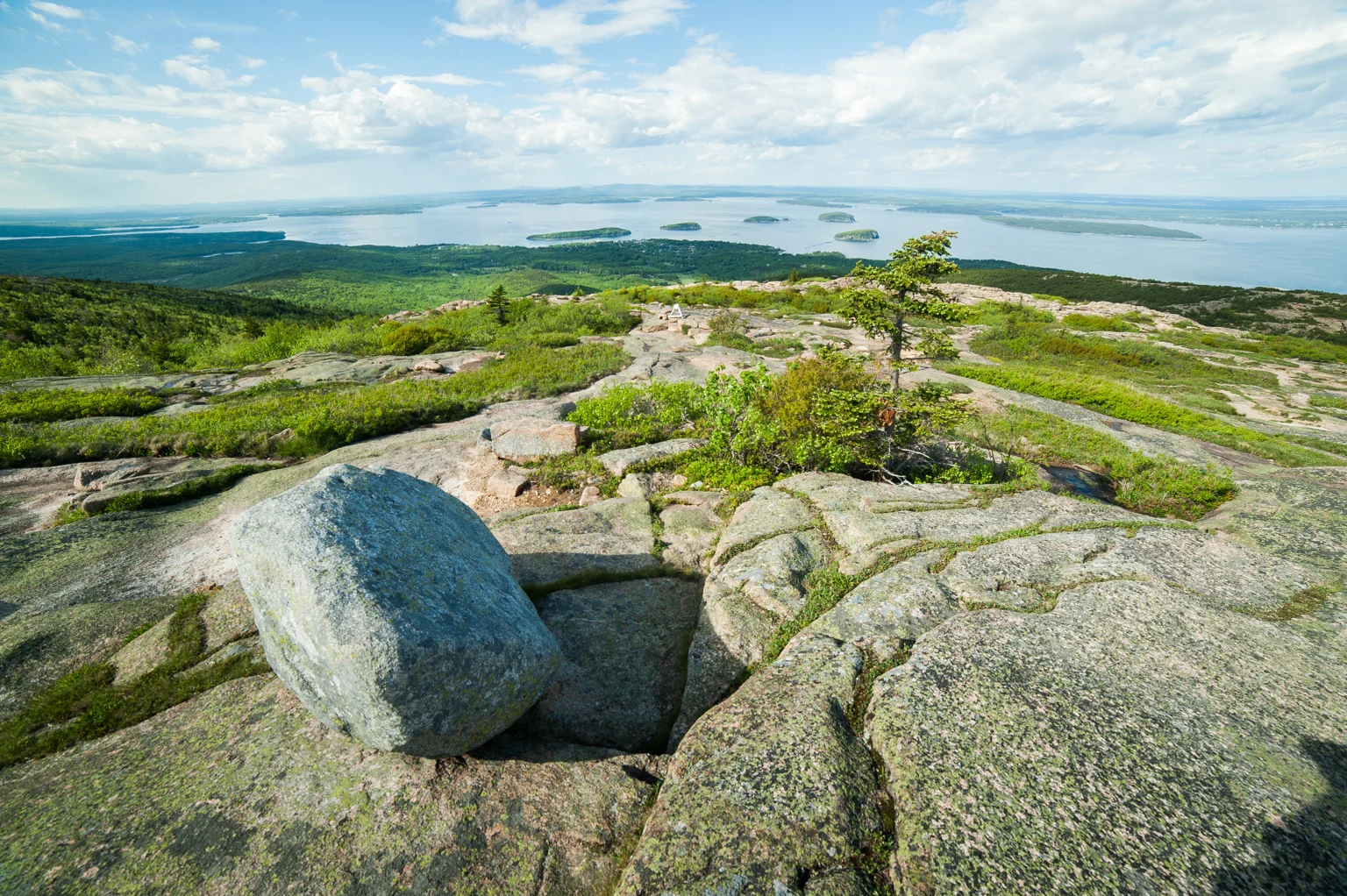
The family stood at a safe coastal viewing place in Acadia National Park, Maine. Beyond the rocks stretched the Atlantic. Forest met shore nearby, and the air smelled different from the high-country air in their last chapter.
Four-year-old Augie opened his notebook. On the first page was a little pool labeled FISH BATHTUB?
“Still a question,” nine-year-old Ana reminded him.
“I brought the question with me.”
Allie, ten, had brought a better pencil. Seven-year-old Andy had brought an imaginary hotel inspection badge. He had decided that any small pool with permanent residents might require a manager.
Mom and Dad had planned an unhurried Acadia visit, with short outings, indoor learning, and choices suited to weather and everyone’s energy. Before exploring near tide pools, they checked local tide information, surf conditions, and park guidance. They chose an appropriate place and kept Augie within arm’s reach.
A pool among the rocks held water even though the sea had withdrawn from the surrounding shore.
“Who fills it?” Augie asked.
“And who lives there when the roof disappears?” Andy added.
Allie wrote their case: HOW CAN A LITTLE POOL BE PART OF THE OCEAN, EVEN WHEN THE OCEAN ISN’T COVERING IT?
Andy straightened his imaginary badge.
“Welcome to the Ocean Hotel,” he said. “Please leave your suitcase in your shell.”
2. The clock that does not tick like a wave
First, they watched the sea from a safe distance. Waves arrived and broke, then pulled back. Andy counted three before declaring that he had solved the tide.
“Up. Down. Up. Down. Very efficient.”
Ana shook her head. “Those are waves. The tide changes the water level over a much longer time.”
Their parents showed them the tide prediction they had checked for this location. High and low water would occur at different times. Acadia usually experienced two high tides and two low tides over a period a little longer than twenty-four hours, with times shifting from one day to the next.
“So we can’t come back tomorrow at exactly the same clock time and assume it’s identical,” Allie said.
“Correct,” Dad replied. “And waves and weather still matter.”
Tides were linked to the gravitational effects of the Moon and Sun. The shape of coasts and ocean basins, Earth’s rotation, and other influences helped determine local patterns and timing. The children did not try to predict a safe outing simply by looking for the Moon.
Augie searched the sky anyway.
“The Moon has a very long bucket.”
“Funny picture,” Ana said. “Not an actual bucket.”
Allie drew a short wavy line for breaking waves and a slower rise-and-fall curve for changing sea level. She labeled both as simple models, not a tide chart.
The hotel’s water supply had a timetable, but it was not the same timetable as each small wave. Their first suspect—a person secretly operating a tap—was looking less likely.
Andy crossed PLUMBER HIDING BEHIND ROCK off his list.
3. A room between two worlds
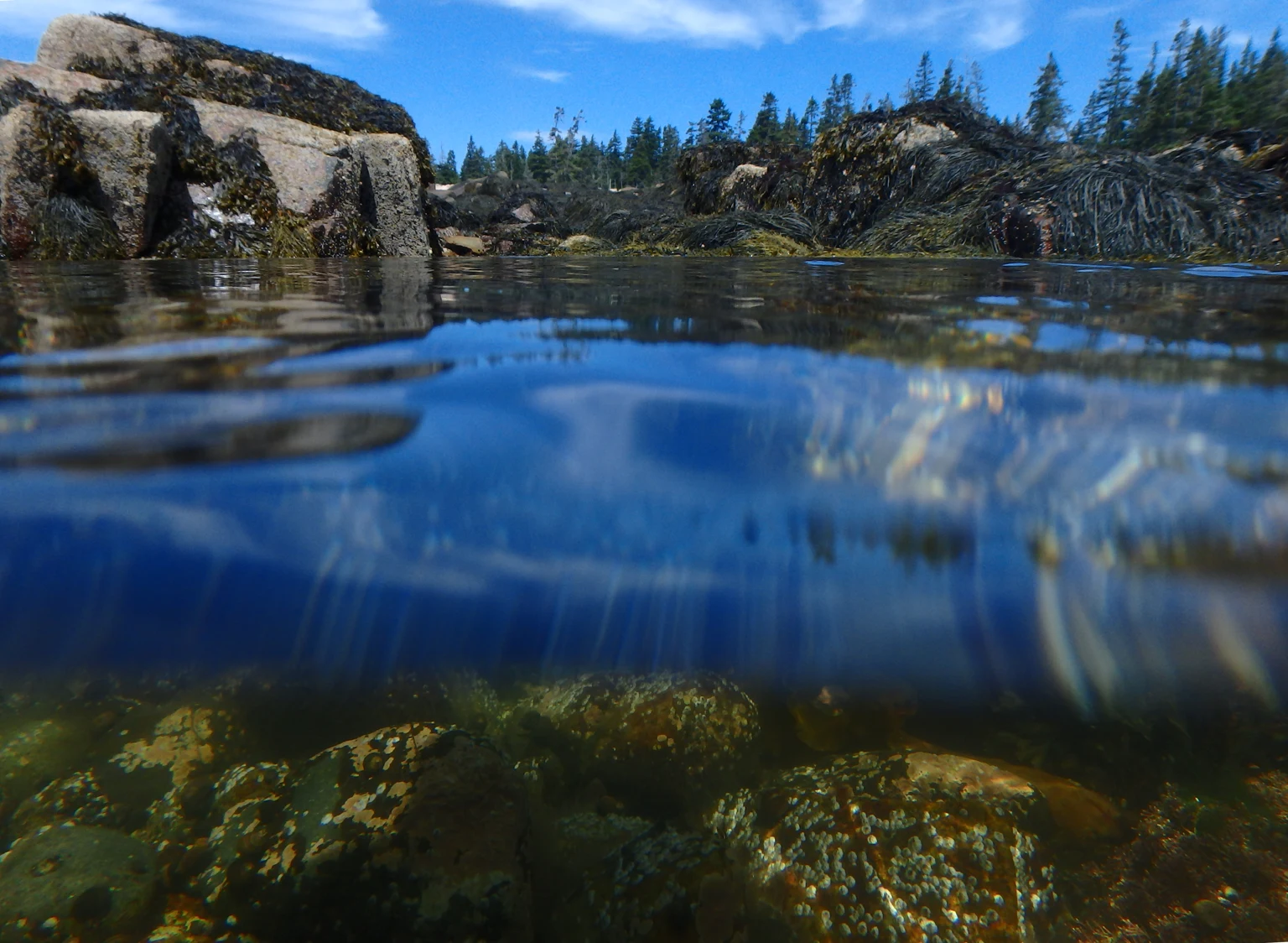
As water receded, hollows in the rocky shore could retain seawater. Those pockets were tide pools. The surrounding intertidal zone lay between the levels reached by high and low tide: covered at some times and exposed at others.
“The ocean lends it water,” Allie said.
“And then collects the room key,” Andy added.
Their family observed without reaching into a pool or moving an animal. Closed-toed shoes helped on the uneven shore, but shoes did not make slippery seaweed or wet rock safe. Their parents chose where everyone stood. They kept well away from the water’s edge and continued watching the sea.
Ana noticed that the shore did not look the same at every height. Some places were exposed for longer periods than others. Different organisms could tolerate different combinations of wetness, drying, waves, and temperature.
“A building with several floors,” she suggested.
“Ground floor: damp,” Andy said. “Upstairs: bring your own umbrella.”
The pool was not a tiny, unchanging aquarium. Sunlight could warm shallow water. Evaporation and rain could alter conditions. Fresh seawater brought by the returning tide could change the little world again.
Augie examined the pool without touching it.
“Complicated bathtub.”
“Habitat,” Allie said, writing the word underneath his question.
She drew the pool connected to the sea by an arrow. Even while it appeared separate, its water, residents, food, and conditions were tied to a much larger system.
Andy added the hotel’s first official notice: NO TWO CHECK-INS GUARANTEED TO BE THE SAME.
4. The tenant with its own front door
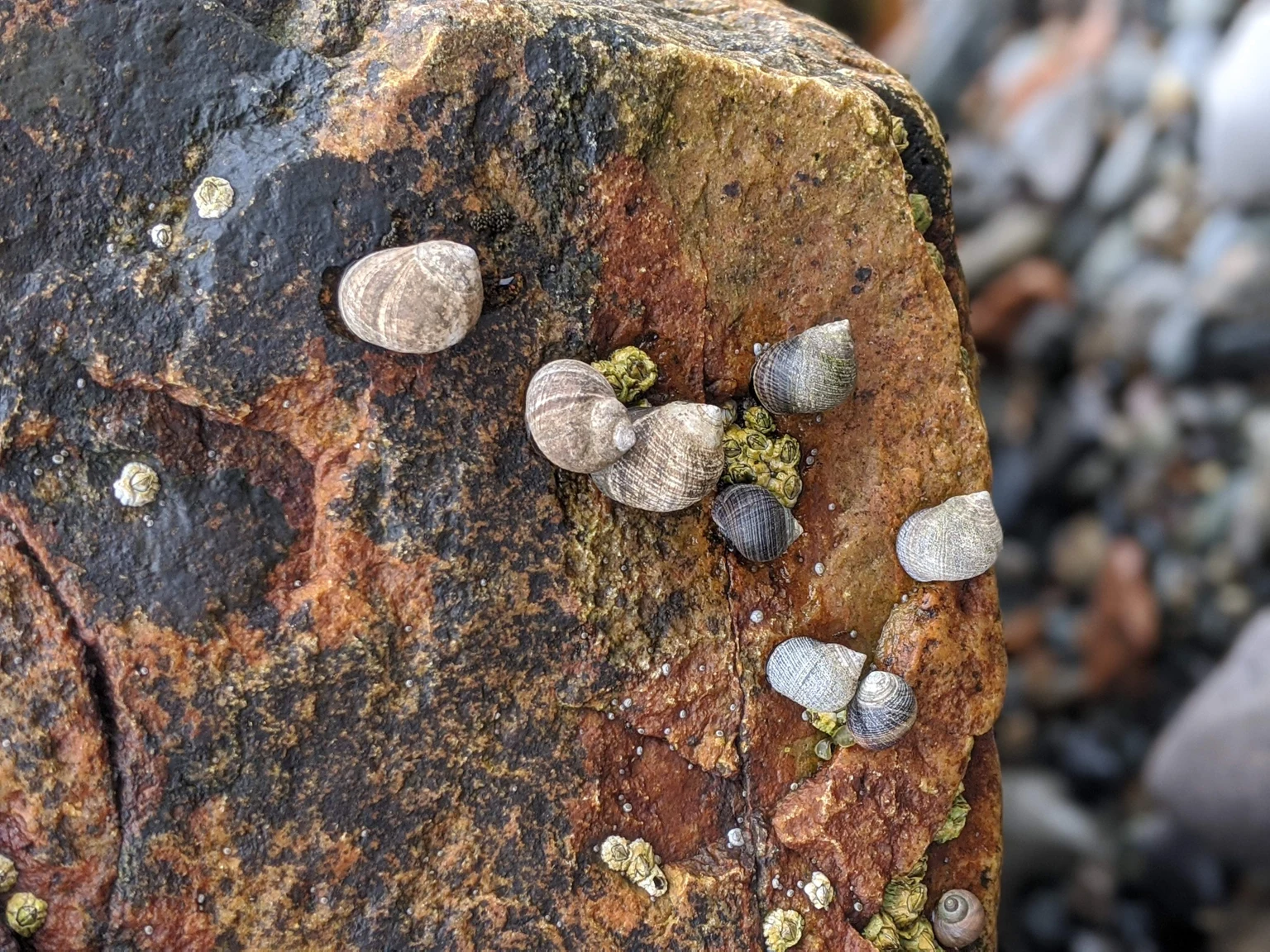
A small snail became their next witness. It moved so slowly that Andy offered to return after finishing his education.
“Be patient,” Ana told him.
Park photographs and a species guide helped them investigate common periwinkles. These marine snails could graze on algae. A hard shell helped protect the soft animal inside, and a little plate could close the shell opening when the animal withdrew.
“A front door,” Augie whispered.
“An operculum,” Allie read carefully.
Andy repeated the word as though announcing an extremely important train station.
“Next stop: Operculum. Please mind the snail.”
The little lid could help a periwinkle reduce water loss while exposed. That did not mean a snail could live anywhere dry, or that the children should test its limits. Its features belonged in the setting where the species lived.
Ana drew a shell, an opening, and a plate beside it. She did not draw the snail permanently glued to the rock.
“That would be a different kind of tenant,” she said.
Augie put a tiny doormat outside the shell in his drawing.
Allie labeled the illustration model plus one joke.
They learned that an empty shell could later be used by a different animal, such as a hermit crab. A shell alone did not always tell them who lived inside it now. They left shells where they were instead of turning the habitat into a souvenir shop.
Andy revised his hotel register.
Guest: unknown until observed carefully.
Door: possibly included.
Walking speed: entirely the guest’s business.
5. A crab in a stone hat?
The next photograph showed clusters of small pale structures fixed to rock. Augie thought they looked like tiny volcanoes.
“Please tell them not to erupt,” Andy said.
“They’re barnacles,” Ana read.
Barnacles were animals—crustaceans, related to crabs and lobsters—not miniature rocks. Adult acorn barnacles attached firmly to a surface and lived inside protective plates. When covered by seawater, they could extend feathery feeding limbs to capture food from the water.
Allie stared at the picture again.
“An animal that stays put can still be busy.”
“Room service comes past the window,” Andy decided.
At low tide, closed barnacles could seem almost lifeless. An underwater photograph showed why observing an organism in one condition was not the same as understanding its whole life. The family used the picture instead of waiting beside a rising tide to see the change happen.
Ana compared their drawings. The periwinkle moved and grazed. The barnacle stayed attached and filtered food. Both belonged to the intertidal world, but they did not solve every problem in the same way.
Nearby seaweed added another sort of living neighbor. Many marine algae used sunlight to make food. Structures called holdfasts attached seaweeds to surfaces; they were not roots doing exactly the same job as a tree’s roots.
Augie drew a barnacle wearing a hat.
“It already has a protective house,” Ana said.
“This is for special occasions.”
Their hotel now contained grazers, filter feeders, and photosynthetic neighbors. It was less like a row of identical rooms and more like a busy neighborhood whose residents had different jobs.
6. Why the ocean does not wait for inspectors
The family’s shore outing ended when their planned conditions and timing said it should. They did not wait until water blocked a route, and they did not try to squeeze in one more pool as the tide rose.
Andy looked offended on behalf of his imaginary hotel business.
“But the inspection is unfinished.”
“Then we continue somewhere else,” Mom said.
They moved to a safe place away from the sea and compared their notes with photographs. Low tide exposed interesting habitat, but it never switched off the waves. A calm-looking moment did not promise the next moment would be the same.
Allie made two columns: what we want to see and what decides our plan. The first contained a snail, a barnacle, and Andy’s increasingly elaborate hotel. The second contained tide information, surf conditions, safe access, park guidance, and the needs of the whole family.
Ana added grown-ups can say we’re finished.
Augie added snack to both columns.
“That is not a tide prediction,” Andy told him.
“It is a very strong prediction.”
They laughed, then reviewed what they had left untouched: animals, seaweed, shells, and rocks. Looking carefully was enough. They did not need to lift every object to prove that exploration had happened.
Allie liked the unexpected lesson. An investigation did not become better because it continued longer than conditions allowed. Knowing when to stop was part of doing it well.
Andy stamped an imaginary form.
Ocean Hotel inspection paused. Residents may continue being themselves.
7. The rocks had an earlier visitor
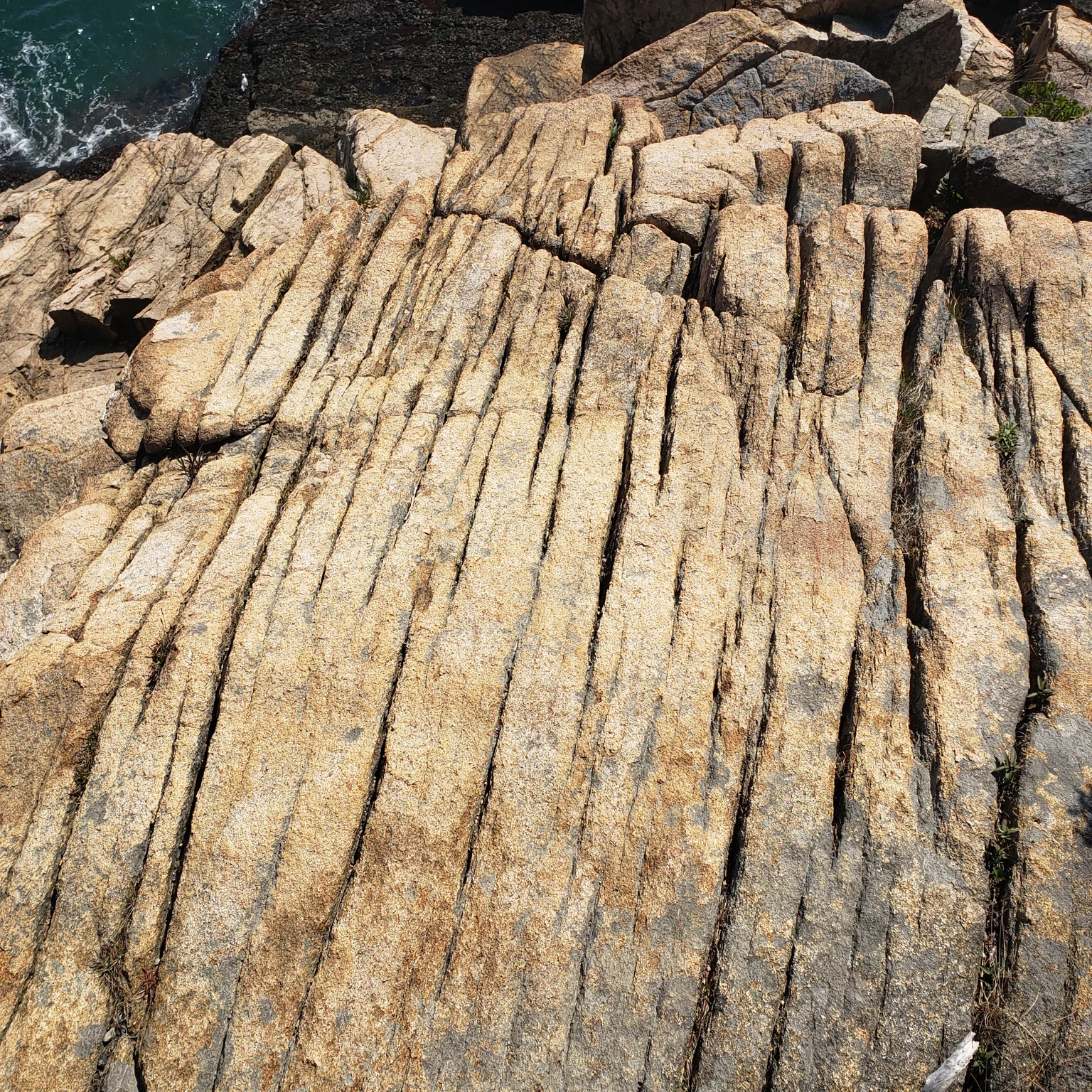
On another suitable outing, the family looked inland. Acadia was more than its shore. Mountains, forests, lakes, and rocky outcrops offered a second set of clues.
Their Yosemite and Rocky Mountain pages suggested a familiar question: had ice worked here too?
Park geology information described glaciers scraping and reshaping the landscape. Grooves and scratches in bedrock could record stones being dragged beneath moving ice. Large boulders carried and left behind by glaciers were called erratics.
“An erratic is not just a rock having an unreliable day,” Ana explained.
Andy looked disappointed. He had already imagined one arriving late for everything.
The family studied appropriate examples in exhibits and park photographs. They did not identify every boulder as an erratic simply because it was large. A geological explanation needed local evidence, not just a dramatic-looking rock.
Allie compared the familiar granitic rock with their Yosemite notes. Granite could form through slow cooling of magma underground. Its present exposure and shape told later parts of the story. At Acadia, ice and the coastal environment had acted on a landscape with a long, complicated geological history.
“So water and ice brought their toolboxes east,” Andy said.
“Different place, different details,” Ana replied.
Augie drew a boulder carrying a suitcase.
“Traveling guest.”
Their hotel metaphor had escaped the shore. Allie allowed it into the jokes column, then wrote the actual geological term beside it. The notebook could connect chapters without pretending that every park was the same mystery wearing a different name tag.
8. A bridge with people in its story
A short, suitable stretch of carriage road gave the family a change of pace. These historic roads were built for travel without motorcars. Today, visitors could encounter walkers, cyclists, or horses, depending on the route and current guidance.
Dad checked the signs. Everyone shared the space carefully rather than treating a broad road as permission to run without looking.
At a stone bridge, Allie studied the curved opening.
“How does a collection of separate stones stay above the gap?”
A simple explanation of an arch helped: its shape carried loads through the stones toward supports at the sides. Ana drew arrows curving down an arch. Andy drew a tiny bridge inspector carrying a sandwich.
“Different hotel department,” he said.
The bridge belonged to human history, unlike a boulder deposited by ice. People had chosen materials, designed routes, and built structures. Other paths and relationships with this landscape reached much further back.
Through cultural interpretation, the family learned about the Wabanaki peoples and their continuing presence in this region. The park lay within their homelands. Shorelines, plants, travel routes, and place names had meanings that could not be reduced to scenery for a visitor’s notebook.
Allie looked for accounts shared by Wabanaki voices and park partners. The children would learn from those sources, not invent a traditional story to make their own adventure sound older.
Augie drew a path continuing past his page, as he had at Rocky Mountain.
“Still goes further,” he said.
“Yes,” Ana replied. “Our visit is one small part.”
Andy closed his inspection register for a moment. Some things were better understood by listening than by giving them a funny hotel name.
9. The hotel gets its real name
At the end of their visit, Allie spread the notebook pages on a table. The ocean had not signed Andy’s appointment book, but it had supplied plenty of evidence.
“How can a little pool be part of the ocean when the ocean isn’t covering it?” she asked.
“A hollow can keep seawater when the tide falls,” Ana said. “And the pool stays connected with the wider shore and sea.”
“The residents need ways to live with changing conditions,” Andy added. “Snail has a door. Barnacle has protective plates and feeding limbs. Seaweed makes food with sunlight.”
“Not a fish bathtub,” Augie concluded.
Allie wrote TIDE POOL: A CHANGING HABITAT beneath the original question. She kept Andy’s hotel sign too, with a note explaining where the comparison helped and where it stopped.
Their story included more than small pools: gravitational effects behind tides, earlier glaciers, granitic rock, forests, historic roads, and people with continuing relationships to the place. No one page could contain all of Acadia.
Andy gave the hotel its final review.
“Excellent residents. Unreliable roof. No breakfast buffet for inspectors.”
Ana smiled. “The roof wasn’t unreliable. We were learning its schedule.”
The next chapter would take them back west to Grand Teton, where a sharp mountain skyline would raise another question: how could the land rise into such steep peaks beside a valley?
Augie drew a mountain with a zipper.
“Still a guess,” he said proudly.
Allie opened a clean page.
“Good. Let’s find the clues.”
Explorer’s notebook
What we discovered
- Acadia National Park is on the coast of Maine, beside the Atlantic Ocean, and also protects mountains, forests, and lakes.
- Tides change sea level over longer periods than the familiar breaking waves on a shore.
- The Moon and Sun help drive tides; local patterns and timing require location-specific information.
- The intertidal zone is covered and exposed as tides change. Hollows can retain seawater as tide pools.
- Periwinkles are snails that graze on algae and can close their shell openings with an operculum.
- Barnacles are crustaceans. Attached adults can extend feeding limbs when covered by water.
- Seaweeds are important members of coastal habitats. Holdfasts attach them to surfaces.
- Glacial grooves and erratic boulders help scientists investigate Acadia’s earlier ice.
- Historic carriage roads and bridges tell human stories; Wabanaki peoples maintain enduring connections to these homelands.
Try your own Acadia adventure
Plan with a grown-up. Check local tides, surf advisories, weather, closures, accessibility, and route conditions. These are possibilities across a visit, not a one-day itinerary.
- Observe a suitable tide-pool area with a grown-up’s close supervision, keeping a safe distance from the sea and leaving as the tide begins to rise. Choose exhibits or photographs when conditions are unsuitable.
- Compare park images of high and low water at the same location. Never use a sketch or this story to predict safe tide times.
- Sketch a snail or barnacle without moving it, lifting rocks, or collecting shells.
- Learn about glacial marks and erratics through park geology interpretation.
- Choose a suitable carriage-road walk, investigate a historic bridge, and seek interpretation shared by Wabanaki voices and park partners.
Three questions for the road
- How are changing tides different from the waves breaking on a shore?
- How do a periwinkle and a barnacle feed and protect themselves differently?
- Which parts of Andy’s hotel comparison helped explain the habitat, and which parts were only jokes?
Useful words
- Tide: A long-period change in sea level driven mainly by the gravitational effects of the Moon and Sun.
- Intertidal: The shore area between high- and low-tide levels.
- Operculum: A plate that can close the opening of certain snail shells.
- Crustacean: An animal in the group that includes crabs, lobsters, shrimp, and barnacles.
- Holdfast: A structure that attaches a seaweed or similar organism to a surface.
- Erratic: A rock transported and deposited by a glacier, often different from nearby bedrock.