1. A birthday with no candles
Augie had brought a question to West Virginia. It was folded inside a second question, which was tucked inside a third.
“If it’s the New River,” he asked, “where is the Old River? And did this one just arrive? And does it need a birthday cake?”
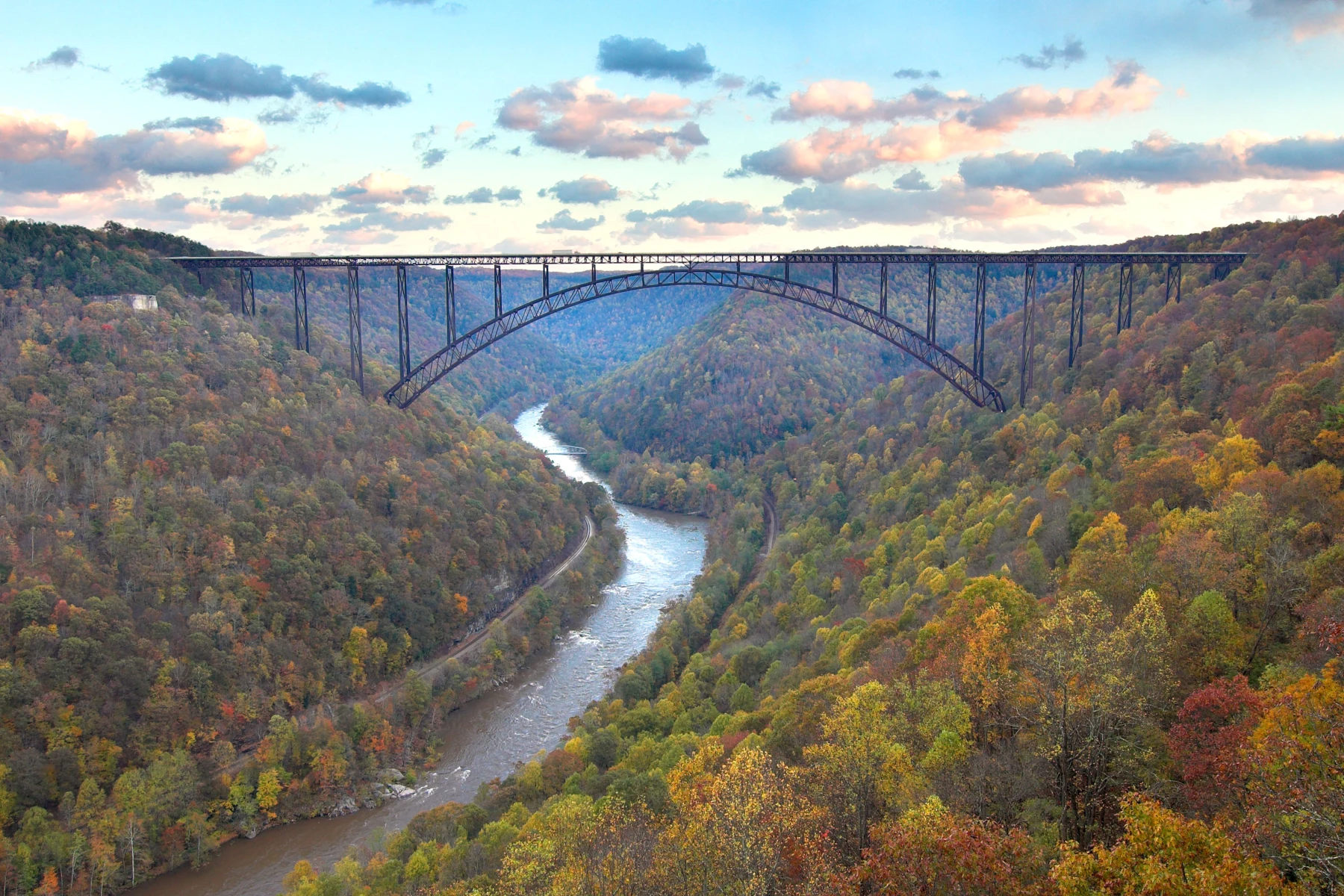
At Canyon Rim, the family followed the path toward the upper overlook. Below them, forested slopes dropped into a deep valley. A ribbon of water curved between the hills. Across the opening stretched an enormous steel bridge, with a curved arch underneath its roadway.
“That river does not look newly unpacked,” said Ana.
“Maybe they threw away the box,” Andy suggested.
Allie opened the explorers’ notebook. After the Gateway Arch, she had expected a break from enormous curves. Apparently, the curves had followed them.
“Today’s mystery,” she announced, “is how something called New can be very old.”
“Easy,” Andy said. “My new shoes already smell ancient.”
Their grown-up pointed out the visitor center, where they could investigate maps, exhibits and park information. This would be a day for the upper overlook and indoor discoveries. They were not trying to squeeze every part of a long river park into one outing.
A lower viewing area involved many stairs. The upper overlook suited their group today.
“Does choosing fewer stairs make us less adventurous?” Andy asked.
“It makes us more likely to have enough energy for our adventure,” Allie replied.
Augie approved. His legs had already submitted a report requesting lunch.
At the overlook, everyone stayed behind the barrier. The river looked small from high above, but that was a trick of distance. Allie held her thumb at arm’s length, making it cover part of the valley.
“My thumb is not actually bigger than a river,” she said.
“Good,” said Ana. “Your mittens would be impossible.”
They watched the moving water. The great gorge seemed both peaceful and enormous. Its story would require more than one birthday candle.
Allie wrote three headings: What we observe. What we think. What evidence could help.
Under the first, Augie dictated, “It is down there.”
An excellent beginning. Scientists needed accurate observations, including obvious ones.
2. The river refuses to read the map
Inside, the four explorers studied a map of the New River’s route. Its headwaters were in the Blue Ridge Mountains of North Carolina. It flowed through Virginia into West Virginia.
“Hold on,” Andy said. “That’s north. Isn’t north up?”
“Up the page,” Ana answered.
“Then the river is climbing the page.”
Allie tilted her notebook sideways. “Now is north over there? Did the real mountains fall over?”
Andy considered this. “Probably not. Nobody screamed.”
On a map, north was a direction. On the ground, uphill and downhill described elevation. Water flowed downhill under gravity whether its route pointed north, south, east or west.
They pictured a marble rolling down a sloping tray. Turning a compass beside the tray would not make the marble climb back up.
“So a compass helps us know direction,” Ana said, “but it doesn’t tell us which end of a valley is higher.”
“Different tools answer different questions,” Allie agreed.
The map revealed another surprise. Downstream from the park, the New joined the Gauley to become the Kanawha. That waterway connected with the Ohio, which joined the Mississippi. The river network eventually led toward the Gulf.
“The Mississippi!” Andy said. “We just learned about that beside the Gateway Arch.”
Their separate park discoveries were beginning to connect like pieces of a very watery puzzle. The New did not run past the Arch in St. Louis; the Ohio joined the Mississippi farther downstream. A familiar river name did not mean every connection happened in the same place.
Augie frowned. “Does the water know when its name changes?”
“No little sign pops up inside each drop,” said Ana.
“Then I could call it Steve.”
“The Steve River network,” Allie said solemnly. “Please consult your atlas.”
They learned another useful word: watershed, an area of land that drains toward a shared waterway or outlet. Rain falling on a hillside could become part of a small stream, then a larger river. Nearby ridges could send water toward different destinations.
Ana drew branching lines. They resembled an upside-down tree.
“The small streams are connected to the big story,” she said.
Augie added a tiny umbrella. “In case Steve gets wet.”
3. The rocks keep a different calendar
A picture of exposed cliffs showed layers running across the gorge. Andy thought they looked like a giant stack of pancakes.
“Rock pancakes,” he corrected himself. “Nobody taste them.”
Some layers began as sand; others began as mud. In ancient environments, sediments accumulated and eventually became rock. Sandstone and shale preserved parts of those histories. Plant material also contributed to coal-bearing layers.
“Does that mean the valley was always a valley?” Ana asked.
“No,” Allie said, checking their information. “The layers formed before the river exposed them in the gorge we see today.”
That was the first important separation. Making the rock and carving through the rock were different events.
Allie searched for an example in their own lives. “Our notebook’s paper existed before we wrote in it.”
“And the tree existed before the paper,” Ana added.
“And my excellent drawing arrived after both,” said Andy.
His excellent drawing was a pancake wearing a hard hat.
Dating the notebook paper would not reveal the exact morning Andy had drawn the pancake. Similarly, learning the age of a rock layer would not automatically give the age of a river cutting through it.
“Different calendars,” Ana said.
Allie made three imaginary calendar covers: Rock formation. River-system history. Gorge cutting.
Augie requested a fourth: Snack time.
They could tell that sandstone and shale were not identical materials, even before understanding all their differences. Some layers resisted wearing away better than others. Across parts of the gorge, resistant sandstone helped form prominent cliffs.
“Like the crunchy edge of a biscuit?” Andy asked.
“A comparison can help,” said Ana, “as long as we don’t pretend biscuits are geological evidence.”
The cliff did not require a tiny date stamped on every grain. Geologists combined observations from rock layers, their relationships and other evidence. A single view from an overlook was only one window into a much bigger investigation.
Allie drew a border around their calendars. “We mustn’t mix these together just because they are all old.”
Augie studied the hard-hat pancake. “This pancake is not old. Andy just made it.”
Exactly. Even a silly drawing could help keep time straight.
4. A river with a very long job
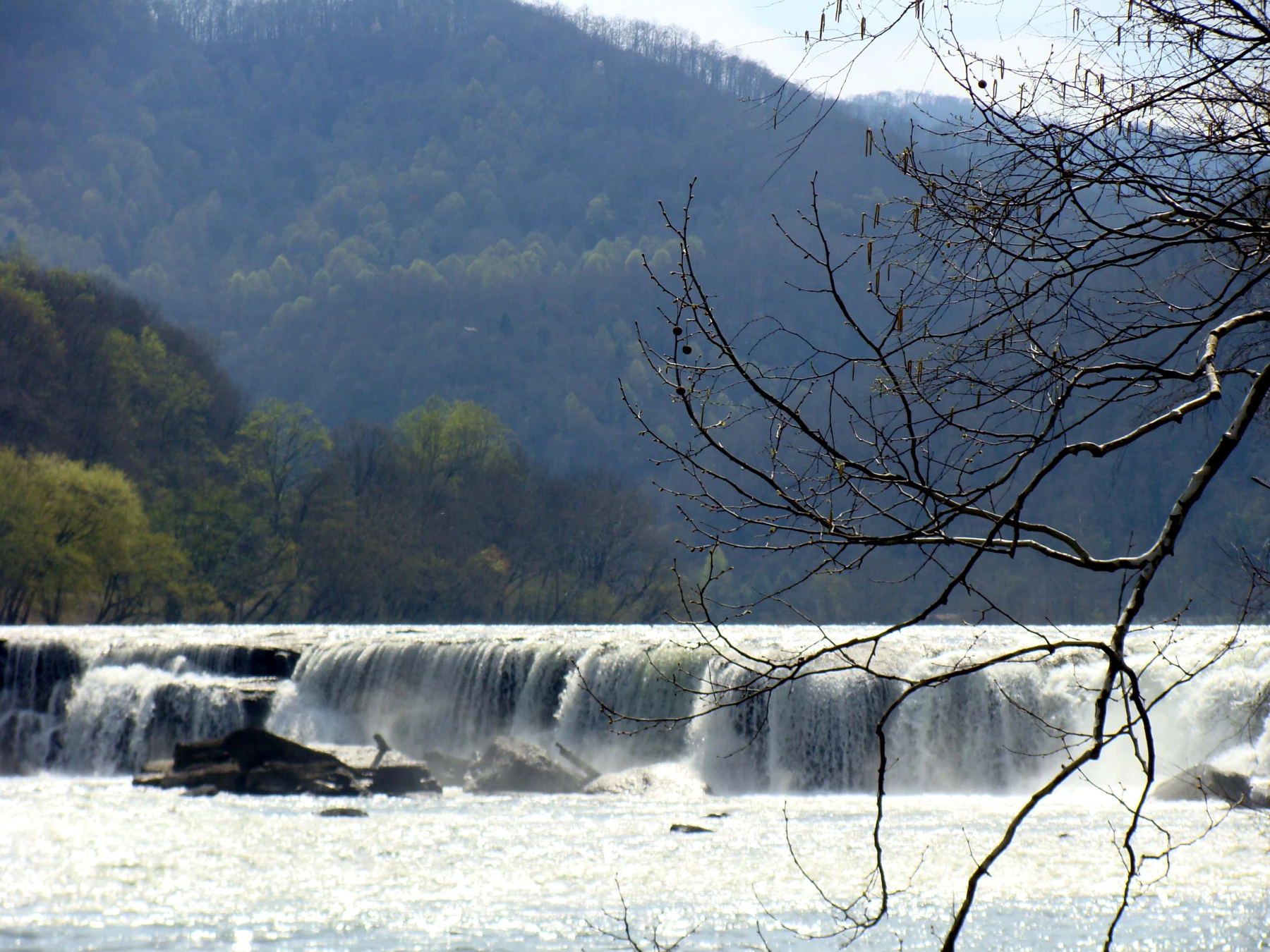
The family opened a photograph of Sandstone Falls, farther south in the park. Water poured across a broad rocky ledge. The picture was a way to explore another part of the river without pretending it was visible from Canyon Rim.
“That looks busier than the ribbon we saw,” Ana said.
Distance had hidden much of the river’s activity at the overlook. Water moved around obstacles, crossed uneven rock and carried sediment. Sand and other particles could help wear the channel as they moved against it.
“Like a river carrying its own rough tools,” Allie said.
“Does it get paid?” Augie asked.
“In more river,” Andy decided.
Their grown-up helped them distinguish two words. Weathering broke rock down where it was. Erosion removed and transported material. The processes could work together, although they were not interchangeable names for everything that happened to a hillside.
“Breaking a cracker is one job,” Ana said. “Carrying the crumbs away is another.”
“Eating the crumbs is my department,” Augie said.
Rock cracks, weather and gravity also mattered. Pieces could loosen and fall; slopes could change. The river did not carve every part of the landscape alone like a magical knife slicing a cake.
Allie added arrows to her drawing: water in the channel, weather acting on rock, gravity pulling material downhill.
“Many workers,” she said. “One very slow remodeling project.”
Slow overall change did not mean every event was gentle. High water could move powerful loads. A falling rock did not need a million years to land. They could admire the processes without approaching rapids, climbing barriers or testing slippery stones.
“I vote for photograph distance,” said Ana.
The falls photograph raised a new question: would every stretch of river look like this? The answer was no. A river crossed different materials and slopes. Broad pools, bends and rushing sections were parts of a varied route, not interchangeable decorations.
Andy wrote, A river changes the land, and the land shapes the river.
Then he added, “Neither one has submitted a finished drawing.”
The gorge was still a place where change happened. The family was watching a landscape in progress, even when the progress was difficult to notice during one afternoon.
5. The case of the missing birth certificate
Now Allie returned to the original mystery. How old was the New River?
She had hoped to write one enormous number, underline it twice and feel extremely scientific.
Instead, the sources described a complicated history. Estimates varied. The river belonged to a drainage story much older than a human lifetime, but an exact birthday was not something they could honestly print on a party invitation.
“Then how do we know it’s old?” Andy asked.
“Evidence can support a long history without giving us one perfectly certain number,” Ana said.
There were clues in landscape relationships and old drainage routes. Part of the New River followed a route associated with the ancestral Teays river system. Later, continental ice and the changes it caused reorganized drainage farther away.
Allie drew a branching line, then another line that joined a different branch.
“A system can have an old history and still change,” she said. “It doesn’t mean every channel stayed in exactly the same place forever.”
“Like our adventure plan,” said Andy. “Very ancient. Changed after breakfast.”
The children imagined how difficult it would be to investigate a river system that had no written diary. Scientists could not ask the river to remember its first Tuesday. They had to compare evidence and test explanations.
“What if a website gives a very confident number?” Ana asked.
“Confidence is not another kind of rock sample,” Allie said.
They decided to ask what was being dated: the rocks, the earlier drainage system, or the cutting of the present gorge. Two numbers might answer different questions. A simple ranking of the world’s oldest rivers could hide those difficulties rather than explain them.
Augie looked worried. “No cake, then?”
“We can celebrate a mystery without inventing its answer,” Ana said.
“One candle shaped like a question mark,” Andy proposed.
“And the water we see today?” Allie asked. “It isn’t the same water sitting here since the beginning.”
Rainfall, streams and the water cycle kept supplying moving water. The age of a river system was not the age of one particular puddle.
Augie sighed with relief. “Good. That would be a very stale drink.”
In the notebook, Allie crossed out Find the exact birthday. She replaced it with Explain what the evidence can—and cannot—tell us.
For once, a question mark was their discovery.
6. An arch with traffic on top
Back at the upper overlook, Andy pointed toward the bridge.
“The Gateway Arch got a road!”
“Different arch,” Ana said. “And a different job.”
At Gateway Arch National Park, they had studied a freestanding monument. Here, the bridge’s great steel arch supported a roadway above the river. The shapes could start a comparison, but the two structures were not copies wearing different paint.
The New River Gorge Bridge opened on October 22, 1977. The roadway stood 876 feet above the river. Its full length was 3,030 feet; the main arch span measured 1,700 feet.
“All three numbers describe different things,” Allie said. “Height, total length and arch span.”
“Please do not build a bridge using the wrong column,” Ana added.
They traced the arch through the air with their fingers while keeping their feet on the overlook. The curve met supports at either side of the gorge. Above it, a framework held the deck where vehicles crossed.
“What was crossing like before?” Andy asked.
Road travel between the sides had involved a winding descent into the gorge and a climb out again. The high bridge provided a much more direct crossing. An engineering decision could change everyday journeys for communities, not simply give photographers something beautiful to photograph.
Augie considered how long it took him to cross the living room when building blocks were everywhere. “My room needs a bridge.”
“Your room needs a basket,” Ana replied.
The steel had a brownish, weathered appearance. It was a special weathering steel, different in appearance from the shining surface they remembered in St. Louis. That did not make it a forgotten bridge. Design, inspection and care still mattered.
“Engineers also need notebooks,” Allie said.
“And people who check their notebooks,” Andy added.
The family would not walk onto the highway. Their place to study the bridge was the designated overlook. An impressive structure did not make every possible viewing spot appropriate.
Ana sketched an arch under a straight line. She labeled the line roadway, then drew a tiny car.
Augie drew a basket underneath.
“For Andy’s room?” she asked.
“No. For the engineer’s snacks.”
A sensible addition to an imaginary drawing, although nobody put it in the bridge’s specifications.
7. The valley remembers its workers
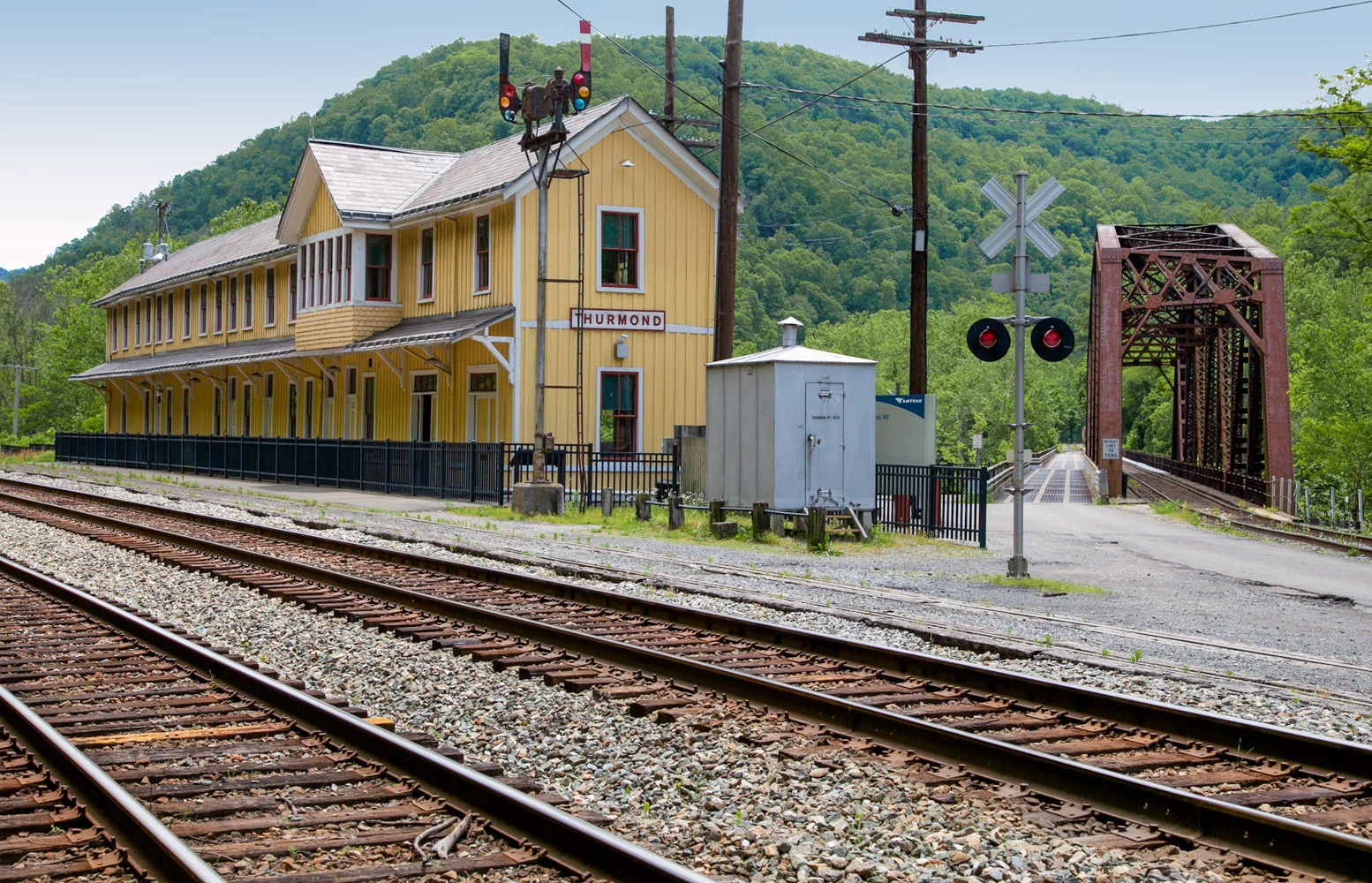
Later, the children studied a photograph of Thurmond, a railroad town elsewhere in the gorge. Tracks ran beside historic buildings. It was another place to investigate through pictures today and consider for a separately planned visit.
“Why would people build a town down there?” Andy asked.
The river valley had been a transport corridor. Railways carried coal from local mines and connected businesses and communities. Thurmond grew during the coal and railroad era. Its buildings preserved clues to that history.
“An old place can have more than one story,” Ana said. “The water’s story and people’s stories.”
They learned that steam locomotives required coal, water and servicing. Crews at Thurmond did that work. The later switch to diesel locomotives changed the need for those services. Mine closures, economic troubles and fires also affected the town.
“So it wasn’t one morning when everyone said, ‘We are finished,’” Allie observed.
“More like many changes stacking together,” said Ana.
Thurmond was not merely a stage set with empty windows. It remained a community with a history worth treating carefully. The railroad was still active. Tracks were working transportation routes, not paths for pretend train games.
Augie moved his imaginary train onto a line he drew in his notebook instead.
The discussion widened to the gorge’s coal communities. People from Appalachia, African Americans and immigrants from Europe worked in the coalfields. Families made homes, attended school, worshiped, played music and supported one another.
That did not make the coal camps fair or easy places. Mining was dangerous work. Companies could control jobs and housing. Segregation separated Black and white residents, including children at school.
Ana was quiet. “We can like learning about trains without pretending everybody had the same chances.”
Allie nodded. “And remember the workers, not just the machines.”
Andy had another question. “Was coal made from dinosaurs?”
They checked. The coal-bearing history here involved ancient plant material, changed through burial and geologic processes. A coal seam was not a pile of dinosaur bones wearing a disguise.
Augie looked at his train drawing. “So the old engine’s fuel had a plant story.”
Rock, work, transport and family life met in one landscape. The children had arrived looking for a river’s birthday. Now their notebook needed room for people whose names they did not yet know.
8. A forest is not a curtain
From above, the gorge’s trees could look like a soft green or gold blanket. Ana had nearly treated them as scenery around the “important” river and bridge.
“But the forest has its own history,” she said.
Much of the region had experienced logging and industrial change. Forests had regrown in many places, while some older trees remained. A wooded slope was not proof that nothing had ever happened there.
Allie remembered how the dunes in Indiana had taught them that a landscape could hold many stages of growth. Here, too, appearances could hide a history.
“Is the biggest tree always the oldest?” Andy asked.
Not necessarily. Different species and growing conditions affected size. A smaller tree growing slowly on a difficult site could be older than a larger, faster-growing neighbor.
Augie brightened. “I’m smaller than Andy. I might be the oldest.”
“Your birth certificate is quite clear,” Ana told him.
“The river doesn’t have one.”
A strong argument, delivered with cracker crumbs.
Trees were also living parts of a habitat, not just age puzzles. Leaves captured sunlight. Branches offered places to rest or nest. Fallen leaves became part of the forest floor. Water, soil, plants and animals made connections the children could only begin to follow.
They paused to listen from the path. No one needed to identify every sound to notice that the place was alive. They could write heard a short repeated call; animal not seen rather than invent an impressive bird sighting.
“Another honest question mark,” Allie said.
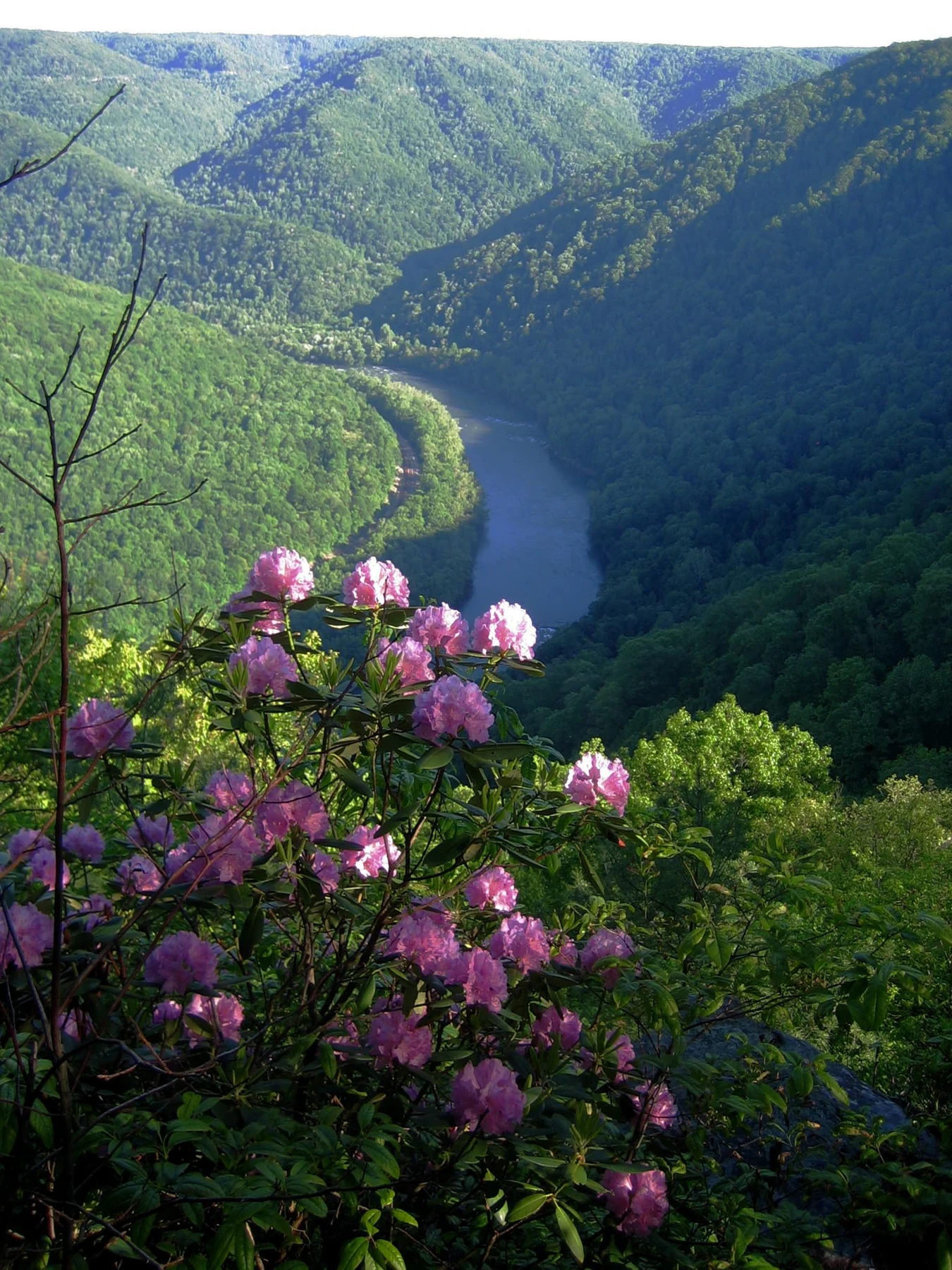
They also resisted naming every flowering shrub in a photograph without checking. One park photograph showed Catawba rhododendrons at Turkey Spur in the Grandview area. That identified view and flowering season did not mean the same blossoms were beside them at Canyon Rim today.
“Pictures need their own labels,” Ana said. “Otherwise we accidentally move mountains and flowers around.”
Andy suggested a company called Accidental Mountain Movers.
“No,” said Augie. “Too heavy.”
Looking after a park included its living systems and its human history. Buildings needed care; habitats needed attention; visitors needed thoughtful choices. The beautiful view was the beginning of understanding, rather than the whole job.
9. The certificate of excellent wondering
Before leaving, the four explorers returned to their first notebook page.
“What we observe,” Allie read. “A moving river, a deep gorge, wooded slopes and a bridge.”
“What we think,” Ana continued. “There is a very long, complicated history behind this view.”
“What evidence helps,” Andy said. “Rocks, maps, old channels, buildings, records and people’s stories.”
“And lunch,” Augie added.
Lunch had helped the investigators, which was not quite the same thing as evidence. Allie allowed it in a separate box.
Their biggest discovery was not a huge age written in permanent marker. It was learning to ask a better question. The age of a rock was not automatically the age of a river. North was not uphill. A river with an ancient history could have changed its route, and a forest could hold both regrowth and older survivors.
“And the bridge is longer across than it is high,” said Andy. “Those numbers are not fighting. They’re measuring different directions.”
Ana drew a small certificate:
Awarded to the New River: excellent at making us wonder. Birthday still under investigation.
Augie wanted to present it personally. The others explained that the notebook was a much better place for paper than the river. No certificate, cracker or imaginary candle would be thrown into the gorge.
Instead, they took one last look from the overlook. Far below, the water continued moving. Vehicles crossed high above it. The trees did not announce how old they were. None of those things needed to explain itself completely for the children to enjoy being there.
Allie turned to the next page. Their next reading adventure would head to Big Bend National Park, where desert, mountains and river country would bring a new set of connected habitats.
“Three floors,” Andy read from their next mystery’s title. “Does the desert have an elevator?”
“I hope it has a snack button,” said Augie.
Ana closed the notebook. “First we learn what the floors mean.”
They had become better at that: enjoying a funny idea, then checking what the real world was doing.
Behind them, the New River kept flowing downhill, regardless of where north happened to sit on the page.
Explorer’s notebook
Nine discoveries to keep
- A river’s name does not tell us its age. The New River has a long geologic history, but its exact age is uncertain.
- Rock formation, the history of a drainage system and the cutting of today’s gorge are different events.
- North is a compass direction. Downhill describes decreasing elevation. Rivers can flow north while flowing downhill.
- The New joins the Gauley downstream from the park to form the Kanawha; the river network connects onward with the Ohio and Mississippi.
- Weathering breaks rock down in place. Erosion moves material. Water, sediment, weather and gravity all contribute to landscape change.
- Part of the New River’s route is associated with the ancestral Teays drainage system. Later changes, including glaciation farther away, reorganized drainage.
- The New River Gorge Bridge opened in 1977. Its 876-foot height, 3,030-foot total length and 1,700-foot main arch span measure different things.
- Coal and railways shaped communities including Thurmond. Their history includes skilled work, family life, danger and unequal treatment.
- Tree size alone does not prove age. Forests here include regrowth and older survivors.
Five family adventures
- North without uphill: With a grown-up, tilt a tray slightly over a towel and roll a marble from the raised end. Turn a paper compass rose beside the tray. Explain why changing the direction label does not reverse the slope. Keep small objects away from younger children.
- Three calendars: Draw a tree, a notebook made from paper and a new drawing inside the notebook. Explain why the ages of those three things need not match. Compare this with rock, a river system and gorge cutting.
- Follow the network: On a reliable map, find the New, Gauley, Kanawha, Ohio and Mississippi. Trace their connections with a finger. Locate St. Louis separately; notice where the Ohio actually joins the Mississippi.
- Cracker geology: Over a plate, break a cracker, then move the crumbs with a spoon. Discuss the difference between breaking and carrying. This is a simple comparison, not a model of every geological process. Eat only food your family can safely enjoy; never taste outdoor rocks.
- One view, several stories: Look at a landscape photograph. Ask one question about rocks or water, one about living things and one about people. Mark which answers you know and which still need evidence.
Four questions for the road
- Why doesn’t knowing the age of a rock layer automatically tell us the river’s exact age?
- How can water flow north without flowing uphill?
- What might be missing from a history that describes coal trains but never mentions workers and their families?
- Which observation today could you record honestly without knowing its complete explanation?
Eight words for your explorer kit
- Elevation: Height measured relative to a reference level, often sea level.
- Watershed: Land whose water drains toward a shared waterway or outlet.
- Sediment: Loose material such as sand, mud or gravel that can be transported and deposited.
- Sedimentary rock: Rock formed from accumulated material that becomes consolidated over time.
- Weathering: Breakdown or alteration of rock where it is.
- Erosion: Removal and transport of material by agents such as moving water, wind or ice.
- Gorge: A deep valley with steep sides.
- Arch span: The distance an arch bridges between its supports; it is different from a whole bridge’s total length.