1. A very suspicious snow hat
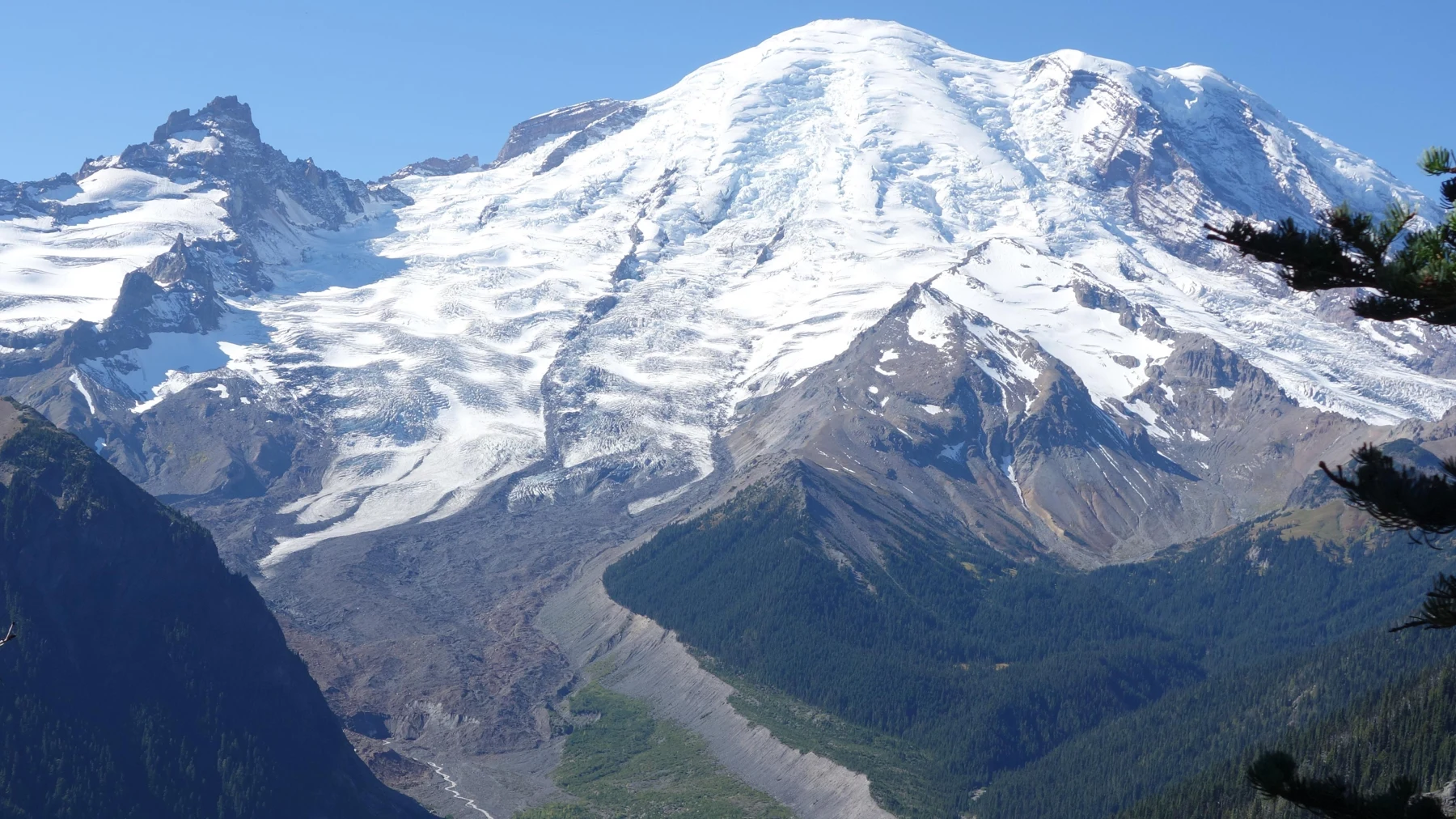
Augie opened the notebook to the drawing he had made after Arches: a snowy hat perched above a little furnace.
“Hot head. Cold hat.”
Andy studied the photograph beside it. Mount Rainier rose above forests and meadows, with ice stretching down its slopes.
“If this is a volcano,” he asked, “why hasn't the hat melted?”
Ana considered the question. “Perhaps the volcano isn't an oven turned on underneath every snowflake.”
“Then where are the controls?”
“Definitely not in your backpack,” Allie said.
Their family’s book journey had reached Washington State in the Pacific Northwest. Mount Rainier belonged to the Cascade Range. It was an active volcano, but its snowy appearance told another story too.
Mom and Dad planned their park outings around current conditions, suitable established trails, viewpoints, and time to rest. They checked weather, road access, and park guidance, packed water and extra layers, and kept the children together. Glacier travel and summit climbing required specialized skills and equipment; those places would be investigated through photographs and exhibits.
“So our expedition goes up here?” Andy pointed to the summit.
“Our questions can,” Mom said. “Our feet have a different plan.”
At a viewing place, a cloud drifted across part of the mountain. Augie announced that the hat had acquired a blanket.
“A cloud isn't evidence of an eruption,” Allie said. “We need proper information, not guesses from one shape in the sky.”
She wrote their case in the notebook: HOW CAN THE SAME MOUNTAIN BE BUILT BY VOLCANIC ACTIVITY AND SHAPED BY ICE?
Andy added two blank name badges.
“Hiring mountain workers. Must enjoy unusual temperatures.”
2. The builder works in layers
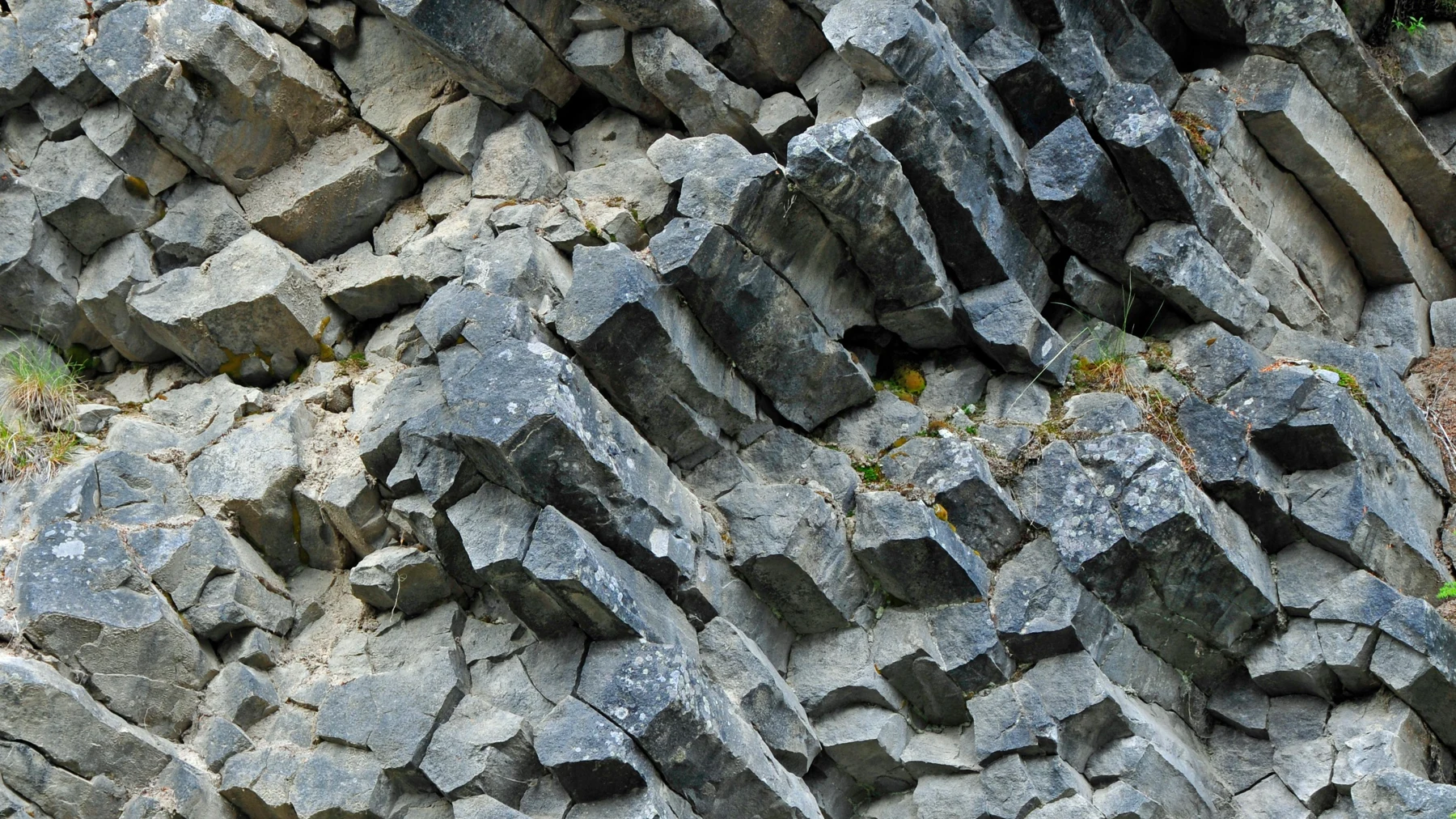
At an exhibit, they found a word long enough to make Andy sit up straighter: stratovolcano.
“Strat-o-vol-ca-no,” Allie read. “A composite volcano.”
Augie tried, then chose “mountain cake.”
“That comparison might help,” Ana said, “as long as nobody expects frosting.”
Repeated eruptions had added lava and other volcanic material, building Rainier over a long time. The mountain had not appeared in one enormous sneeze. Its history included periods of more activity and periods of less.
Molten rock underground was magma. When it reached the surface, it was called lava. As lava cooled and hardened, it became rock. Other eruptions could scatter fragments rather than simply produce a smooth flow.
Andy drew a chef in a hard hat.
“Today's special: one layer of rock. Please allow a very long delivery time.”
The mountain also stood on much older rocks. The visible volcano was only part of the region's history, which included earlier environments and geologic events.
Allie remembered the hidden salt under Arches.
“Another basement we can't understand just by looking at the roof.”
Their first name badge read VOLCANIC BUILDER. But they drew it on the history page, not as a claim that lava was pouring out during their visit.
“Active means it can erupt again,” Ana said. “It doesn't mean every minute is eruption minute.”
Augie placed a tiny calendar beside the chef.
“Not my birthday.”
“No,” Andy agreed. “Very different kind of cake.”
The children had found one kind of work: adding material. Now they needed to learn how a mountain could lose pieces without losing its identity.
3. The engine room is not a hollow oven
Andy had drawn a doorway into the mountain with a sign: ENGINE ROOM. NEXT TO THE BISCUITS.
Ana crossed out the biscuits.
“Why?”
“Because this is not a kitchen.”
Rainier was part of a chain of volcanoes related to plate tectonics. Offshore, the oceanic Juan de Fuca Plate descended beneath North America. That process was called subduction.
At depth, fluids released from the descending plate helped some of the hot rock above it melt. Magma could rise through Earth's crust. The explanation connected a mountain in Washington with processes far below the surface and far beyond the park boundary.
“So the moving plate doesn't just scrape along and turn into one giant puddle?” Allie asked, checking their guide.
“Too simple,” Ana said. “The fluids and the rock above it matter.”
Augie drew an arrow going down, then another coming up.
“Underground traffic.”
“Without a car park,” Andy added.
Their picture of a hollow mountain filled to the brim with glowing liquid needed replacing. Magma systems were more complicated, with molten material, crystals, gases, and surrounding solid rock.
Allie made their sketch deliberately simple and labeled it MODEL — NOT A VIEW INSIDE.
“How do scientists know anything if they can't open the mountain?” Andy asked.
They used evidence: rocks, past deposits, earthquakes, measurements, and many other observations. One instrument or one exciting-looking cloud did not tell the whole story.
Ana added another question to their page: WHAT WOULD WE MEASURE?
Augie held up his ruler.
“Not the whole mountain with that,” Allie said.
He considered this limitation.
“Need bigger ruler.”
4. The cold crew arrives
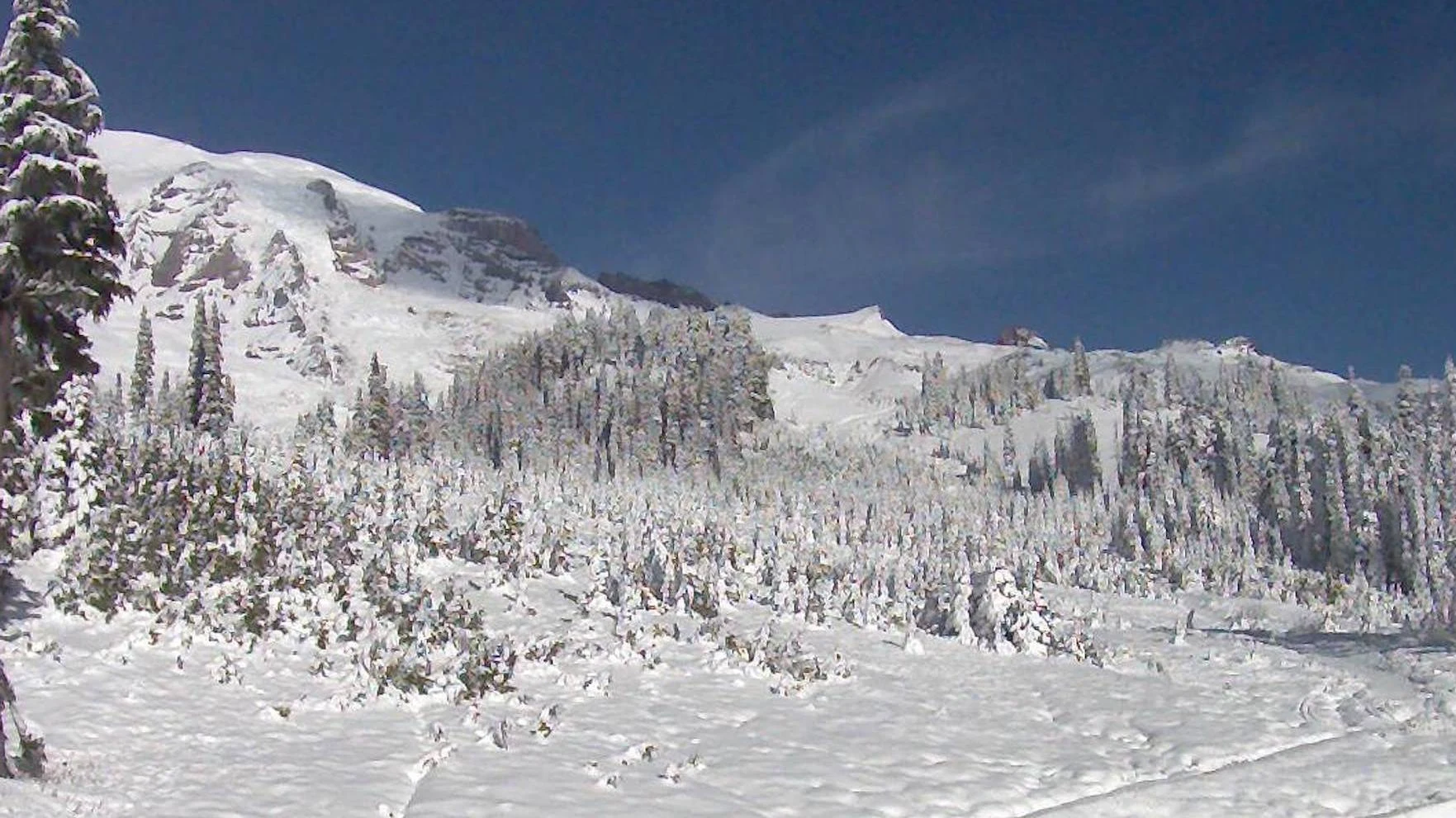
The next exhibit returned to the glacier descending into a valley in their opening photograph.
Andy leaned closer. “That's a lot of old winter.”
Where snowfall accumulated over time faster than it was lost, buried snow could become denser and eventually turn into glacier ice. A glacier was more than a patch of snow that had refused to leave: its mass of ice moved under gravity.
Augie pointed at the photograph.
“I can't see it going.”
“Most movement is too slow for one quick look,” Ana said. “A photograph catches a moment, not the whole journey.”
They watched an educational time-lapse that made the movement easier to recognize. The ice deformed and moved downslope. It was solid ice, not a river of liquid water wearing a white disguise.
Allie remembered glaciers in earlier chapters. Knowing one definition was useful; seeing how it applied in a new place was even better.
Andy drew their second badge: GLACIER SCULPTOR. SPECIALTY: SLOW WORK.
“But not harmless work,” Dad reminded them.
Glaciers could have deep cracks called crevasses, including cracks hidden by snow. The children were not stepping onto the ice, approaching its edge, or exploring beneath it. Close photographs let their curiosity travel where an ordinary family walk should not.
Augie drew binoculars on his badge.
“Looking job.”
“An excellent job,” Allie said.
The hot and cold clues were beginning to fit. The volcano had built rock; moving ice could reshape it. The mountain did not need to choose only one history.
Andy added a snowflake to the imaginary chef's hat.
“New employee.”
5. The mountain-sized sandpaper problem
“How does ice carve rock?” Andy asked. “My ice cube mostly carves a wet circle on the table.”
Ana looked at Mom.
“Over a towel,” Mom said immediately.
Moving glacier ice could carry rocks and sediment. Material dragged along its base scraped the surface below. Ice could also help pull pieces from bedrock, a process called plucking.
Allie drew grit beneath an arrow-shaped glacier.
“A giant sheet of sandpaper is a useful comparison,” she said. “Except glaciers are much more complicated, and nobody holds the handle.”
Repeated glaciation had helped deepen and widen valleys and sculpt Rainier's volcanic slopes. Earlier glaciers had been much larger than the ones in the photographs of the modern mountain.
Augie added a vacuum cleaner to the drawing.
“Where do the bits go?”
“Some travel with the ice,” Ana said. “Some end up in piles and ridges.”
Those accumulations of glacial debris were called moraines. They could help reveal where ice had once been, like evidence left after a worker moved on.
A glacier's end was its terminus. If that end retreated uphill, it did not mean every piece of ice had started marching backward. Ice could continue flowing downslope while melting and other losses removed it faster than new ice arrived at the end.
Andy imagined a conveyor belt delivering biscuits to Augie.
“If Augie eats faster than the belt delivers, the biscuit pile shrinks.”
Augie accepted the scientific responsibility.
“I can help.”
Allie wrote a warning under the comparison: ICE IS NOT BISCUITS.
Ana drew a very small, serious scientist pointing at it.
“The most important label in this notebook.”
6. A river with flour and no bakery
Below the mountain, water had another job.
Streams carried meltwater and sediment away from the ice. In a park photograph, one river looked cloudy rather than clear.
“Someone washed the sandpaper,” Andy suggested.
“Not a bad connection,” Allie said.
Glaciers could grind rock into very fine particles called glacial flour. Suspended in water, that sediment could give a stream a milky or gray appearance. It was not milk, and it was not baking flour.
Augie closed his imaginary cake shop.
“Nothing to eat here.”
Waterways draining Rainier carried water and rock material into a much larger landscape. Channels could split and rejoin across sediment-filled valleys, creating braided patterns. Rivers shifted and moved their load; a riverbed was not a tidy pipe fixed permanently in place.
Ana drew several blue threads, then put an arrow downstream.
“The Everglades taught us to follow water sideways. Here we start much higher up.”
Rain and seasonal snowmelt also fed waterways. Allie made sure their drawing did not claim every drop came from a glacier.
At a designated stopping place, Dad kept everyone well away from the river's edge. Cold, fast water and unstable banks were reasons to look from a suitable place, not investigate by wading in.
Andy wrote: SAMPLE COLLECTED — IN A PHOTOGRAPH.
Their case now had three arrows: volcanic material added, ice carving and carrying, water moving sediment onward.
“That's three workers,” he complained.
“Our two engines are a title,” Ana said. “Nature didn't sign a contract limiting the staff.”
Augie drew another badge anyway.
“River delivery.”
7. The meadow has a short appointment
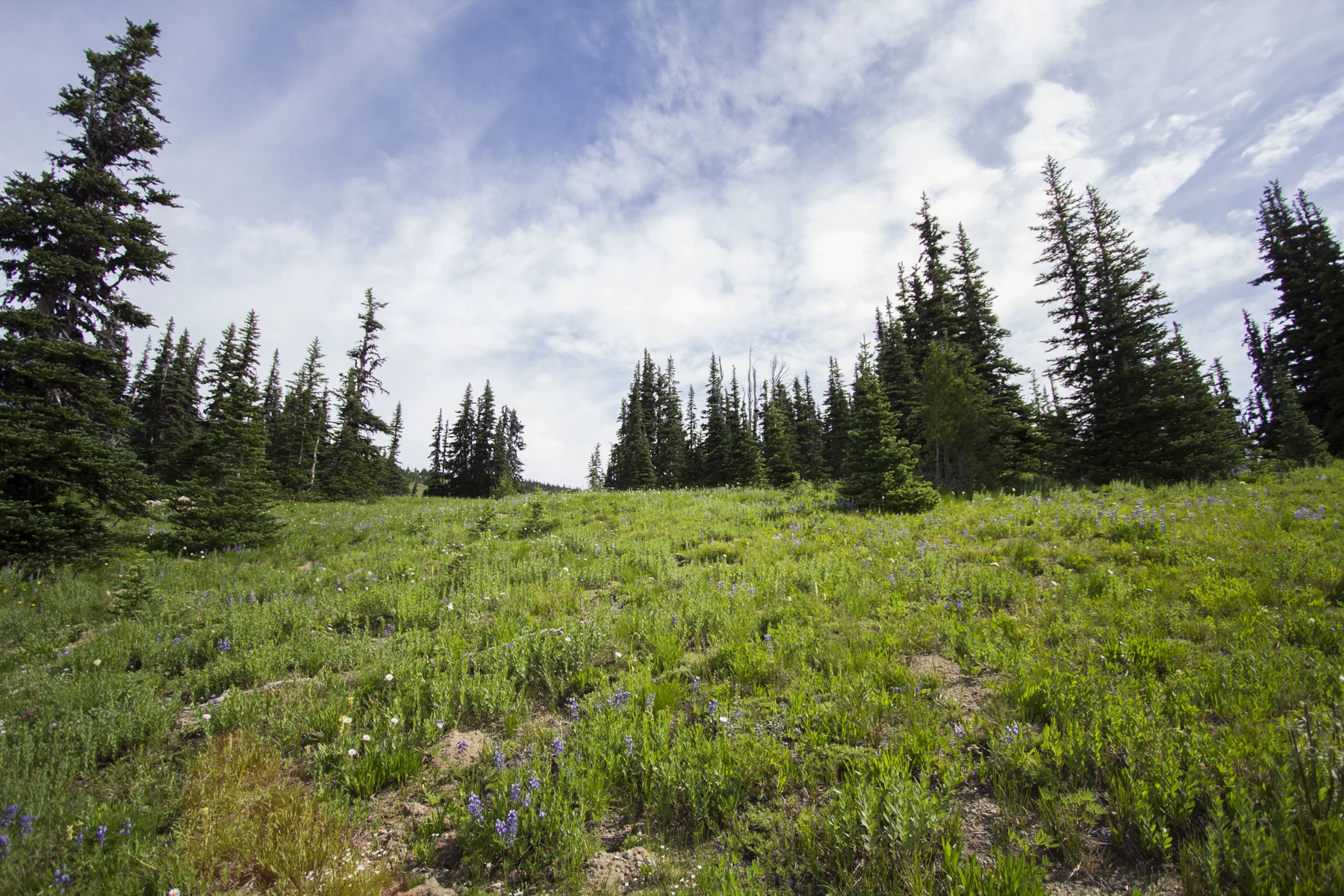
Rainier's story was not only gray rock and white ice. In summer photographs, meadows spread color across the slopes.
Augie pointed at purple flowers.
“The mountain has sprinkles.”
“Still not cake,” Allie said.
Lower parts of the park supported forests, including large conifers and a shaded world of ferns, mosses, and fallen wood. Higher up, subalpine meadows and groups of trees formed a different community. Above that, exposed alpine environments challenged living things with cold, wind, and a short growing season.
The boundaries were not neat stripes painted around the mountain. Snow, slope, moisture, and local conditions helped shape where plants grew.
Ana studied their meadow photograph.
“If snow stays late, the flowers have less time before winter returns.”
Wildflowers had to grow, bloom, and reproduce during the available season. The timing varied with conditions; the family could not promise a particular meadow would be flowering on a fixed calendar date.
Andy drew a flower holding an appointment book.
“Tuesday: bloom. Wednesday: continue blooming. Thursday: ask snow to wait.”
The plants needed care from visitors too. The children stayed on the established trail and looked without picking flowers. A step sideways for a photograph could damage plants that had waited through months of snow.
Augie kept both feet on the path.
“No squishing sprinkles.”
Through educational material, they met the hoary marmot, a large squirrel relative whose whistle-like alarm call had earned marmots a memorable nickname: whistle pigs. It was not an actual pig and did not need encouragement to perform.
Andy put away his imaginary conductor's baton.
“Wildlife concert canceled. Listening seats only.”
8. The mountain's checkup
Back at an exhibit, Allie returned to their measurement question.
“How do you give a volcano a checkup?”
“Very large thermometer,” Augie said.
“Please open wide and say lava,” Andy added.
Scientists used instruments and repeated observations to look for changes. Earthquake monitoring was one part of volcano science; changes in the ground and volcanic gases could also provide information. They compared evidence over time rather than making predictions from a single dramatic observation.
A mountain could have hazards even between eruptions. The children learned the word lahar: a fast-moving flow of water and volcanic debris. At Rainier, large landslides as well as eruptions could start dangerous flows. A snowy volcano did not become risk-free simply because no lava was visible.
Ana's pencil stopped.
“So being prepared matters even when the photograph looks peaceful.”
“Yes,” Dad said. “We follow current information, know the guidance for where we are, and listen to park staff and emergency instructions.”
The children did not invent their own escape route or try to examine unstable ground. Mom and Dad handled the practical planning. Learning about a hazard meant understanding and preparing, not searching for a thrilling demonstration.
Andy gave his scientist drawing a clipboard instead of a cape.
“Evidence superhero.”
“Ordinary people doing careful work,” Allie said. “Which is already impressive.”
Augie drew several little instruments around the mountain.
“Lots of listeners.”
Their two engines were now properly labeled: volcanic building over time, and glacial shaping. Neither badge was a forecast of what the mountain would do next.
Ana added one final note: THE MOUNTAIN IS NOT A MACHINE WITH TWO BUTTONS.
Andy sighed.
“There goes my invention.”
9. A mountain is more than our mystery
Before closing the case, the family learned about the people connected with this landscape.
The mountain and surrounding lands were ancestral homelands and living places of cultural and spiritual importance. The park's associated Tribes included the Cowlitz, Muckleshoot, Nisqually, Puyallup, Squaxin Island, and Yakama. The children could follow the park's links to Tribal websites and listen to people sharing their own relationships with the land.
“Not a chapter that began when we turned up,” Ana said.
Allie nodded. “And not one story we can tell for everyone.”
Their notebook could hold geology and still leave space for listening. They would not invent a single meaning for the mountain's Indigenous names or borrow a sacred story as a joke.
Then Augie reopened the snow-hat drawing.
“I know now. Not an oven.”
The mountain's glaciers and snow belonged to a cold, high-elevation environment. Volcanic heat and eruptive history did not warm every part of the mountain uniformly. Processes below the surface and processes on its slopes could coexist.
Andy drew the builder and sculptor shaking hands.
“Congratulations. You made a mountain together.”
“Built and reshaped,” Allie said. “And it keeps changing.”
Ana added water carrying grains away, trees below, and flowers beside the trail. Augie placed a tiny marmot in the corner, wearing absolutely no equipment.
Their case report read: ONE LANDSCAPE CAN RECORD SEVERAL KINDS OF WORK, HAPPENING AT DIFFERENT TIMES AND IN DIFFERENT PLACES.
On the next page, blue mountain ridges faded into the distance. Shenandoah National Park would bring them back toward the Appalachians.
Andy considered the picture.
“Those mountains look blue. Has someone painted them?”
Ana smiled. “Another color mystery.”
Augie drew a paintbrush, then a large question mark.
Allie turned the page: THE BLUE-MOUNTAIN MYSTERY.
Behind them, the snowy hat stayed on the photograph. The notebook, at last, was allowed to close.
Explorer’s notebook
Nine discoveries to keep
- Mount Rainier National Park is in Washington State, in the Cascade Range of the Pacific Northwest.
- Rainier is a composite volcano, or stratovolcano, built through repeated eruptions of lava and other volcanic material.
- Magma is molten rock below the surface; lava is molten rock that has reached the surface.
- Subduction of the Juan de Fuca Plate beneath North America helps explain the region's volcanoes. Fluids released at depth help rock above the descending plate melt.
- Buried snow can become glacier ice. Glaciers move under gravity and help reshape the mountain.
- Rock carried by ice can scrape bedrock; plucking removes pieces. Moraines are accumulations of glacial debris.
- A retreating terminus does not mean all the glacier's ice is flowing backward. Loss at the end can exceed the arrival of ice.
- Fine sediment called glacial flour can cloud meltwater. Rivers carry water and sediment into the wider landscape.
- Forests, subalpine meadows, and alpine environments support different communities. Their boundaries and seasonal changes depend on local conditions.
Five ways to explore thoughtfully
- With a grown-up, use current official information to choose suitable routes, weather windows, road access, and rest stops. Short outings, accessible viewpoints, exhibits, and photographs all count as exploring.
- Study Rainier's snowy slopes from an established viewpoint. Use binoculars or park photographs to notice different glacier shapes without approaching ice, crevasses, or glacier caves.
- Compare volcanic rock textures through exhibits or a designated geological stopping place. Leave natural rocks where they are and never stop in the roadway to inspect a cliff.
- Enjoy meadows from established trails. Leave flowers unpicked, keep off delicate vegetation, and observe wildlife without feeding or approaching it.
- Learn about the mountain through the park's Associated Tribes resources and Tribal websites. Let the communities connected with the land speak for themselves.
Talk it through
- What evidence might show that a mountain was built by eruptions, even when no eruption is happening during a visit?
- How can glacier ice move downhill while the glacier's end retreats uphill? Explain it without turning the glacier into a liquid river.
- Why do photographs, time-lapse recordings, and repeated measurements answer different kinds of questions? Which would you use to investigate something that changes very slowly?
Words for your field notebook
- Stratovolcano: a volcano built from layers of lava and other erupted material; also called a composite volcano.
- Subduction: the movement of one tectonic plate down beneath another.
- Crevasse: a crack in glacier ice, which can be deep or hidden by snow.
- Moraine: rock and sediment accumulated by a glacier, often forming a ridge.
- Terminus: the end of a glacier.
- Lahar: a flow of water and volcanic debris that can travel rapidly down valleys.