1. The window complaint department
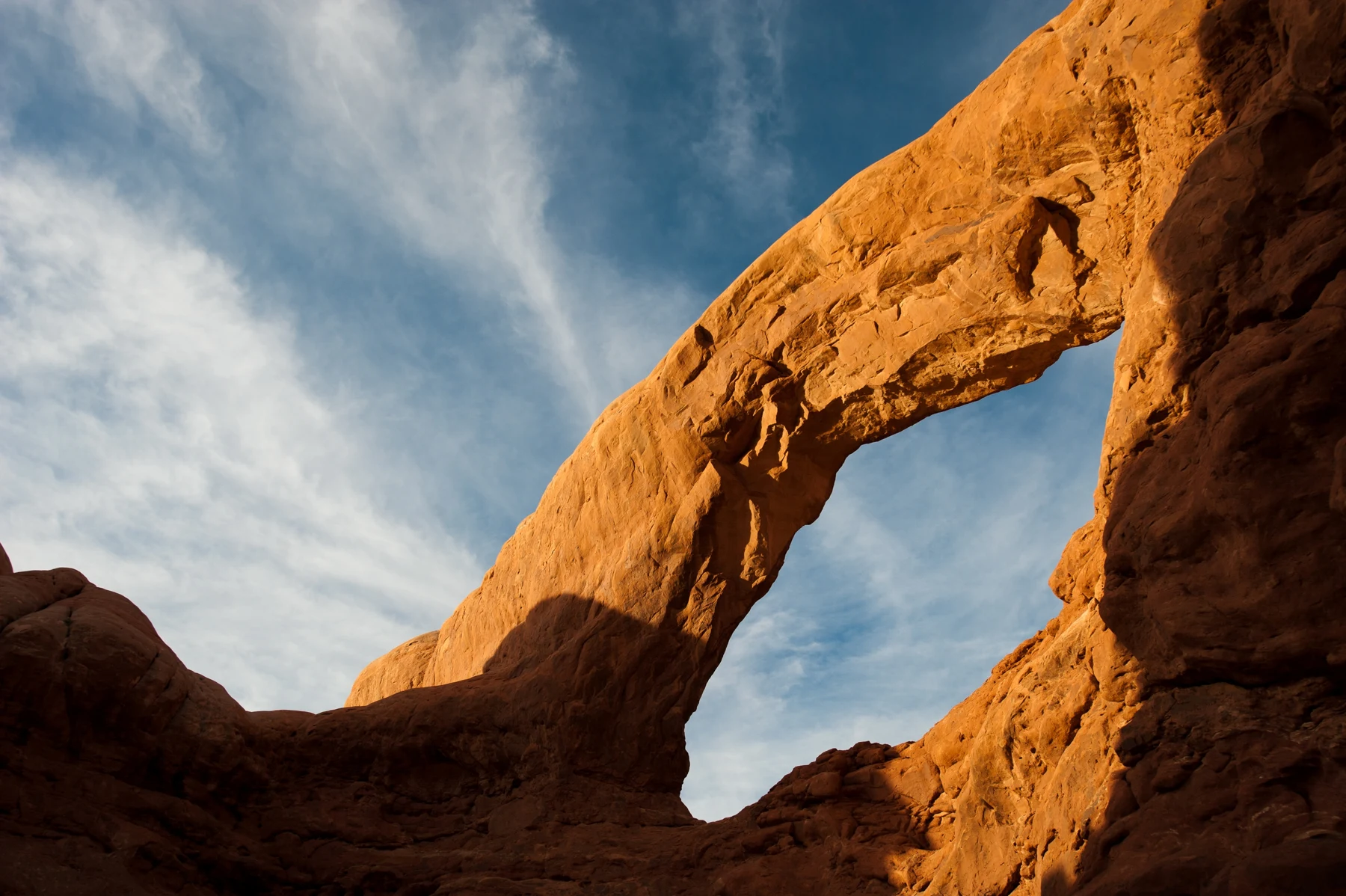
Augie arrived with a complaint.
“The windows are broken.”
On the photograph in their park guide, blue sky shone through an enormous opening in red stone. No glass. No curtains. Not even a handle.
Andy examined it. “Someone forgot the house.”
After the Everglades, where a river had hidden among plants, the family’s book journey had reached southeastern Utah. Arches National Park stood near Moab, on the Colorado Plateau. Here, the puzzle seemed to be the opposite: instead of something hiding, something was missing.
“Who took the middle?” Ana asked.
Allie wrote that question in the notebook. Underneath it, Augie drew a square window with a dinosaur squeezing through.
“Possible suspect,” he explained.
Mom and Dad checked the park’s current guidance before choosing their outings. Water bottles, sun hats, maps, snacks, and breaks came before mysteries. They planned suitable established trails and viewpoints, staying together and keeping away from drop-offs. Some formations would be explored through photographs and exhibits rather than long hikes.
“Do we need a ladder?” Andy asked.
“Definitely not,” Dad said.
The stone arches were for looking at, not climbing on. Neither was Balanced Rock a playground. Augie tucked his imaginary ladder into an imaginary cupboard.
“Closed for safety.”
At a viewing place, the children watched sunlight settle on the sandstone. The opening was irregular, and its edges were thick in some places and thin in others.
“It doesn’t look cut out,” Ana said.
Allie opened their new case: WHO MAKES THE WINDOWS, AND WHAT HAPPENS TO THE MISSING STONE?
Andy drew a tiny employee badge. NAME: UNKNOWN. JOB: ENORMOUS HOLES.
2. The rock that remembers sand
Their first clue came from a display about sandstone.
“Sand?” Andy said. “As in the stuff that gets in my shoes?”
“That kind of grain,” Allie said. “But joined together into rock.”
Minerals could cement sand grains together. Long before today’s arches existed, ancient environments had deposited the materials that became the rock layers. Much of the park’s familiar arch-making sandstone belonged to the Entrada Sandstone, whose story included ancient dunes.
Ana studied a close photograph of the grains.
“So the rock has a history before it becomes an arch.”
“A baby window is not born wearing a window,” Andy decided.
“That sentence needs help,” Allie said.
Augie supplied it. “Baby rock.”
The sandstone contained tiny spaces between grains. Scientists called that quality porosity. Water could enter those spaces even when a rock looked solid to the children.
Andy held his water bottle beside the photograph.
“Not testing it,” he said quickly. “Just introducing the suspects.”
Different layers behaved differently. Beneath much of the Entrada lay rock containing more clay, which let water pass through less easily. The boundary between layers could help water linger and work on the sandstone above it.
Ana drew a sponge over a tray, then added a large warning: A COMPARISON, NOT A ROCK RECIPE.
“A sponge helps us picture spaces,” she said. “It doesn’t mean sandstone squishes like a bath toy.”
Allie approved the warning. Good explanations needed limits as well as pictures.
The first clue was ready: the material mattered. The same weather would not carve every kind of stone in exactly the same way.
Augie drew a sand grain wearing a hard hat.
“Small worker.”
“Very small building material,” Ana corrected.
3. The secret under the floor
The next clue was somewhere the children could not see from the trail.
“Underground salt,” Allie read.
Andy looked alarmed. “The whole park is standing on dinner seasoning?”
Deep beneath the landscape lay ancient salt deposits left as seas advanced and evaporated. Later sediments buried them. Under great pressure, salt could deform and move slowly, behaving differently from the brittle rock above it.
“It isn’t a swimming pool of melted salt,” Ana said, checking the explanation. “Solid salt can change shape over geologic time.”
As buried salt moved and bulged, overlying layers bent and fractured. Uplift, erosion, and other changes also helped create and expose cracks. Water later followed those weaknesses.
Augie lowered his ear toward the notebook.
“Is it moving now?”
“We can’t hear deep time through paper,” Allie said.
“I heard my tummy.”
“That operates on lunch time,” Andy replied.
Allie drew the history as separate stages. An ancient sea. Buried salt. Layers bending and cracking. Overlying rock gradually removed. The stages stretched across immense spans of time; they were not events squeezed into one busy afternoon.
Ana added arrows between the pictures.
“Our mystery starts before the hole,” she said. “Even before the wall is standing out in the open.”
Andy crossed out his first theory: GIANT WINDOW INSTALLER ARRIVES WITH HAMMER.
He replaced it with: LANDSCAPE ALREADY HAS WEAK PLACES.
“All good mysteries have a secret basement,” he announced.
Grand Teton had taught them about moving blocks of Earth’s crust. Here was another reminder that the visible landscape did not tell the entire story. Sometimes an important clue was under the floor.
Augie drew a salt grain in slippers.
“Basement worker.”
4. Fins without fish
Tall, narrow walls appeared in another park photograph. They stood with spaces between them, like enormous pages left open to the sky.
“Fins,” Allie read.
Augie searched the image. “Where’s the fish?”
“Geology borrowed the word,” Ana said.
Weathering and erosion widened fractures and separated sections of sandstone into thin walls. A stone fin was a shape, not an animal part. Some fins could eventually develop openings; others would change without ever becoming a grand arch.
Andy drew a fish wearing a mountain.
“I am returning this confusing word to the dictionary.”
Allie pointed to two useful terms. Weathering broke down or altered rock where it was. Erosion moved loosened material away. They often worked together, so the children needed both in their explanation.
“First loosen the crumbs, then carry them,” Ana said.
Mom looked at Andy’s snack.
“Please demonstrate over the napkin.”
He did, with spectacular scientific restraint.
Rain could wash grains into a small drainage, then farther through the landscape. Gravity pulled loose pieces downhill. A grain did not have to complete its entire journey in a single storm.
“So the missing middle didn’t disappear,” Ana said. “It became pieces and went somewhere.”
“All sizes of pieces,” Allie added. “From grains to blocks.”
Andy wrote a new badge: EROSION — LOST-AND-FOUND TRANSPORT.
“Not lost,” Ana said. “Relocated.”
The cracks were pathways. The fins were an intermediate shape. The windows would need another clue.
Augie put a tiny drawing of a fish beside the word FIN, then crossed it out carefully.
“Just making sure.”
5. The smallest window-making tools
The desert looked dry enough to make a water bottle feel popular.
“Can rain really be the main suspect here?” Andy asked.
A place did not need constant rain for water to change its rocks. In Arches, water was a major sculptor. It seeped into openings, loosened grains, and helped move debris away.
Some rainwater could slowly dissolve calcite, a mineral cement holding sand grains together. That did not turn a whole cliff into a drink. It weakened particular places, little by little.
Ana drew a grain with its tiny mineral connections fading.
“An extremely slow undo button.”
Cold weather supplied another tool. Water entering cracks could freeze and expand, helping push rock apart. Thawing and later freezing could continue the work when conditions were right.
Augie stared at his ice pack.
“Tiny strong ice.”
“Not a tool for us to use on the park,” Allie said. “We only observe.”
Openings grew where conditions favored them. Weaker material could wear away under stronger rock. In other cases, a basin near the edge of a rock wall could deepen until an opening broke through. Not every arch followed one identical set of steps.
Andy folded his arms. “The window factory has different departments.”
“And no promise that every project succeeds,” Ana said.
Wind could move sand and loose dust, but their original picture of a windstorm drilling every hole was too simple. Rock type, fractures, water, weather, and gravity worked together over time.
Allie added TIME to the badge list in especially large letters.
“How large?” Andy asked.
“Larger than our holiday.”
“Larger than waiting for my birthday?”
“Much.”
Augie sighed. “Slow workers.”
“Patient observers needed,” Ana replied.
6. A window is still an arch
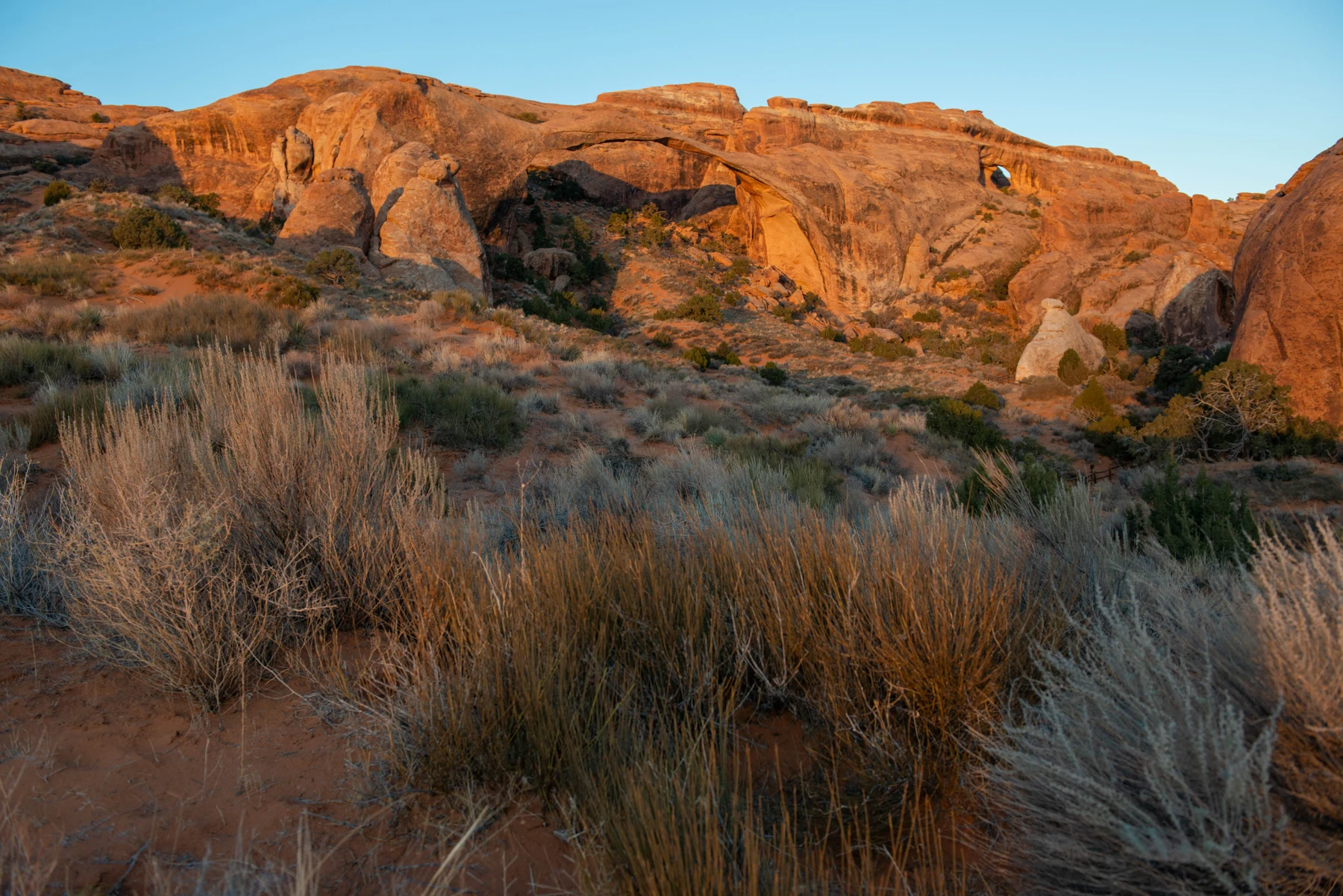
The family compared South Window with photographs of other formations.
“Is a window a different species?” Andy asked.
“Not an animal,” Allie reminded him.
“Different stone recipe?”
The word window described an arch that might be especially large, sit high in a wall, or frame a striking view. It did not require a separate kind of glass-free construction crew.
Ana peered at Landscape Arch in a photograph. Its long, slender span made her pause.
“That looks very different from South Window.”
“One process can produce many shapes,” Allie said. “And several processes can contribute to one shape.”
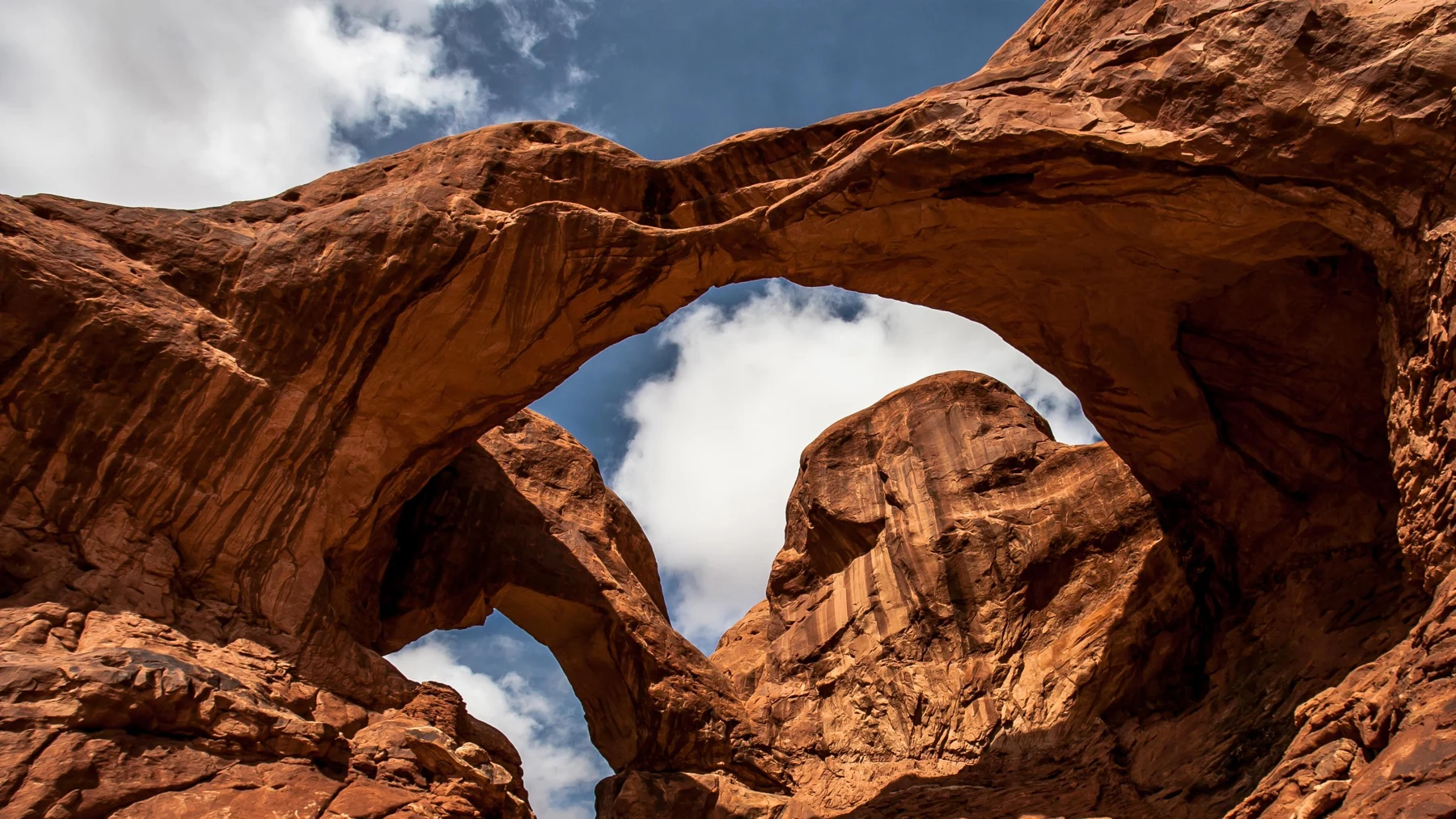
They also studied Double Arch, with two openings sharing part of the same rock structure. The park’s formations were individuals, not copies from a mold.
Andy drew an imaginary order form: ONE WINDOW, EXTRA SKY.
Augie added TWO, PLEASE.
A natural bridge was a related landform spanning a watercourse, or a place where water once flowed. The name did not mean people had built a road across it. Nor did it mean ordinary arches were made without any help from water.
“Words are useful,” Ana said. “Until we make them explain too much.”
The children’s notes began to resemble a detective board: ancient sand, buried salt, fractures, fins, mineral cement, water, ice, gravity, time.
No dinosaur appeared in the evidence.
Augie quietly moved his dinosaur drawing to the snack page.
“Different case.”
Allie left the main question open. They knew how windows could form. They still needed to understand whether the finished window stayed finished.
7. The balancing act that isn’t an act
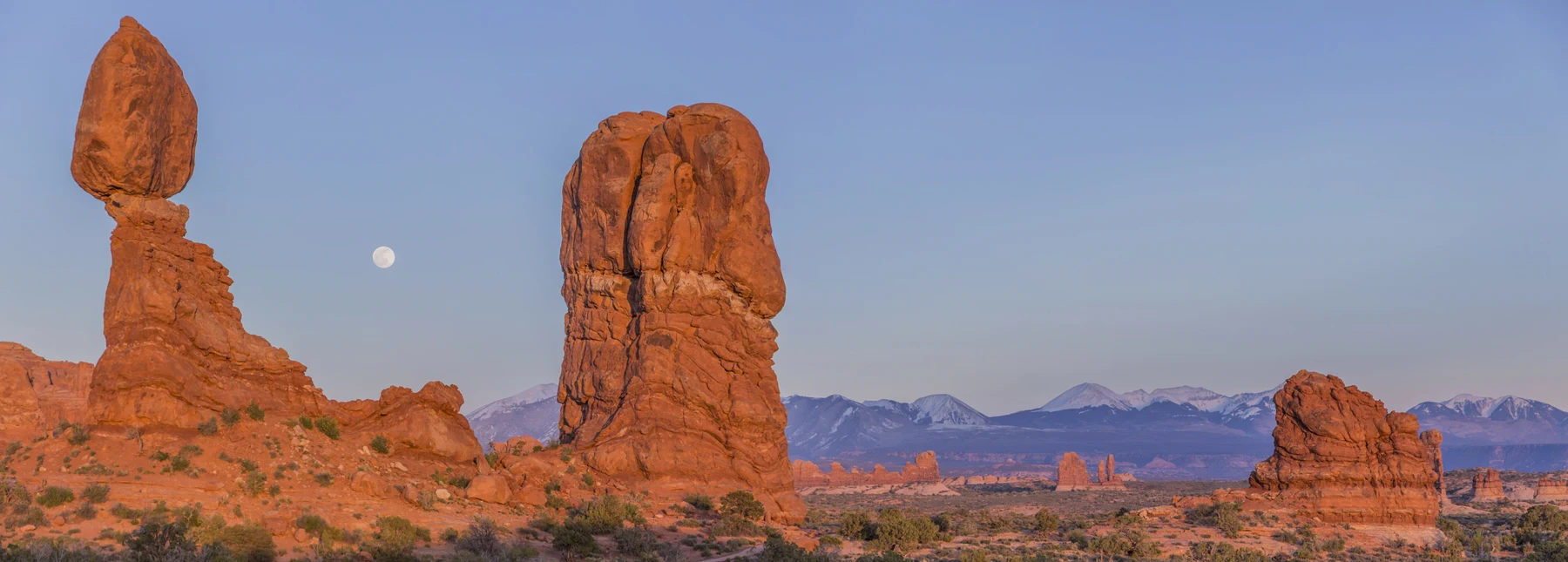
Balanced Rock looked as if someone had put an enormous boulder on a much narrower stand and then hurried away.
Andy held out one finger. “I cannot do that.”
“Excellent,” Mom said. “Nobody is trying.”
From the established viewing area, they learned that the upper sandstone remained attached to its pedestal. It was not a loose ball performing a circus trick. The supporting rock wore away differently from the rock above it.
Ana drew the pedestal with a serious face.
“Important supporting role.”
But the support would not last forever. Continued erosion would eventually change the formation. Balanced Rock belonged to an active landscape, not a museum where the exhibits had been glued in place.
“Does the same thing happen to arches?” Allie asked.
The answer was yes: openings could grow, spans could weaken, and rock could fall. The forces that made a window could eventually remove its roof.
Andy erased the word FINISHED from his factory sign.
“Still under construction.”
“And sometimes demolition,” Ana added.
They could not predict a particular rockfall by looking at a photograph. Mom reminded them that obeying closures, keeping to appropriate routes, and respecting natural features were part of enjoying the park.
Augie drew a window with no top.
“Now it’s a door?”
“Now it’s another shape,” Allie said. “Our names can change, but the landscape keeps going.”
The mystery had its answer. Nobody had stolen the center. Natural processes had loosened and carried rock away, while the remaining stone temporarily framed the sky.
Andy signed the case report: WINDOW MAKERS IDENTIFIED. NO LADDER REQUIRED.
8. A small world beside the big one
The largest rocks did not get the last word.
At the edge of the established trail, Ana noticed rough-looking ground between plants. The family had met biological soil crust in Joshua Tree; here was another reason to watch their feet.
These living communities could include cyanobacteria, lichens, mosses, and fungi. They helped bind soil and resist erosion. Some crust was easy to overlook, so guessing that a patch was lifeless was no excuse to step on it.
“The tiny crew holds things together,” Ana said.
Andy considered their missing-stone case.
“Big geology takes rock apart. Small biology helps keep soil in place. Busy neighborhood.”
At an exhibit, they learned about sandstone basins called potholes. Rain could fill them, creating temporary pools. Ephemeral meant short-lived, although the organisms associated with these habitats had remarkable ways of coping with changing conditions.
Augie practiced the word. “Eff… little swimming place.”
“Good first draft,” Allie said.
A pool could contain life too small to notice. Even a dry basin deserved protection. The children would not step through one, scoop its water, or add anything to it.
“Not even a bath for my toy dinosaur?”
“Especially not,” Andy said. “He has a sink at home.”
The Everglades had introduced them to a vast connected wetland. Here, water might collect in a small rock bowl. Different sizes, different habitats, the same useful habit: look carefully before deciding there is nothing there.
Ana drew a giant arch over a tiny pool in their notebook, joining two separate observations on the page.
“Size,” she wrote, “is not the same as importance.”
9. Leave the window open
Back with their guide, the family made room for another kind of knowledge.
This landscape had human histories far older than the national park. Ancestral Puebloan and Fremont-era peoples were part of its past. Ute, Paiute, Hopi, Zuni, Navajo, and other Tribal communities had continuing relationships with the region; the park’s fuller list and Tribal accounts could help them learn more.
“Not an empty place waiting for our notebook,” Allie said.
They discussed rock markings, including petroglyphs pecked into stone. Images and archaeological places deserved care, not touching, tracing, or additions. The children would not invent meanings for someone else’s symbols. They could listen to Tribal voices and keep learning.
Andy closed his notebook briefly.
“A detective also needs to know when to listen.”
Then came the final picture: a stone opening framing open sky.
Augie inspected it again.
“No glass needed.”
“No curtains either,” Ana said.
“Window cleaning would be terrible,” Andy added. “The sky keeps moving.”
Allie wrote their conclusion: A WINDOW CAN BE AN OPENING LEFT BY CHANGE. UNDERSTANDING IT MEANS LOOKING AT WHAT REMAINS, WHAT MOVED AWAY, AND WHAT HAPPENED LONG BEFORE WE ARRIVED.
Augie placed his dinosaur beside the closing sentence.
“Not guilty.”
On the next page, a photograph showed Mount Rainier rising above the surrounding land. Snow and ice lay on a mountain with a volcanic history.
Andy frowned. “A mountain with hot work underneath and cold work on top?”
“Two very different kinds of tools,” Ana said.
Augie drew a snow hat over a little furnace.
Allie wrote their next question: HOW CAN ONE MOUNTAIN HAVE TWO ENGINES?
The window case was closed. The mountain case was warming up.
Explorer’s notebook
Nine discoveries to keep
- Arches National Park lies near Moab in southeastern Utah, on the Colorado Plateau.
- Sandstone contains sand grains joined by mineral cement. Tiny spaces can let water enter.
- Ancient buried salt moved under pressure, helping bend and fracture rock above it.
- Fractures can widen into gaps, leaving narrow stone walls called fins.
- Weathering breaks down or changes rock in place; erosion carries material away.
- Water, freezing, gravity, rock properties, and time help shape arches. There is more than one route to an opening.
- A window is an arch described for its size, position, or view. A natural bridge spans a present or former watercourse.
- Arches and Balanced Rock are changing landforms. People must keep off these features and respect closures.
- Biological soil crust and temporary rock pools support life that is easily damaged, even when it is hard to see.
Five ways to explore thoughtfully
- With a grown-up, choose suitable established trails or viewpoints using current park guidance, weather, and your family’s needs. A photograph or exhibit can be an adventure too.
- At The Windows, observe how an opening frames the view. Stay on appropriate routes and keep off the arches.
- Study Balanced Rock from a designated viewing place. Compare the shapes and textures of its top and pedestal without approaching or climbing the feature.
- Use park photographs to compare Landscape Arch, Double Arch, and South Window. Draw their different outlines rather than trying to visit every formation in one day.
- Learn from park resources and Tribal accounts about the people connected with this landscape. Leave rocks, cultural places, soil crust, and wet or dry potholes undisturbed.
Talk it through
- If you saw a narrow rock wall with no opening, would you promise it will become an arch? Why is “might” a better scientific word here?
- What is the difference between breaking a cracker over a napkin and moving its crumbs into a bowl? How does that comparison help with weathering and erosion, and where does it stop being like real geology?
- Which clues in this chapter were too small, too far underground, or too slow for the kids to discover just by looking out of the car?
Words for your field notebook
- Porosity: the amount of tiny space inside a material, such as the spaces between grains in some rocks.
- Fracture: a crack or break in rock.
- Fin: a narrow, upright wall of rock.
- Weathering: the breakdown or alteration of rock where it is.
- Erosion: the transport of loosened rock or soil by agents such as water, wind, ice, or gravity.
- Ephemeral: lasting a short time, as a temporary pool does before drying.