1. A fish with very important directions
Augie drew a salmon with a leaf in its mouth.
“If it feeds a forest,” he said, “does it deliver lunch to the trees?”
Andy added a tiny delivery hat. “Ocean groceries. Very fresh.”
The family’s new adventure led to Katmai National Park and Preserve in Alaska. After Great Basin, where they had followed water toward inland destinations, they were investigating a different connection between freshwater and the sea. This time, something living carried part of the ocean’s story upstream.
Allie wrote their question at the top of the notebook: How can a fish help support a forest without climbing a tree?
Ana set out three picture cards: ocean, river and woodland. Between them she left spaces for arrows.
“We should explain every connection,” she said. “A line between two pictures isn’t an answer by itself.”
The children began with park photographs, recorded bear-camera scenes and information about Brooks River. Their grown-up had chosen suitable activities and would follow park guidance for any outing. The family would not stand beside a fishing bear or approach salmon to make the story more exciting.
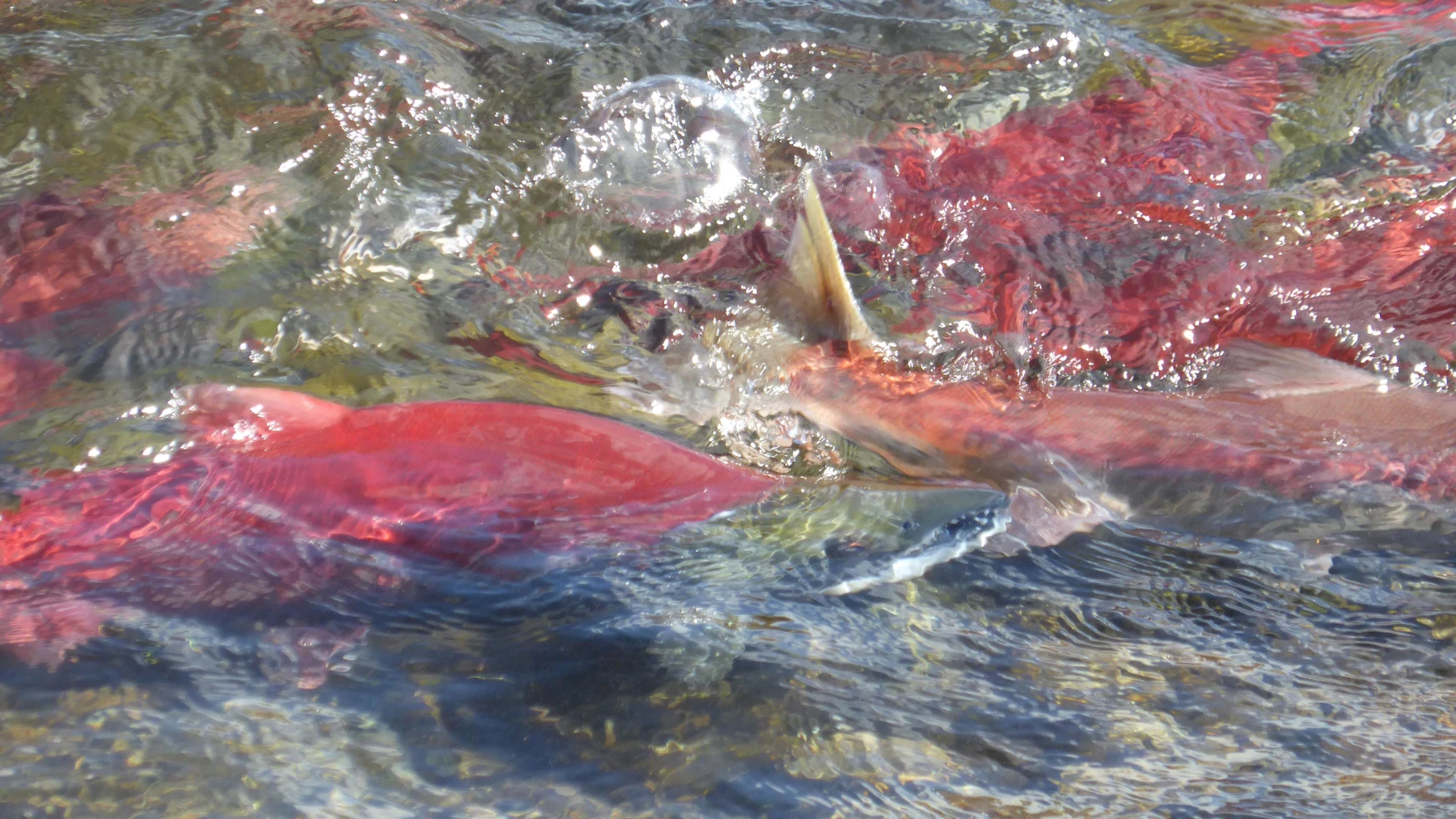
In one river image, sockeye salmon glowed red beneath the surface. The water traveled one way; the returning fish pushed against it.
“They’re going the wrong way,” Augie said.
“Important fish directions,” Andy replied. “We need to find out where they’re trying to go.”
Allie placed a fourth card beside the river: eggs in gravel.
The journey was not simply a race against water. The fish were part of a life cycle. Their route connected places that looked separate on a map, and their bodies carried materials gathered along the way.
Augie removed the leaf from his salmon’s mouth.
“Maybe the tree lunch needs more explanation.”
2. A life cycle with two kinds of water
The children made a sequence of cards: egg, young fish, growing fish at sea, returning adult and the next generation of eggs.
Sockeye salmon began in freshwater. Young fish commonly spent time growing in lakes before the ocean journey. At sea, they fed and grew, building bodies that would later travel back toward freshwater spawning places.
Allie joined the cards with arrows, leaving room between stages.
“There’s a lot of living between these pictures.”
“Not a fish changing costumes five times in one afternoon,” Ana said.
Returning adults often found their way toward the waters where they began. They used remarkable navigation abilities, but not every fish returned to exactly the same place. Some strayed, which could help establish or restore salmon in suitable waters.
Andy moved one paper fish onto a different branch of their river drawing.
“That arrow has a reason too.”
As sockeye prepared to spawn, their appearance changed. The red bodies and greenish heads familiar from photographs were part of that stage, rather than the way every sockeye looked throughout its life.
Augie drew a silver fish beside a red one.
“Same kind of fish. Different chapter.”
The returning adults depended on stored energy for their demanding freshwater journey. Reaching spawning water did not mean their own lives started over as young fish. After spawning, these sockeye died; the next generation continued the life cycle.
Ana paused over the word cycle.
“The stages repeat through new fish,” she said. “An individual fish doesn’t go back into its own egg.”
That was a useful distinction. A round diagram could make a process look like the same traveler went around forever. Their labels kept the story honest.
Andy removed the delivery hat from his drawing and put an arrow above the fish instead.
“The real directions are interesting enough.”
3. A gravel bedroom needs flowing water
Near the spawning-stage card, Ana drew a shallow nest in gravel.
“A redd,” she said, writing the word underneath.
“Like the fish’s color?” Augie asked.
“Different word, same sound,” Allie replied. “This one means the nest.”
Female salmon used their tails to move gravel and make places for eggs. After fertilization and covering, developing eggs remained among the gravel. Water passing through those spaces supplied dissolved oxygen.
Andy drew large stones with open gaps between them. Then he drew tiny particles filling some of the gaps in a second picture.
“Too much fine sediment can change what happens in the bedroom.”
Fine material could clog spaces and interfere with water moving around the eggs. Appropriate temperatures and water conditions mattered too. A stream’s surface could look beautiful while important changes were happening beneath it.
Augie gave the eggs miniature pillows.
“No pillows in a real redd,” Ana said. “Open gravel spaces and suitable water.”
He erased them. “The fish are very practical.”
The family would study photographs and models, leaving spawning grounds undisturbed. Walking into the water to find a redd could damage the very habitat they were trying to understand.
Allie added a label to their river card: habitat for the next generation.
Until now, Andy had mainly pictured adults jumping a waterfall. The gravel drawing changed the scale of the adventure. A salmon population also depended on tiny eggs, young fish, lakes, streams and places to grow at sea.
“We can’t protect just the dramatic jump,” he said.
Ana connected the small egg drawing to the largest map on the table. The quietest part of the life cycle belonged in the same explanation as the busiest river scene.
Augie added a sign above his paper nest: PLEASE LEAVE THE GRAVEL BEDROOM ALONE.
4. The bear is not waiting for a delivery person
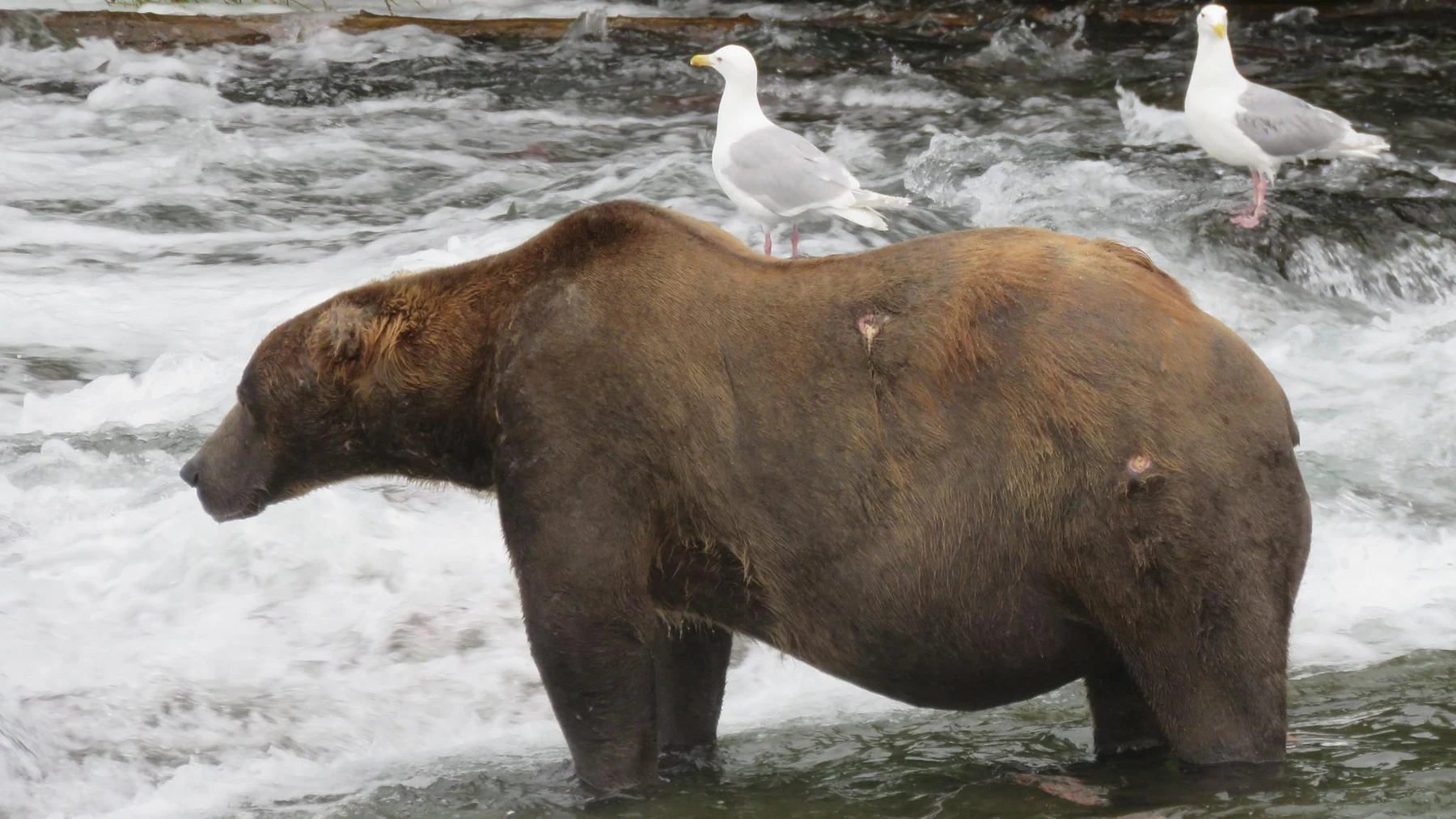
A park photograph showed a brown bear in flowing water with gulls farther behind it. In recorded river scenes, the children could compare different ways bears waited, watched and fished.
Andy gave his bear drawing a restaurant menu.
“Today’s special: salmon.”
Allie added a note beside the camera picture. “We’re studying what the recording shows. We can’t assume the next scene, or a real visit, will look exactly the same.”
A bear could catch salmon and carry a fish away from the water. It might eat much of it or leave some behind. Other animals could use remaining pieces. These were possible pathways, not a promise that every fish followed an identical route.
Ana moved a paper salmon from the river onto a bank, then placed a bear card beside it.
“Now we have to explain what crosses the boundary.”
The salmon’s body contained nutrients and stored chemical energy from its earlier feeding and growth. A bear eating that fish gained food; moving the fish also moved materials from the river toward land.
Augie looked at his leaf-carrying fish again.
“So the salmon doesn’t need a delivery hat.”
“No,” Andy said. “And the bear is not a person we ask to demonstrate.”
Their grown-up explained that an actual Brooks Camp visit began with required bear-safety orientation. Visitors followed ranger directions, used designated viewing areas, kept children close and managed food correctly. Waiting or changing plans could be part of a visit. A camera’s close view was no guide to a safe human distance.
The family’s snacks stayed in their appropriate place, separate from the paper investigation.
Allie drew a border around the bear scene: observe without changing the animal’s behavior.
Curiosity did not require a close encounter. Recorded scenes and park interpretation could bring them a detailed view while leaving the real bear free to be a bear.
5. Ocean groceries reach the roots
Ana set the woodland card beside the river again.
“We moved a fish onto land. But a tree still hasn’t taken a bite.”
Augie drew a mouth on a spruce trunk.
“Excellent teeth,” Andy said. “Wrong explanation.”
The missing part included decomposition. Microorganisms and other decomposers broke down dead material, releasing nutrients into forms that could move through soil and water. Plant roots could take up available nutrients. Animal waste supplied another route by which materials from food reached the surroundings.
Allie connected several arrows: ocean feeding, salmon body, bear, remains or waste, decomposers, soil and plant roots.
“Not one magical leap from fish to tree,” she said. “Several processes.”
The children learned that salmon brought nutrients such as nitrogen and phosphorus into freshwater systems. Some of those materials could also reach nearby vegetation. Bears helped carry the connection onto land, but they were not its only participants.
Birds, insects, other animals and water also moved or used material. Some salmon remained in the river after death, contributing to aquatic communities. Different places and years could have different pathways and amounts.
Andy looked at the growing web of arrows.
“Our forest lunch has a whole delivery network.”
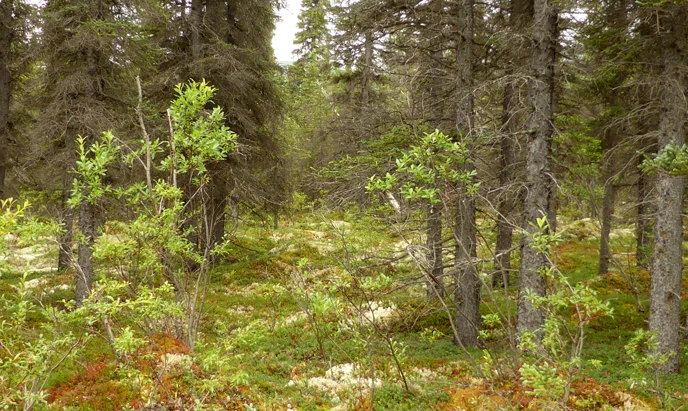
A photograph of open spruce woodland made the ending feel real. The trees did not display little labels showing where their nutrients came from. The park’s ecological explanation added information that the picture alone could not supply.
Ana wrote an observation beside the photo: green woodland. Then she wrote a separate explanation: salmon can contribute nutrients to plants near their spawning waters.
“Those are connected,” she said, “but one isn’t a measurement of the other.”
Augie erased the spruce’s mouth and drew roots instead.
“The tree uses the downstairs entrance.”
Allie circled the new drawing. It was their best version yet.
6. A food web needs more than one kind of arrow
The notebook now held fish, bears, birds, insects, roots and tiny decomposers. Andy wanted to connect everything to everything.
“It looks busier that way.”
“Let’s make it clearer instead,” Ana suggested.
They chose one arrow style for food and another for nutrient movement. A bear eating a salmon was a feeding relationship. Nutrients becoming available in soil and entering roots described other processes. Every line needed a label that said what actually happened.
Allie added sunlight beside the woodland.
“Plants still use light to make sugars through photosynthesis,” she said. “Fish nutrients help plants grow, but they don’t replace sunlight.”
Augie drew a sun holding a lunchbox.
“Another delivery?”
“Energy input,” Andy said, trying the words carefully.
Energy passed through living things and was eventually dispersed as heat. Nutrients were matter that could be used and reused. The ecosystem did not recycle the same packet of usable energy forever.
Ana traced the difference with her finger: sunlight into plant growth, food into animals, nutrients through bodies and surroundings.
“A food web shows connections,” she said. “It doesn’t mean every connection works the same way.”
The children returned to their salmon cards. A fish’s ocean meals had supported its growth. Its return moved that body into freshwater. The next stage might involve spawning, a predator, decomposition or several pathways over time.
Andy found an arrow connecting a gull directly to a pine needle and removed it.
“I added that because there was space.”
“Now there’s space for a question,” Allie said.
Their finished page looked less like tangled string and more like an explanation. It still had empty places. That was fine. A useful model showed what they understood and made the next question easier to see.
7. The valley with a volcanic name
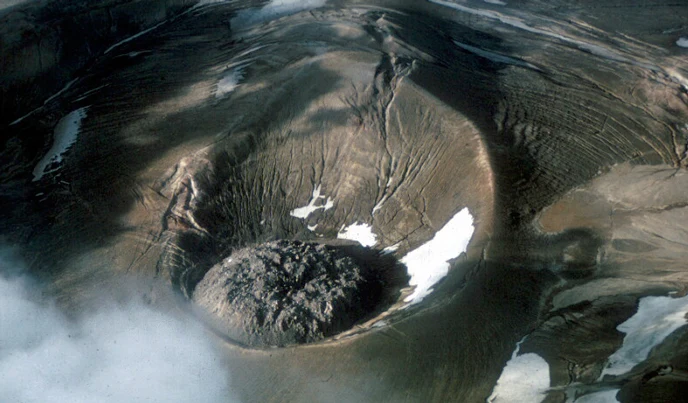
Katmai had another story written in its landscape. In photographs and a map, the children examined Novarupta and the Valley of Ten Thousand Smokes.
Augie studied the name.
“Did somebody count every smoke?”
“Possibly a very difficult counting assignment,” Andy said.
In 1912, Novarupta produced an enormous explosive eruption. Hot volcanic flows and ash filled nearby valleys, and widespread ashfall affected a much larger region. Later explorers saw steam issuing from many openings in the hot deposits, giving the valley its memorable name.
“The name records what people encountered,” Allie said. “It doesn’t guarantee the same scene now.”
Many of those steam vents cooled as the deposits lost heat. The volcanic landscape still preserved evidence of the eruption, even without thousands of steaming openings.
Ana put a date beside each historical photograph rather than mixing them with newer views. They were studying a remote place through records, not adding a valley expedition to their own route.
The children also learned to distinguish Novarupta, where the eruption vented, from Mount Katmai, whose summit collapsed in the connected event. Similar names did not mean the same volcanic feature.
Andy drew two labeled locations on a simple sketch.
“Another reason to check the map before writing the caption.”
The eruption affected water, vegetation and habitats, as well as the people of the region. It was not merely an impressive backdrop for the bear story. Disturbance could change the conditions salmon and other living things depended on, and recovery did not happen everywhere at the same speed.
Augie gave the volcanic page a large question mark.
“Our park has more than one mystery.”
“Yes,” Ana said. “And we should connect the stories without pretending they’re identical.”
8. A salmon landscape is also a homeland
Before completing their food web, the children read about the region’s human history. Alaska Native communities had long relationships with these waters and salmon, through food, skilled work, knowledge and family life.
Allie added people beside the map, leaving room for more than a single figure.
“The story didn’t begin when visitors arrived to watch bears.”
Park accounts described the disruption caused by the 1912 eruption. Homes, villages and familiar places were affected, and people were displaced. The children would learn from recorded accounts rather than invent what an eyewitness might have said.
Ana wrote two headings: geological change and people’s experiences.
“One event,” she said. “Different kinds of evidence and consequences.”
Connections with the region continued through living communities and descendants. Archaeological places and historic objects represented people’s lives; they were not souvenirs to pick up or props for a pretend adventure.
Andy moved the salmon card toward the center again.
“It matters to animals, plants and people. That makes protecting the journey a bigger task than saving one pretty viewpoint.”
Healthy spawning habitat, suitable water conditions and connected migration routes mattered across a salmon’s life. A change far from a bear-viewing scene could affect what happened later in the river.
Allie remembered Great Basin. There, water had connected a mountain, soil, air and places downstream. Here, the fish added moving bodies and a life cycle to the map.
Augie placed his paper salmon across the edge of two pages.
“It won’t stay inside one box.”
“Neither will a useful explanation,” Ana said.
They checked the table and packed away their model. No food, wrappers or equipment would be left where wildlife could investigate it. Their real contribution was to observe carefully, respect guidance and leave the place’s living and cultural stories intact.
9. The forest does not need a fishing rod
Allie turned back to the first question: how could a fish support a forest without climbing a tree?
Augie held up his corrected drawing. The salmon had no leaf, no hat and no delivery instructions taped to its tail.
“It travels with the groceries inside,” he said.
Ana began the explanation. “Sockeye grow in the ocean after their early freshwater stages. Returning adults bring bodies containing nutrients and stored energy into freshwater.”
Andy added the riverbank. “Bears and other pathways can move salmon material onto land. Decomposers and soil processes help make nutrients available to roots.”
Allie pointed toward the sun in their model. “Plants still need sunlight, water and other resources. Salmon are part of the support system, not the whole explanation for every tree.”
The family compared their answer with the first three cards: ocean, river and woodland. Between them, the once-empty spaces now held a life cycle, feeding relationships, nutrient transfers and questions for future learning.
They had also found a second timeline: a volcanic eruption that reshaped land and affected communities. Katmai held both dramatic disturbance and recurring seasonal journeys.
“The salmon story returns each generation,” Ana said. “The volcanic history reminds us the setting can change.”
Augie gave the forest one last improvement: a tree holding no fishing rod at all.
“Roots are enough.”
Allie wrote the next destination: Wrangell–St. Elias National Park and Preserve, where enormous mountains would lead to another question about the forces shaping Alaska.
Andy looked at the thickening notebook.
“We may need a bigger map.”
Outside their paper model, real salmon continued lives no drawing could capture completely. But the children now knew where to begin: follow the journey, label the connections and look beyond the biggest bear in the picture.
Explorer’s notebook
Nine discoveries to keep
- Sockeye salmon connect freshwater habitats with the ocean through their life cycle.
- Returning adults often head toward their home waters, while some stray to other suitable places.
- A cycle continues through new generations; an individual sockeye does not become an egg again.
- Developing salmon eggs need suitable water conditions and oxygen moving through spawning gravel.
- Bears can move salmon material from rivers onto land, where other organisms and processes continue the transfer.
- Decomposition helps make nutrients from dead material available to other living things, including plants.
- Nutrients can be reused, while usable energy moves through ecosystems and is eventually dispersed as heat.
- The 1912 eruption vented at Novarupta; Mount Katmai’s collapse was part of the connected event.
- Katmai’s living communities, Alaska Native histories, continuing relationships and volcanic landscape belong in the story alongside its bears.
Five family adventures
- Build a life-cycle card trail. Draw egg, young freshwater fish, ocean-growing fish, returning adult and new eggs on separate cards. Put them in order and add habitat labels. Use a new color for the next generation so the diagram does not suggest that one adult becomes its own egg. Add a small branch for straying, explaining why most return arrows and the alternative arrow both matter.
- Label the forest delivery route. Draw ocean food, salmon, bear, remains or waste, decomposers, soil nutrients and plant roots. Add a sentence to every arrow explaining what moves. Include another route where a dead salmon remains in the water. Keep this a paper activity: never move real fish, feed wildlife or place scraps outdoors.
- Give your food web two arrow styles. Use solid arrows for feeding relationships and dotted arrows for other nutrient transfers. Add sunlight beside the plants and label what it supplies. Explain why a plant receiving nutrients is not swallowing a fish or replacing sunlight with fertilizer. Remove any line you cannot yet explain and replace it with a question.
- Design a gravel-space model. With a grown-up, arrange a handful of large clean craft stones in a shallow tray and sketch the spaces between them. Use small paper circles to represent eggs, then add fine paper pieces to a second drawing to show spaces becoming blocked. Explain how water moving through gravel brings oxygen. This dry model does not measure real oxygen, water flow or egg survival; leave real streambeds untouched.
- Compare two Katmai timelines. On one strip of paper, show a salmon generation from eggs to returning adults and the next eggs. On a second, mark the 1912 eruption and later observations of cooling deposits. Record which events repeat and which describe a particular history. Add a human-history note from park interpretation, keeping it separate from an invented eyewitness story.
Four questions for the road
- How can a salmon carry a connection from the ocean into freshwater and onto land?
- Why do spawning gravel and young fish deserve attention even when adult salmon and bears make the most dramatic photographs?
- What is the difference between a nutrient being reused and energy moving through a food web?
- Why should historical photographs of the Valley of Ten Thousand Smokes have dates, and whose experiences belong beside the geological explanation?
Eight words for your explorer kit
- Sockeye: A Pacific salmon species whose life cycle commonly includes freshwater growing places, the ocean and a return to spawn.
- Migration: Movement between places as part of an animal’s life, often linked with feeding or reproduction.
- Spawning: Releasing eggs and sperm for reproduction in fish and some other aquatic animals.
- Redd: A gravel nest prepared by a spawning salmon.
- Nutrient: A substance an organism needs for growth and life processes.
- Decomposer: An organism, such as a fungus or bacterium, that breaks down dead organic material.
- Food web: A model of interconnected feeding relationships in a community.
- Fumarole: An opening through which volcanic gases or steam escape.