1. A lake with an ocean-sized attitude
Augie searched the map for palm trees.
Their last adventure had followed tropical rainforest and coral reefs in American Samoa. Now the family was investigating an island in Lake Superior, with cold freshwater around its rocky shores.
“This lake is pretending to be an ocean,” he said.
Andy studied the expanse of blue. “It has enough room to practice.”
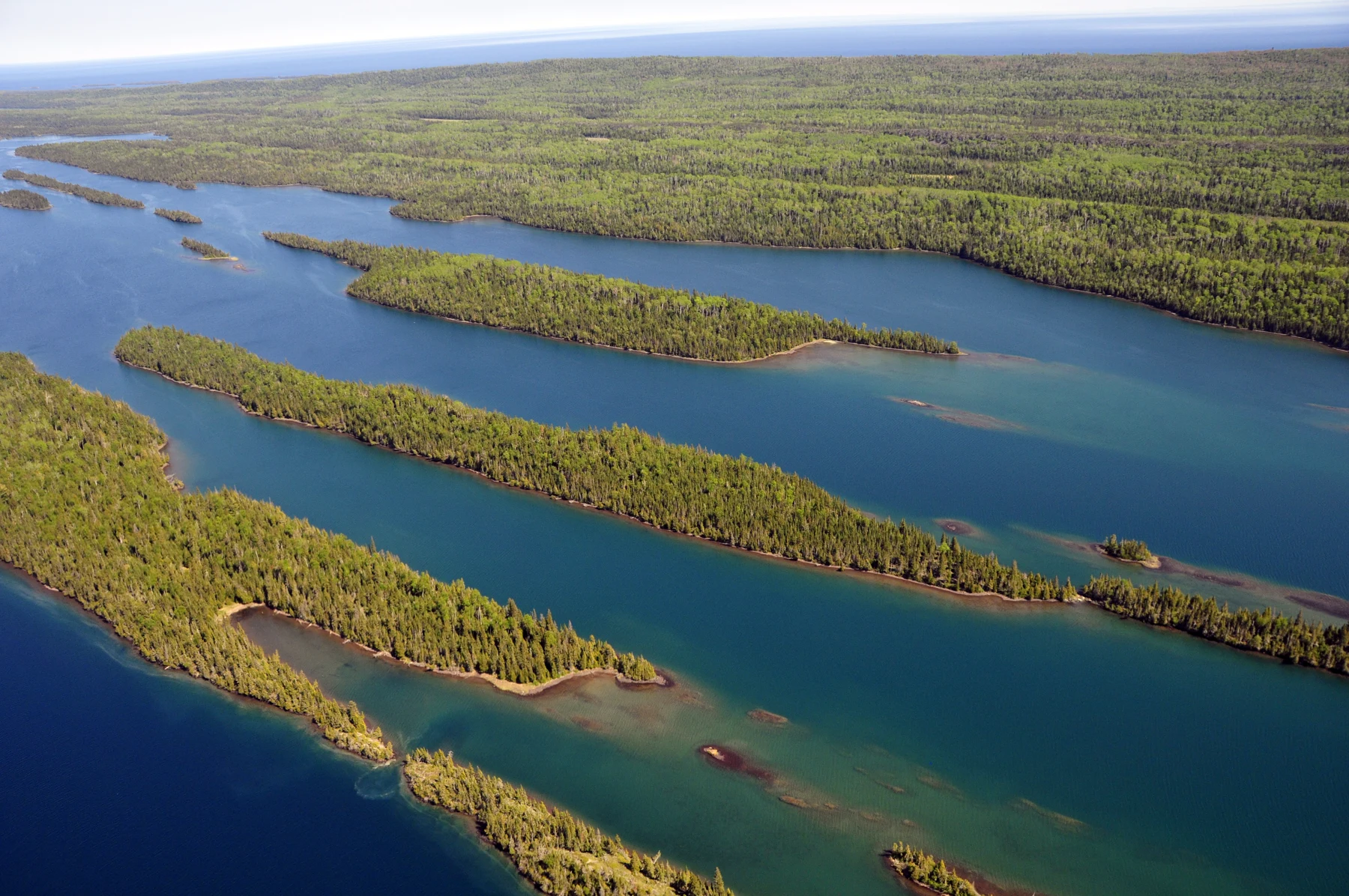
Isle Royale National Park lay in Michigan, far out in the largest of the Great Lakes by surface area. Its archipelago included one main island and many smaller ones. Forest, inland lakes, wetlands and rocky shorelines made a patchwork across the map.
Their grown-up planned the visit around suitable short explorations and current park guidance. Boats, weather and island distances needed careful planning. The children would use interpretation and photographs to investigate animals they might never see.
Allie wrote a question across the notebook: How could wolves influence a forest without eating its trees?
Ana drew a wolf on one side of the page and a young tree on the other. She left room between them.
“The missing connection might be hungry.”
Andy added a moose. Augie gave it enormous feet.
“Forest detective, reporting for duty.”
The children already knew that a food web connected living things. Here, scientists had followed some of those connections for decades. The family would investigate a real landscape where predator, prey, plants and changing conditions kept interacting.
Allie added a second question beneath the first: What would we need to know before deciding what caused a change?
“That one needs a bigger notebook,” Andy said.
Augie drew a second notebook inside the first. Then he added a tiny mosquito beside it.
“For the detective’s assistant.”
2. The moose restaurant has branches
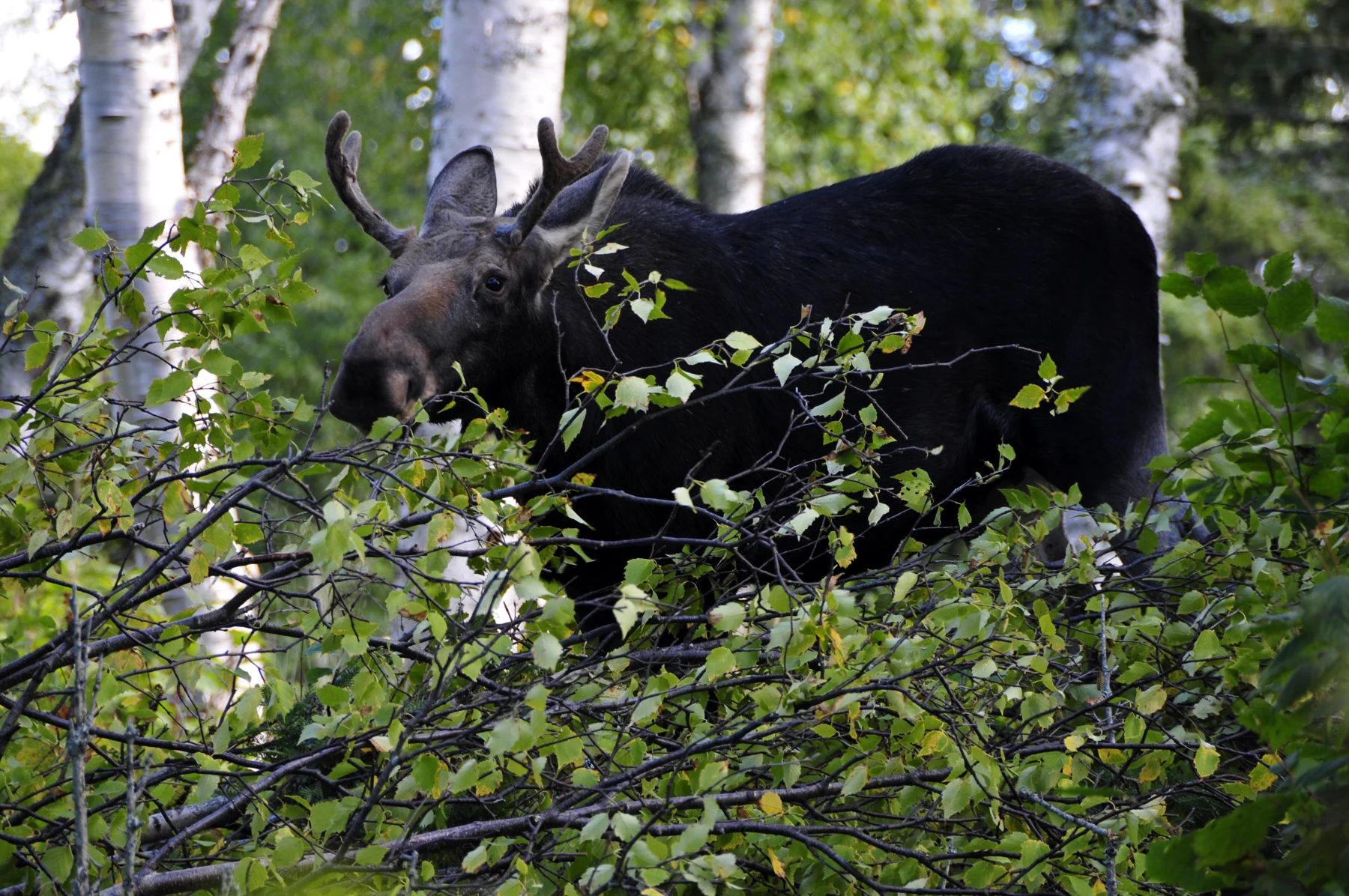
A park photograph showed a moose with long legs and an impressively large body. Augie measured the picture with his hands.
“Too big for the notebook restaurant.”
Moose were herbivores: animals that ate plants. Their foods included leaves, twigs and aquatic vegetation, with choices changing by season and availability. Browsing meant feeding on woody plants such as shrubs and young trees.
Ana drew a small balsam fir and a mouth-shaped arrow. A young tree could lose shoots to a browsing moose. If browsing happened repeatedly, it could affect the tree’s growth and survival.
Andy added several little trees to the page.
“One hungry animal is a meal. Lots of hungry animals, over time, can become a forest question.”
The amount of available food mattered too. A moose population did not have an unlimited pantry simply because the map was green. Different plants offered different food, and animals could not use every tree in every season.
Allie divided their drawing into two views: one close-up of a bitten twig and one wider view of young trees across an area. A single twig showed evidence of feeding. It did not measure the whole island’s browsing pressure.
“We need to look beyond the first clue,” she said.
The children could study plant relationships without approaching a moose. Their grown-up kept any outdoor observations at a respectful distance and helped them follow park wildlife guidance. A large herbivore was still a powerful wild animal.
Augie put a tiny menu beside his drawing: leaves, twigs, water plants.
“No sandwiches?”
“Different customer,” Ana said.
Allie labeled the arrow plants feed moose. That was their first relationship. Now they needed the animal on the other side of the moose.
3. The wolf does not read the menu
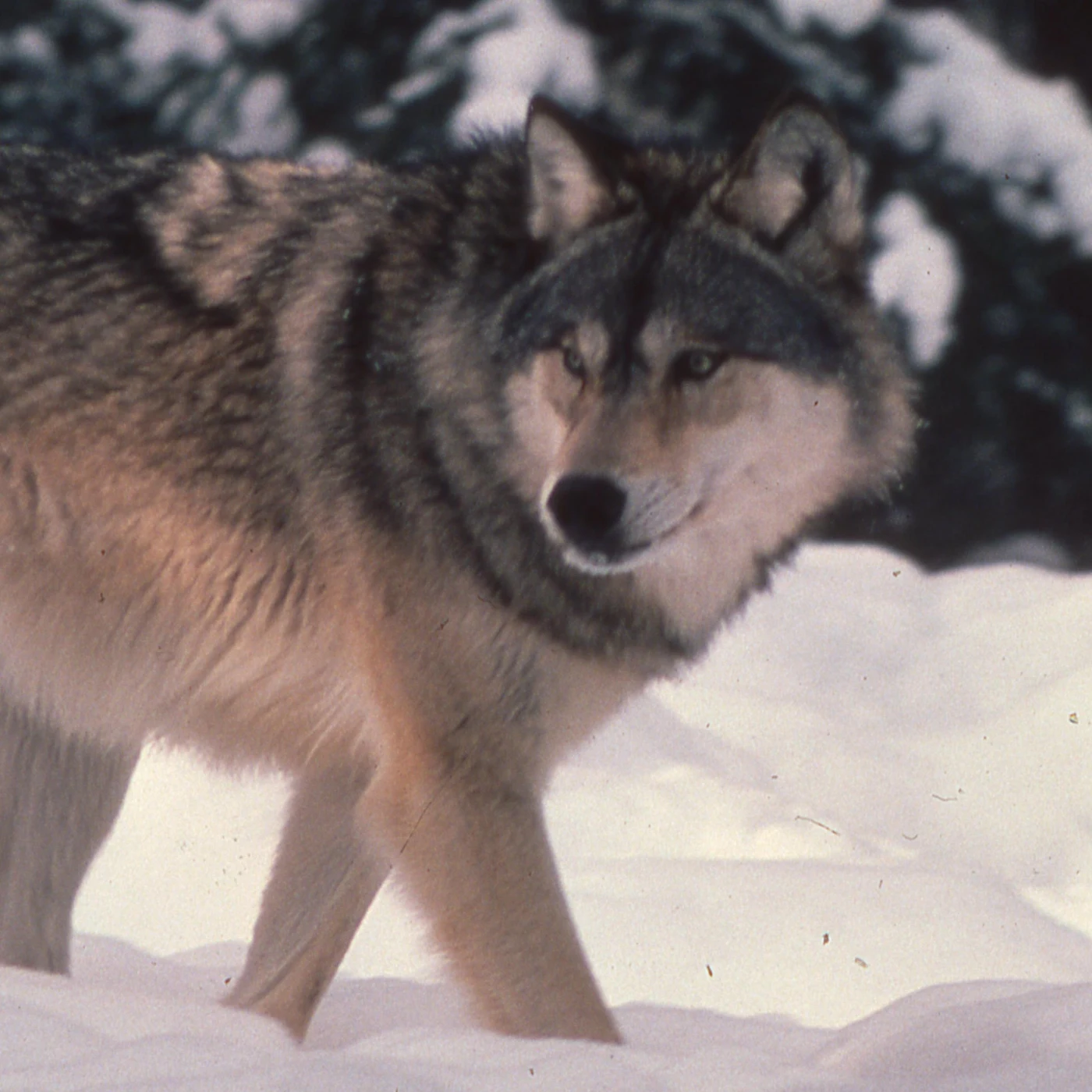
Wolves were predators. Moose were an important prey animal on Isle Royale. Wolves hunted some moose, often taking animals that were vulnerable, including calves and older or weakened individuals.
Andy drew another arrow. He used it to show energy moving from the food to the animal eating it: plant to moose, then moose to wolf.
“If we choose one arrow meaning, we should keep it,” Ana said.
Augie examined the chain.
“So wolves close the moose restaurant?”
“Not exactly,” Allie replied. “They can affect how many moose are there, but that isn’t the only thing changing.”
A predator needed food. Its own survival and reproduction also depended on other conditions. Disease could affect wolves. The number of available prey animals could change. Wolves could compete with one another or be injured. A picture of one healthy wolf did not reveal every pressure on the population.
Ana added a second kind of line to their page. Dashed lines meant can influence, rather than is eaten by. She connected wolves to moose numbers and moose browsing to young trees.
Now the original mystery had a possible route. Wolves could influence moose. Moose could influence plants. A change involving predators might therefore reach vegetation through an indirect connection.
Allie wrote indirect effect beside the tree.
“The wolf doesn’t need to eat a fir tree to matter to it.”
But the children resisted turning the diagram into a machine with one lever. More wolves did not guarantee an immediate, identical change in every patch of forest. There could be delays, differences among places and other causes working at the same time.
Augie drew a wolf holding a remote control for a tree, then crossed the remote out.
“No forest button,” he said.
Andy added the crossing-out to their key. Apparently their diagrams needed a symbol for a tempting explanation that was too simple.
4. The forest keeps a long memory
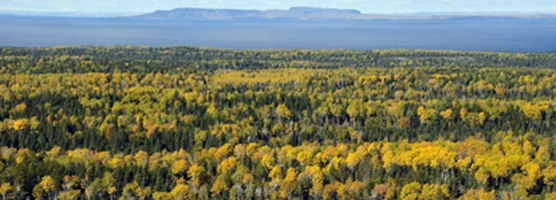
The family compared photographs of island vegetation. Some places held conifer trees such as spruce, fir and cedar; other areas included broad-leaved trees. Soil, moisture, disturbance and location helped shape these communities.
“The word forest covers a lot of neighborhoods,” Ana said.
Allie returned to the young fir in their notebook. A seedling could face browsing, shade, limited water and competition with nearby plants. If it survived, it still needed time to grow. A forest response could be slower than a change in animal numbers.
Andy drew a seedling, a sapling and a larger tree across three pages.
“Not a before-and-after picture taken five minutes apart.”
Heavy moose browsing could reduce the growth and survival of young trees. That could influence which plants grew into later forest layers. The effect might also matter to animals using those plants for food or shelter.
Augie added a bird and an insect, leaving their species unlabeled.
“They need apartments.”
Ana made a note about beavers, another important part of the island’s ecological relationships. Beavers ate plants and changed habitat by cutting vegetation and building dams. Wolves could also prey on beavers. The island’s web extended beyond the three largest drawings on their page.
Allie joined the cards with labeled lines instead of connecting everything to everything.
“A web should explain a relationship, not just become a bowl of spaghetti.”
Their grown-up helped them distinguish two ideas. One was a plausible explanation: heavier browsing could make it harder for young trees to survive. The other was an observation from a particular place and time. Scientists needed measurements to find out how strongly the explanation fit what actually happened.
Andy drew a ruler beside the sapling and a calendar beneath it.
“The forest has homework that takes years.”
Augie placed a very patient pencil beside the calendar.
5. An island is a filter, not a locked door
Water separated Isle Royale from the mainland, but its animal community had not stayed identical forever.
Park accounts described moose establishing a population in the early twentieth century, apparently after swimming to the island. Wolves arrived decades later, most likely by crossing winter ice from the mainland.
Augie studied the blue space on the map.
“Different travel tickets.”
The family treated the arrival stories as evidence-based accounts, not as events they had personally watched. The exact journeys of individual animals were not recorded in their notebook as certain eyewitness scenes.
Ana wrote apparently beside the moose route and likely beside the first wolf crossing.
“Those words tell us how much the explanation claims.”
An ice bridge could sometimes connect island and mainland. It was not a dependable road. The family would not walk onto lake ice or imagine a safe crossing from a historical account. Weather and ice conditions belonged to current official guidance, not a story’s map.
As warming conditions made such connections less frequent, the chance of new wolves arriving naturally could be reduced. Occasional newcomers could matter because they brought different inherited variation into a small population.
Andy drew two islands separated by a wide blue gap, then put a dotted connection across it.
“Isolation can change more than the travel schedule.”
When a population was small and closely related, inbreeding could increase. Some harmful inherited traits could become more likely to affect animals. That did not mean every small population had the same fate, but it helped explain why scientists considered genetics alongside food and disease.
Augie put a question mark beside his wolf drawing.
“So the detective needs a family tree too?”
“Yes,” Allie said. “And it is a different kind of tree from the one the moose eats.”
Their notebook now had two meanings of tree, several travel routes and more evidence to follow.
6. The clues that do not leave footprints
Andy liked large clues. A moose hoofprint in a park photograph was easy to notice. Some important pressures were much harder to see.
The children learned about winter ticks, parasites that could feed on moose. Heavy infestations could contribute to stress and poor condition. Grooming to remove ticks could also lead to hair loss, reducing protection when an animal still faced cold weather.
Augie drew a very small detective circle around a speck.
“Tiny suspect.”
But the children did not blame every moose problem on ticks. Food shortages, weather, predation, age and disease could also matter. Several pressures could act together. An animal weakened by one problem might be more vulnerable to another.
Ana made a page with separate cards: food, weather, ticks, predators, age and disease. She moved them around a moose drawing without declaring any one card the answer for every year.
“A list of possible causes isn’t proof of which one mattered most,” she said.
Allie imagined a year when fewer moose were counted. Had more died? Had fewer calves survived? Had observers missed some animals? They would need information about methods and uncertainty as well as the final number.
Andy added what changed? and how was it measured? to the detective checklist.
A count was not always a perfect census. Researchers used carefully designed surveys to estimate populations, and those estimates could have uncertainty. That did not make them useless. It meant the evidence needed to be described honestly.
Augie looked relieved.
“So scientists are allowed to have question marks.”
“They need them,” Allie said. “The useful kind that tells you what to investigate next.”
The family’s mystery was becoming a collection of linked questions. Large animals, small parasites and invisible inherited differences could all belong in the same explanation.
7. A study longer than a childhood
Scientists began annual monitoring of Isle Royale’s wolves and moose in 1958. The investigation continued across many decades, following changes that one visit or one season could never capture.
Augie counted on his fingers, ran out of fingers and looked at his grown-up.
“That is a lot of notebooks.”
Researchers used different kinds of evidence. Winter observations could help estimate animal numbers and study wolf movements. Moose remains could reveal information about age and condition. Plant measurements could help track browsing and forest growth.
The children would not collect bones, disturb a carcass or follow a wolf to imitate this work. Research had its own permissions, training and methods. Their family could practice the habit of recording evidence without copying every field technique.
Allie made a pretend dataset using colored paper squares. Each column stood for a different year. She labeled it invented practice data, so no one would mistake it for the island’s measured populations.
Andy noticed that a rise in one column could be followed by a change in another.
“Maybe one affects the other.”
“Maybe,” Ana said. “We should also ask what else changed.”
Two things changing together did not, by itself, establish that one caused the other. Longer records, ecological knowledge and several lines of evidence could help researchers test explanations. Even then, an ecosystem could surprise them.
Augie put a card marked new clue beside the graph.
“The mystery gets another chapter.”
Their grown-up asked why researchers did not stop after finding one pattern.
Allie pointed to the weather and disease cards. Conditions could change. A relationship found during one period might work differently under another set of pressures. Continuing to measure made it possible to revise an explanation rather than simply repeat it.
Ana wrote their rule: Make a prediction, check the evidence, and be willing to change your mind.
8. People belong in the island story
The island’s history did not begin when scientists started counting wolves.
The family learned that Minong, the Anishinaabe name used for Isle Royale, and its surrounding waters held enduring cultural importance. The island was part of the ancestral homeland of the Grand Portage Band of Lake Superior Chippewa, or Ojibwe. Indigenous connections belonged to the present as well as the past.
Allie left space beside their science notes for the park’s Anishinaabe heritage interpretation.
“A research timeline is one timeline,” she said. “It isn’t the whole history of a place.”
Other pages introduced fishing, mining, navigation and island communities. The children could learn from those histories without moving artifacts or turning historic remains into play equipment.
People also made present-day management decisions. When the wolf population became very small and concerns about isolation and inbreeding increased, the National Park Service relocated wolves from the Great Lakes region to Isle Royale.
Augie imagined packing boxes, then stopped.
“Not ordinary moving day.”
Wildlife relocation required trained specialists, planning and animal care. It was an intervention aimed at restoring an important ecological relationship. It was not a promise that managers could choose an exact future number of wolves, moose or trees.
Ana made two columns: what managers hoped to influence and what still needed monitoring.
The children considered why a decision might involve uncertainty even after careful research. Doing something could have consequences. Choosing not to act could also have consequences. Evidence helped people compare possibilities, but it did not erase every unknown.
Andy connected the management page to the research calendar.
“Making a decision doesn’t mean the observing is finished.”
Their grown-up reminded them that this story described the background of a management choice. Current population estimates and visitor conditions could change. Readers could follow the linked official sources for those updates.
Augie gave the patient pencil another page.
9. The forest is a group project
The children spread their notebook cards across the table.
There were plants and moose, moose and wolves, wolves and beavers. There were water barriers, possible ice connections, ticks, weather, genetics and people making decisions with incomplete information.
Augie tried to draw a crown on the wolf.
“King of the forest?”
Ana slid the crown onto the table instead.
“An important influence. No single ruler.”
Now they could answer their opening question. Wolves could influence a forest through their effects on herbivores such as moose. Moose browsing could influence young trees. Those plant changes could affect other living things and the forest’s future structure.
Allie traced the indirect route, then pointed to the other cards.
“The connection matters. So do the conditions around it.”
Their title, The Island Where Wolves Changed the Forest, invited them to follow that relationship. It did not mean wolves controlled every tree or that every change had one cause.
Andy wrote food web in the center of the page. Around it, he added their detective questions: What happened? How do we know? What else might explain it? What should we measure next?
The family’s own visit had offered only a small window. Photographs and interpretation had helped them reach beyond it. Long-term research and living cultural connections gave the island more depth than a checklist of wildlife sightings.
They packed out their supplies and left natural and cultural objects where they belonged. Their grown-up kept their plans within the weather and travel guidance for the visit. A remote island deserved careful guests.
The next notebook page waited for Lake Clark, where volcanoes, water and salmon rivers would open a new investigation.
Augie checked that the mosquito detective had not acquired a crown either.
“The forest is a group project,” he announced.
Allie closed the notebook.
“And understanding it takes more than one clue.”
Explorer’s notebook
Nine discoveries to keep
- Isle Royale is an archipelago in cold, freshwater Lake Superior, with forests, wetlands, inland lakes and rocky shores.
- Moose eat plants, and repeated browsing can affect young trees’ growth and survival.
- Wolves prey on moose and can indirectly influence vegetation through that relationship.
- Food webs include many connections; beavers and other species also shape island habitats.
- Isolation can limit arrivals, while occasional ice connections have helped wolves reach the island.
- Food, weather, parasites, disease, predation and genetics can interact; population changes rarely have one universal cause.
- Decades of monitoring reveal patterns, delays and surprises that a short visit cannot measure.
- Minong holds enduring Anishinaabe cultural importance, including ancestral connections of the Grand Portage Band.
- Wolf relocation was a management intervention followed by continued monitoring, not a guarantee of an exact ecological outcome.
Five family adventures
- Build a labeled food web. Make paper cards for plants, moose, wolves and beavers. Use solid arrows to show energy moving from food to eater and dashed lines for other influences. Add a key explaining your choices. Trace one indirect path from a wolf to a young tree, then describe another factor that could change the result.
- Grow a paper forest. Draw six young trees and record their pretend heights. In each of four rounds, add one growth mark to every tree; then choose two trees to lose a growth mark to imagined browsing. Keep every height at zero or above. Compare the results and discuss why identical pretend trees do not capture real differences in species, soil, weather or browsing. Use drawings rather than breaking real twigs.
- Practice with pretend population data. Make six year cards with invented moose counts of 12, 16, 18, 14, 10 and 11, and wolf counts of 2, 2, 3, 4, 3 and 2. Build a paper bar chart labeled “invented practice data.” Describe what changes together, what changes later and what you cannot conclude about cause. These small numbers are not Isle Royale estimates or a prediction.
- Try the missing-clue challenge. Put cards for food, weather, ticks, disease, predation and age around a paper moose. A grown-up announces that fewer calves survived in the pretend year. Each person names one possible explanation and one observation that would help investigate it. Do not select a winner without evidence; the goal is to ask a better next question.
- Make an island evidence journal. Read one official page about the predator-prey study and one about Anishinaabe heritage with a grown-up. Record the source, one thing learned and one question for each. Add a guest-care promise about wildlife distance, packing out supplies and leaving objects in place. During a local nature walk, record only what you can observe safely; no bone collecting or animal tracking is required.
Four questions for the road
- How could a wolf influence a young fir without eating or touching the tree?
- Why might trees respond more slowly than an animal population changes?
- If fewer moose were counted in a year, what information would you want before deciding why?
- How can long-term research and living cultural connections both deepen the story of an island?
Eight words for your explorer kit
- Archipelago: A group of islands.
- Herbivore: An animal that eats plants.
- Browsing: Feeding on leaves, shoots and twigs of woody plants.
- Predator: An animal that hunts and kills other animals for food.
- Prey: An animal hunted by another animal for food.
- Indirect effect: An influence that reaches something through an intermediate connection.
- Inbreeding: Reproduction between closely related individuals, which can increase the chance of harmful inherited traits affecting offspring.
- Monitoring: Repeated observations and measurements used to understand conditions and change over time.