1. Augie requests the elevator
The last page of the Acadia notebook smelled faintly of the sea. Or possibly of the cracker Augie had pressed into it as a bookmark.
Under the words OCEAN HOTEL, Allie wrote their next destination: Grand Teton National Park, Wyoming.
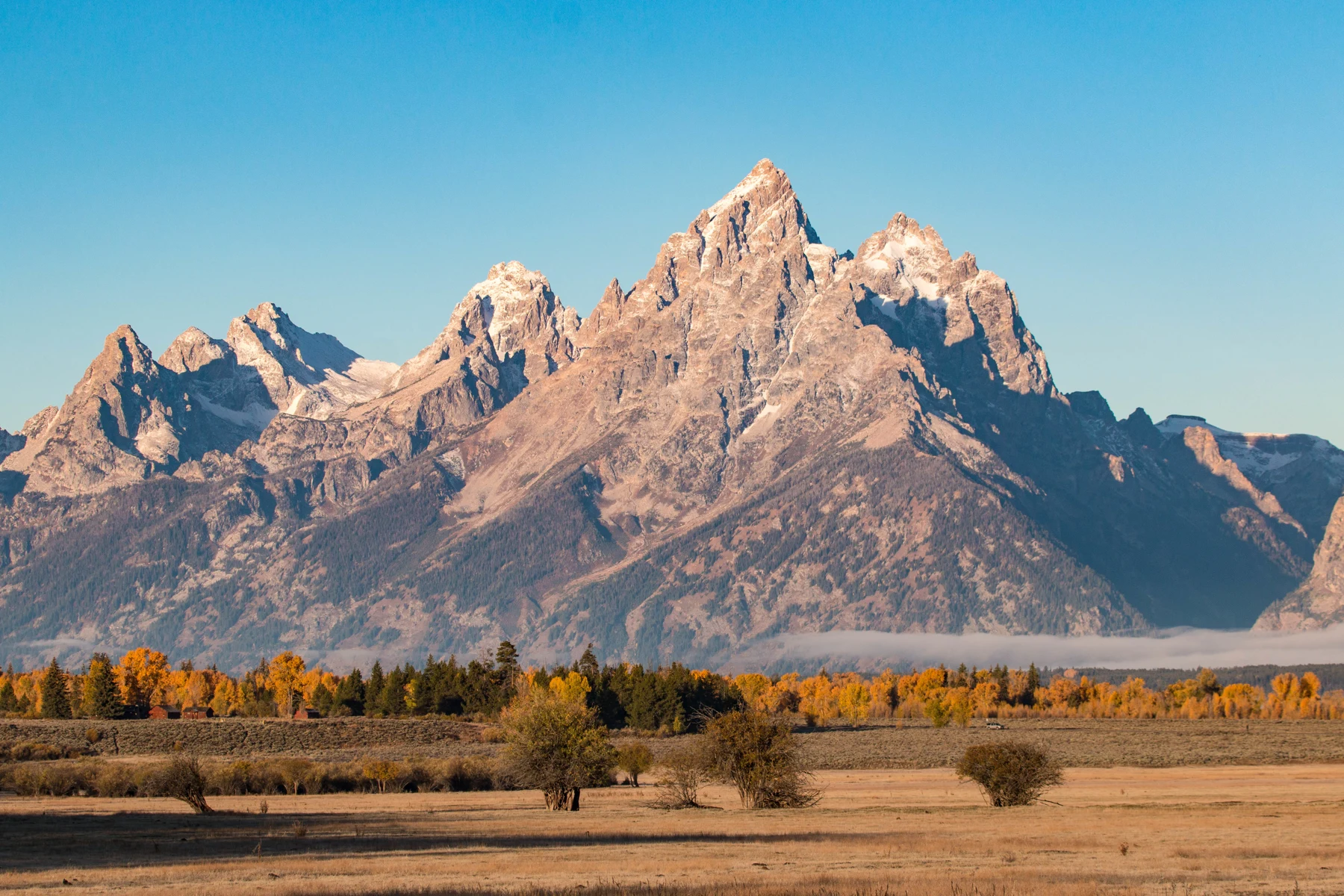
Andy studied a photograph of the mountains. Their sharp peaks shot up behind a wide valley, as if somebody had forgotten to put the small practice mountains in front.
“Those look unfinished,” he said. “Where are the little hills that tell you a big mountain is coming?”
Ana leaned closer. “Maybe the surprise is the point.”
Augie tapped a snowy summit. “How do we get upstairs?”
“We aren’t climbing that,” Allie said.
“Elevator?”
Their parents laughed. They were planning short walks and viewpoints, with weather checks and plenty of time to stop. Nobody’s plan included carrying a four-year-old up a snowy peak in search of a button.
At their first broad view of the range, the real mountains made the photograph seem rather shy. Pale rock, dark forest, patches of snow: the skyline looked like a row of enormous stone teeth.
Andy opened his mouth to imitate it.
“Your mountain has a missing front tooth,” Ana observed.
“It’s an erosion feature.”
Allie drew a horizontal line across a fresh notebook page. Above it she sketched peaks. Below it she drew a question mark.
“Here’s our mystery. Did the mountains go up, did the valley go down, or did something else happen?”
Augie supplied a fourth possibility.
“Somebody sat on the downstairs.”
They named the case THE MOUNTAINS WITH A BASEMENT. For once, the youngest detective had brought exactly the right kind of question: what was happening underneath everything they could see?
2. The floor has a fault
At a park geology display, Allie found the word fault.
Andy immediately pointed at Augie.
“No,” Ana said. “The mountain is not his fault.”
“I didn’t touch it,” Augie confirmed.
A geological fault is a break in Earth’s crust along which rock has moved. The Teton fault runs along the eastern foot of the range. Over millions of years, movement there helped lift the mountain block relative to the valley block, while the valley side dropped.
Allie held her hands side by side, then moved one higher and the other lower.
“Both,” she said. “Our first two guesses can both be part of the answer.”
Ana made two fists to copy the blocks. “The region stretches. Stress builds, and the rocks can move suddenly in an earthquake. It isn’t an elevator humming upward all afternoon.”
“Does it have buttons at all?” Augie asked.
“No buttons.”
“Terrible elevator.”
Their parent reminded them that this was a model made with hands, not a prediction of an earthquake happening during their visit. The fault is active, but standing at a viewpoint does not let anyone schedule its next movement.
The valley was called Jackson Hole. Here, a “hole” meant a valley enclosed by mountains, not an empty pit waiting to swallow their car.
Andy looked relieved. “I was wondering where they kept the lid.”
Allie added two arrows to her sketch. The landscape’s dramatic height difference had a story on both sides of the break. They would need to remember the low part as carefully as the high part.
3. An old rock wearing a younger mountain
“Then these are baby mountains?” Ana asked.
Allie checked the next panel. “Their present mountain-building story is much younger than many of the rocks inside them.”
Andy frowned. “You can be old and young at the same time?”
“Think of building a new wall from old bricks.”
“Or a new sandwich from old bread,” he suggested.
“Please don’t,” Ana said.
Some rocks in the Teton Range formed billions of years ago. Later events buried, heated, squeezed, lifted, and exposed rock. A mountain’s age is therefore not one simple birthday. Scientists may mean the age of its material, or when a particular episode of mountain building happened.
Augie checked a pebble beside the path without picking it up.
“Do rocks get candles?”
“Not if we want to finish the cake before next week,” Allie said.
She pointed out bands in a pictured metamorphic rock. Metamorphic rocks are changed by heat and pressure while remaining mostly solid. Igneous rocks form when melted rock cools and hardens. These were different chapters in a very long history, not two names for the same process.
Ana remembered Yosemite’s granite. “Different parks can share kinds of rock without having exactly the same story.”
“And similar-looking mountains can have different toolboxes,” Allie agreed.
Andy made a notebook rule: NEVER GUESS A WHOLE MOUNTAIN FROM ITS HAT.
“Hat?”
“The snow on top.”
It was a surprisingly useful rule. The outside shape was only one clue. The rocks, their arrangement, the fault, and the evidence left by ice could tell them more together than any single snowy summit.
4. The ice that remodeled the rooms
The next clue looked like a huge scoop had been taken out of the range.
“Canyon,” said Ana.
“Giant ice-cream spoon,” said Andy.
“Which flavor?” asked Augie.
They examined a photograph of a glacier: a mass of ice that forms where snow accumulates and becomes compressed over time, then flows under its own weight. It moves slowly, but slowly does not mean harmless or weak.
Glaciers carrying rock fragments can scrape and grind the ground. In the Tetons, past glaciers helped widen and deepen mountain valleys into broad U-shaped troughs, sharpen peaks, and excavate lake basins.
Allie ran one finger through the air in a narrow V, then a broad U.
“Those are useful clues,” she said. “But we still look at the rest of the evidence. We don’t identify every valley from one letter.”
Andy made an O with his mouth.
“Snack-shaped valley?”
“That’s your surprised face,” Ana said.
Ice also transports sediment: pieces ranging from fine grains to large boulders. A moraine is a pile or ridge of material deposited by a glacier. Sometimes the most useful clue is the messy heap left when the moving ice melts away.
Augie brightened. “My room has a moraine.”
“Your room has toys,” Allie said.
“Same shape.”
The children now had two jobs in their landscape investigation. Fault movement helped create the big mountain-and-valley arrangement; glaciers later carved and reshaped it. Neither process did every part of the work alone.
Ana drew a toolbox with two compartments. In one went moving rock blocks. In the other went moving ice. She put a large warning above both: NOT ACTUAL TOYS.
5. Jenny Lake and the missing giant spoon
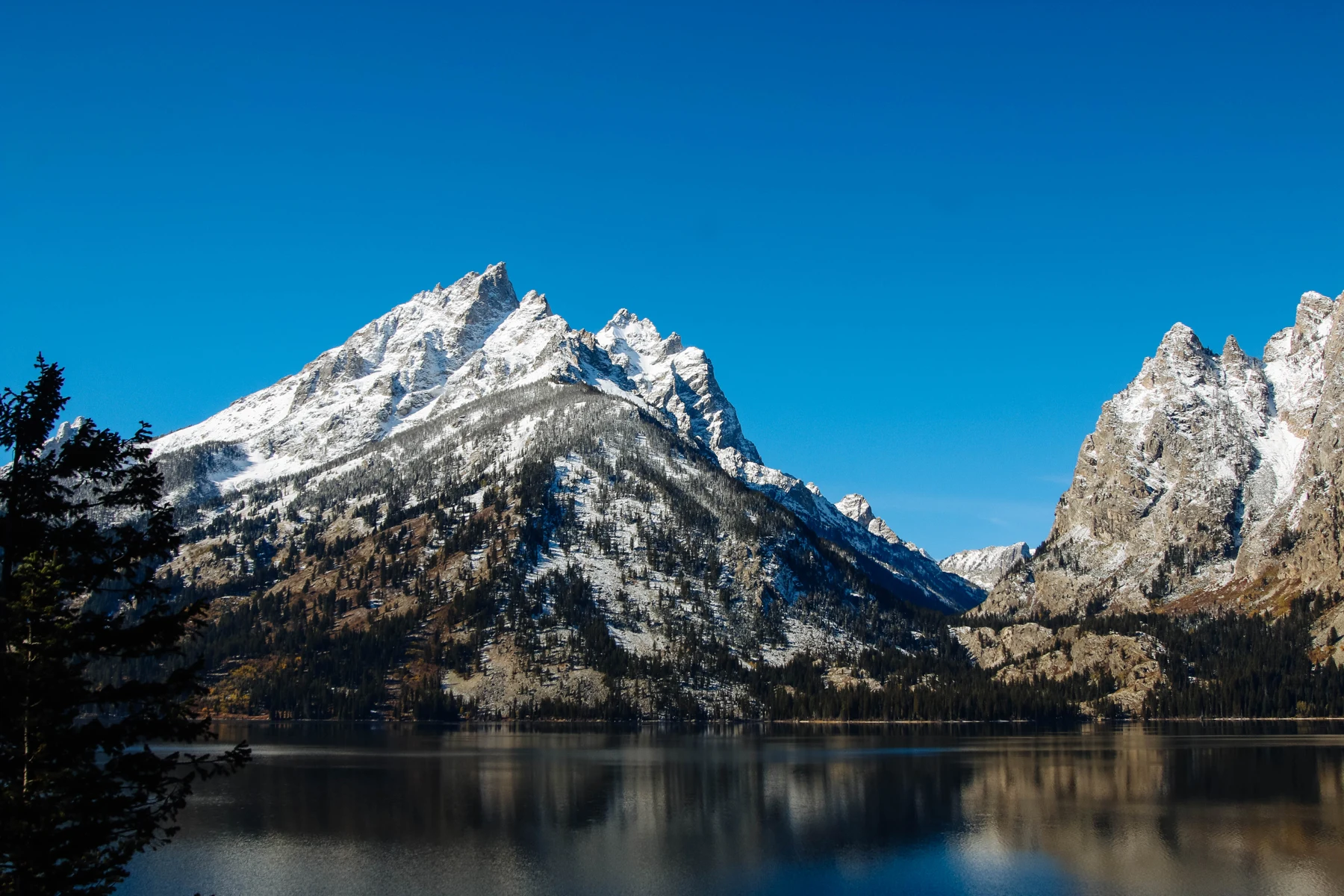
At Jenny Lake, the children stayed with their parents on the designated path and looked across water toward the mountains. The air felt different near the shore, cooler against their faces.
“No giant spoon,” Andy reported.
“Look at what it left,” Ana said.
Glaciers helped excavate the basin occupied by Jenny Lake, and glacial deposits helped shape its edge. The lake was evidence of a landscape that once held far more ice, not a puddle somebody had accidentally forgotten to wipe up.
Augie considered that. “Very big towel.”
A breeze roughened the surface. The mountain reflection broke into bright pieces, then reassembled when the water calmed.
“The mountains didn’t wobble,” Allie said. “The reflecting surface did.”
Andy tried holding perfectly still to improve the picture.
“That doesn’t control the wind,” Ana told him.
“I’m helping emotionally.”
They watched from shore instead of trying to do every activity in one visit. Boats and longer trails required their own planning, conditions, and adult decisions. Beautiful water did not promise warm water or easy swimming.
Allie wrote another question: Where does water go after it leaves the mountains?
Rain and melting snow can feed streams, lakes, and the river system below. Water carries pieces of the mountains too, although a grain of sand is much easier to overlook than a glacier.
Andy glanced at his shoes. “So the mountain can travel without moving the whole mountain?”
“Erosion and transport,” Allie said.
Augie looked back at the peaks.
“Please don’t travel into our car. We only have four seats in the back.”
6. A river with more than one pencil
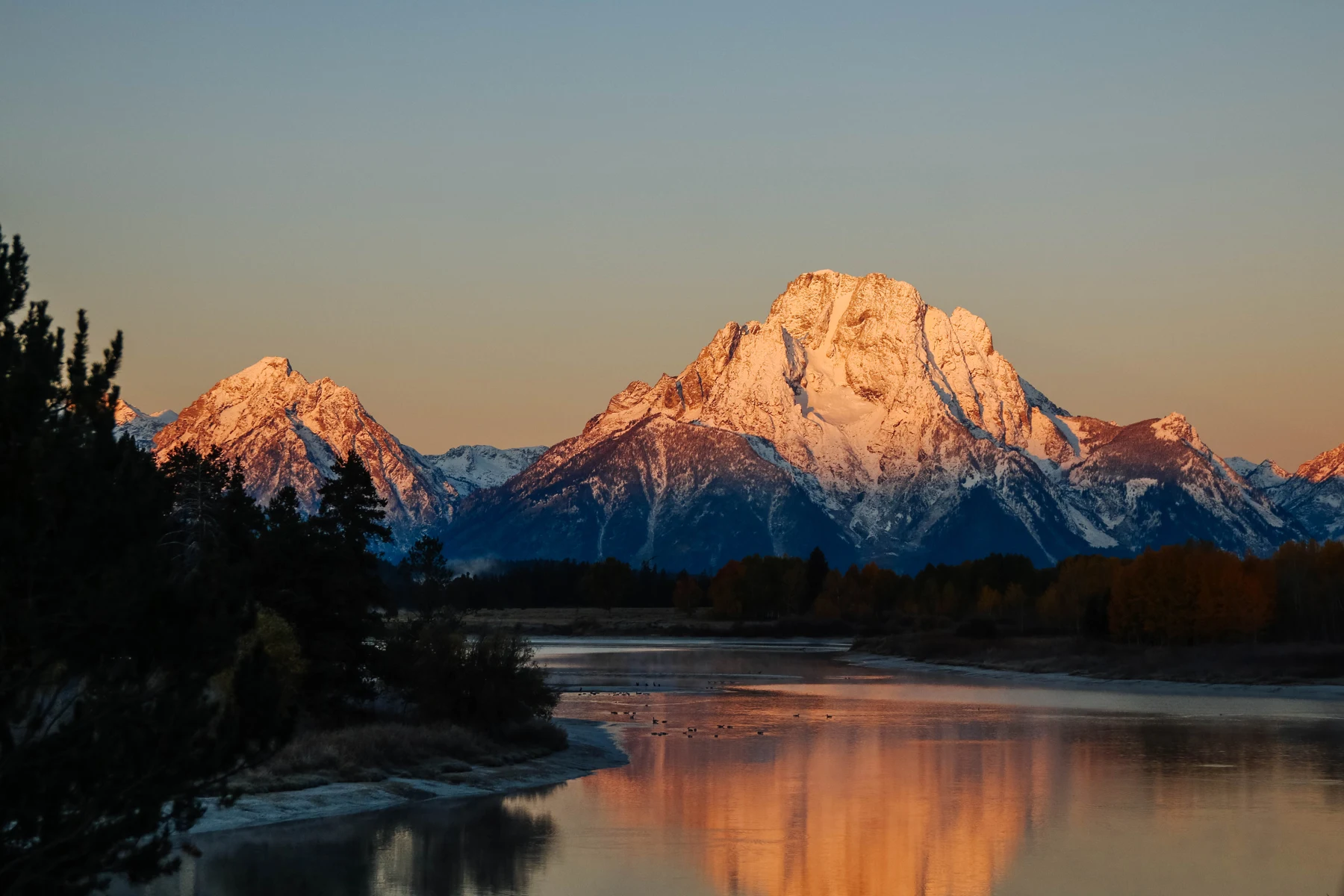
From a safe viewing place, the Snake River looked like it had changed its mind about where to draw its line. Water bent through the valley, with bars and channels making a complicated pattern.
“Did a snake draw it?” Augie asked.
“With what hands?” Andy replied.
Rivers move water and sediment. Flow can wear away one place and deposit material in another. Channels can shift, especially when flows change. A flood plain is land beside a river that can be covered when the river rises.
Ana traced a bend in the air. “So the valley floor isn’t finished either.”
“Exactly,” Allie said. “The basement has a moving floor plan.”
They did not approach the current for a closer look. A river can be cold, swift, and deeper than it appears; the view was excellent from where their parents had stopped.
Nearby wet ground supported different plants from the drier flats. Wetlands provide habitat and can slow floodwater and help filter water. They are not useless soggy places between the interesting bits.
Andy proposed a new name: VERY INTERESTING SOGGY BITS.
A sign described beavers changing waterways by building dams. Slower water behind a dam can create habitat for other living things. That made a beaver an ecosystem engineer, though it never wore a hard hat or filled out a building permit.
“Another builder,” Ana said. “A smaller one.”
They saw no beaver that afternoon. Allie wrote that down too. A sign explaining an animal’s habitat was not a promise that the animal would appear on schedule.
Augie understood completely.
“Maybe it’s on its lunch break.”
7. The plain that was not plain
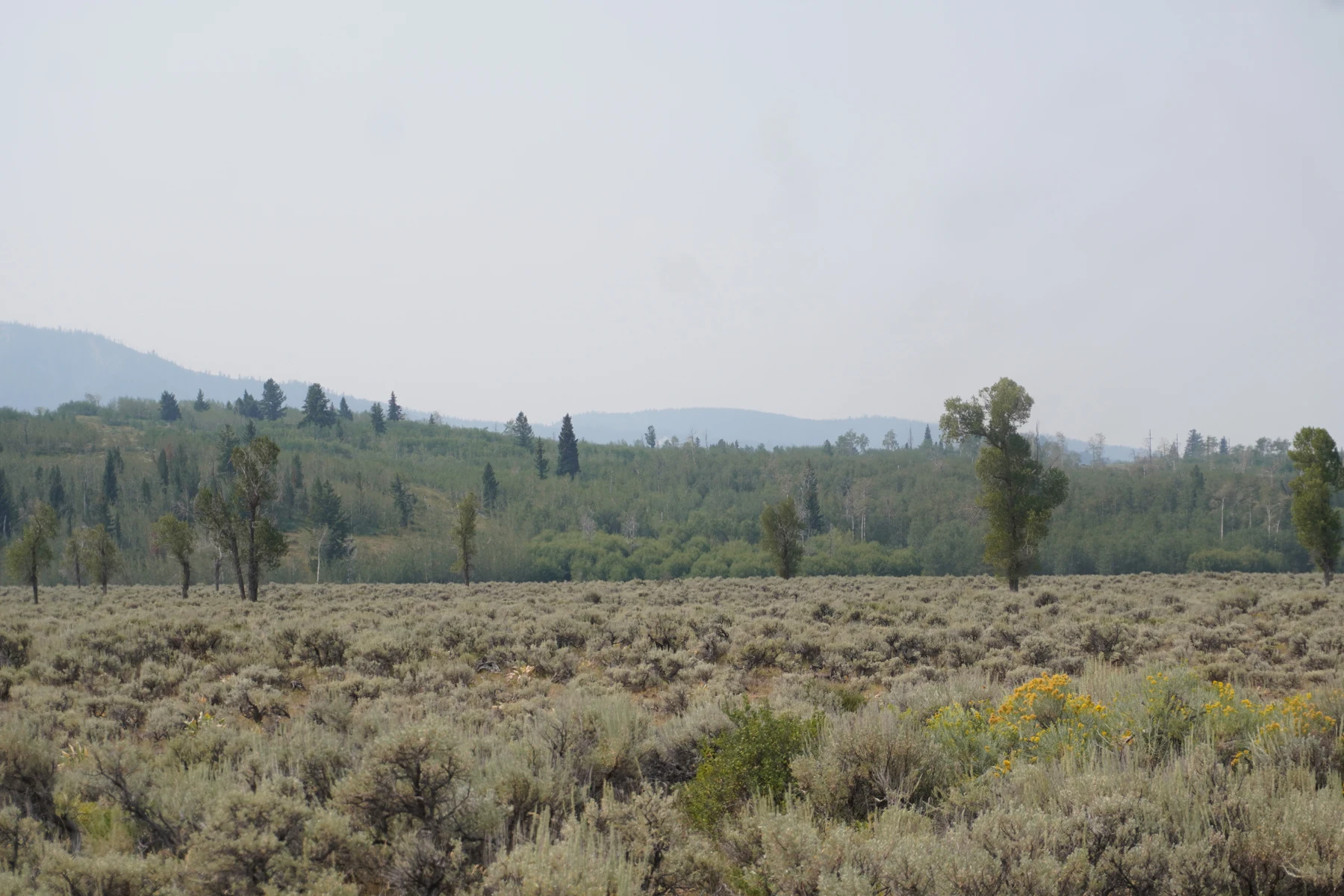
Beyond the wet places, silvery-green shrubs spread across the valley. Andy called it the empty part.
Ana raised an eyebrow. “We’ve made that mistake before.”
At first glance, sagebrush country could look repetitive. Looking longer revealed grasses, flowers, different shrubs, insects, and room for animals to feed and move. Dry, rocky soils and the availability of water helped shape what could grow there.
Allie compared the flats with the lakeshore. Same park; different conditions; different communities of living things.
“An apartment building with different rooms,” Ana said.
“Ocean hotel without ocean,” Augie added.
They watched a distant shape through binoculars, taking turns without leaving their parents. Their parent helped them compare it with a wildlife guide rather than confidently naming an animal from a tiny moving dot.
A pronghorn was pictured in the guide, with its distinctive markings and horns. The park’s open habitats provide important feeding and travel areas for animals such as pronghorn and elk. A patch of sagebrush could be somebody’s food supply, cover, or route between places.
Andy changed EMPTY PART to PART I DIDN’T LOOK AT LONG ENOUGH.
“That’s a long label,” Allie said.
“It needed a correction.”
They kept well back from wildlife and followed park distance rules: at least 100 yards from bears and wolves, and 25 yards from other wildlife. Even more space was needed if an animal reacted to them. Binoculars enlarged the view without shrinking the animal’s room.
Augie peered through them backward by mistake.
“Now everybody has extra room.”
8. The people missing from the sketch
Back at their resting place, Allie reviewed the notebook. Mountains, ice, water, plants, animals: the page was becoming crowded.
“Something else is missing,” Ana said. “People.”
They learned that Indigenous peoples had known and used this valley long before it became a national park, and Tribal connections continue today. A park boundary is a recent line on a much older human landscape.
“We shouldn’t write that nobody was here until somebody made a sign,” Allie said.
Andy nodded. “The sign is not the beginning.”
They also found stories of later homesteaders, ranching, conservation, and the work of protecting the valley. Different people had valued this place in different ways. Understanding a landscape meant asking who had lived with it, cared for it, and told stories about it—not just measuring how high it was.
Augie examined Allie’s sketch.
“Can I add us?”
“Yes. Small, please.”
He drew four tiny figures at the bottom. Andy’s head was almost as large as a mountain.
“Small-ish,” Augie explained.
Allie added a caption: FOUR VISITORS LEARNING TO LOOK.
They did not need to own a rock, touch an animal, or reach a summit to belong in the story of caring for the park. Staying on appropriate paths, leaving natural objects in place, packing out their rubbish, and respecting other visitors were useful contributions at any age.
Andy checked beneath their resting spot for a dropped wrapper.
“Basement inspection,” he announced.
This time, everyone agreed that was a job he could do without an elevator.
9. The basement wins the case
That evening, the range stood dark against a changing sky. The children looked from the peaks down to the broad valley.
Allie opened the case page.
“Our answer?”
Ana counted on her fingers. “Rock blocks moved along a fault. The mountain side rose relative to the valley side, and the valley dropped. Glaciers carved. Water keeps carrying and rearranging material.”
“And plants and animals live in the rooms,” Andy added.
“People have a long story here,” Allie said. “And a responsibility now.”
Augie thought carefully.
“No elevator.”
“Correct.”
“Can we still have an upstairs snack?”
They ate at their table, which was safely downstairs. Allie crossed out the question mark beneath her mountain drawing and replaced it with arrows, a river bend, and one very unofficial beaver wearing a hard hat.
The mountains were spectacular. But looking only upward would have missed half the mystery. The valley, its buried history, and its living habitats helped explain the whole scene.
Ana turned to their next destination: Olympic National Park.
On that page were a mountain, a forest, and a wild coast.
“Snow, rain, and ocean,” Andy said. “Is the next park three parks wearing one coat?”
Augie leaned against him.
“Does the coat have pockets?”
“For snacks?”
“For the ocean.”
Allie closed the notebook gently around the old Acadia bookmark. Their next mystery was waiting in the weather—and it sounded as though they might need a waterproof page.
Explorer’s notebook
Nine discoveries to take with you
- Grand Teton National Park is in northwestern Wyoming.
- Movement along the Teton fault helped produce the sharp contrast between the range and Jackson Hole valley.
- A fault is a break along which rock has moved; it is not an open elevator shaft.
- The age of a rock can differ enormously from the age of the mountain-building episode that exposed it.
- Glaciers carve, carry rock, and leave deposits such as moraines.
- Jenny Lake’s basin and edges record past glacial work.
- The Snake River transports sediment and shapes its flood plain.
- Wetlands and sagebrush flats support different, valuable communities.
- Indigenous connections to the valley continue today; the park’s human story did not begin with its establishment.
Five ways to explore thoughtfully
Choose activities with an adult using current park guidance, weather, accessibility information, and your family’s abilities. These are options, not a one-day checklist.
- Compare the mountain skyline and valley floor from an established viewpoint. Sketch both.
- Observe Jenny Lake from an appropriate shore path. Draw the reflection before and after a breeze.
- Look for river bends and sediment bars from a safe overlook, well away from swift water.
- Compare plants in a dry habitat with those beside a wetland, staying on designated routes.
- Explore park exhibits and Tribal history resources. Record a question about people as well as geology.
Three questions for the crew
- Why can both “the mountains went up” and “the valley went down” help explain this landscape?
- What evidence would you look for before deciding that a glacier shaped a valley?
- Why might a place that looks empty to a visitor be important to wildlife?
Words worth keeping
- Fault: a break in rock along which movement has occurred.
- Uplift: upward movement of part of Earth’s crust.
- Metamorphic: describing rock changed by heat and pressure without completely melting.
- Moraine: material deposited by a glacier, often in a pile or ridge.
- Flood plain: land beside a river that can be flooded when the river rises.
- Habitat: the surroundings that provide what a living thing needs.