1. Who ordered the forest?
Augie was looking for the delivery truck.
He had been thinking about their Lassen chapter, where the children learned how volcanic materials helped build different landforms. Now, on a later family journey to Southeast Alaska, the problem seemed to run in reverse.
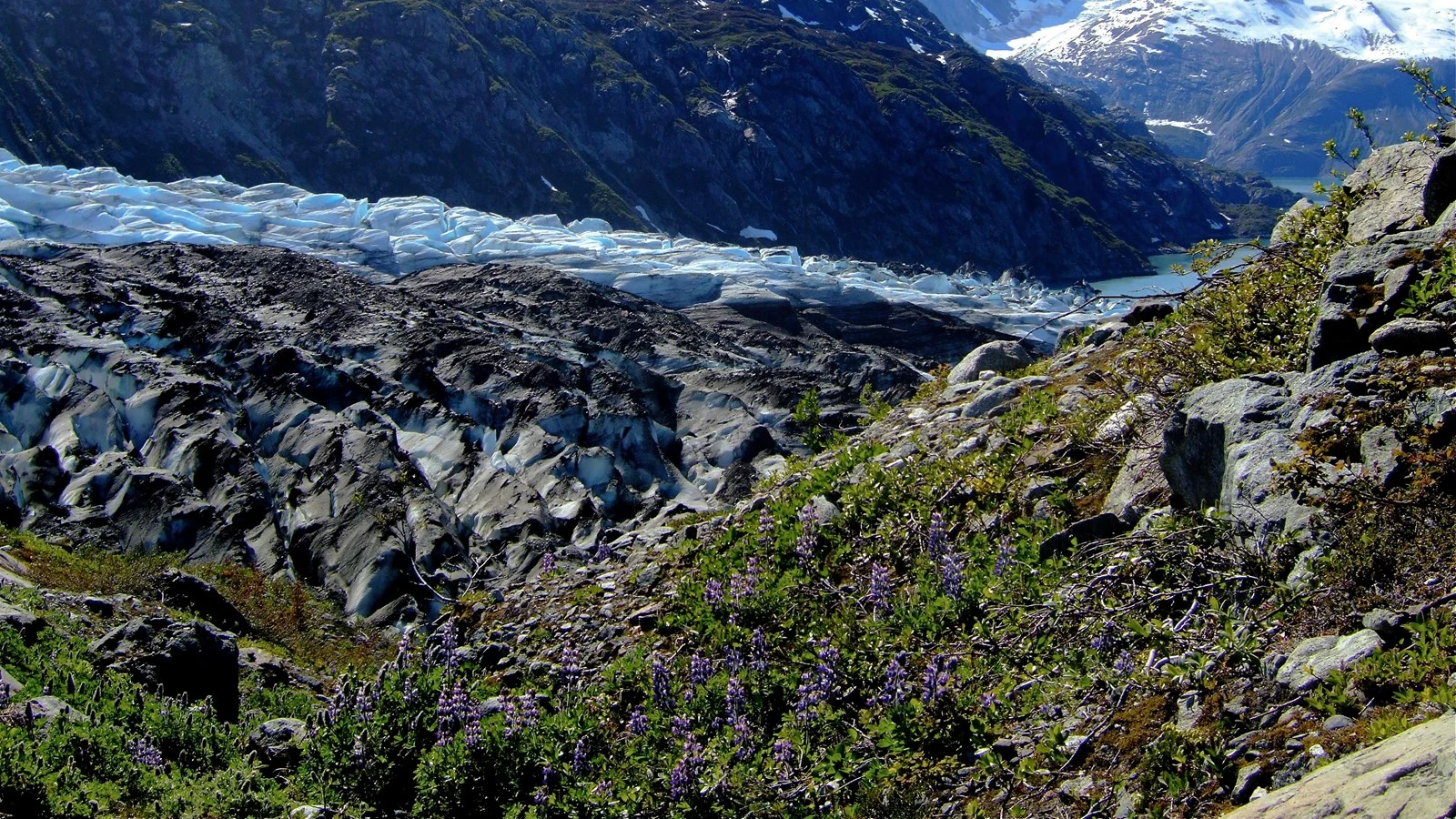
A photograph showed rocky ground beside Lamplugh Glacier, with hardy plants and purple flowers growing nearby. Another learning page showed a green forest.
“Who brings the trees after the ice?” he asked.
Andy considered the size of the order.
“Very large truck. Extra-long receipt.”
Ana looked up from the park guide. “Or perhaps we should investigate whether anybody delivers them at all.”
They were visiting Glacier Bay National Park and Preserve, a landscape of mountains, glaciers, fjords, forests, and coastlines. Their parents had arranged a manageable stay around Bartlett Cove, with suitable walks and time to learn. Photographs and interpretation would help them investigate the upper bay without adding a glacier landing or a long boat journey to their plans.
This was Glacier Bay in Alaska, not Glacier National Park in Montana. Allie put both names on their larger park list so the two places would keep their own stories.
Ten-year-old Allie wrote: How can a forest develop on ground once covered by ice?
Nine-year-old Ana supplied a pencil. Seven-year-old Andy supplied a receipt reading one forest, assembly required. Four-year-old Augie supplied the first question about who did the assembling.
Their parents checked the day's conditions and chose an open route suited to the family. Rainwear, warm layers, sturdy footwear, drinking water, and properly secured food were ready. The children would stay together and use established paths.
Outside, the forest looked thoroughly established. There was no obvious gap where a delivery truck had unloaded it.
Allie made space beneath the question for several clues.
Andy added a tiny box for a refund, in case their forest arrived without squirrels.
“No wildlife guarantees,” Ana said.
The investigation had officially begun.
2. The ice can move forward while its front moves back
Before following the forest, they had to understand the ice.
A glacier formed as snow accumulated and became compacted into ice over time. Under its own weight, a glacier flowed. It was not simply a giant, permanently parked ice cube.
Andy drew a freezer with an extremely ambitious door.
Ana put the appliance in the imagination corner.
Their materials explained a surprising point: a glacier's front could retreat while ice within it continued flowing downhill. If ice was lost at the front faster than it was supplied, the end could shift back up the valley.
Augie moved one finger forward and another backward, then inspected both suspiciously.
“Two moves?”
“Different things being measured,” Allie said. “Movement of the ice, and position of the front.”
They made a paper game. Little blue squares moved toward an imaginary front. Their parent removed some squares at the end to represent losses. When more disappeared than arrived, the drawn front moved back even though each arriving square had moved forward.
The game showed one relationship, not all the complicated physics of a real glacier.
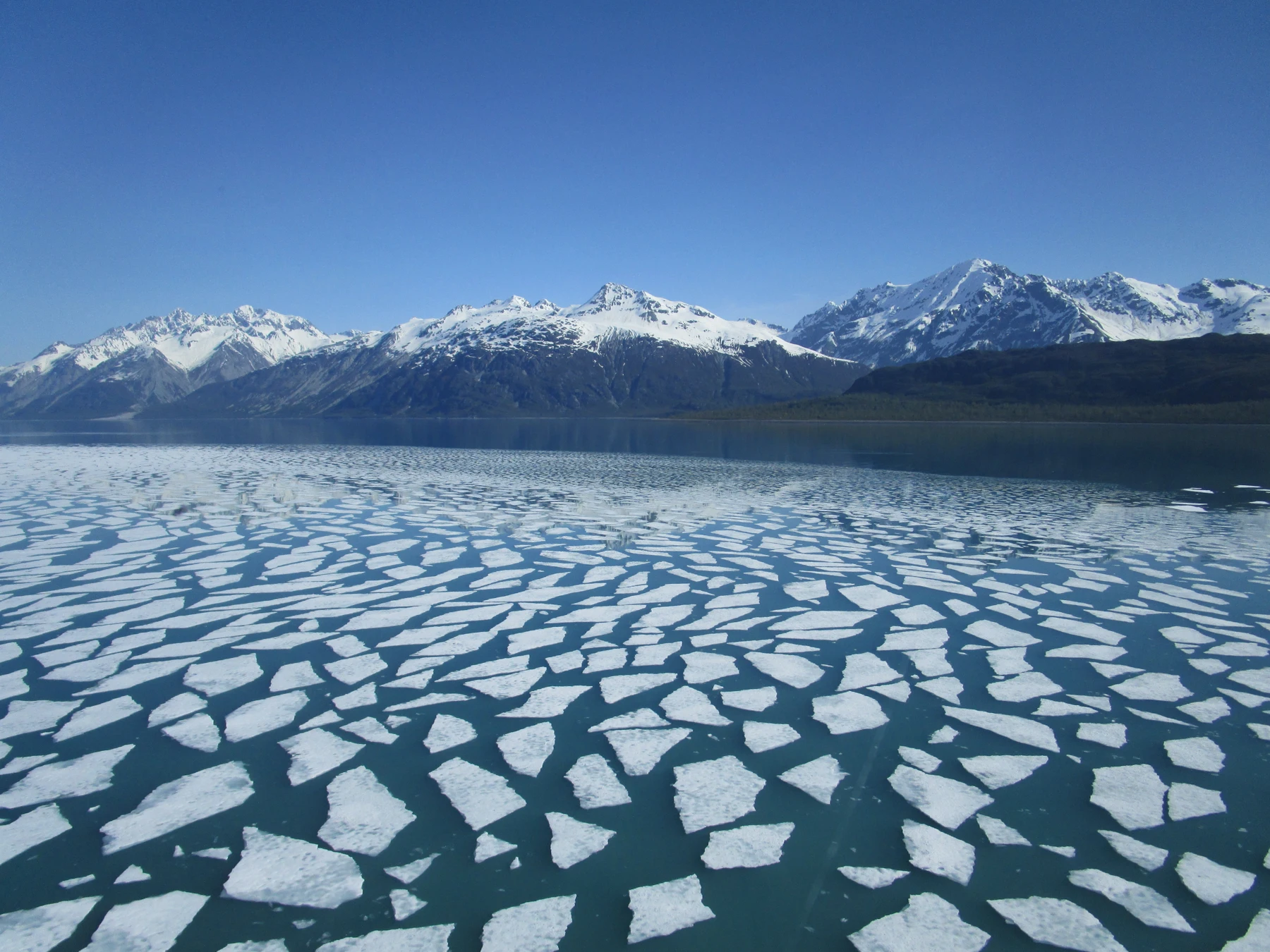
Some glaciers ended at the sea. Pieces could break off in a process called calving. The children would learn through the guide rather than approach an ice front to look for a performance. A separate photograph showed flat pieces of pan ice on the water in Tarr Inlet, reminding them that not every floating piece of ice had the same history or shape.
Andy drew a small label on each paper square.
“Ice: please state your occupation.”
“Probably not how scientists do it,” Ana said.
Allie returned to their main question. When ice no longer covered a place, exposed ground could become available for living things. But a glacier's retreat did not automatically deliver rich soil, seeds, shelter, and a finished forest.
Augie looked at the imaginary receipt again.
“So assembly really is required.”
“Time and many living processes,” Allie replied. “Let's see where the story can begin.”
3. The first arrivals don't need a moving van

The photograph of plants near Lamplugh Glacier gave the children their next clue.
The ground was rocky. It did not resemble the deep, soft-looking forest floor around Bartlett Cove.
“How does anything begin there?” Ana asked.
Seeds and spores could reach newly exposed places by wind, water, or animals. Getting there was only part of the challenge. A seed also needed suitable conditions to survive and grow.
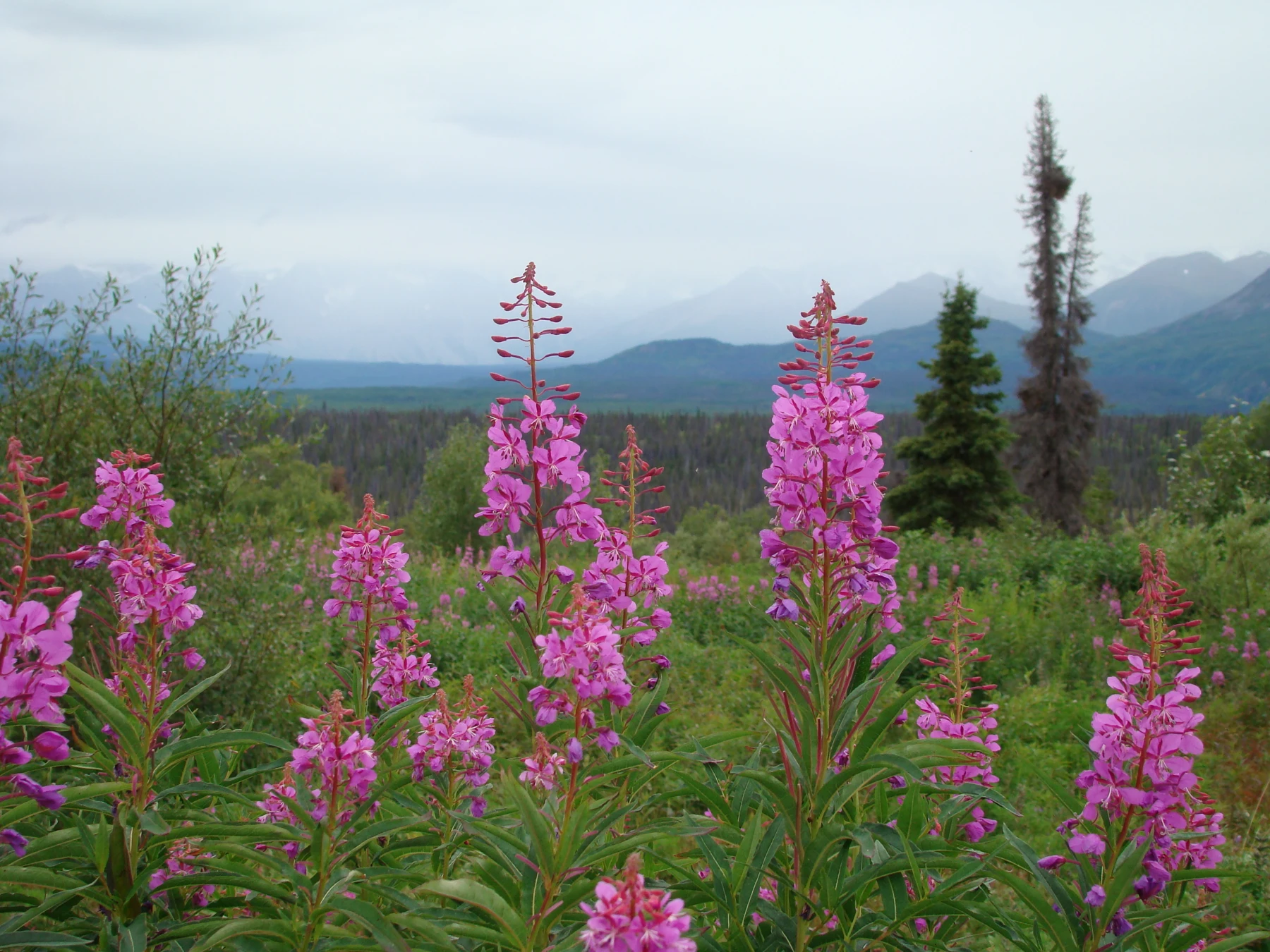
The park's learning materials introduced early colonizers such as mosses, lichens, Dryas, and fireweed. These were examples to investigate, not a rule that every surface had to welcome the same organism first.
Andy drew a row of tiny arrivals waiting at a reception desk.
“Name?”
“Fireweed.”
“Luggage?”
“Very little.”
Ana examined his sketch. “Please don't give every seed a suitcase.”
A fireweed photograph showed tall pink flowers against distant mountains. Its seeds could travel on the wind. The fluffy structures helped them disperse, but they still needed somewhere appropriate to establish themselves.
Augie blew gently across their paper page. Nothing moved except Andy's imaginary receipt.
“Not actual wind research,” Ana observed.
Allie drew two landing places: one with a sheltered crack and some moisture, another exposed to harsh conditions. She added question marks, because she could not predict a seed's entire future from a simple sketch.
Their parent asked whether the family should help by scattering garden seeds on bare ground.
“No,” said the three older children.
Augie thought for a moment, then added, “Wrong delivery.”
The real park needed its own ecological processes, not visiting gardeners adding plants. Shoes and gear should be checked for things carried accidentally, and natural material should stay where it belonged.
Andy changed the reception desk into a field notebook.
The first arrivals did not need a moving van. They needed a way to reach the place, conditions they could tolerate, and enough time for the next part of the story to unfold.
4. The soil has a team underneath it
Augie wanted to order the soil separately.
“Trees need somewhere to stand.”
“Good question,” Allie said. “Where does that growing place come from?”
Ground exposed by glaciers could contain rock fragments, sand, silt, and other material. Soil development also involved living things, decaying remains, weathering, and changes over time. A forest floor was more than crushed rock in a bag.
Ana drew several ingredients without turning them into a recipe that worked identically everywhere.
Some plants altered the surroundings as they grew. Fallen leaves and other remains added organic material. Roots, shade, and shelter changed conditions. Organisms that decomposed dead material helped return nutrients to circulation.
The children learned about alder, an important plant in many Glacier Bay succession stories. Bacteria living in special root nodules could convert nitrogen from the air into forms useful to living things. The partnership helped alder grow where usable nitrogen was limited and could contribute to changes in soil nutrients.
Andy drew an alder with a basement office.
“Underground assistants.”
“Bacteria,” Ana said. “No desks required.”
Augie peered at the imagined nodules.
“Very small staff.”
Their parent explained that plants did not plan to prepare a forest for somebody else. Growing, shedding leaves, dying, and interacting with other organisms changed the environment. Other species might then find different opportunities there.
Allie connected leaves, decomposers, nutrients, and new growth with arrows. Andy tried to appoint a manager, but nobody on the page had applied for the job.
Ana crossed out the alder decides to build a spruce forest and wrote the alder can change growing conditions.
That was a better explanation.
Their family would not dig up roots or collect soil to inspect the partnership. Public interpretation and diagrams let them investigate processes too small or slow to watch during one visit.
Augie put a pencil tick beside the soil question.
“No truck,” he said. “Many helpers.”
Allie kept the word helpers as a friendly comparison, with a note that the organisms had their own lives rather than a shared construction plan.
5. Nobody promised a straight queue
Andy now had an impressive parade in his notebook.
Mosses marched first. Flowers followed. Alder carried a flag. Spruce brought a suitcase large enough to contain a very small forest.
Ana studied it carefully.
“It looks suspiciously organized.”
Their parent helped them read about plant succession: change in plant communities over time. The familiar Glacier Bay story could be a useful introduction, but different sites did not necessarily follow one identical sequence.
Some species could arrive earlier in one place than another. Distance from seed sources mattered. So did the site's conditions and previous history. Research at Glacier Bay had documented more than one pathway of vegetation development.
Allie turned Andy's single road into several branching possibilities.
Augie pointed to the spruce suitcase.
“He doesn't have to wait for everybody?”
“Not according to our parade schedule,” Ana replied. “We invented that schedule.”
As vegetation grew, it also changed light and other conditions. A taller plant could shade a smaller one. One species might help another establish, while later competition could change which plants did well. Relationships were more complicated than everybody politely passing a forest along a line.
Andy drew two plants arguing over a sunny window.
“Useful question about light,” Allie said. “Imaginary conversation.”
Their parent gave them a choice of labels: always, sometimes, or depends on conditions.
Ana placed most of their claims under the third heading. That did not mean they had learned nothing. It meant their explanation had room for the real landscape.
They also discussed wet ground that might remain open rather than become a tall forest. A meadow or shrubland was not a failed woodland waiting for a better grade.
Augie gave the meadow a large, approving star.
“No forest exam.”
Andy retired the parade flag. Its replacement was a question mark with room for several arrows.
The trees in their chapter title were following opportunities after ice, not following a leader in a perfectly timed procession.
6. A fallen tree with a second career
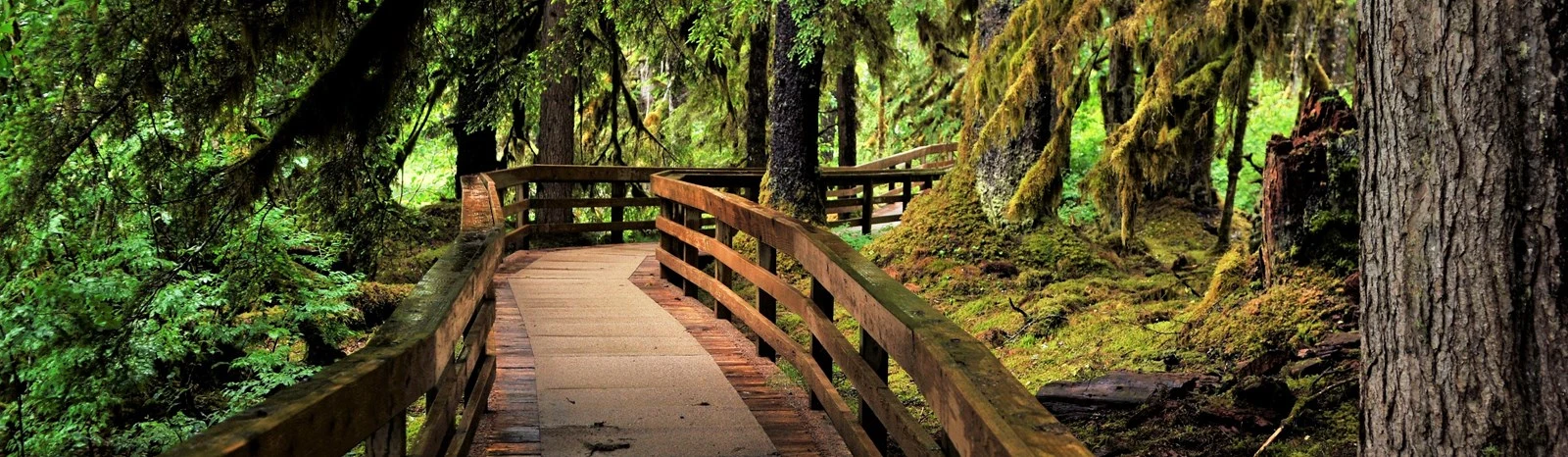
On a suitable section of the Bartlett Cove forest route chosen by their parents, the children slowed down.
The ground and wooden surfaces could be wet and slippery. There was plenty to notice without leaving the path or climbing onto anything.
A forest photograph showed a boardwalk threading through dense, mossy vegetation. Their own view offered layers: trunks, branches, smaller plants, and dead wood among the living growth.
Andy looked at a fallen log visible from the route.
“Tree taking a nap.”
Ana checked the guide. “Possibly a much longer change of employment.”
In a temperate rainforest, fallen wood could become a growing surface for new vegetation. A decaying trunk that supported young plants was often called a nurse log. It offered a place to establish and, through decay, became part of the forest's cycling material.
Augie looked concerned.
“Does it need a blanket?”
“Moss seems to have that covered,” Allie said.
A mature forest did not contain only tall, matching trees. It included different ages, fallen branches, standing dead wood, openings, and new growth. Trees falling or breaking could let more light reach the ground.
Ana added change continues beside the mature forest picture.
Their parent asked whether this meant the children should move a log to a sunnier spot or tidy away old branches.
The answer was no. Dead wood belonged to the habitat. The family could notice it without rearranging it.
Andy crossed forest housekeeping service off the back of his delivery receipt.
The atmosphere felt very different from a bare slope near the ice in their photograph. More shade, more surfaces for growth, and accumulated organic material changed what could live here. It was not just the same ground with several large trees placed on top.
Augie drew a tiny plant above a log in his notebook.
“New job,” he said.
Allie wrote the name beside it. The forest had no office sign, but its materials were continually finding new roles.
7. The study that needed more than an afternoon
The children had another problem with the delivery theory.
Their family had been watching for quite a while, and no bare patch had turned into a mature spruce tree.
Andy checked his imaginary receipt.
“Perhaps the order is delayed.”
“Perhaps we need a different way to study time,” Ana said.
In 1916, botanist William Skinner Cooper established study plots at Glacier Bay to investigate changing plant communities. Returning to marked places over years let researchers compare observations instead of relying on one afternoon's impression.
Allie drew a small square on paper and imagined recording what grew inside it. A later drawing could show change at the same location. Scientists needed consistent methods, dates, and careful observations; the family would not mark out or enter a real research plot.
Augie put a tiny calendar beside the square.
“Bring patience.”
Comparing different places could also raise useful questions about how long ground had been exposed. But the children remembered their branching-path page. Two sites with different ages might also differ in seed supply, moisture, and history. A younger place was not automatically an exact photograph of an older place's past.
Ana gave their pretend study two columns: what changed and what else might explain the difference.
Their parent added a modern question. Human-caused warming was affecting glaciers and the surrounding environment. Glacier behavior depended on several factors, including snowfall, losses, terrain, and, for tidewater glaciers, conditions at the ice front. One photograph could not settle every climate question.
“All this green doesn't mean losing ice is simply good news,” Allie said.
“Right,” their parent replied. “New growth and serious environmental change can be part of the same larger story.”
They talked about learning from reliable evidence, reducing waste, and supporting care for the places people and wildlife depended on. The children did not have to solve the whole planet before dinner.
Andy added one final supply to the imaginary research kit: a pencil that lasts longer than my snack.
Ana suggested spare pencils. It was their most practical proposal of the afternoon.
8. The homeland was never an empty page
A phrase in their first notes made Allie pause.
Empty land after ice.
She drew a line through the word empty.
“Bare ground for some plants doesn't mean a place has no human story.”
Their parents helped them learn about Glacier Bay as a homeland for Huna and Yakutat Lingít, also commonly written Tlingit. The family's Bartlett Cove learning focused especially on Huna Lingít relationships while recognizing that the wider park and preserve held distinct connections.
An advancing glacier had displaced Huna ancestors from places in the bay. Retreat later changed access again, but relationships with homeland continued through knowledge, family histories, place names, and cultural practices.
Ana added a second timeline beside the plants.
“This isn't just a story of scientists arriving to see something new.”
Their parents also explained that federal restrictions after the area became a national monument had harmed Huna Lingít access and traditional activities. Cooperation between the National Park Service and the Hoonah Indian Association had helped rebuild relationships and opportunities for reconnection.
The children learned about Xúnaa Shuká Hít, the Huna Ancestors' House at Bartlett Cove, as a place for community gatherings and sharing. Any family learning there would follow current opening arrangements and what hosts offered for public participation.
Andy left his next notebook page mostly blank.
“Room to listen,” he said.
Augie rested his pencil beside it.
The children would not copy a clan story into their own adventure, invent a ceremony, or treat cultural carvings as playground equipment. Publicly shared interpretation could begin their learning without giving them ownership of somebody else's knowledge.
Their parent asked what belonged beside the plant timelines.
“People's continuing relationships,” Ana said.
“And different voices,” Allie added.
They kept both pages. The forest-following-ice question had opened a window onto ecological change. It had not replaced the much larger history of people knowing, caring for, losing access to, and reconnecting with this place.
Andy folded the unused delivery receipt away. It no longer seemed large enough to hold the story.
9. One forest, still becoming
At the end of the day, Augie asked for the committee's answer.
“Who brought the forest?”
Andy took a breath.
“Seeds and spores can arrive. Plants grow if conditions suit them. Living things change the place. Soil develops. Other plants find opportunities. Sometimes the path goes another way.”
Ana looked impressed by the length of the answer, although she did inspect the suitcase drawing one more time.
“And the trees don't walk after the glacier,” she added.
Allie joined their clues together: moving ice, exposed ground, arrival, survival, changing soil, competition, shade, fallen wood, and time.
Their parent asked whether all of that meant one organism was in charge.
Augie shook his head.
“No forest boss.”
The children had begun by imagining a delivery. Now they could picture many connected processes, none requiring a tree truck or a supervisor in a hard hat.
They had not waited centuries, walked on a glacier, approached a calving face, or inspected every plant community in the park. Their short family visit, photographs, interpretation, and careful questions had been enough to make their first explanation much better.
Ana turned to the notebook's last blank space.
“What question should travel with us?”
Allie wrote: When a landscape changes, what makes new life possible—and what might be lost?
Andy drew a small seed beside it. For once, it had no luggage.
Their next chapter would take them to Cuyahoga Valley National Park, where a river's history would raise questions about damage, recovery, and people working together.
“Another delivery?” Augie asked.
“Another investigation,” Ana said.
The family checked its belongings, packed every scrap, and left the forest's leaves, logs, plants, and wildlife in place. Their questions could travel. The habitat did not need to come home in a pocket.
Augie gave the imaginary tree truck one last look and parked it in the margin.
The forest had not arrived all at once. It was still becoming.
Explorer’s notebook
Nine discoveries to take home
- Glacier Bay National Park and Preserve is in Southeast Alaska. It is a different park from Glacier National Park in Montana.
- Glaciers form from accumulated snow and ice and flow under their own weight. The ice can move downhill while its front retreats.
- Ground exposed after ice retreat can offer opportunities for colonization, but it does not arrive with a finished forest floor.
- Seeds and spores can travel by several routes. Arrival alone does not guarantee that an organism will establish successfully.
- Growing plants, decomposers, weathering, and accumulating organic material help change soil and other conditions.
- Alder's partnerships with nitrogen-fixing bacteria can contribute to nutrient availability. Plants change their surroundings without planning a future forest.
- Succession means change in plant communities over time. Different sites can follow different pathways; not every open area must become the same forest.
- Mature forests keep changing. Fallen wood, gaps, young plants, and nurse logs are parts of a living habitat.
- Glacier Bay is a continuing Lingít homeland. Scientific study, cultural knowledge, and responsible visiting involve relationships that extend beyond a single trip.
Five small adventures
- Model a changing glacier front. On a table, move blue paper squares toward a drawn front while an adult removes some at the end. Explain how the front can retreat even while the arriving squares move forward. Keep the model labeled as simplified.
- Draw two seed journeys. Invent routes to two different landing places. Add questions about moisture, shelter, light, and distance. Do not scatter seeds or move plants in a park.
- Make a branching succession map. Use paper cards for exposed ground, small colonizers, shrubs, trees, and wet open habitat. Draw more than one possible pathway and explain what conditions might make a difference.
- Give a log a second chapter. From a photograph or an established trail with a grown-up, look for ways fallen wood could become habitat or a growing surface. Draw your ideas without moving, climbing on, or disturbing the log.
- Keep a tiny change journal. Choose a permitted place at home, such as an existing garden patch, and observe from the same position over time. Record dates and conditions. Change nothing for the experiment, and remember that a garden is not a replica of Glacier Bay.
Talk it over
- Why doesn't a retreating glacier have to flow backward?
- What can help a seed arrive, and what might stop it from growing afterward?
- Why is a branching map better than one compulsory plant parade?
- Why can a place with few visible plants still have a long and continuing human history?
Words for your explorer pack
- Glacier: a mass of accumulated snow and ice that flows under its own weight.
- Terminus: the end or front of a glacier.
- Calving: the breaking away of pieces of ice from a glacier or other ice mass.
- Colonization: the establishment of organisms in a place.
- Succession: change in the kinds and relationships of organisms in a community over time; this chapter focuses on plants.
- Organic material: material from living or once-living things.
- Nitrogen fixation: conversion of nitrogen gas into forms living things can use, performed by certain microorganisms.
- Nurse log: a decaying log that provides a growing surface for young vegetation.