1. The case of the river with a past
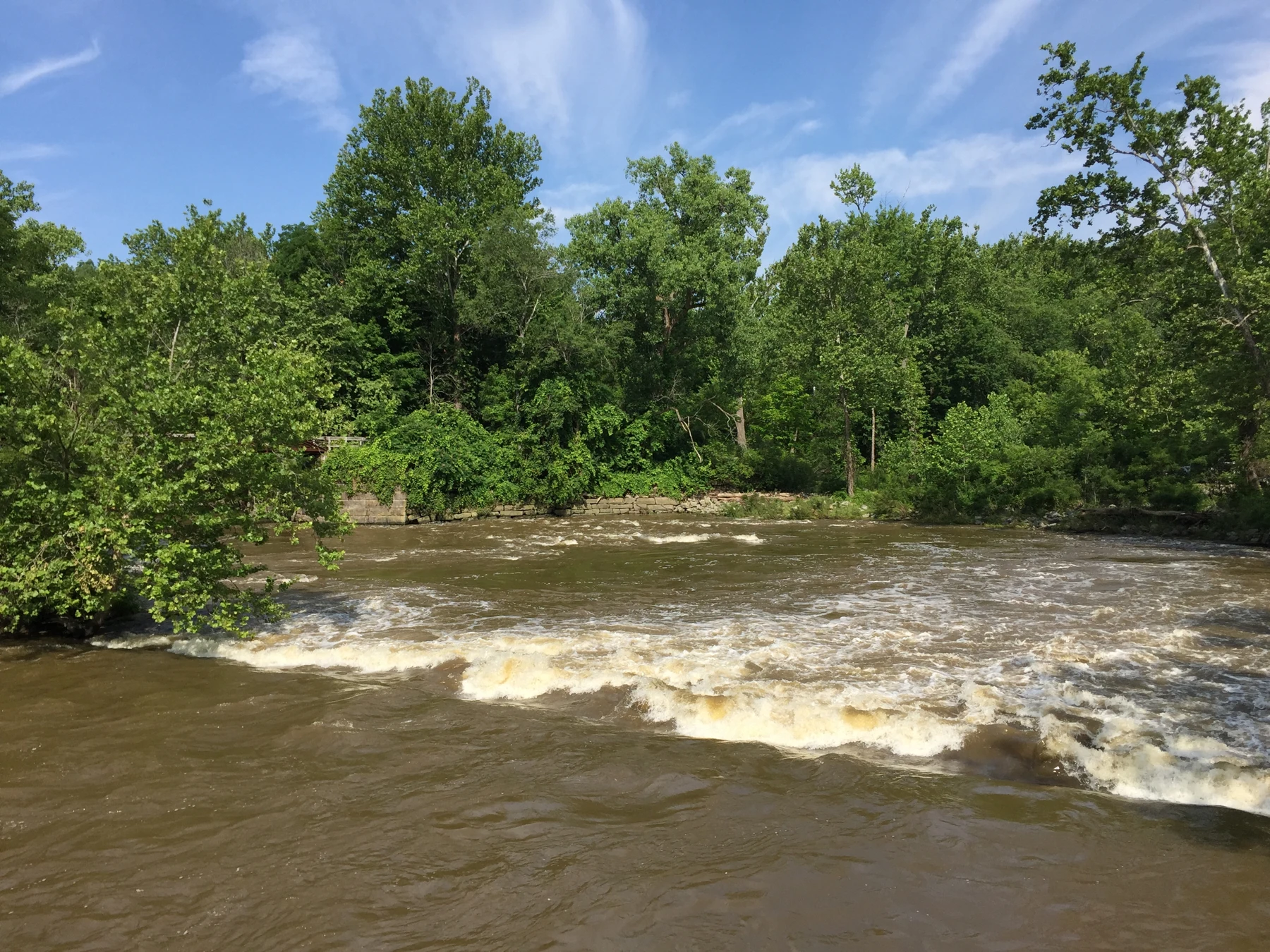
Andy had prepared an extremely important question for Ohio.
“If a river gets a second chance,” he asked, “does it have to say sorry first?”
Allie looked up from the family’s park map. “The river wasn’t the one making the mess.”
“Then somebody owes it a very large apology,” Ana said.
Augie leaned toward the window. “And a towel.”
Their grown-ups were driving through Cuyahoga Valley National Park, between Cleveland and Akron. Beyond the road were wooded hills, fields, and glimpses of water. This park was woven into a landscape where people lived and worked. It was not an island floating far from everything else.
Allie remembered Glacier Bay, their previous reading adventure. There, retreating ice had left ground where plants could establish. Here, the puzzle would involve a river and decisions made by people.
“Different place,” she said, opening her notebook. “Different kind of change.”
She wrote their new case title: How does a damaged river begin to recover?
Andy drew a river wearing a bandage.
“Useful illustration,” Ana said. “Probably not the treatment.”
Their first outing would be short: from Ira Trailhead toward Beaver Marsh, with breaks and a return along the same route. An adult had checked the park’s alerts and brought drinking water. A separate river stop later would depend on everyone’s energy.
Augie announced that he had enough energy for twelve stops.
Then he asked to be carried across the parking area.
“Energy distribution problem,” Andy diagnosed.
On the path, Ana noticed a cyclist approaching. The family kept to the right and made room. A towpath was for sharing, even when your detective team contained a small person who believed his elbows required their own lane.
Birds called from the trees. Somewhere beyond the leaves, water continued downstream.
Allie had expected a river-recovery story to begin with something enormous: a machine, perhaps, or a dramatic rescue.
Instead, it began with four children listening carefully and Augie asking whether their river bandage needed stickers.
2. An elevator for a boat
Before the marsh, the family paused near Lock 26. Stonework beside the Towpath Trail helped them imagine an older transportation route: the Ohio & Erie Canal.
“The river?” Andy asked.
“A canal,” Allie answered. “People dug a waterway for boats. The river and the canal are different things, even though their stories connect.”
Ana imagined a delivery truck arriving with flippers instead of wheels.
“Not quite,” Allie said. “But canal boats did carry goods.”
They studied the park’s information together. Long before delivery vans, teams of animals, including mules, walked beside the canal and pulled boats using towlines. The path beside the water was the towpath.
“So this trail used to be a mule’s working route,” Andy said.
He adopted a serious expression. “Please respect the historic hoof commute.”
Augie examined his shoes. “Mine are not hooves.”
The next problem was height. Boats could float, but they could not simply climb a hill. Locks helped them move between different water levels.
Allie used her hands to describe a chamber with gates at both ends. A boat entered when the water levels matched. The gates closed, and water was let in or out. The floating boat rose or fell with it. When the chamber matched the next stretch, the appropriate gates could open.
“A water elevator!” Ana said.
“With no button labeled snacks,” Andy observed.
They were imagining the process, not watching a working demonstration at this old lock. Allie drew three small pictures: enter, change level, leave.
Augie added a fourth picture: boat takes a nap.
“That might depend on the schedule,” Ana said.
The canal had connected farms, businesses, towns, and markets. It also changed the valley. Moving more goods made new kinds of growth possible, and growing communities made new demands on water and land.
Andy looked from the stonework to the trees.
“So we can’t solve the river mystery by pretending people were never here.”
“Exactly,” Allie said. “We have to understand what people did—and what people can do differently.”
She added a second notebook question beneath their case title: What changed the valley, and who can help care for it?
3. Before the canal, and still here
Ana stopped Allie before she could begin a timeline with canal construction.
“That can’t be the beginning,” she said. “The river was already here. People were already here.”
Together with an adult, they read about the valley’s much longer Indigenous history. Different Native peoples had relationships with this region over time, including ancestors of communities such as the Lenape, also called Delaware, and the Seneca-Cayuga. No single short list could represent every connection.
European settlement and the expansion of the United States brought dispossession and forced removal. These were harms to people and communities, not empty spaces opening on a map.
Native people also live in the region today, including in the Cleveland area. The children understood that Indigenous history did not end when the canal arrived.
“Our timeline needs room for people’s continuing stories,” Ana said.
Allie turned to a new page instead of squeezing everything into a tiny corner.
Augie looked concerned. “Will we run out of paper?”
“We might run out of easy answers,” Allie said.
“Those are different problems,” Andy added. “Only one can be fixed with another notebook.”
Their grown-up reminded them that learning names was a start. Listening to Native communities’ own accounts mattered too. A park history page could open a door to learning; it could not contain every experience.
Ana had been drawing a river as a blue line. Now she added people’s homes, journeys, and stories beside it.
“A river isn’t only where water goes,” she said. “It’s also a place people belong to.”
Andy considered his bandaged river drawing. He had made the case look like a simple accident followed by a quick repair.
He wrote underneath it: Ask more questions.
Augie added a question of his own.
“Are we still going to the marsh?”
They were. Understanding a place did not mean standing in one spot until you knew absolutely everything. It meant taking the next step with more care than before.
4. The fire that was not burning water
At a rest stop, Allie read aloud the part of the river’s history that had first caught their attention.
In 1969, a fire burned on the Cuyahoga River in Cleveland, downstream and north of the national park’s river stretch.
Andy stared. “But water puts out fires.”
“The water itself wasn’t the fuel,” Allie said. “Oil and other burnable material associated with pollution could catch fire.”
Augie hugged his water bottle. “Mine does not do that.”
For years, industrial waste and sewage had seriously damaged parts of the river. The 1969 fire became a powerful symbol of a larger pollution problem. It was not the first fire on the river, and it did not mean every part looked the same or burned.
Ana drew a large arrow from the park toward Cleveland.
“Important location clue,” she said. “We shouldn’t move a historical event to wherever our story happens.”
The children discovered another surprise: work toward improvement had already begun before that fire. People had been demanding change. The famous event did not start every effort, and one dramatic moment did not repair the river afterward.
“So this isn’t ‘fire, then everybody claps, then clean river,’” Andy said.
“That would be a very short chapter,” Ana replied. “And a very wrong one.”
Public concern about polluted air and water helped support a broader environmental movement. The Environmental Protection Agency began in 1970, and major Clean Water Act changes followed in 1972. The Cuyahoga’s story was part of that history, alongside many other people, places, and events.
Allie drew a row of blank spaces under the word HELPERS.
“We need more than one hero,” she said.
“Can the river be a hero?” Andy asked.
“It keeps moving,” Ana said. “But we shouldn’t expect it to carry away all our mistakes for free.”
Augie nodded firmly.
“No more putting bad stuff in its pockets.”
For once, everyone knew exactly what he meant.
5. The helpers nobody sees in a postcard
The first helper Allie added was not especially photogenic.
“Wastewater treatment,” she announced.
Andy considered this. “Will it fit on a souvenir mug?”
“Probably. But people usually choose waterfalls.”
Treatment systems, better controls on industrial discharges, and work on sewers helped reduce pollution reaching the river. These improvements needed planning, money, skilled workers, rules, and continued care.
Ana added scientists and water-quality monitors. You needed evidence to know what was changing.
“Looking at the river is useful,” she said. “But you can’t see every problem.”
Clear-looking water could still contain harmful microbes or chemicals. Brown water might contain suspended soil, but its color alone could not reveal everything about its condition either. A photograph was not a laboratory test.
Augie peered at the river picture in the guide.
“It is not wearing its report card.”
“Exactly,” Ana said.
Their grown-up explained that rainfall could wash material off streets and other land into waterways. During heavy rain, some sewer systems could also overflow, adding to water-quality problems. Recovery required attention to what happened beyond the river’s banks.
Andy looked disappointed. “I wanted a giant scoop that removes all the badness.”
“Some rubbish can be collected,” Allie said. “But stopping pollution from entering matters too.”
He rubbed out the enormous scoop in his notebook and replaced it with several smaller drawings: a treatment plant, a careful factory, a scientist, a neighborhood, and a person carrying rubbish to a bin.
The last drawing looked rather like a potato holding a shopping bag.
“That’s me helping,” Andy said before anyone asked.
They also added people who protected habitat and worked together across communities. A river passed through more than one place. A park could care for its own stretch without controlling every decision upstream.
Allie looked at the growing list.
“The river got a second chance because lots of people kept doing things that mattered.”
Ana underlined kept.
Augie underlined it again, very slowly, with a purple crayon.
6. An unlikely place for a marsh
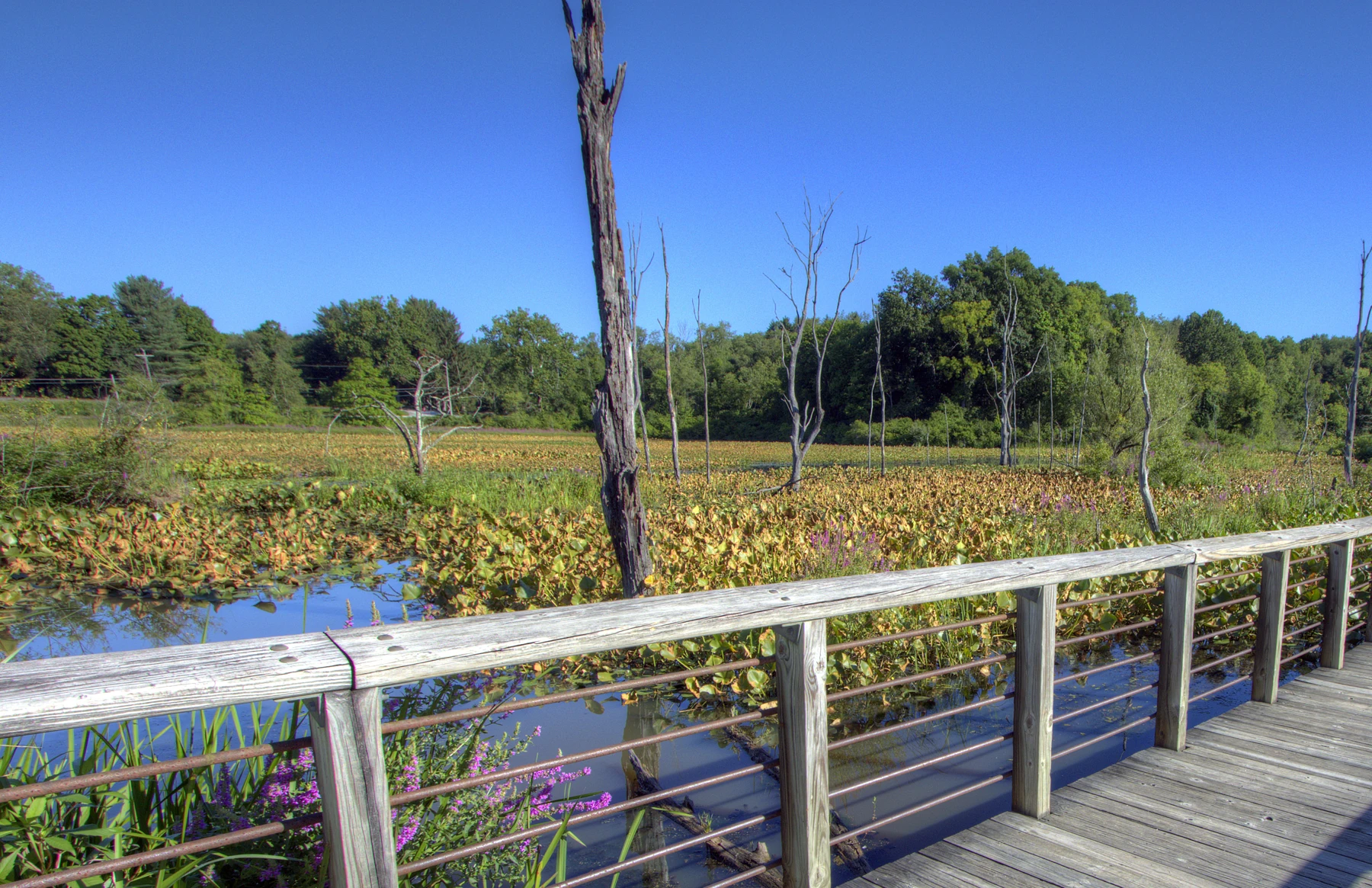
When they reached Beaver Marsh, Andy lowered his notebook.
Water reflected the sky between plants. Birds moved through the wetland. The family stepped onto the boardwalk and paused where they could watch without blocking the trail.
“This looks like a very good address for a duck,” Andy whispered.
“And it has a surprising address history,” Allie said.
They learned that the area had been drained and altered. In the twentieth century, part of it became an auto repair and salvage site. Where they now saw wetland habitat, there had been discarded vehicles and other debris.
Augie looked down at the plants.
“There were cars in the duck place?”
“Not ducks driving cars,” Ana clarified quickly.
Government acquisition and removal of buildings helped make change possible. Beavers returned and built dams that raised water levels. In 1984, Sierra Club volunteers and the National Park Service joined in a major cleanup, hauling away rubbish that included old car parts.
Water, plants, animals, protected space, and human work all contributed to the marsh’s transformation. It was not one tidy action performed by one tidy hero.
Andy pictured a beaver in a tiny hard hat.
“The beavers didn’t handle hazardous waste,” Ana reminded him. “Or carry out the old cars.”
“My beaver has a very limited job description,” he said, adding a stick to its paws.
Their dams changed local water conditions. That could create wet habitat used by many other living things. Beavers built for their own needs; they were not following the children’s restoration checklist.
Nor did their useful work at this site mean every beaver dam suited every location. People sometimes had to manage conflicts between wildlife activity and roads, buildings, or other needs.
Augie gazed across the marsh.
“Did the cars turn into turtles?”
“No,” Allie said. “The rubbish was removed. As conditions changed, living things could use the habitat.”
He thought about that.
“Better than car turtles. Hard to hug.”
The others agreed that neither car turtles nor real turtles needed hugging.
7. Lunch is a complicated web
Ana raised a finger. “Quiet observation minute.”
“Does whispering count as quiet?” Andy whispered.
“We’re about to find out.”
They watched the marsh from the boardwalk. A bird called. Something made small rings on the water. Augie opened his mouth, remembered the minute, and closed it with both hands.
Afterward, Allie asked what they had actually observed.
“A sound,” Andy said. “Ripples. Plants. A bird moving.”
“And what do we know made those ripples?”
He hesitated. “Not enough yet.”
Ana gave him an approving nod. A good detective could leave a blank instead of filling it with a confident mistake.
The park described many animals that used Beaver Marsh, from turtles and wetland birds to mammals. The family did not expect every species to appear during one visit. They might miss a beaver while still learning a great deal about beaver-shaped habitat.
Allie sketched a simple food web. Plants captured energy from sunlight. Some animals ate plants; others ate animals. Decomposers helped break down dead material. There were many connections, not one straight line of creatures waiting politely to be lunch.
“A restaurant with complicated seating,” Andy said.
“And no menu for visitors to add to,” Ana replied. They would not feed wildlife, even if somebody looked interested in their crackers.
Better habitat and improving water conditions could support more kinds of life. But spotting one animal did not prove an entire river was healthy. Scientists used repeated observations and measurements to understand patterns.
Augie pointed at Allie’s drawing. “Where do we go?”
She added four little people beside the web, with arrows showing ways people could affect habitat.
“We’re connected too.”
“I was worried you’d put us on the lunch arrow,” Andy said.
Their grown-up passed around drinking water. Ana checked that the bottle caps were secure before they moved on.
Leaving nothing behind was easier when you kept track of what you had brought.
8. The river has a much bigger neighborhood
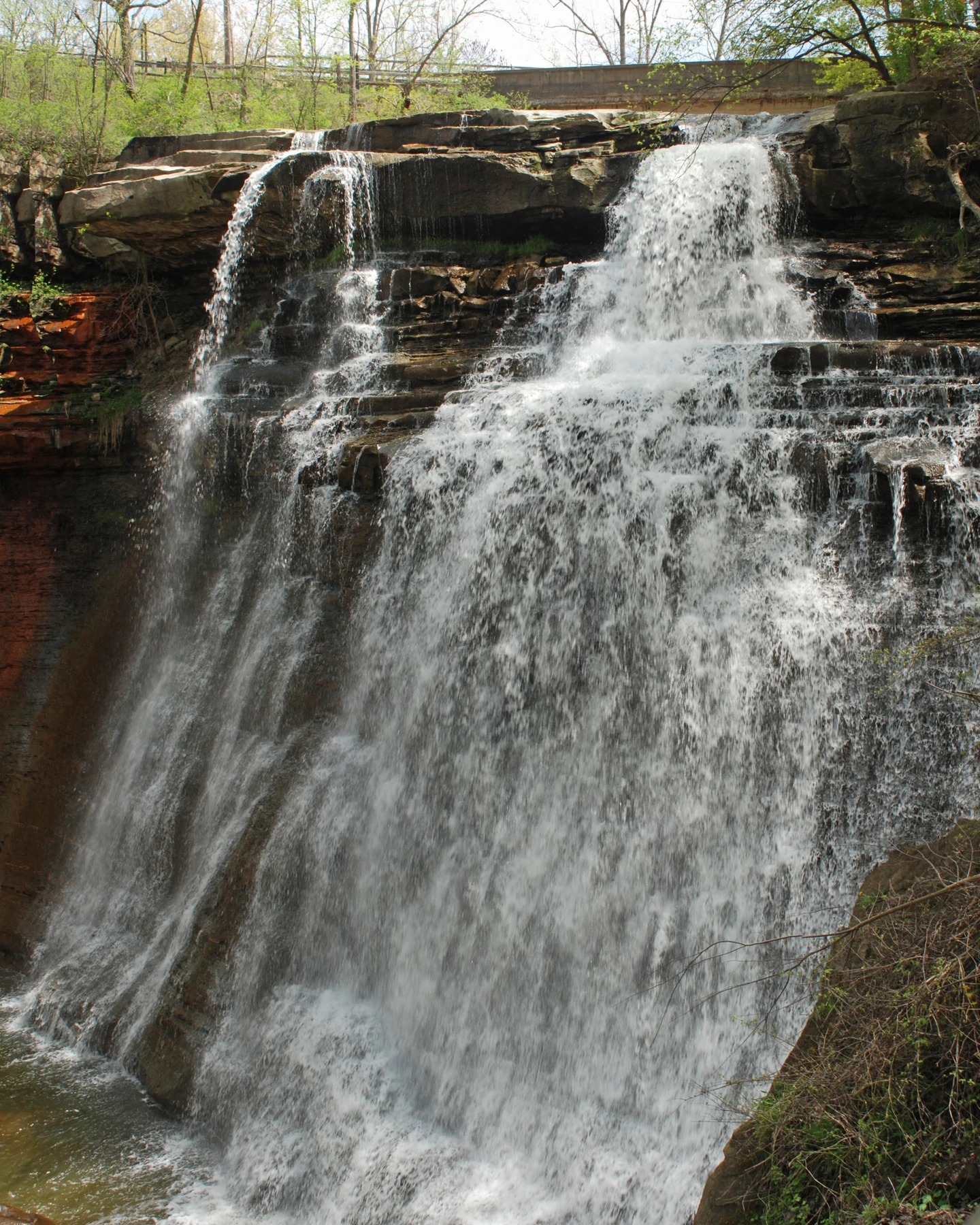
Back at a suitable resting place, the children studied a photograph of Brandywine Falls. They were not adding the waterfall hike to their short marsh outing; the picture helped them think about the park’s network of waterways.
“More falling water,” Augie said. “No boat elevator.”
“Very different route,” Ana agreed.
Brandywine Creek belonged to the larger Cuyahoga watershed. Allie drew a winding river with smaller streams joining it.
A watershed was an area of land that drained toward a shared outlet. Rain falling far from the main channel could still become part of its story. Water might soak into soil, move through the ground, or run over the surface toward streams.
Andy drew a roof, a road, a garden, and a hillside.
“The river’s neighborhood is enormous.”
“And it doesn’t stop at the park boundary,” Allie said.
They traced the Cuyahoga toward Lake Erie. Helping a river meant thinking about connections between places, not merely polishing the view from one bridge.
Ana proposed a detective challenge. What would happen if someone tidied one little stretch while pollution continued arriving from upstream?
“The problem could come back,” Andy said.
What if a neighborhood kept litter out of drains, but no one maintained the wastewater system?
“Another problem,” he answered.
“And if a treatment system improved, but wildlife had nowhere suitable to live?”
Andy looked at their helpers list. “We really do need the whole team.”
Augie raised his hand. “I can hold my rubbish.”
That was a real contribution. It was not the same as a child being responsible for fixing an industrial system. Adults, businesses, governments, and communities had larger responsibilities and tools. Children could learn, ask questions, and take part in suitable activities with grown-ups.
Allie placed a star beside that distinction.
Their mystery had begun with a river wearing a bandage. Now the notebook contained a whole neighborhood learning how to cause less harm.
Andy added a small sign beside his drawing of a street drain.
“Not a rubbish delivery service,” he explained.
9. A second chance needs a next chapter
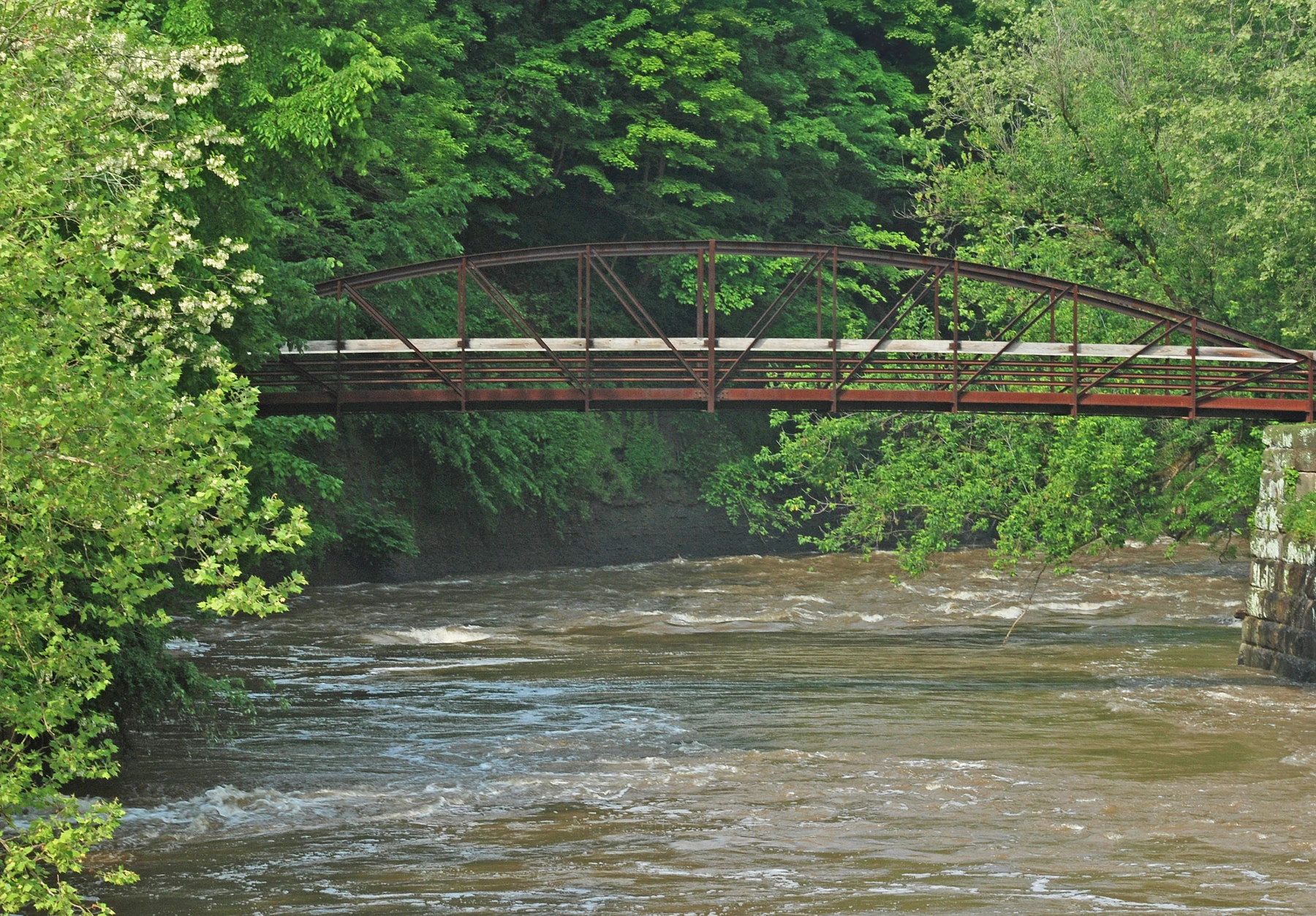
The family still had energy for a short, separate stop near Station Road Bridge. Their grown-ups drove there; the children had not marched the entire distance from the marsh.
From an appropriate public viewing spot, they looked toward the river and stayed away from the bank’s edge. Allie listened to the current. Ana watched light move on the surface. Andy opened their case notebook.
“Time for the answer.”
He read their first question again: How does a damaged river begin to recover?
“Less pollution entering,” Ana said. “Better treatment. Habitat care. People working together.”
“And checking what’s happening,” Allie added. “Then adjusting the work.”
“And beavers, in the marsh part,” Andy said.
Augie contributed, “No cars for ducks.”
Andy had to admit that the team had covered a remarkable range of ideas.
But Ana would not let him write completely fixed across the page. The river had improved greatly, and challenges remained. Water conditions changed. Heavy rain could make some problems worse. Continued work mattered.
“So second chance doesn’t mean finished forever,” Andy said.
“It means improvement is possible,” Allie replied. “And worth caring for.”
They closed their snacks and packed every wrapper. No one tested the water with a finger, a taste, or a heroic leap. Appreciating a recovering river did not require getting into it.
On the drive away, Augie asked what the river would do next.
“Keep flowing,” Ana said.
“And what will we do next?”
Allie turned to the next park in their collection: Indiana Dunes. Another Great Lakes landscape waited there, with sand, plants, and a forest puzzle of its own.
Andy imagined a tree trying to build a sandcastle.
“That sounds structurally ambitious.”
“We’ll investigate,” Allie said.
Before closing the notebook, she added one final sentence to their Cuyahoga case.
A place can carry a difficult history and still have a future worth working for.
Augie studied the purple underline beneath the word kept.
“We keep helping?” he asked.
“Yes,” Ana said.
This time, their smallest detective had found the answer without needing a single extra clue.
Explorer’s notebook
Nine discoveries to take home
- Cuyahoga Valley National Park protects a landscape between Cleveland and Akron where natural systems and human history connect.
- The river is a natural waterway; the Ohio & Erie Canal was a human-built transportation route. Towpaths served animals pulling boats.
- Locks raised or lowered floating boats by changing water levels inside gated chambers.
- Native peoples’ relationships with the valley extend far beyond the canal era and continue today. Removal and dispossession belong in its history too.
- The 1969 river fire happened in Cleveland, north of the park. Burnable pollutants and debris supplied fuel; water itself did not burn.
- Recovery involved many efforts over time. Pollution controls, wastewater work, public action, habitat protection, and monitoring all mattered.
- Beaver Marsh’s recovery involved human cleanup and protection alongside changes made by beavers and other ecological processes.
- A watershed connects land, small streams, and larger waterways. Upstream actions can affect downstream places.
- Recovery can be real while remaining unfinished. A pleasing view or one wildlife sighting cannot measure everything about water quality.
Five family adventures
- Follow a paper raindrop. Draw a hill, homes, roads, streams, a river, and a lake on paper. Move a paper raindrop from different starting points. Which routes join? Add one way adults could reduce pollution on each route. This is a dry drawing activity; put no materials into outdoor drains or water.
- Make a lock comic. Draw four panels: a boat enters at matching water level; gates close; water level changes; the next gates open after levels match. Challenge a grown-up to explain why the boat needs no stairs. Do not operate real gates or approach canal edges.
- Build a helper chain. On separate scraps of paper, draw a wastewater worker, researcher, neighbor, habitat caretaker, and a public decision-maker. Explain how their jobs connect. Add a child’s suitable contribution without making children responsible for solving adult-scale problems.
- Observe, then wonder. From a safe approved trail or window, spend one minute watching. Make two lists: things you directly observed and questions you still have. A ripple is an observation; naming its hidden maker may require more evidence. Sketch rather than collect, feed, or disturb wildlife.
- Plan a gentle park visit. With an adult, use current NPS information to choose a manageable route, such as an open Ira Trailhead–Beaver Marsh outing. Check conditions, accessibility, rest stops, and weather. Bring water, share the trail, and return before anyone is too tired. A separate waterfall or river stop needs its own plan; this chapter is not a complete itinerary.
Four questions for the road
- Why could collecting visible litter help without solving every water-quality problem?
- What is the difference between a canal lock changing a boat’s height and a river flowing down a slope?
- Why is it useful to know where the 1969 fire actually happened and that cleanup efforts had already begun?
- Which observation might make you curious about recovery, and what extra evidence would you want before drawing a conclusion?
Words for your explorer pocket
- Canal: a waterway constructed by people, often for boats or moving water.
- Towpath: a path beside a waterway used by animals or people pulling boats; many historic towpaths now serve recreation.
- Lock: a gated chamber where changes in water level raise or lower boats.
- Pollution: harmful material or conditions introduced into the environment.
- Wastewater: used water that needs suitable treatment before release or reuse.
- Watershed: land that drains toward a shared water outlet.
- Habitat: the surroundings and resources a living thing uses.
- Restoration: work to help a damaged ecosystem recover its functions and living communities.