1. An elevator for a mountain
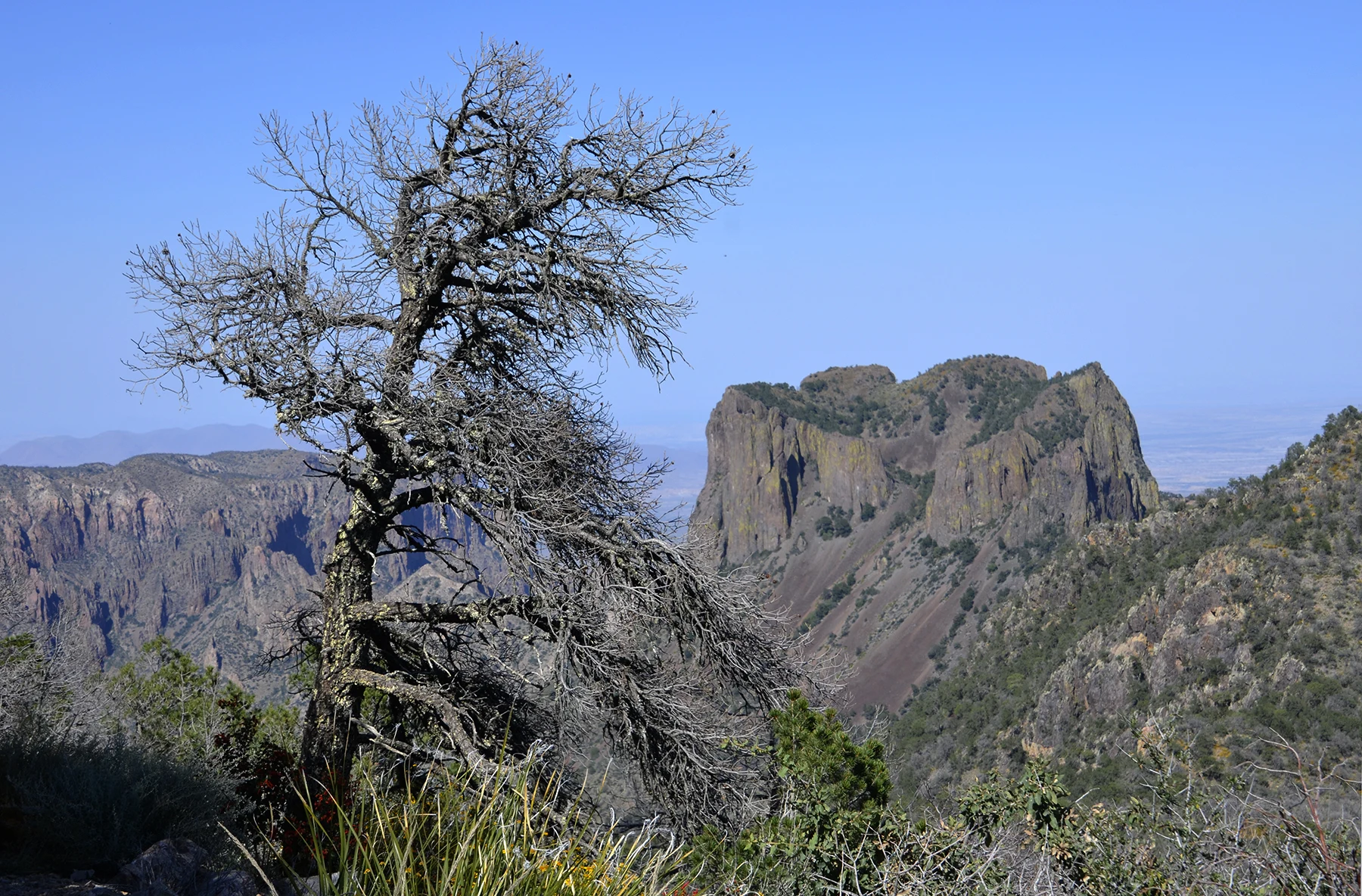
Augie stepped out of the car at Panther Junction carrying a drawing of an elevator. It had three buttons, a snack shelf and a small emergency pillow.
“I’m ready for the desert building,” he announced.
Allie looked from the drawing to the enormous Texas sky. “What desert building?”
“The one with three floors.”
After their adventure at New River Gorge, the family’s next mystery was called The Desert With Three Floors. Augie had taken the title very seriously. Andy had helped with the snack shelf, which explained why it occupied most of the elevator.
Ana studied the distant mountains. “I suspect we’re going to need a different floor plan.”
Big Bend National Park occupied a great bend of the Rio Grande in far western Texas. Across its landscape were river habitats, broad stretches of Chihuahuan Desert and the higher Chisos Mountains. The family had allowed several days for short outings. This was a big place, with real driving distances between discoveries.
Their grown-up checked park information and the weather before they chose each day’s activities. Nobody planned to turn a map full of tempting trails into one enormous race.
“No elevator?” Augie asked.
“Not a real one,” Allie said. “The floors are a way to think about habitats.”
She drew a river, some desert shrubs and a mountain. Then she paused. The picture was convenient, but too tidy. The river belonged to the desert landscape too. Habitat boundaries would not be perfectly straight lines like the ceilings in a house.
“We can use the idea,” Ana said, “without making the park obey the drawing.”
That became their mission: Find what changes between the river, desert and mountains—and what connects them.
Andy added a second question: Does the third floor have better snacks?
Outside the visitor center, a short plant path offered a beginning. They could examine a small area closely before trying to understand everything on the horizon.
Augie folded his elevator drawing carefully.
“Keeping it?” Ana asked.
“Yes. The plants might need it.”
“The plants are already upstairs and downstairs,” Allie said.
“That is very inconvenient for deliveries,” Augie replied.
2. The plants decline a hug
Panther Path curved beside labeled desert plants. The children stayed on the sidewalk, with hands to themselves. A prickly plant did not need to be touched to deliver a convincing message.
“This one says, ‘Absolutely no hugs,’” Andy observed.
“Many of them seem to agree,” Ana said.
The desert was not an empty stretch of sand. Shrubs, cacti and other plants occupied different patches of ground. The more slowly the explorers looked, the less empty it appeared.
Allie made a list of possible water-saving features. Some plants had small leaves. Some stored water in thick tissues. Some had coatings that reduced water loss. Different species used different combinations; there was no single uniform desert survival kit.
“Like our backpacks,” Ana said. “Same trip, different contents.”
“Mine contains an elevator,” said Augie.
That was certainly different.
They found information about ocotillo, with its long, spiny stems. Although people sometimes mistook it for a cactus, it was a different kind of plant. After sufficient rain, it could grow leaves; during dry conditions, it could shed them again.
“It changes its outfit when the water budget changes,” said Allie.
Andy imagined a plant opening a wardrobe. “Today’s forecast: no leaves.”
“That’s a joke,” Ana reminded Augie. “It isn’t choosing clothes.”
A candelilla’s thin stems had a protective waxy coating. Lechuguilla was a small agave with sharp-tipped leaves. Its tough fibers had long been useful to people making cordage.
“All the spiky plants are not cacti,” Allie wrote.
“And not everything useful is safe to pick up,” Ana added.
They could learn about historical plant uses without harvesting anything or trying homemade plant recipes. Even a plant that lacked big obvious spines might have tiny irritating ones. Observation was quite enough.
Augie leaned over his notebook instead. He drew a cactus wearing mittens.
“For the hugs?” Andy asked.
“No. So it can open its lunch.”
The family looked again across the low country. Plants were not standing around waiting for somebody to rescue them from being plants in a desert. Their forms and life cycles made sense in this environment.
Their first floor-plan correction was ready: Desert does not mean lifeless. It means water availability is a major part of the story.
3. The animal timetable
Back inside, Ana found herself looking for animals that had not appeared along their short path.
“Maybe they read the visitor schedule and chose another time,” Andy said.
In a way, timing was important. Many desert animals reduced their exposure to daytime heat by using shade, shelter or cooler hours. Others were active in daylight. “Desert animal” was not a single job with one official timetable.
Allie imagined a noticeboard: Lizard: morning shift. Owl: ask after sunset. Visitors: do not assume everyone is available.
Augie wanted to apply for the snack shift.
The children examined an illustration of a black-tailed jackrabbit. Its long ears could help release heat, as well as detect sounds. Calling them giant cooling ears was helpful; pretending the animal could twist a little air-conditioning dial was less accurate.
“An animal has more than one reason for a body part,” Ana said.
Andy wiggled his ears unsuccessfully. “Mine mostly hold up my glasses. When I have glasses.”
Another picture showed a javelina, also called a collared peccary. Its shape reminded Augie of a small wild pig, but peccaries belonged to a different family from true pigs.
“So resemblance is a clue,” Allie said. “It isn’t always the answer.”
That sounded familiar after all their park mysteries. A northward river was not an uphill river. A big tree was not automatically an old tree. A pig-like animal was not automatically a pig.
They did not need to meet a javelina to learn something useful about one. Wildlife sightings were possibilities, not appointments. Food stayed packed away; the family would never lure an animal closer to improve a photograph.
“What about the ones we can’t see?” Ana asked.
“Still part of the place,” Allie answered.
She drew a sun, a moon, a shady shrub and a burrow. The drawings represented choices of timing and shelter, not a claim that every animal used all four.
Augie drew himself underneath a blanket.
“Which habitat is that?” Andy asked.
“Morning.”
The others understood. Augie was not the only creature whose behavior changed with the time of day.
4. A river with two names
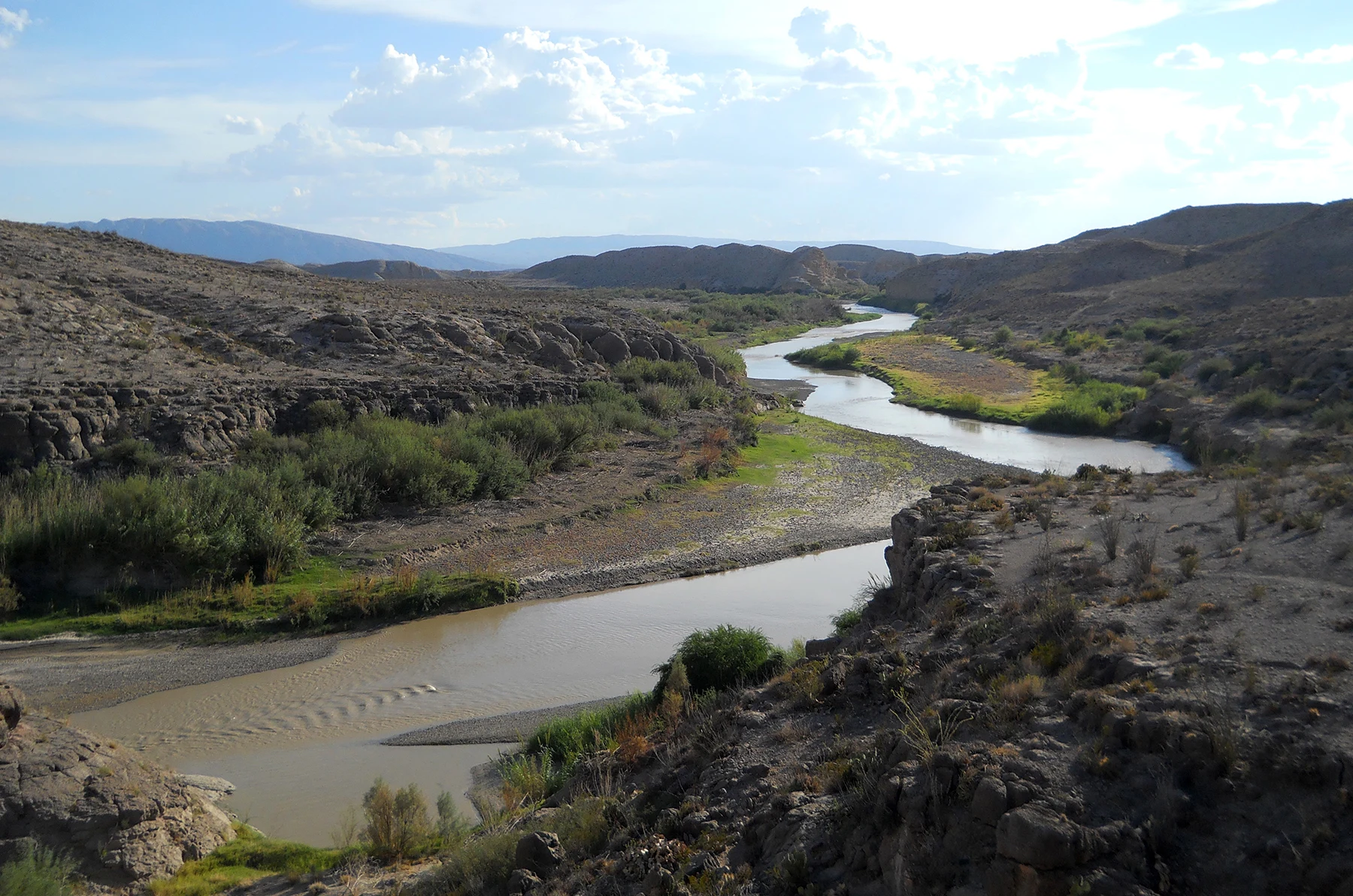
On another morning, the family followed the paved Ross Maxwell Scenic Drive toward the Santa Elena Canyon overlook. They stopped only in designated places, and their grown-up kept the driving unhurried.
The mountains and desert stretched much farther than Andy’s first elevator drawing had suggested. A change of scene here could involve a substantial drive, not three steps through a doorway.
At the overlook, a dramatic opening cut between high rock walls. The Rio Grande had carved through layers of limestone, exposing a canyon that made their voices drop into surprised little whispers.
“The river has been doing homework,” said Ana.
“It brought a very long pencil,” Andy replied.
They remembered New River Gorge: rock formation and river carving were different parts of a landscape’s history. The limestone was not born in the shape of a canyon. Water, sediment, weathering and other processes helped reveal the landscape they saw.
The Rio Grande was also known as the Río Bravo in Mexico. In this region it formed the international boundary. A political line on a map could look rigid; the real river was water moving through a changing channel.
Augie pointed at a bird passing overhead. “It didn’t stop at the line.”
“Habitats cross the border,” Allie said. “The countries have their own rules for people crossing. The river’s living systems are connected.”
Their family stayed at the overlook today. Looking into the canyon was their chosen activity, not the beginning of an unplanned creek crossing or river trip.
Later, they studied a wider river photograph. Green vegetation followed the water through drier surroundings. Riparian was the word for things associated with riverbanks and streambanks.
“Ribbon habitat,” Ana translated for Augie.
“Can it wrap a present?”
“It already supports a lot of living things,” she said.
That did not mean every green plant along the river was native, or that water conditions stayed the same all year. The photograph recorded one view at one time.
Allie drew the river across the bottom of the floor plan, then extended little arrows beyond the page.
“Our building has plumbing that continues into other places,” she announced.
Andy considered the enormous canyon. “I hope nobody expects me to fix the tap.”
5. The island that forgot its ocean
A third morning brought a different outing: the road into the Chisos Basin, after the family checked current access and weather. They watched the landscape change as their car climbed.
The mountains were real, of course. What surprised Augie was that the plants changed too.
“Somebody put trees upstairs.”
The higher country generally had cooler conditions and could receive more moisture than the surrounding lowlands. Pine, oak and juniper occurred in the Chisos. Different temperatures, moisture and growing conditions supported a different mix of life.
They were learning why the Chisos could be described as a sky island: higher, cooler habitat surrounded by warmer, drier country.
“An island without a beach,” Andy said.
“Or an ocean underneath,” said Ana.
“Or a pirate shop,” Augie added, slightly disappointed.
The comparison was about ecological separation. For an organism suited to cool mountain habitat, crossing the hot lowlands might be difficult. The lowlands were not empty water; they were habitats in their own right, with different residents.
Allie’s floor plan needed another correction. “The top floor isn’t better. It’s different.”
“And it isn’t a refrigerator,” Ana said.
The children still needed water and sun protection. A mountain outing could be hot too; elevation was one influence, not a guarantee printed on the weather.
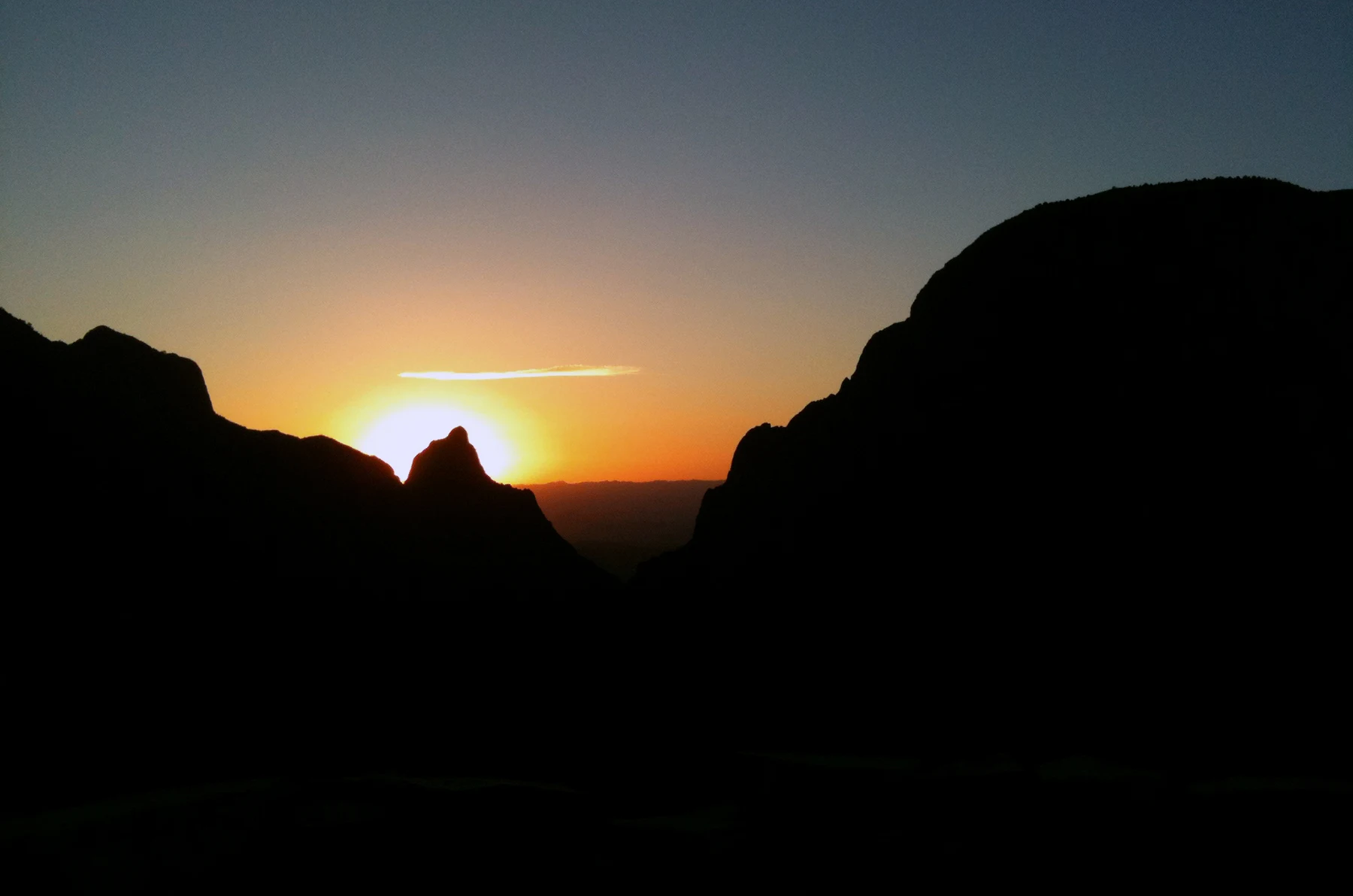
They chose the short, paved Window View Trail, rather than the much longer Window Trail. The names sounded almost identical, but the outings were very different. Their walk offered views of the surrounding peaks and the opening called the Window without taking them down to its pour-off.
“View,” Allie said, underlining the word on their plan.
“An important four letters,” Andy agreed.
On a bench, they compared the mountain view with a photograph of sunset through the Window. The photograph was taken at another time, and its golden light did not mean sunset had arrived during their morning walk.
Augie studied the opening between the peaks.
“No glass?”
“No glass,” said Ana.
“No curtains?”
“Clouds sometimes,” Andy suggested.
Allie wrote, Changes in elevation can change living conditions over a relatively short horizontal distance.
Augie requested a simpler version.
“Going up can change the neighborhood,” Ana said.
That fit beautifully beneath his elevator drawing.
6. Water that refuses to stay in the pipes
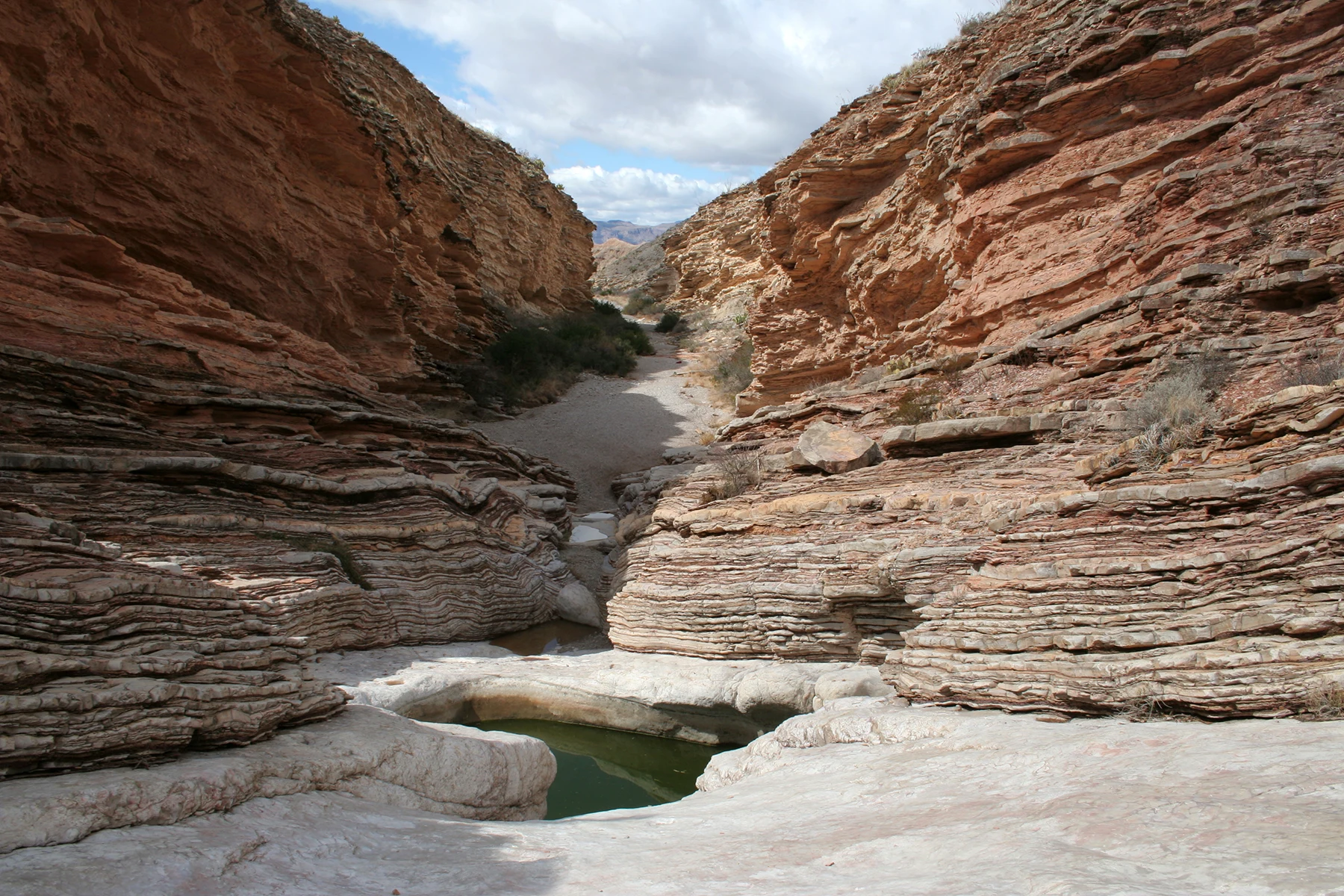
During a break back at their lodging, the children spread photographs and notes across a table. One photograph showed Ernst Tinaja, a water-holding rock basin in a remote part of Big Bend.
They were not going there on this trip. A picture could open a useful investigation without requiring their family to reach every interesting place.
Andy looked at the smooth, curving rock. “A desert bathtub.”
“An observation-only bathtub,” Ana replied.
A tinaja was a natural rock basin that could hold water. Its appearance did not make it a safe pool or a dependable visitor water supply. Springs, seeps, seasonal pools and the river all belonged to the park’s water story, but they were different kinds of water sources.
Allie put a cup on the table. “This holds water.”
She drew an arrow toward a sketch of a spring. “This is where groundwater reaches the surface.”
“And this,” said Augie, raising his drinking bottle, “is mine.”
That distinction was practical. Their family carried its own drinking water rather than planning to refill from an uncertain natural source.
Rain could be patchy. One part of the desert might receive a storm while another stayed dry. A dry channel could fill rapidly during a flash flood, including from rain upstream.
“So dry when we arrive doesn’t mean dry forever,” Andy said.
“Or safe to use as our waiting room,” Ana added.
Their grown-up helped them compare a rocky surface, a crack in the ground and vegetation. Some water ran off; some soaked in; some evaporated. The amounts depended on conditions. A single storm did not distribute identical cups to every plant in the park.
“Very bad delivery service,” Augie said.
“Very complicated landscape,” Allie replied.
The children drew arrows connecting the mountain slopes, channels and lower country. Then Ana added a cloud. Water connected the floors in ways their elevator could not show.
Springs and pools mattered to wildlife even when they were small. Trampling their edges or treating them as disposable play areas could damage much more than a patch of mud.
Andy closed the imaginary bathtub’s tap in his drawing.
“Out of order?” Augie asked.
“No. Already being used by the desert.”
7. No empty rooms in this house
At first, Andy’s park drawing had included mountains, plants, animals and four tiny explorers. Allie noticed who was missing.
“Everybody who lived here before us.”
The family read about Big Bend’s human history. Indigenous people had lived in and traveled through this region for thousands of years. Archeological sites and rock imagery preserved evidence of long relationships with the land.
“Calling it empty just because we didn’t see a house would be wrong,” Ana said.
“And calling us the first explorers,” Andy added.
Their notebook would not turn many different peoples and many centuries into one imaginary person called “the first resident.” There was more to learn than a short chapter could explain.
In later periods, families farmed along the Rio Grande. Ranching, mining, trade and other work also shaped the region. Communities and connections existed on both sides of the river. Modern park boundaries did not contain the whole history.
They read about Castolon, a historic district associated with farming, ranching and community life. It was a place to investigate further through park resources, rather than another stop they were pretending to squeeze between their outings.
“People needed water too,” Augie said.
“Yes,” said Allie. “And knowledge, skills, tools and one another.”
The river had offered more than a pretty view. Water and fertile ground helped shape where people could grow crops. Dry conditions and distance also brought challenges. An impressive landscape could be a home and workplace, with ordinary worries as well as remarkable views.
Ana imagined the difference between their short vacation question—where shall we walk this morning?—and a farming family’s question about whether a crop would succeed.
“We’re guests,” she said. “Our version of the place isn’t everybody’s version.”
Augie drew a welcome mat on the floor plan.
“Whose house is that?” Andy asked.
“The park’s. We have to wipe our imaginary feet.”
Respect did not require an imaginary building. They could leave artifacts where they were, avoid touching rock imagery and follow designated routes. A photograph and a careful question were better souvenirs than something removed from a historic site.
Allie added a new line beneath their mission: Learn who belongs in the story before deciding you understand the place.
Andy nodded. “Our three-floor house needs a history shelf.”
“And a bigger notebook,” Ana said.
8. The roof has too many lights
One clear evening, their grown-up chose a suitable developed place for a short look at the night sky. The family stayed together. The day’s walking was finished; this adventure involved standing still and remembering that evening could feel cooler than afternoon.
“Finally,” Andy said. “A hike with no hiking.”
Above them, stars became easier to see as the sky darkened and their eyes adjusted. Big Bend was known for its dark skies, far from the glow of large cities.
“Did somebody add extra stars?” Augie whispered.
“The stars aren’t new,” Ana said. “Bright lights nearer us can make faint ones harder to see.”
Light pollution was not a blanket wrapped around the stars. Artificial light scattered in the atmosphere could brighten the sky and hide fainter objects from view.
Allie remembered holding her thumb over the distant river at New River Gorge. A nearby thing could change what they noticed of something much bigger. The thumb comparison was not the same physical process, but it reminded her that looking required attention to conditions.
They did not expect a bright, colorful astronomy photograph to match exactly what their eyes saw. Cameras could collect light differently. Cloud, moonlight, season and timing also influenced a night-sky view.
“Another picture with its own story,” Ana said.
Augie found one bright point and immediately appointed it the elevator’s emergency button.
“Please don’t press it,” Andy said. “We haven’t inspected the cables.”
Their grown-up reminded them that light still had a job. They used it where necessary for safe footing and kept it directed down rather than shining into faces or across the sky. Protecting darkness did not mean stumbling around without care.
The night also belonged to animals. The desert had not closed when the visitor center doors shut. Its living timetable continued.
Allie drew a moon above the three floors.
“Is that a fourth floor?” Andy asked.
“It’s another way conditions change,” she answered. “Time of day matters as well as height and water.”
Augie settled against their grown-up. “Then my floor is bedtime.”
For once, the entire expedition agreed with him.
9. A house with no ceilings
On their last morning, the four explorers gathered around the floor plan. It no longer looked much like a building. Arrows connected the river, desert and mountains. A cloud leaned over one corner. The history shelf needed support, and the elevator had acquired two extra snack baskets.
“Did we solve the mystery?” Andy asked.
“We improved the question,” Allie said.
The three floors were a helpful comparison for three broad environments. They were not sealed rooms. River habitat ran through desert country. Mountain slopes held transitions, not a sharp line where every cactus stopped and every pine began. The same place could also change with rain, season and time of day.
Ana drew a dotted line where Andy had put a thick ceiling.
“Connections,” she said.
“Drafty house,” he replied.
They tested one another. What helped make the river corridor different? Water and the conditions along its banks. What helped create the sky island? Higher terrain with a cooler, often moister setting than the surrounding lowlands. Why was the desert not empty? Because many forms of life were suited to its conditions, whether or not visitors happened to notice them.
“And why didn’t we ride the elevator?” Augie asked.
“Because you invented it,” Ana said.
He accepted this reluctantly.
The children’s favorite discoveries were different. Allie liked the way one landscape held several connected systems. Ana liked learning that similar-looking plants could solve water problems differently. Andy liked the river canyon and the idea of a sky island with no beach.
Augie liked knowing that the javelina was not a pig. He planned to announce this at unexpected moments for the foreseeable future.
Next in their book would come Kings Canyon National Park: another canyon mystery, this time involving the work of rivers and glaciers.
“We’ve met both of those,” Andy said.
“And we’ll have to check what they did there,” Allie answered. “Knowing one park doesn’t mean every other park has the same story.”
Ana closed the notebook. The desert had gained plants, animals, people, water pathways and a night shift since their first drawing—not because those things had just arrived, but because the children had learned to see more.
Augie gave his elevator one final button.
It said LOOK AGAIN.
That was a useful button in every park.
Explorer’s notebook
Nine discoveries to keep
- Big Bend lies at a great bend of the Rio Grande in western Texas. Its broad environments include river, Chihuahuan Desert and Chisos Mountain habitats.
- The “three floors” are a comparison, not three sealed or perfectly level layers. Habitats overlap and connect.
- Water availability, elevation and temperature influence which living things occur in different places.
- Desert plants use different adaptations. Ocotillo is not a cactus; it can grow leaves after sufficient rain and shed them during dry conditions.
- Animals use different schedules and shelters. A collared peccary, or javelina, resembles a pig but belongs to a different family.
- The Rio Grande is also called the Río Bravo in Mexico. Here it is an international boundary and a connected habitat corridor.
- The Chisos form a sky island: higher, cooler habitat surrounded by warmer, drier lowlands.
- Springs, seeps, seasonal pools and rivers are different water features. A tinaja is a natural rock basin that can hold water.
- Human history long predates the national park. Dark skies, cultural sites and living habitats all deserve care.
Five family adventures
- Build a better floor plan: Draw river, desert and mountain habitats. Add arrows for water, moving animals and connections beyond your page. Use dotted boundaries. Explain one way the building comparison helps and one way it could mislead.
- Plant feature detectives: With a grown-up, compare photographs of ocotillo, candelilla and a cactus using a reliable plant guide. Find one visible feature and one researched water-saving adaptation for each. Do not touch, taste or collect wild plants.
- Habitat packing challenge: Invent three imaginary creatures, each suited to one of the park’s environments. Give each two useful features and explain how they help. Label your inventions clearly so nobody mistakes them for actual Big Bend species.
- Water takes several paths: Put a little dry sponge beside a smooth plate on a tray. Add small spoonfuls of water and observe what soaks in, runs off or remains pooled. Discuss why real soils and rocks are more varied than this simple comparison. Clean up together.
- A sky with fewer distractions: From a safe familiar spot with a grown-up, compare what you can notice before and after your eyes adjust to darkness. Keep necessary pathway lighting. Never stare at the Sun, shine lights at people or animals, or turn off shared safety lights.
Four questions for the road
- Why could a riverbank and a nearby dry slope support different plants even at similar elevations?
- What does “sky island” explain, and why isn’t it a literal island in an ocean?
- How could two observers visit the same spot at different times and see different animals without either observer being wrong?
- Why does understanding a national park include learning about the people who lived and worked there?
Eight words for your explorer kit
- Habitat: A place providing the conditions and resources an organism needs.
- Adaptation: An inherited feature that helps organisms survive or reproduce in particular conditions.
- Elevation: Height relative to a reference level, often sea level.
- Riparian: Associated with the banks of a river or stream.
- Sky island: Higher habitat ecologically separated from similar habitat by surrounding lower country.
- Runoff: Water that moves across the land’s surface.
- Tinaja: A natural rock basin that can collect and hold water.
- Light pollution: Artificial light that brightens or disrupts naturally dark surroundings, including the night sky.