1. The tooth with no birthday
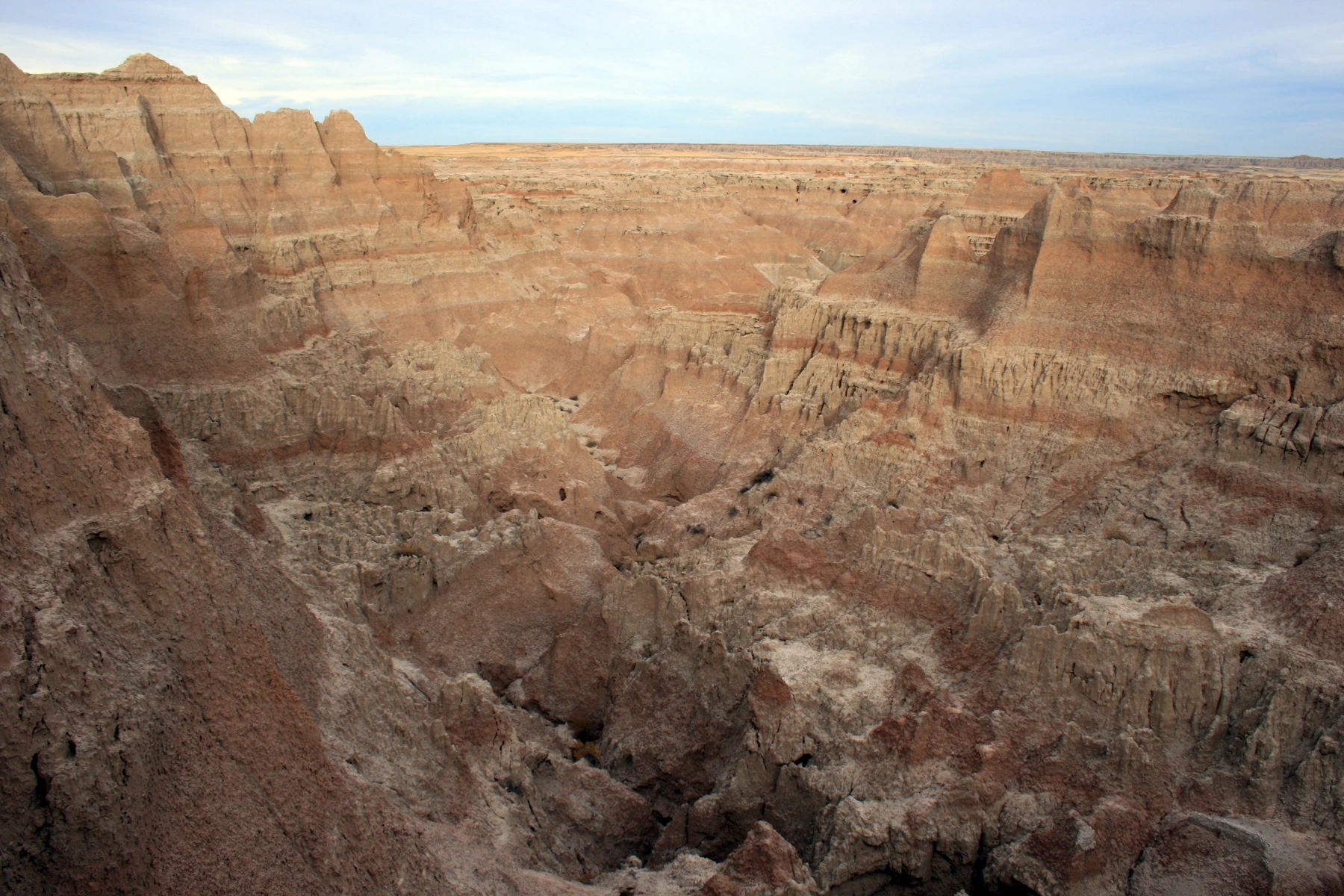
Andy arrived at Badlands National Park with a question ready.
“How old is a fossil before it needs a really big birthday cake?”
“Older than our snack supply,” said Ana.
Beyond the overlook, pale ridges rose in sharp, uneven rows. Bands crossed the buttes, and green prairie filled spaces between them. After investigating clouds around Denali, the four explorers had reached South Dakota and a landscape that seemed to have mislaid its trees.
Augie looked at the name on their park booklet. “Did the land do something bad?”
“We'll investigate that too,” Allie promised.
Their parents had checked the forecast and chosen a short outing suited to the family. The children had water, hats, and sturdy shoes. Nobody was going to scramble up a crumbly cliff to inspect its stripes.
Inside the visitor center, a fossil display stopped Andy in his tracks. An ancient jaw had teeth, but no birthday label explaining the day its owner was born.
“How do scientists know when it lived?” he asked. “It can't tell them.”
Ana opened their notebook. “Maybe the rocks keep the calendar.”
Allie wrote their main question: How can a fossil carry a time stamp without a date printed on it?
Augie drew a tooth wearing a party hat.
“That,” he explained, “is a happy old tooth.”
The children would need to learn what counted as evidence. Looking old was not enough. Their father's hiking hat looked ancient, and it had come from a shop last spring.
“Please leave my hat out of the scientific investigation,” he said.
Ana made no promises.
2. First stack it, then carve it
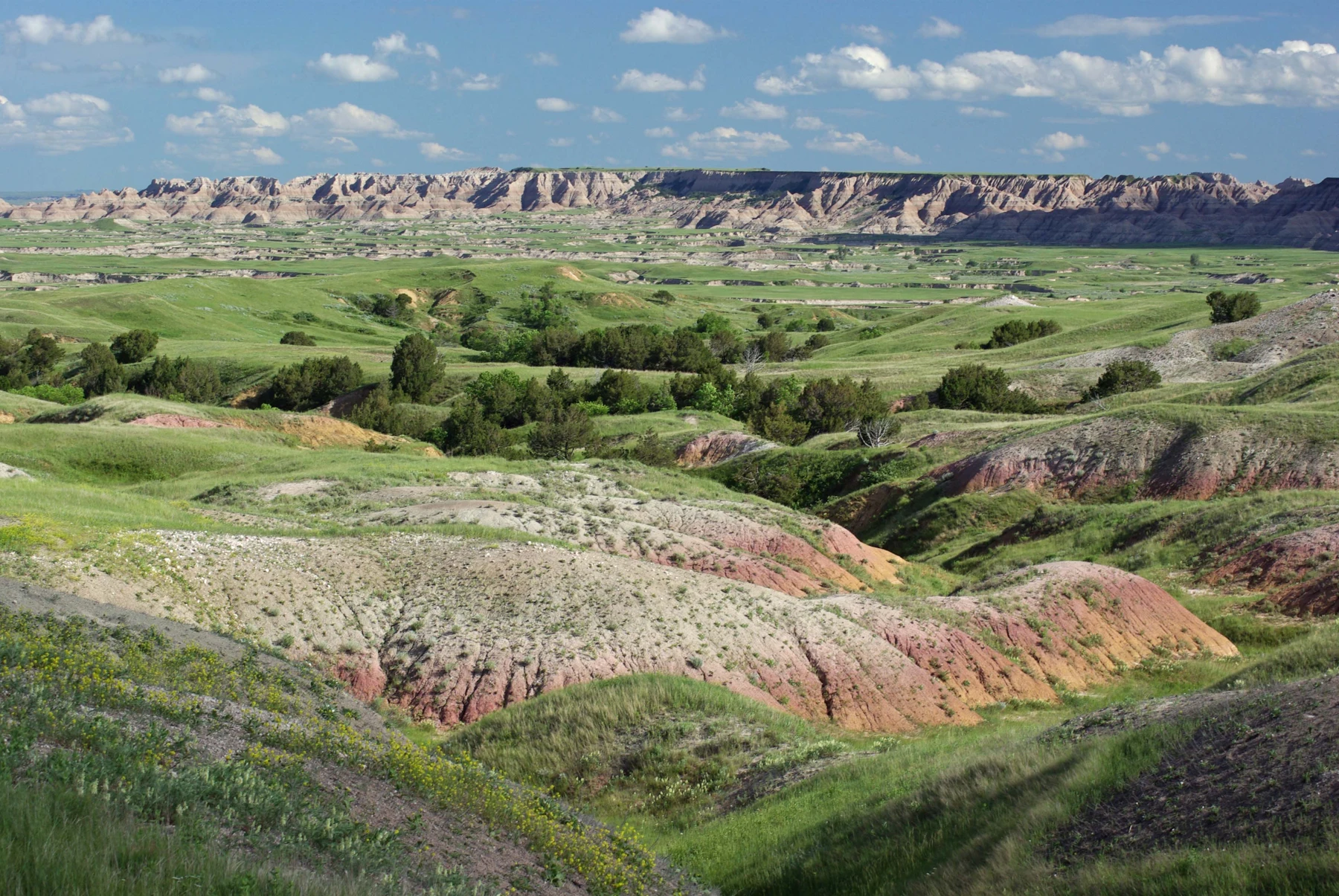
From the overlook, Allie traced a distant band with her finger in the air. She did not touch the formation.
“Remember the Grand Canyon?”
“Layers,” said Andy. “And missing rock.”
“The same two questions help here. What built the layers? What exposed them?”
Sediment had accumulated in different settings over enormous stretches of time. Some material settled in an ancient sea; other deposits came from rivers, floodplains, wind, and volcanic ash. Burial and changes in the sediment helped turn deposits into rock.
Much later, erosion cut into that layered record. Water carried material away, shaping gullies, ridges, and the steep-sided hills called buttes. The visible shapes were younger than the sediments from which they had been carved.
Ana drew a stack of paper, then an imaginary channel through it. “Making the pages isn't the same event as cutting into the book.”
“An extremely dramatic book review,” Andy said.
Yellow and red bands added another puzzle. Some colorful layers recorded ancient soils, preserved within the rock sequence. The yellow mounds were not piles of mustard, despite Augie's hopeful expression.
“Can we tell a layer's age by its color?” Ana asked.
“Not just by color,” Allie said. “Different rocks can look similar, and similar rocks can look different.”
They would need maps, measurements, fossils, and comparisons—not a paint chart.
Andy imagined visiting a hardware store and asking for one can of Thirty Million Years Ago.
“It would be a very slow-drying paint,” Ana said.
The family stayed at the viewing area. The best place to understand a cliff was not necessarily halfway up it.
3. A sea under our shoes
A picture of a marine fossil seemed to have wandered into the wrong park.
“Where is its beach?” Augie asked.
“Long gone,” said Allie. “This region wasn't always the landscape we see now.”
The park's oldest exposed rocks included deposits left by the Western Interior Seaway, an ancient shallow sea that once covered much of the Great Plains. Fossils in those rocks included shelled animals and marine reptiles called mosasaurs.
Andy looked down at his shoes. “So this used to be underwater?”
“The evidence tells us that parts of this landscape record a sea,” Ana said. “We aren't standing on today's beach.”
Their booklet showed later environments too. Rivers and floodplains followed the ancient sea. The much later mammal-rich layers belonged to different chapters of Earth's history.
“Not one enormous animal party,” Allie said. “Sea creatures and later land mammals didn't all live here together.”
Augie imagined a prairie dog floating past an oreodont in a tiny boat.
“Excellent drawing,” said Ana. “Unreliable history.”
Andy had another question. “Is a mosasaur a swimming dinosaur?”
“A marine reptile,” Allie replied. “It lived during the time of dinosaurs, but it wasn't a dinosaur.”
That distinction pleased Ana. “Being alive at the same time doesn't make animals the same group. You're alive at the same time as a butterfly.”
Andy flapped his arms. “Finally, someone notices.”
They added a new rule to the notebook: A fossil tells part of a story. Its rock layer helps tell which story.
The children could now picture a changing place instead of squeezing every ancient creature into one crowded scene.
4. The dentist's very unusual patients
At the displays, Ana studied an oreodont jaw.
“Those teeth look useful for chewing.”
Oreodonts were extinct mammals. Their low, broad teeth helped scientists interpret them as plant eaters. Detailed tooth shapes also helped paleontologists identify different kinds of animals.
“So a tooth is like a tiny clue cupboard,” Andy said.
Allie nodded. “Scientists compare ridges, shapes, and measurements. They don't simply guess from whether it looks scary.”
A photograph of a nimravid skull offered a striking comparison. Long canine teeth curved down from its upper jaw.
“Someone forgot to put the teeth away,” Augie said.
Nimravids were extinct meat-eating mammals that looked rather catlike. They belonged to a different family from living cats. Calling one a saber-toothed tiger would hide that difference.
“Not a tiger with extra accessories,” Ana said.
The children compared pictures without touching any specimen. Teeth could help reveal an animal's identity and diet, but a skull could not answer every question about a whole ecosystem by itself.
“Can it tell you its favorite color?” Andy asked.
“No.”
“Whether it was grumpy before breakfast?”
“No.”
“Whether it ate my biscuit?”
“Extinct for millions of years,” Allie said. “An unlikely suspect.”
The visitor-center information also described fossil preparation. Specialists carefully removed surrounding rock with suitable tools and equipment. A fossil discovery did not end with finding it; patient laboratory work helped make the evidence available for study.
Augie held up his toothbrush in an imaginary professional pose.
“Not the tool kit for today,” their mother said.
He put the imaginary toothbrush away. The real one, everyone agreed, was still needed for a rather younger set of teeth.
5. A time stamp isn't a birthday sticker
The family settled at a table, where the children built a model using sheets of paper from their own notebook.
Ana placed a blue sheet down first, a tan sheet above it, and a green sheet on top.
“If these layers were deposited in this order and haven't been overturned, which is oldest?”
“The bottom,” Andy said. “It got here first.”
That was a way to establish relative age: older than this, younger than that. It did not supply a number of years.
“Like knowing Allie arrived before me,” Ana said. “That doesn't tell a stranger either of our birthdays.”
Augie put his drawn tooth between two sheets.
“Buried,” he announced.
Allie drew several different fossil symbols on their model. Scientists could also compare groups of fossils in rock layers, because different organisms appeared and disappeared through Earth's history. Particular fossils and combinations of fossils could help match the ages of layers in different places.
“Not every fossil is an equally precise clock,” she added. “Some kinds existed for a very long time.”
Ana laid another strip across their paper stack to represent volcanic ash. Some ash contained minerals that scientists could date using radioactive decay—changes in certain atoms that occur at known rates.
They measured those changes with laboratory methods, not by reading a number written on a crystal. Suitable dated ash layers could help constrain the ages of nearby fossil-bearing layers. Researchers also checked whether material had been moved and deposited again.
Andy frowned thoughtfully. “So there are several clues, and they have to fit.”
“Exactly,” said Allie. “Layers, fossils, mineral measurements, and their positions.”
“The tooth doesn't have Tuesday printed on it,” Ana concluded. “It has a place in a much larger timeline.”
Augie inspected his picture. “Mine has a hat.”
“Yours has excellent party information,” Andy said.
6. The clue that should stay put
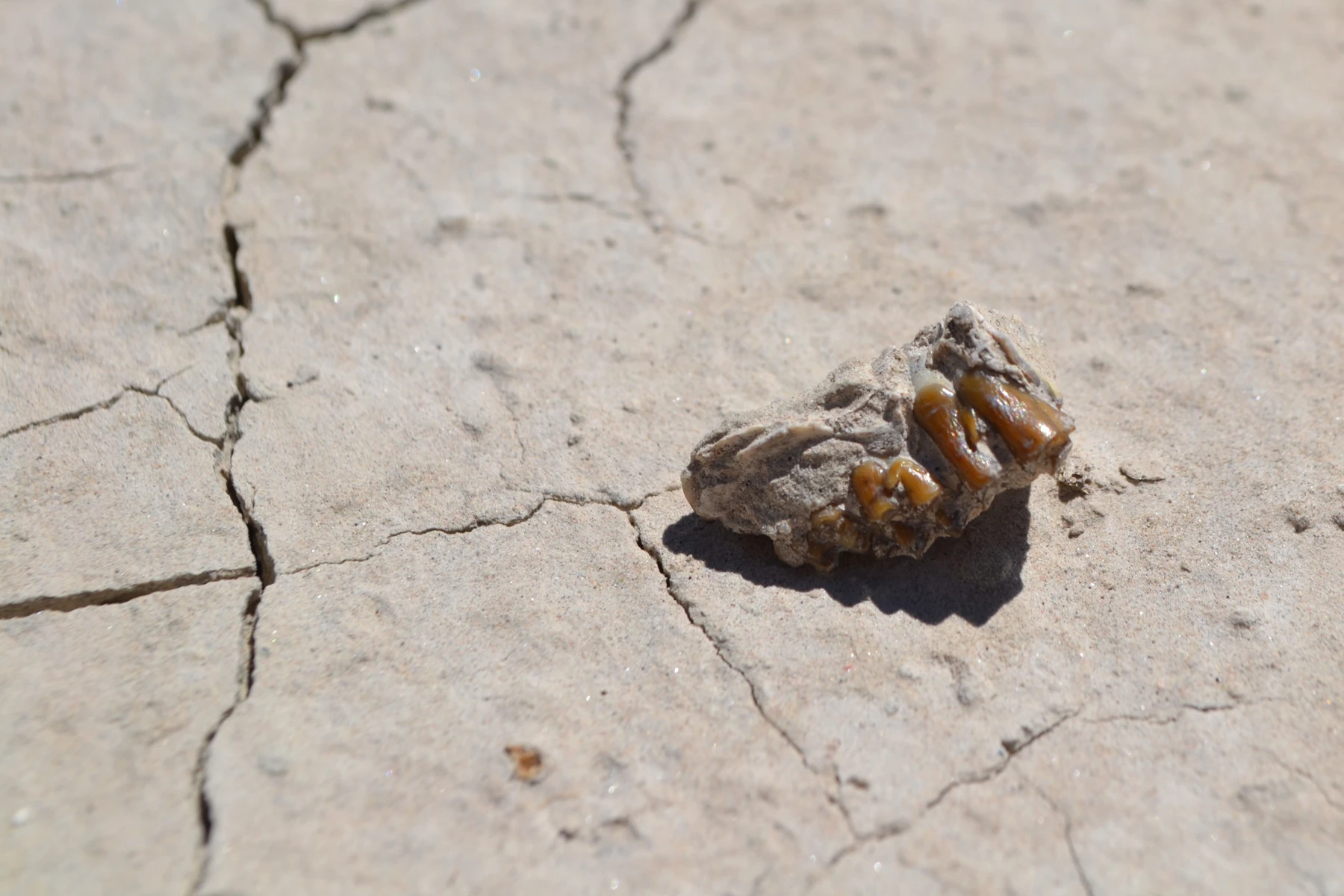
Later, the children practiced a fossil-discovery question from their booklet: what should you do if you notice something that might be a fossil?
“Look carefully,” Andy began. “Without poking.”
“Leave it exactly where it is,” said Ana.
Their parents helped them rehearse the rest: photograph it if they could do so safely, record its location, and report it to a park ranger. No digging, lifting, scratching, or making stone markers around it.
“But if we don't pick it up, how do we prove we found it?” Andy asked.
“The photograph and location help,” Allie said. “And leaving it there preserves more evidence.”
They used Augie's paper tooth for a demonstration. On its own, the drawing showed a tooth. Between the model's layers, it also had a position—a relationship with the surrounding record.
Andy lifted it, then stopped. “Oh. I've separated it from the rest of its clues.”
Ana put a sticky note beside the model: Where matters.
The park described a real young visitor, seven-year-old Kylie Ferguson, who had reported a discovery rather than digging it out. Specialists later studied the rare nimravid fossil.
“Seven!” said Andy. “That's my age.”
“Careful observation isn't reserved for grown-ups,” Allie said.
“And being helpful isn't the same as carrying something home,” Ana added.
Augie put his paper tooth back between the sheets, where it had been before.
“Fossil returned. Party still scheduled.”
Their practice discovery stayed fictional. If they saw an uncertain shape outdoors, they would let specialists identify it. They did not need to declare every pale pebble a famous animal.
“Some pebbles,” Andy admitted, “are simply doing pebble things.”
7. The land was never an empty page
The children's second mystery returned when Augie pointed to the park's name again.
“Still doesn't look naughty.”
The park explained that the Lakota name mako sica was commonly translated as bad lands. It connected with a landscape difficult to travel through: rugged terrain, scarce dependable water, and clay that became slippery and sticky when wet.
“Bad to cross doesn't mean bad to care about,” Ana said.
Learning a name was also an invitation to learn whose land and history they were reading about. The Badlands were not an empty place waiting for a visitor to notice the first fossil.
Park information described long-standing Lakota knowledge of fossil bones and shells. It also identified many associated Tribal nations, whose relationships with the landscape continued into the present.
Allie read that the park's South Unit lay entirely on Tribal Trust land for the Oglala Sioux Tribe, the Oglala Lakota nation. The park and Tribal government had an ongoing relationship; this was not merely a story about people long ago.
Andy looked at their notebook's blank page. “Our page was empty. The place wasn't.”
Ana wrote that down exactly.
The family could read park materials and follow links to Tribal sources to keep learning. The children did not invent a traditional story or pretend one name explained everyone's experiences.
Augie added a tiny drawing of an open book.
“More pages?” asked Allie.
“More listening,” he said.
Then he drew a biscuit beside it.
“Listening can include a snack,” he explained.
Their father opened the bag. This time, the biscuit had an excellent location record.
8. The town without letterboxes
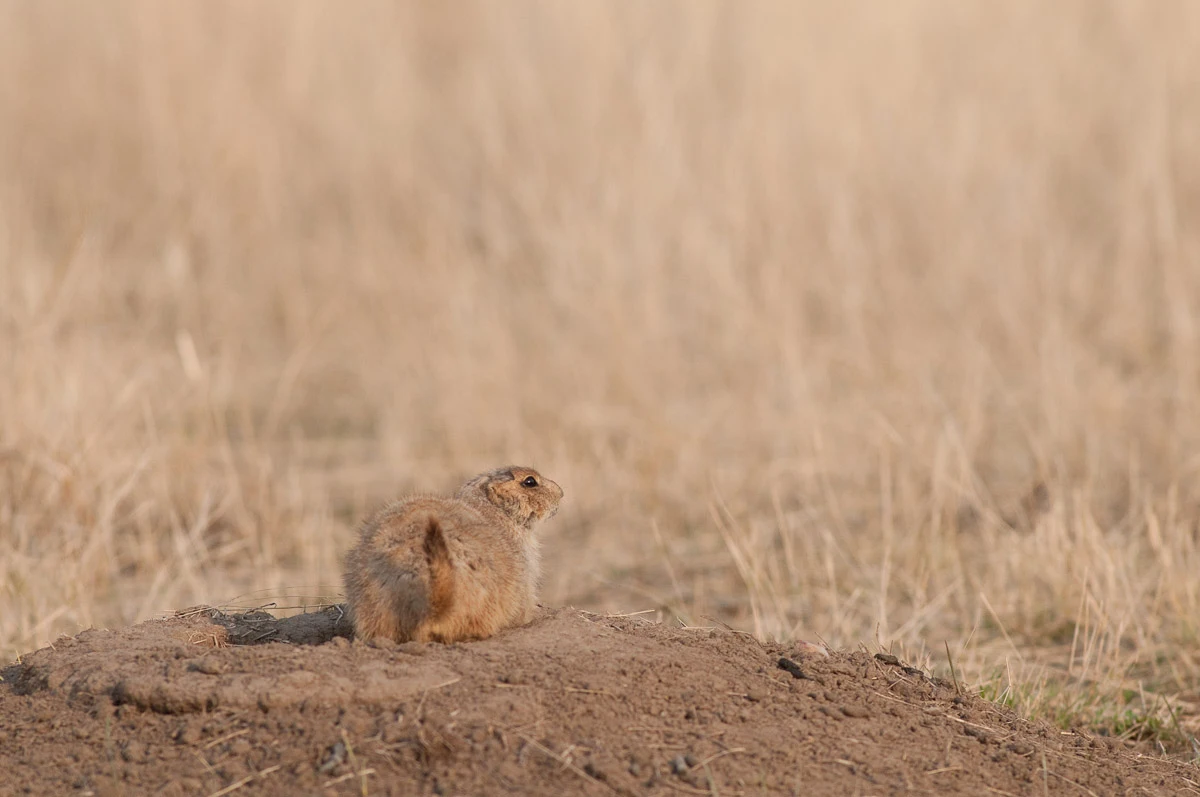
Outside, grass waved beyond the badlands formations. A prairie-dog photograph showed a small animal standing on a mound, looking as alert as a shopkeeper waiting for customers.
“That's not a dog,” Andy said.
“Correct,” Allie replied. “A rodent in the squirrel family. The kind found here is the black-tailed prairie dog.”
Augie appeared disappointed. “No tiny lead?”
“Definitely no lead,” Ana said. “Wild animal.”
Prairie dogs built underground burrows in colonies often called towns. They dug, maintained their homes, ate vegetation, and watched for danger. Their activities affected other species too.
Abandoned burrows could provide homes for animals such as burrowing owls. Prairie dogs also formed part of the food web, feeding predators, while their clipping and digging changed the local vegetation and ground.
“Builders and gardeners,” Andy said.
“And somebody else's dinner,” Ana added.
“Difficult job description.”
Allie explained that a species with an especially important influence on its ecosystem could be called a keystone species. The prairie dog's importance was not measured by how large it looked in a photograph.
Bison, bighorn sheep, and many smaller creatures also belonged to the living park. This prairie was not scenery placed around the fossils. It was an ecosystem happening now.
The family watched the landscape from a safe viewing place. They kept food to themselves, gave wildlife space, and stayed away from burrow openings. No fingers went into holes to check who was home.
“Also,” Andy said, “I would be annoyed if someone put a giant finger through our front door.”
Augie considered this.
“I'd shut it.”
“A clear argument for respectful distance,” said Ana.
9. The evidence goes home in a notebook
Before a final short stop, their parents checked the conditions again. The family had seen what rain could carve over time; they did not need to wait on an exposed ridge to see a storm do it that afternoon.
They planned around heat, changing weather, and the children's energy. A visitor center, a suitable boardwalk, an overlook, or a ranger activity could each offer discoveries. Current accessibility and operating information helped families choose what worked for them.
Augie held their notebook while Allie reviewed the mystery.
“A fossil can tell us about ancient life,” she began.
“And its surroundings tell us more,” said Andy. “Where it was found, which layer, and what else was there.”
“Layer order gives relative ages,” Ana continued. “Other evidence, including suitable dated minerals, can help put years on parts of the timeline.”
“And a party hat gives no years,” Augie said solemnly.
They had solved the title's puzzle. A fossil time stamp was a way of talking about evidence—not a literal date stamped into a bone, and not one clue that answered everything.
The land held several histories at once: an ancient sea, later animals and changing habitats, erosion exposing the record, and living human and prairie communities today.
“What did we collect?” their father asked.
“Questions,” said Allie.
“Drawings,” said Ana.
“An improved opinion of pebbles,” said Andy.
Augie lifted the paper tooth. “A very old pretend guest.”
Nothing from the park's rocks or wildlife had gone into their pockets. Their next chapter would take them to Saguaro National Park and a cactus mystery. The habit of asking what the evidence actually showed would travel with them.
Ana closed the notebook, leaving its model layers in order.
Andy checked the snack bag once more.
“Relative age question: which biscuit is oldest?”
“The one you haven't eaten,” said Allie.
It was, unfortunately, a very short investigation.
Explorer’s notebook
Nine discoveries to take home
- Badlands National Park is in South Dakota. Its layered formations and living mixed-grass prairie tell different, connected stories.
- Deposition built up sediments; much later erosion exposed and shaped the layered rocks. A rock's age and a landform's age are different questions.
- Ancient sea deposits and later mammal-rich layers record different times and environments, not one gathering of all the animals.
- Fossils are preserved evidence of past life. Teeth, bones, impressions, and traces can supply different clues.
- Oreodonts were extinct plant-eating mammals. Nimravids were extinct catlike carnivores from a different family than modern cats.
- Relative age establishes an order such as older and younger. It does not, by itself, give a number of years.
- Fossil comparisons and suitable dated minerals, including minerals in volcanic ash, can help scientists establish a geologic timeline.
- A fossil's position and surrounding rock are important evidence. Leave a possible find in place, document it safely, and report it to a ranger.
- Lakota and other Tribal connections with the Badlands continue today. The prairie is also a living ecosystem, with prairie dogs influencing many other species.
Five small adventures
- Make paper layers. Stack three differently colored sheets in a known order. Slip a drawing between two of them. Explain which came first without assigning any real geologic age. Keep all materials at home.
- Separate noticing from guessing. Look at the fossil photograph. Write three visible features and two questions the picture cannot answer. Remember that a caption can identify something your own observation alone cannot.
- Build a timeline without numbers. Arrange drawings of planting a seed, a seedling, and a taller plant. Explain relative order. What extra record would you need to know when each event happened?
- Rehearse a helpful report. Hide a pretend paper fossil indoors. Make a location note and take a photograph without moving it. Tell a grown-up exactly where it is. Outdoors in a park, follow ranger instructions and never dig or collect.
- Draw the living connections. Put a prairie dog in the middle of a page. Add plants it eats, a predator, and another animal that can use an abandoned burrow. Label these as different relationships, not friendships.
Talk it over
- Why can moving a fossil make it harder for a scientist to understand?
- What is the difference between saying one layer is older and saying it is a certain number of years old?
- How can a place be famous for extinct animals and still be important for living communities?
Words for your explorer pack
- Fossil: Preserved evidence of past life, including remains and traces.
- Paleontology: The study of ancient life using fossils and other evidence.
- Sediment: Material such as sand, silt, or mud that can accumulate in layers.
- Deposition: The laying down or accumulation of material.
- Erosion: The removal and transport of material by processes such as moving water.
- Relative age: The age of something compared with something else, rather than a number of years.
- Context: The surroundings and relationships that help a clue make sense.
- Keystone species: A species with a particularly important influence on its ecosystem.