1. The prairie has a downstairs
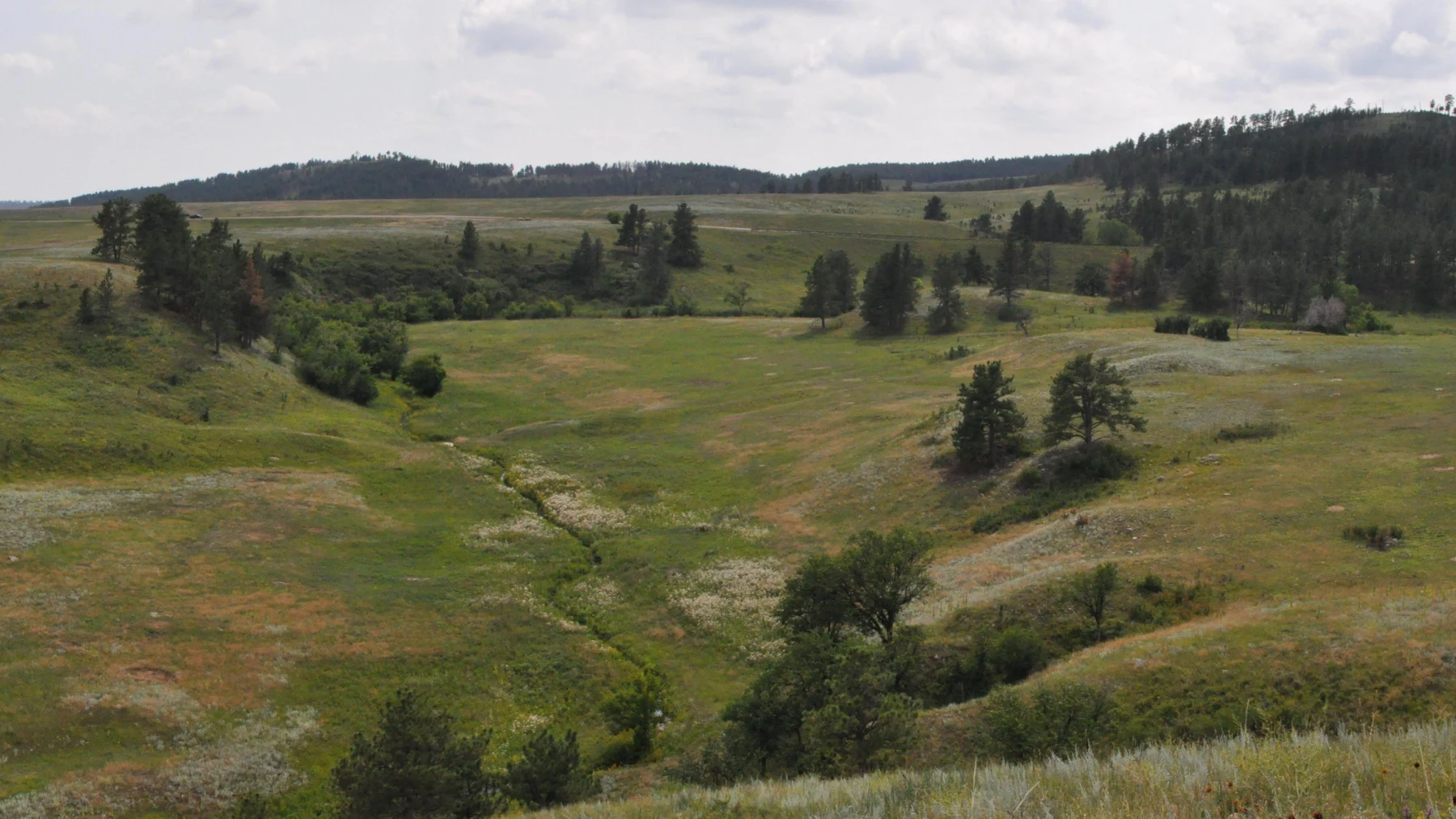
Augie had drawn a mountain with a reef inside it on the last page of their notebook. On the next clean page, Andy drew a house with grass on its roof.
“Our next park,” he announced.
Ana studied it. “Why does the house have a bison upstairs?”
“Excellent landscaping.”
The family had arrived at Wind Cave National Park in the southern Black Hills of South Dakota. Rolling grassland met wooded hills. Beneath part of that landscape lay a complicated cave system, with passages the children could not see from the road.
Allie looked from the prairie to their park information. “Our challenge is to discover why a cave seems to breathe.”
Augie immediately checked the drawing for a nose.
“We may need a bigger page,” he said.
Their grown-up had planned time at the visitor center, a visit to the natural entrance and opportunities to learn about the underground world. Photographs and exhibits would let them investigate details beyond their own route. They would also discover why the park protected the land above the cave.
“Two worlds,” Ana said. “And plenty of connections.”
The family had just investigated an ancient reef raised into the Guadalupe Mountains. That adventure had taught them to look beyond a place’s present appearance. Here, an ordinary-looking patch of ground could have a very complicated downstairs.
Andy added a door beneath the grass roof.
“Please wipe your feet before entering the geology.”
“And check the actual entrance instructions,” their grown-up said.
Allie divided the page into three questions: What moves the air? What made the cave? What made the stone patterns?
“Three mysteries,” Augie said. “Does the bison know the answers?”
“We can let the bison concentrate on being a bison,” Ana replied.
Their new investigation had begun: The Cave That Breathes.
2. A small opening with a long story
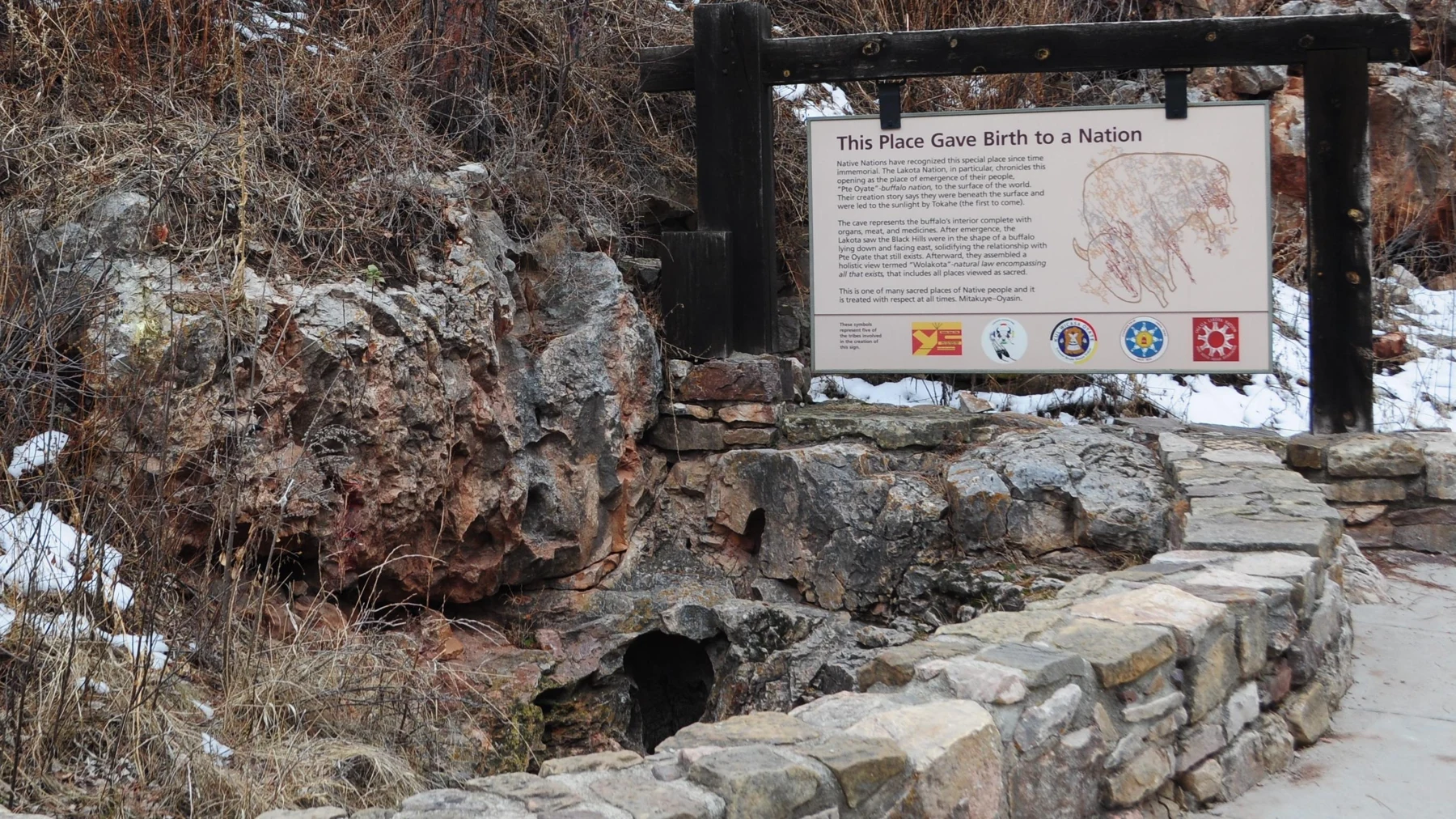
At the natural entrance, Augie stared at the opening in the rock.
“That’s the doorway?”
He had expected something large enough for Andy’s grass-roofed house. Instead, the natural opening was surprisingly small. It connected with a much larger underground system, rather like seeing one tiny opening into a place whose full shape remained hidden.
“An entrance doesn’t have to show the size of everything behind it,” Allie said.
The family followed the established path and viewed the entrance from the designated place. This was somewhere to observe and listen, not an opening to crawl into on their own.
Ana read about the place’s significance. Wind Cave was sacred to many Indigenous people. Lakota emergence traditions connected the cave with the origins of people and bison. These were living cultural relationships, not simply a historical paragraph that ended when the park was established.
Their grown-up encouraged them to learn through the voices the park shared, including a telling by Ranger Sina Bear Eagle. Different families and communities held different versions of the tradition.
Allie put a listening symbol beside her drawing.
“We should make room for what this place means to people,” she said.
The family treated the area quietly and respectfully. They would leave ceremonial items undisturbed and follow the park’s guidance about not photographing prayer cloths or bundles.
Andy closed his joke notebook for a moment.
“Some places need our best listening manners.”
Augie nodded. He was becoming very good at remembering that an interesting place could already be important to someone else.
Then they turned to another question about the opening. Sometimes air moved through it with noticeable force. Sometimes the movement was gentler or difficult to notice.
“What makes it change?” Ana asked.
That question belonged on their science page.
3. The air is doing the pushing
The children learned that the entrance wind depended on a difference in air pressure between the cave and the surface.
Andy considered the invisible air around them. “It doesn’t look especially pushy.”
“Air is made of moving particles,” Allie said. “It can exert pressure even when we can’t see it.”
Their grown-up used a simple picture with two spaces joined by an opening. One side was labeled higher pressure and the other lower pressure. An arrow pointed from higher to lower.
When pressure outside the cave was higher than pressure inside, air could move inward. When pressure inside was higher than outside, air could move outward. Changes in surface weather systems could change the pressure relationship and the airflow.
Ana drew the two situations on separate pages.
“We need to compare both sides,” she said. “Just saying high pressure without saying where could confuse our arrows.”
Augie added a small sign to each arrow: this way for now.
The cave contained a large amount of air, while its natural openings were relatively small. Pressure changes outside did not instantly make every part of the cave match the surface. Airflow through the openings was part of that adjustment.
“So breathing is a useful nickname,” Andy said.
“A comparison,” Ana agreed. “The cave has no muscles pulling on lungs.”
It did not breathe on the regular schedule of a sleeping child, either. Direction and strength could change as conditions changed. The children did not need to see an inward and outward gust during one short visit to understand the two possibilities.
Allie put a note under the diagram: pressure difference, then movement.
Augie drew a hat secured to its owner.
“Practical research equipment,” he explained.
Andy approved. An escaped hat would add an entirely unnecessary fourth mystery.
4. One windy moment is not a forecast
At the visitor center, Ana drew a small table in the notebook. Its columns said time, observation and question.
“What happened to the cave’s weather report?” Andy asked.
“We’re starting with what we can actually record.”
An instrument called a barometer measured air pressure. Repeated pressure readings could show a change over time. Scientists could compare those readings with airflow measurements to investigate how the cave and outside atmosphere responded to each other.
Allie liked that better than drawing a cloud every time an arrow pointed outward.
“A connection with weather doesn’t turn one gust into a complete forecast,” she said.
The family’s real weather decisions came from current forecasts and park guidance. Their cave notebook was an investigation, not a substitute for knowing whether a thunderstorm was approaching.
Augie drew a barometer as a round instrument with a very serious expression.
“It’s concentrating.”
Their grown-up asked what else the airflow could help researchers study. The amount of air moving through an opening, interpreted with pressure changes and suitable models, could provide clues about underground air space.
Andy immediately drew an enormous underground ballroom.
Ana added a question mark. “A volume estimate doesn’t tell us the exact shape of the rooms.”
The same amount of space could be arranged in different ways: a few larger spaces, many smaller passages or some combination. Measurements helped scientists ask better questions; they did not automatically produce a finished cave map.
Allie drew two boxes of the same size, then different arrangements of smaller shapes inside them.
“Same amount of space,” she said. “Different layout.”
Augie put a tiny sandwich in both.
“Both acceptable layouts.”
Ana placed the sandwiches in the joke column. Their actual observations needed to stay clearly separate.
5. Water prepares a stone maze
Now the children turned to the cave itself. The wind explained moving air in existing passages. It did not explain how all those passages had formed.
“A cave can have more than one story happening in it,” Allie said.
Wind Cave lay mostly within limestone associated with an ancient marine environment. That gave the children a familiar starting point after Guadalupe Mountains, although these rocks belonged to their own geological history.
Water and rock chemistry had helped enlarge openings along cracks and other pathways. Over immense spans of time, dissolution removed material. The cave’s history included several stages, changes in groundwater and the uplift of the Black Hills.
Andy drew a river racing through a tunnel, then paused.
“Is this one of those times my drawing is too speedy?”
Ana checked the park explanation. Water had probably spent long periods moving slowly or sitting within the limestone, enlarging pathways. Wind Cave’s maze did not require a fast underground river cutting every corridor.
Augie drew a water drop in an armchair.
“Patient water.”
“A comparison,” Allie reminded him. “It’s chemistry and changing conditions, not a water drop choosing a comfortable seat.”
The family compared this history with the talus caves at Pinnacles. There, spaces lay among fallen boulders. Here, removal of rock through dissolution was central to the explanation.
“Same word, cave,” Andy said. “Different construction history.”
The passages formed a complicated three-dimensional network. Looking at a map from above could make passages at different levels seem to cross in one flat place.
Ana held two pencils at different heights. From above they crossed. From the side, the gap was obvious.
“We need height as well as left and right,” she said.
Augie examined the drawing of the grass-roofed house. His secret basement now needed a much more complicated floor plan.
6. Waffles on the ceiling
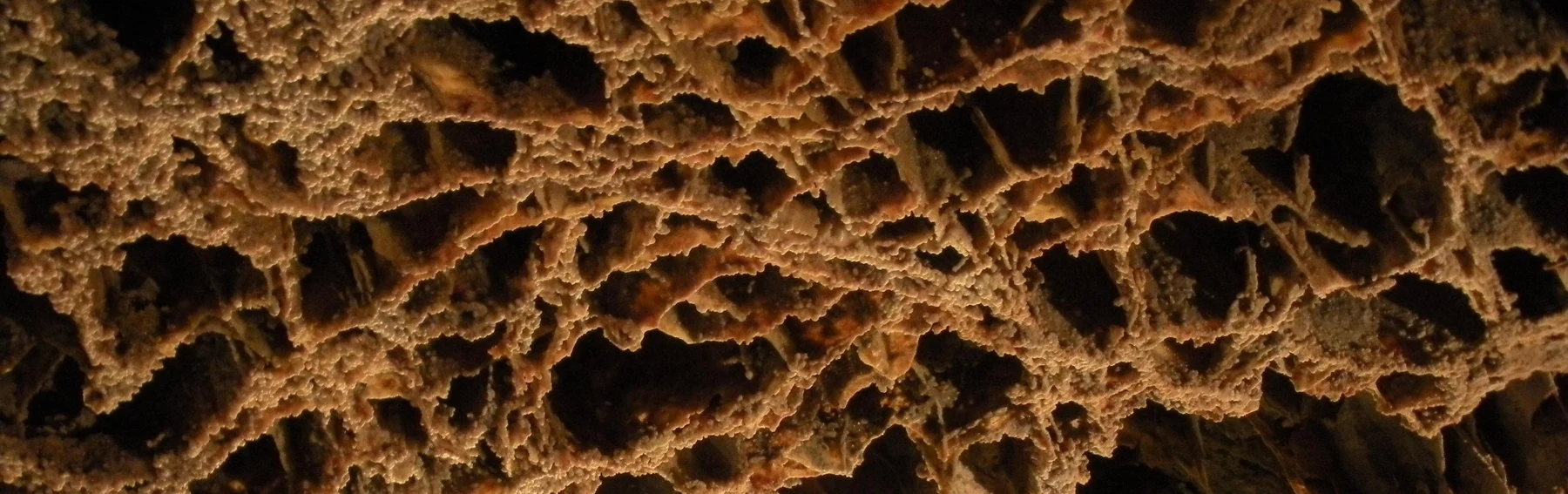
The boxwork photograph produced an immediate response.
“Stone waffles!” Augie announced.
Andy leaned closer. Thin ridges crossed the cave surface, leaving shapes between them that reminded him of boxes or honeycomb.
“Please don’t add syrup to the geology.”
The ridges were fins of calcite. Wind Cave was especially well known for this feature, called boxwork. The fins projected from cave walls and ceilings in a delicate network.
Allie studied the pattern. “Did water drip these shapes down from the ceiling?”
Ana read the explanation carefully. Boxwork had a different history from the usual picture of a stalactite growing from mineral-bearing drips. Calcite had occupied narrow fractures in the rock. Later removal of surrounding material exposed the more resistant fillings as projecting fins.
“First the fillings,” Allie said. “Then some of the surrounding rock was removed.”
Andy drew lines inside a shaded rectangle, then erased some shading between them. The lines became much easier to see.
“An uncovering model,” he said.
Their grown-up pointed out that the full geological explanation involved more than this simple drawing. Minerals, fractures, changes in the surrounding rock and chemical processes all mattered. Scientists continued investigating the details of boxwork’s origin.
Augie added a tiny sign beside the fins: Very old. Very delicate.
That was an excellent visitor reminder. Thin stone could break even when the wall behind it looked strong. The children would keep hands and belongings away from cave features and follow every instruction on any guided route they joined.
“Eyes do the touching,” Andy said.
“Eyes do the looking,” Ana corrected. “Hands can help by staying where they belong.”
Allie wrote their second answer: boxwork is revealed from earlier mineral fillings.
Augie underlined the final rule: No syrup.
7. A map with room for questions
Another exhibit showed how surveyed cave passages could twist beneath a small area of surface land. Andy tried to follow one line, lost it among several others and began again.
“This basement needs signposts.”
“And careful mapping,” Allie said.
Explorers measured passages, recorded directions and dimensions, and linked new observations with existing surveys. The children’s paper diagram could explain an idea, but it was no map for finding a route underground.
Ana returned to their three columns: observed, learned, still wondering.
They had observed the surface landscape and visited the natural entrance. They had learned about underground passages and formations through park interpretation and photographs. Plenty of questions remained beyond what their own visit could answer.
“That’s a lot more useful than pretending we explored everything,” she said.
The family’s grown-up reviewed how real cave visits worked. Underground access was through authorized guided activities, with suitable arrangements and current information. A little opening, a line on a map or a photograph of another visitor was not permission to head off alone.
Augie put a bold border around the words stay with the group.
He liked knowing which route belonged to their family and which passages belonged to trained explorers doing very different work.
Allie also remembered the natural entrance’s cultural importance. The park was a place of continuing relationships as well as scientific investigation. Learning respectfully meant listening, following boundaries and allowing questions to remain open.
Andy gave the map a new title: A lot learned. More to learn.
“A very honest map,” Ana said.
Augie added a little compass in the corner.
“For finding our way back to the picnic.”
Their grown-up supplied the actual directions. The notebook compass was beautifully drawn and completely unsuitable for navigation.
8. Upstairs is a living neighborhood
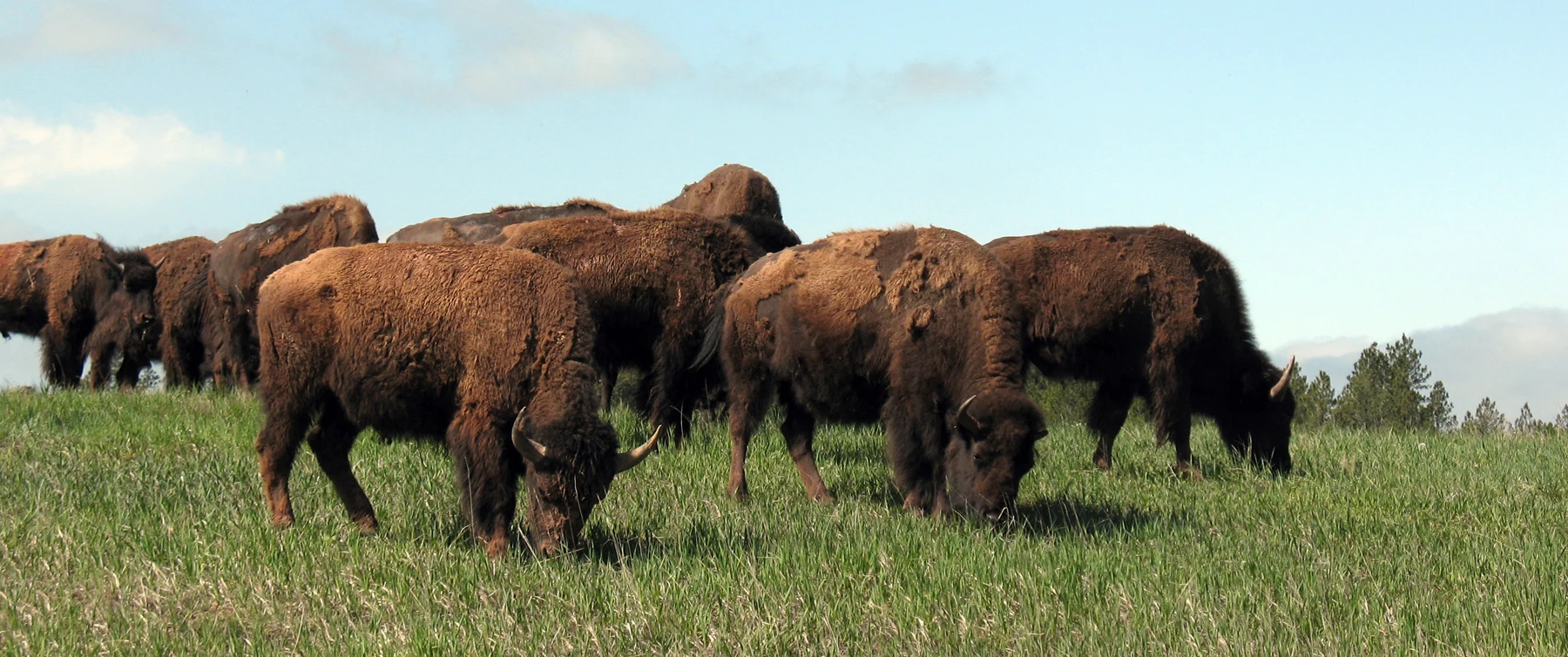
Back with the prairie photographs, the children studied bison grazing on a grassy ridge. The animals were large, even in a picture. Their dark shapes made Andy’s grass-roofed house look rather undersized.
“We need a stronger upstairs,” he decided.
Wind Cave National Park protected prairie and wooded hills as well as the cave. Bison were part of this living landscape. Grazing changed vegetation, and wallowing could disturb patches of soil and grass.
Augie drew a bison rolling in dust.
“Landscape artist.”
“A wild animal doing bison things,” Ana said. “Other living things can use the changed spaces.”
The family learned about prairie-dog towns too. Prairie dogs were rodents that dug burrows, clipped vegetation and used mounds as lookout places. Their activities influenced the surrounding habitat. Some animals hunted them; others could use their burrows or the more open ground nearby.
“An underground home above an underground cave,” Allie said.
That did not mean a prairie-dog burrow was a shortcut into Wind Cave. Different spaces had different origins and occupants. The children kept their drawings separate and connected only the relationships they could explain.
Andy added grass, insects, a prairie dog and a predator to a food-web sketch. Then Ana added the soil and a question about water.
“There’s more than one direction to investigate,” she said.
Their grown-up reminded them to watch wildlife from a safe distance, following the park’s guidance. Bison could be fast and powerful. Nobody needed to approach an animal to measure how impressive it was.
Augie placed his drawing of a tiny sandwich far away from the bison.
“Our picnic is private.”
“And wildlife should never be offered our food,” Allie added.
The secret basement was fascinating. So was the living world above it.
9. The earth keeps its own schedule
At the end of their visit, Allie reopened the three-question page.
“What moves the air?”
“A difference in pressure,” Ana answered. “Air can move into or out of the cave as the relationship changes.”
“What made the passages?”
“A long geological history involving water, rock chemistry and changing conditions,” Andy said.
“And the boxwork?”
Augie pointed to the erased rectangle in their notebook. “Mineral fillings were left sticking out when surrounding material was removed.”
“Excellent,” Allie said. “And what didn’t we find?”
“A cave with lungs,” Andy replied.
“Or a waffle restaurant,” Ana added.
Augie looked briefly disappointed, then remembered the picnic supplies.
Their investigation had brought together different kinds of time. Pressure could change during a day. A bison could graze across a hillside. Mineral and rock histories reached far beyond the length of any family visit.
“The earth keeps its own schedule,” Allie said.
They had also learned that hidden did not mean empty. The ground could conceal cave passages, burrows, water pathways and histories important to people. Looking carefully included knowing what a view could not show.
Ana added their final note: A comparison starts a question. Evidence helps answer it.
The cave’s breathing had been a useful comparison. Now they could explain the moving air without turning the cave into an animal.
Next in their park order was Hot Springs National Park in Arkansas, where they would investigate rainwater that returned warm from a journey underground.
Andy stared at the next title. “Breathing caves. Warm rainwater. The downstairs is very busy.”
Augie gave the notebook house one last improvement: a small sign above the door.
Please ask good questions.
Allie closed the book. Above the hidden passages, the prairie moved with the breeze. Below, air followed changing pressure through the stone maze, keeping a schedule of its own.
Explorer’s notebook
Nine discoveries to keep
- Wind Cave National Park is in the southern Black Hills of South Dakota and protects both underground passages and surface habitats.
- The small natural entrance connects with a much larger cave system. It is a sacred place with continuing Indigenous relationships, including Lakota emergence traditions.
- Air moves through openings because of pressure differences between the cave and the surface, generally from higher pressure toward lower pressure.
- Airflow can reverse as the pressure relationship changes. Cave breathing is a comparison, not an animal’s regular breathing cycle.
- Limestone dissolution and a long history of changing water and geological conditions helped form the cave’s maze-like passages.
- Boxwork consists of projecting calcite fins. Earlier mineral fillings were exposed as surrounding rock was removed; the full origin remains a subject of study.
- Cave maps require measured surveys in three dimensions. An estimate of underground air volume does not provide a complete passage map.
- Bison grazing and wallowing, prairie-dog burrowing and other activities help shape prairie habitats and relationships.
- Respect cultural places, keep cave features untouched, follow guided-access rules and observe wildlife from a safe distance.
Five family adventures
- Two pressure pictures: Draw a cave space and the outside, joined by a small opening. Label the outside higher pressure in one picture and the cave higher pressure in another. Add an arrow from higher to lower in each. Explain that a real cave has complex passages and changing conditions beyond the drawing.
- Air in a soft bottle: With a grown-up, hold a small strip of tissue securely just outside an empty, clean, dry, squeezable plastic bottle. Gently squeeze the bottle and watch the tissue move away from the opening. Keep the strip outside and keep your face away. Discuss how a pressure difference moves air. Wind Cave has no hand squeezing it; this is only a simple comparison. Do not use glass or heat.
- Reveal a pattern: Draw crossing lines firmly in crayon, then shade lightly around them with pencil. Erase some shading while leaving the crayon lines. Compare the revealed pattern with boxwork. The activity models uncovering existing lines; crayons, pencil and erasers do not reproduce cave minerals or chemistry.
- Same space, different layout: Draw two equal-sized rectangles. Divide one into a few larger rooms and the other into many smaller rooms. Discuss why knowing the total space does not identify the exact layout. Add a second floor on another sheet to explore the limits of a flat map.
- A respectful explorer plan: Make three cards: cultural place, cave feature and prairie wildlife. On each, write a helpful action such as listen to the people connected with the place, follow a guide, leave formations untouched or observe animals from a distance. Use park guidance to plan a real visit with a grown-up.
Four questions for the road
- What determines whether air moves into Wind Cave or out of it?
- Why is a cave’s breathing different from the way an animal breathes?
- How can removing surrounding material reveal a pattern that formed earlier?
- Why does protecting this park include both the underground world and the prairie above it?
Eight words for your explorer kit
- Air pressure: Force exerted by air on a surface, measured over an area.
- Barometer: An instrument used to measure atmospheric pressure.
- Dissolution: The process of a substance becoming dissolved, as chemical reactions help remove minerals from rock.
- Calcite: A calcium carbonate mineral found in limestone and many cave features.
- Boxwork: A network of thin, projecting mineral fins exposed on cave surfaces.
- Survey: A set of measured observations used to record positions, directions and dimensions.
- Prairie: A grassland community with grasses, flowering plants and many other living things.
- Wallow: A shallow depression made or used by an animal rolling on the ground; bison wallowing can alter soil and vegetation.