1. The mountains have terrible handwriting
Andy drew a giant letter U in the explorers’ notebook. Beside it, Ana drew a V. Augie added a crown above both.
“For the king,” he explained.
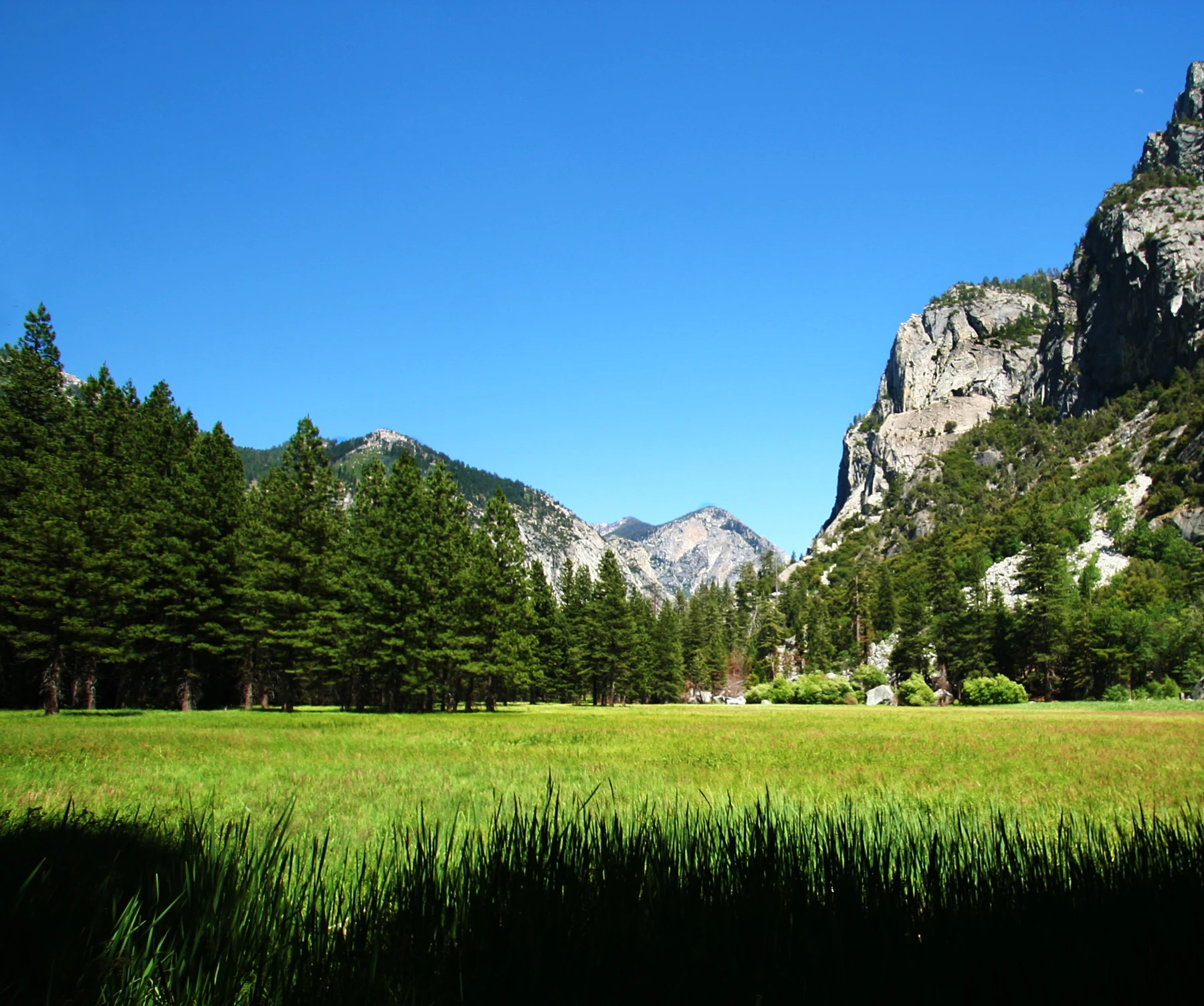
They had arrived in the Cedar Grove area of Kings Canyon National Park, in California’s Sierra Nevada. At Canyon View, the family looked east into a broad valley with steep walls. Trees filled part of the valley floor. Rock rose high above them, much too large to fit neatly between two lines of notebook paper.
After Big Bend’s imaginary three-floor house, Andy had expected another building problem. Instead, Allie had announced a handwriting mystery.
“Why do some valleys remind us of a V,” she asked, “while this view suggests a much wider U?”
“Mountains have terrible handwriting,” Andy said. “They forgot the bottom of the letter.”
Ana looked again. The valley was not a perfect printed U. Trees and uneven ground complicated the view, and their position changed how it looked. The letter was a useful comparison, not something somebody had stamped into the Earth.
Their grown-up had checked road access, weather and current park information before the drive. This was a fictional visit during the season when the road into Cedar Grove was open. They would explore a few nearby places, then visit Grant Grove on a separate day.
“We’re looking for two kinds of landscape work,” Allie said. “Moving water and moving ice.”
Augie scanned the view. “Where is the ice?”
“That,” said Ana, “is a very good question.”
The big valley glacier that helped shape this place was gone. Its effects had not vanished with it.
Andy held up the drawing. “A missing sculptor. A suspiciously wide letter. We need detectives.”
“We have four,” Allie said.
“And a crown,” Augie added.
Their first rule was already familiar from earlier adventures: describe what they could actually observe, then ask what evidence might explain it. The mountain’s story would take more than one glance.
Allie wrote their case title: The Canyon Carved Twice.
Ana added a small note underneath: Check whether twice is the whole story.
2. Before the canyon, the rock
At the visitor center, the children studied information about the park’s geology. Their first suspect turned out to be much older than the valley’s missing ice.
“Granite,” Allie read.
Andy looked at a photograph of speckled rock. “It has crumbs in it.”
“Minerals,” Ana said. “Please don’t put this in the cracker section.”
Much of the Sierra Nevada’s exposed rock was granitic. It had formed as molten rock cooled far beneath the surface. Later uplift and erosion helped expose rock that had once been deeply buried.
“So it wasn’t poured into the canyon like soup?” Andy asked.
“No,” said Allie. “The rock formed before this valley acquired its present shape.”
They remembered the different calendars from New River Gorge: the age of the rock, the history of a river system and the cutting of a gorge were not the same birthday. Here was another place where those events needed separate pages.
Ana drew a covered box to represent rock below the surface. Then she drew arrows showing overlying material being removed over a very long time.
“It’s a simplified picture,” she said. “Not a recipe we can copy in the kitchen.”
Augie nodded. “We don’t have enough cupboards for a mountain.”
The children also learned that a park could contain more than one kind of rock. “Granite” was not a password that correctly named every pale stone in the Sierra Nevada. Different minerals, textures and geologic histories mattered.
Allie liked the idea of crystals recording something about how a rock formed. What looked like random speckles to Andy could become evidence to a geologist.
“Like reading tiny writing,” she said.
“Extremely tiny mountain handwriting,” he replied.
No one needed to chip a sample from a cliff or pocket a stone. Photographs, exhibits and careful observations were enough for their investigation.
The rocks were the material on which later processes worked. Making that material was one part of the story; raising and exposing it was another; carving valleys through it added still more chapters.
Augie studied the notebook. “The canyon has a longer book than we do.”
“And we’ve only opened it,” said Ana.
3. The river gets the first turn
The South Fork of the Kings River ran through Cedar Grove. The family observed it from an established place back from the bank, where their grown-up could keep everyone together.
It looked busy even without a tiny construction helmet.
“What is it carrying?” Allie asked.
“Water,” said Augie.
“An excellent first answer.”
Water could also carry sediment: particles of different sizes, depending on the flow and conditions. Moving sediment could wear against rock. The river could remove material and cut downward while weathering and gravity helped change the slopes around it.
“Breaking and carrying,” Ana said. “We’ve met those jobs before.”
Erosion was not a river magically dissolving an entire mountain at once. It involved many events over long periods, with faster change during some conditions and slower change during others.
River-cut valleys often had a V-like cross-section: a narrower bottom with sides sloping upward. The shape depended on more than a letter, including rock, time, uplift and slope processes.
Allie drew a V, then a small wavy line at its base.
“Cross-section means imagining a slice across the valley,” she explained. “A bend we see on a map is a different view.”
Andy turned the notebook. “So I can’t call a bend a U-shaped valley just because the river looks like a U from above?”
“Exactly,” said Ana.
That felt like a particularly sneaky trick the landscape might play on a new detective. A map view and a cross-section answered different questions.
Augie drew a sandwich beside the V.
“Another cross-section?” Allie asked.
“No. I’m reminding us about lunch.”
The children considered the broad valley they had seen at Canyon View. If rivers often produced narrower valleys, what could have widened and deepened parts of this one?
They had not proved an answer simply by drawing two letters. But they now understood why a geologist would look for more clues.
Allie wrote: Rivers helped begin the valleys. What happened when a much thicker mass of ice occupied them?
Andy gave the river an imaginary timecard.
“First shift,” he said. “Still working.”
4. The ice is moving, very slowly
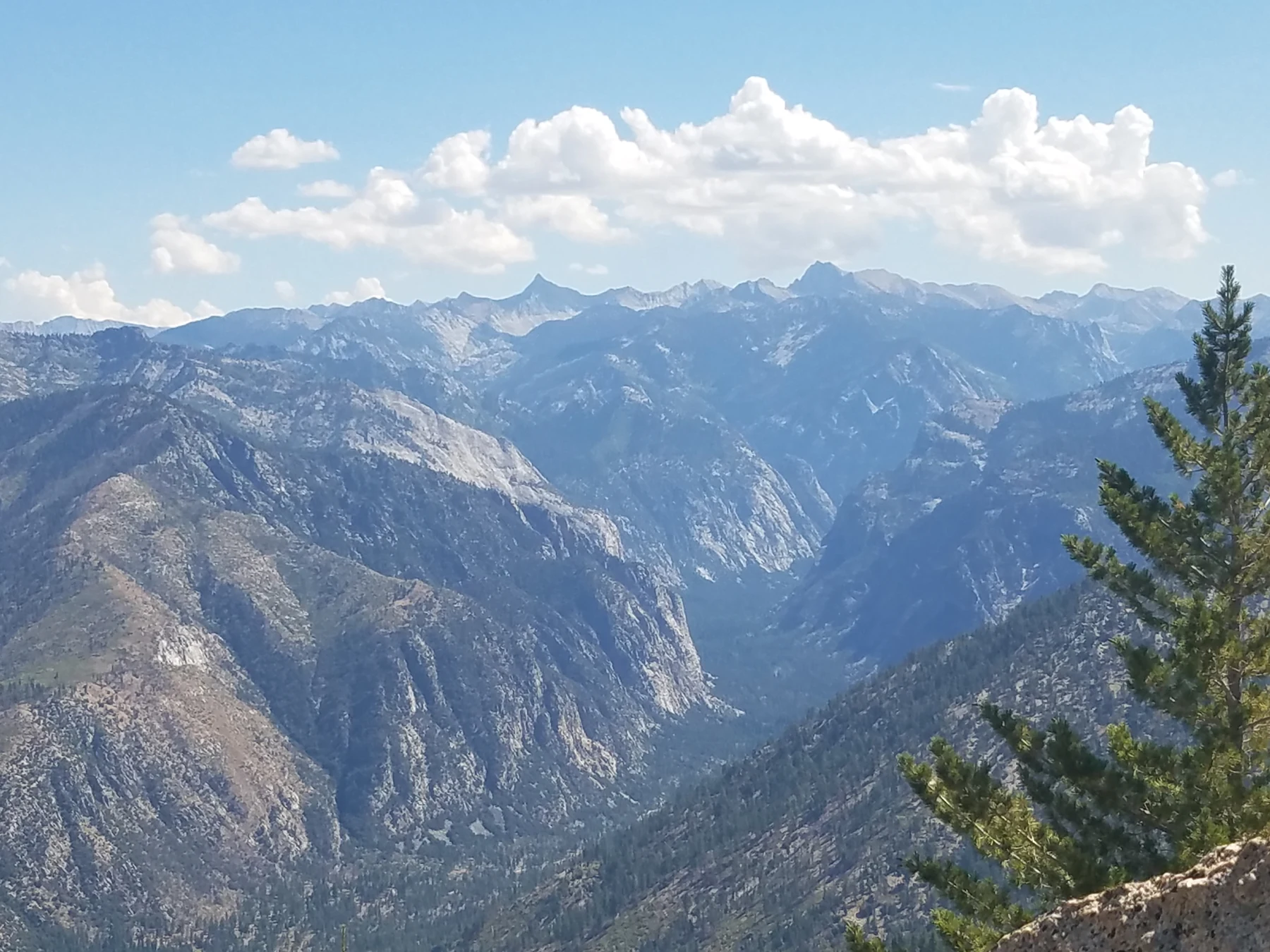
The next part of their investigation happened through photographs and park explanations. Nobody was hiking the children up to a glacier that afternoon.
In colder periods, snow could survive from one year to the next. Where more accumulated than disappeared, it could build up and gradually become dense glacial ice. Thick ice could deform and flow under its own weight; in suitable conditions, it could also slide over the ground beneath it.
Augie frowned. “But the ice in my cup doesn’t walk.”
“A glacier isn’t walking,” Allie said. “And one little ice cube isn’t a thick body of ice flowing through a mountain valley.”
Andy imagined a glacier with four boots. He drew them anyway, labeled not actual glacier equipment.
As a glacier moved through a valley, rock fragments carried near its base could scrape and grind the bedrock. Abrasion was the name for that wearing action. Glaciers could also remove chunks of fractured rock in a process called plucking.
“Not plucking a chicken,” Ana clarified.
Augie looked relieved. The mountain had no room for a giant chicken problem.
Compared with a river working in its channel, a thick valley glacier could affect a much broader area. Glacial erosion widened and deepened earlier valleys, helping produce the broad, steep-sided form that people compared with a U.
The photograph of high country showed how rugged and varied the landscape was. A single cartoon groove could not reproduce all those slopes, ridges and valleys.
“Was it one glacier, once?” Andy asked.
No. The Sierra Nevada had experienced repeated periods of glaciation. Ice advanced and retreated as conditions changed. “Carved twice” introduced the roles of rivers and glaciers; it did not mean two quick cuts on a perfectly simple timetable.
Ana put several arrows beside the title.
“Renovations,” she said. “Many rounds.”
During retreat, the ice did not need to flow uphill. Its end could move back because ice was disappearing there faster than it was being supplied.
“Like a conveyor belt that’s melting at the end,” Allie suggested.
“Very poor luggage delivery,” Andy said.
The children had found their second sculptor. Now they needed to understand how scientists recognized its work after the valley ice was gone.
5. A scratch is not a signature
Allie drew a detective badge. Ana added a magnifying glass. Andy supplied a glacier wearing sunglasses, which probably made it less useful for a serious investigation.
“Where is the glacier’s signature?” Augie asked.
It did not leave its name in curly letters. Instead, geologists interpreted patterns in the landscape: broad valley shapes, smoothed or scratched rock, transported material and the relationships between different landforms.
Rock dragged along beneath ice could scratch a surface. Finer material could help polish it. But a smooth stone beside a river was not automatically proof of a glacier. Water and other processes could smooth rock too.
“So we need clues that fit together,” Ana said.
“Not one scratch and a victory trumpet,” Allie agreed.
A park explanation at Canyon View described the broad valley and marks associated with glacial work. The family could study the distant walls and learn from the interpretation without claiming they had examined every scratch from across the canyon.
Andy approved. His eyes did not come with a mountain-sized magnifying lens.
They also learned about hanging valleys. A smaller tributary glacier might erode its valley less deeply than a large glacier in the main valley. After the ice disappeared, the smaller valley could remain higher above the main valley floor. A stream flowing out of it might drop as a waterfall.
“Different floors again,” Andy said. “Big Bend’s elevator has returned.”
“A different reason for different levels,” Ana reminded him.
The parks were teaching them a useful habit: enjoy a comparison, then investigate the actual process. A sky island and a hanging valley both involved height, but they were not the same phenomenon.
Augie drew a sign saying waterfall: mind the step.
They would explore examples through reliable pictures rather than invent a waterfall sighting. Not every distant notch was something they could identify confidently from their viewpoint.
Allie added three columns to the case notes: Observed here. Learned from an exhibit or photograph. Still uncertain.
Andy placed the sunglasses glacier in the third column.
“Definitely uncertain,” Ana said.
“Especially its fashion choices,” he replied.
6. The meadow is already occupied
For their short walk near Zumwalt Meadow, the family checked the current route with park staff. Their plan was an out-and-back to a suitable viewing point, returning the same way when their grown-up decided it was time.
They would not follow an old loop description or step onto the meadow to finish a circle that existed only on an outdated map.
The South Fork of the Kings River, forest and steep rock walls made the scene feel much bigger than the distance they walked. A green meadow lay within that larger valley landscape.
“A mountain lawn,” Andy said.
“Who mows it?” Augie asked.
“Nobody needs to make it a lawn,” Ana replied.
A meadow was a living community, with plants and animals connected to soil, water and seasons. Flatter ground where sediment accumulated helped create different growing conditions from the rocky slopes above. Water near the surface could strongly influence which plants thrived.
Allie remembered Big Bend’s habitats. The meadow and the cliffs were not interchangeable rooms, even though they belonged to the same connected landscape.
Their group stayed on the designated route. Trampling the vegetation or taking a shortcut could damage the plants and soil that made the meadow a habitat in the first place.
Augie pointed to the grass. “It’s already somebody’s room.”
That was a better description than empty space.
They paused to listen. A bird called, but they did not see it well enough to name it. Andy wrote heard a bird instead of promoting it to a rare species for extra detective points.
Bears also lived in this area. Before setting out, the family had stored scented items as directed in the provided bear-resistant storage facilities. A snack could become an animal problem even when nobody intended to share it.
“Bears can’t read our lunch labels,” Ana said.
Augie privately thought his labels were extremely clear. Still, he accepted the storage plan.
The river was another place for care. Cold, swift water could be dangerous even where the surrounding view seemed peaceful. The children watched from the route rather than testing it with their feet.
On the way back, Allie looked from meadow to forest to wall.
“The canyon’s history helped shape the spaces,” she said. “Living things use them now.”
“Past construction,” Andy said, “current residents.”
7. Winter keeps water in storage
That afternoon, the children spread their notes across a table. Andy put a drawing of a freezer beside a mountain.
“Another imaginary machine?” Ana asked.
“This one is about snow.”
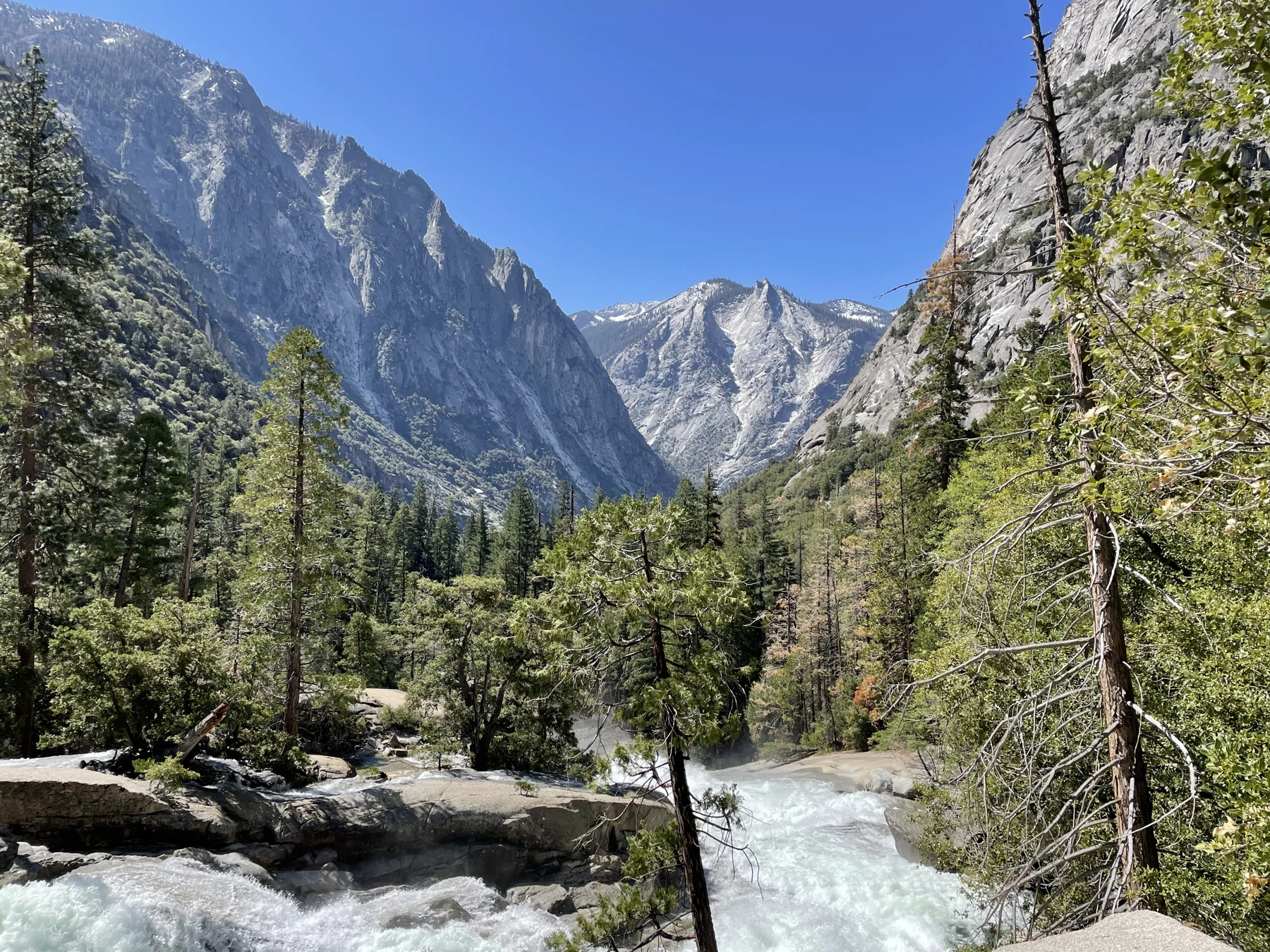
They studied a photograph of Mist Falls in Kings Canyon, a place they would not reach on their short walks. The picture showed water rushing over rock, a reminder that the landscape’s work continued today.
Much of the high country received winter precipitation as snow. Snowpack could hold water in frozen form, then release meltwater as conditions warmed. That seasonal supply helped feed streams and other parts of the landscape.
The water story did not end at the park boundary. Rivers carried water toward lower country, supporting ecosystems and communities farther away.
“Like Big Bend,” Allie said. “Follow the connections beyond the edge of our picture.”
But a seasonal snowpack was not automatically a glacier. Many snowy places lost their snow during warmer months. A glacier required accumulated ice that persisted and moved. A white patch in a photograph needed more investigation before the children could name it.
“Not every pile of snow is applying for glacier work,” Ana said.
Augie thought that sounded exhausting anyway.
They read about research on high-elevation glaciers in the parks. Older and newer photographs could show changes when scientists compared the same place carefully. A picture with a different angle, season or viewpoint was not a fair substitute for a thoughtful comparison.
Allie drew a camera in the same position on two pages.
“Like measuring our height against the same doorframe,” Andy said. “Not standing on a box for the second picture.”
“Who would do that?” Ana asked.
Augie became very interested in the pencil sharpener.
Changes in temperature and snowfall could affect when water became available. Earlier melting might leave less stored snow for later in the dry season. Rain, groundwater, evaporation and plants also belonged in the investigation; it was not a system with only one switch.
The children did not draw a glacier pouring directly into every bend of the river. They used arrows for a broader network of sources and pathways.
Andy labeled his freezer drawing a comparison, not a real appliance.
Then Augie added a small warning: No ice cream inside.
A disappointing machine, perhaps, but an important idea. A mountain could store something people and wildlife needed long after the storm that delivered it.
8. The giant tree has tiny beginnings
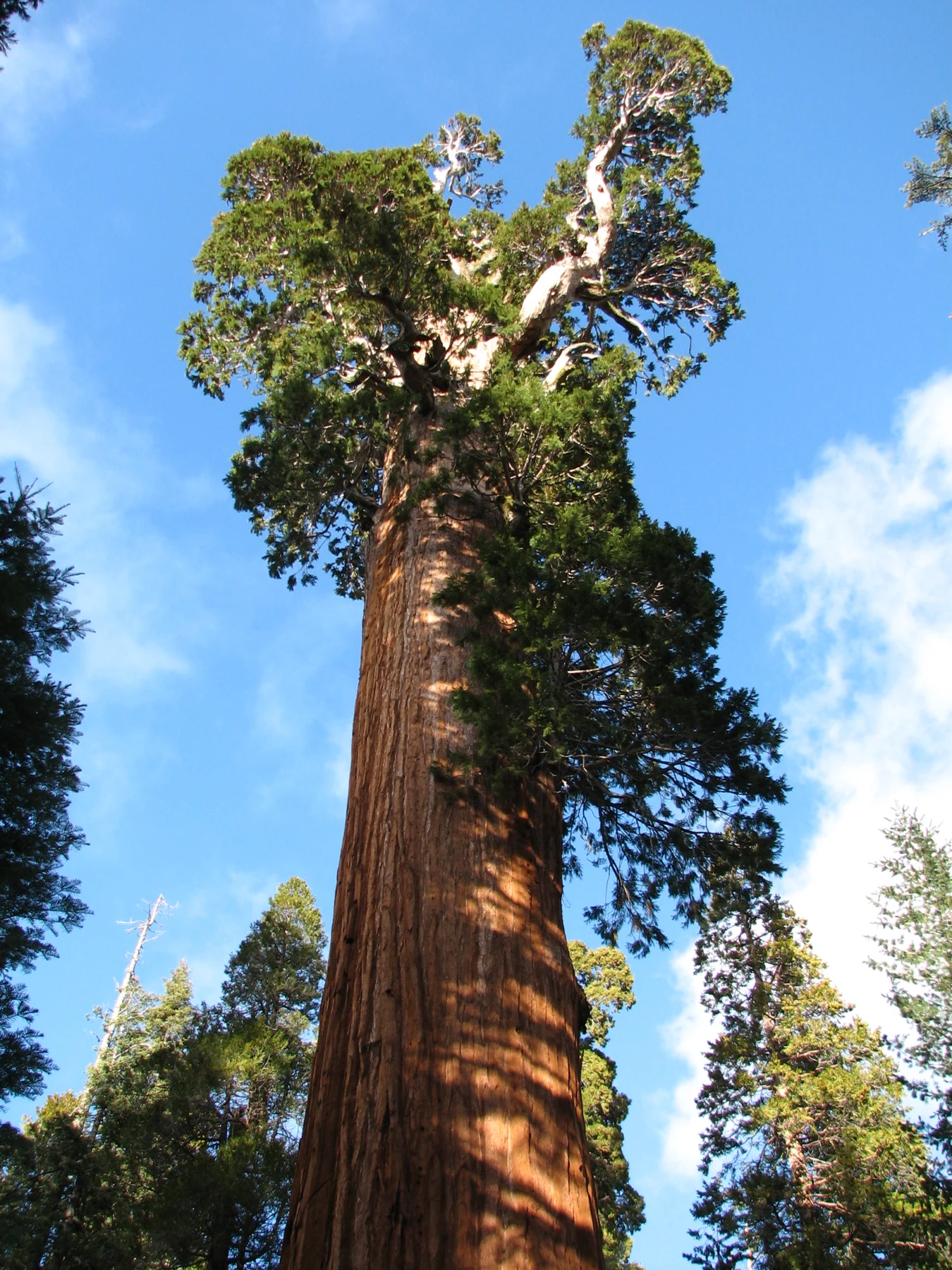
On a separate day, the family visited Grant Grove, another part of Kings Canyon National Park. It required a real drive, not a short path climbing directly from the canyon meadow to giant trees.
Ana checked their map. Nearby Sequoia National Park was a different park, although the two were managed together. This grove and the General Grant Tree belonged to Kings Canyon.
“A park called Kings Canyon can have giant sequoias,” she said.
“And a park called Sequoia can have canyons,” Andy replied. “The names don’t list everything.”
The General Grant Tree made Augie tilt his head back until his hat threatened to leave the expedition.
“That is a lot of tree.”
The others agreed. It was not an especially technical measurement, but it was heartfelt.
The family followed the paved trail and respected the boundaries around roots and soil. They examined information about cones and small seeds. A tiny beginning could grow into an enormous tree if enough things went right over a very long time.
“All the future tree isn’t packed inside like a folded tent,” Allie said. “It has to grow, using water, light and materials from its surroundings.”
“Good,” said Andy. “That would be a very difficult tent to put away.”
Fire was part of the grove’s story. Under suitable conditions, fire could help expose mineral soil, release seeds and create sunny gaps for young sequoias. That did not make every fire helpful. Severe wildfire could kill even very large trees.
“Thick bark isn’t a promise that nothing can hurt them,” Ana said.
Professional fire management involved careful decisions, conditions and monitoring. Visitors did not experiment with the process.
The children also learned that these parklands were Indigenous homelands. The parks identified connections with the Mono, also called Monache, Yokuts, Tübatulabal, Paiute and Western Shoshone peoples. Those connections continued today, despite histories of displacement and forced removal.
“This isn’t a place where human history began when a sign was installed,” Allie said.
Ana wrote that caring for land included listening to people with continuing relationships and knowledge, rather than treating them as characters who belonged only in the distant past.
Augie drew a very small seed beside a very large tree.
“Ambitious,” Andy said.
“It has time,” Augie replied.
“And it needs the right conditions,” Ana added.
9. The sculptors never punched out
At the end of the visit, the children reopened the first page of their case file. Two crowned letters stared back at them.
“Did the canyon get carved exactly twice?” Allie asked.
“No,” said Ana. “The title helped us notice two kinds of work. The real history included repeated glaciation and many other changes.”
“Did the river quit when the glacier arrived?” Andy asked.
Their evidence did not describe a tidy office schedule. Water and ice could both be involved during glacial periods, and flowing water continued shaping the landscape after large valley glaciers retreated.
“Did every shiny rock get polished by ice?” Ana asked.
“Also no,” said Allie. “We need evidence and context.”
Augie looked disappointed. He had been preparing to certify the shiny surface of his spoon as a glacier discovery.
The four explorers had learned to compare shapes without treating letters as proof. A broad glacial valley and a narrower river-cut valley helped them ask good questions. Scratches, deposits, rock relationships and other observations helped scientists investigate the answers.
They had also learned that the canyon was not finished. A river carried material onward. Weathering affected rock. Gravity moved loosened pieces. Plants grew in meadows and forests; people made decisions that influenced those places.
Andy put a line through finished masterpiece and wrote landscape still changing.
“Are the sculptors ever going home?” he asked.
“Gravity lives here,” Ana replied.
Augie approved. “No commute.”
For their final drawing, they put the river inside the broad valley, trees along its floor and distant mountains above. Their picture was still simple, but the explanation beneath it had improved.
Next came Biscayne National Park, where much of the adventure would be under water. The children would look for connections among mangroves, seagrass, islands and reefs.
“More water,” Andy said. “Will we need waterproof handwriting?”
“We’ll need another good question,” Allie answered.
Augie removed the crowns from the U and V and placed one above the notebook itself.
“For the best detectives?” Ana asked.
“No,” he said. “For the pencil. It did a lot of work.”
So had the rivers and glaciers. The pencil, at least, was ready for a rest.
Explorer’s notebook
Nine discoveries to keep
- Kings Canyon lies in California’s Sierra Nevada. Its Cedar Grove area includes a broad valley shaped by glaciation.
- Much of the exposed rock is granitic, formed from molten rock that cooled underground before uplift and erosion exposed it.
- Rivers erode channels and carry sediment. River-cut valleys often have a V-like cross-section, although real shapes vary.
- Thick glacial ice flows. Abrasion grinds rock with carried debris; plucking removes chunks of fractured rock.
- Glaciers widened and deepened earlier valleys, helping produce U-shaped cross-sections. There were repeated periods of glaciation, not just two simple cuts.
- Geologists combine clues. Smooth rock alone does not identify a glacier, and a U-shaped river bend on a map is not a valley cross-section.
- Meadows, forests and riverbank habitats connect living things with soil and water. Seasonal snowpack helps store and release water.
- Grant Grove and the General Grant Tree are in Kings Canyon National Park. Fire can help create conditions for sequoia reproduction, but severe wildfire can kill giant trees.
- These parklands are continuing Indigenous homelands. Their human story reaches far beyond the establishment of national parks.
Five family adventures
- Same valley, two views: Draw a winding river from above. Beside it, draw an imaginary slice across its valley. Explain why a U-shaped bend and a U-shaped cross-section describe different things.
- Two tools, one model: Press a narrow groove into a tray of soft modeling dough with a spoon handle. Use the rounded back of a spoon to widen part of it. Compare the narrow and broad shapes. Explain that real rivers and glaciers work through erosion over long times, not by pressing kitchen tools into soft mountains.
- Make an evidence file: Choose a landscape photograph. Write three observations, one possible explanation and one question you cannot answer from the picture. Separate what you see from what you learned elsewhere.
- Frozen water in storage: With a grown-up, place a small ice cube in a bowl and watch meltwater collect. Talk about delayed release of stored water. An ice cube is a simple storage comparison; it does not model a moving glacier or an entire snowpack.
- Tiny beginning, big requirements: Plant an appropriate seed at home with a grown-up, or draw its growth stages. List what a seedling needs. Compare its needs with a giant sequoia’s without expecting a garden plant to behave exactly like a sequoia. Leave all park cones and seeds where they are.
Four questions for the road
- Why is the age of the granite different from the history of the valley carved into it?
- What can moving ice do that helps explain a valley broader than its present river channel?
- Why should a detective look for several related clues instead of declaring every smooth rock glacially polished?
- How can winter snow affect plants, animals and people during a dry summer?
Eight words for your explorer kit
- Granite: A coarse-grained igneous rock made of interlocking mineral crystals, formed as molten rock cooled underground.
- Cross-section: A view of an imagined slice through something, such as across a valley.
- Glacier: A persistent body of ice formed from accumulated snow that flows under its own weight.
- Abrasion: Wearing by rubbing or scraping; glacial abrasion involves rock and sediment carried against bedrock by ice.
- Plucking: Removal of chunks of rock by a glacier.
- Hanging valley: A tributary valley left higher than the main valley, often because a smaller glacier eroded less deeply.
- Sediment: Loose material such as sand, silt or gravel that can be moved and deposited.
- Snowpack: Accumulated snow on the ground, which can store water until it melts.