1. The post office has spiky arms
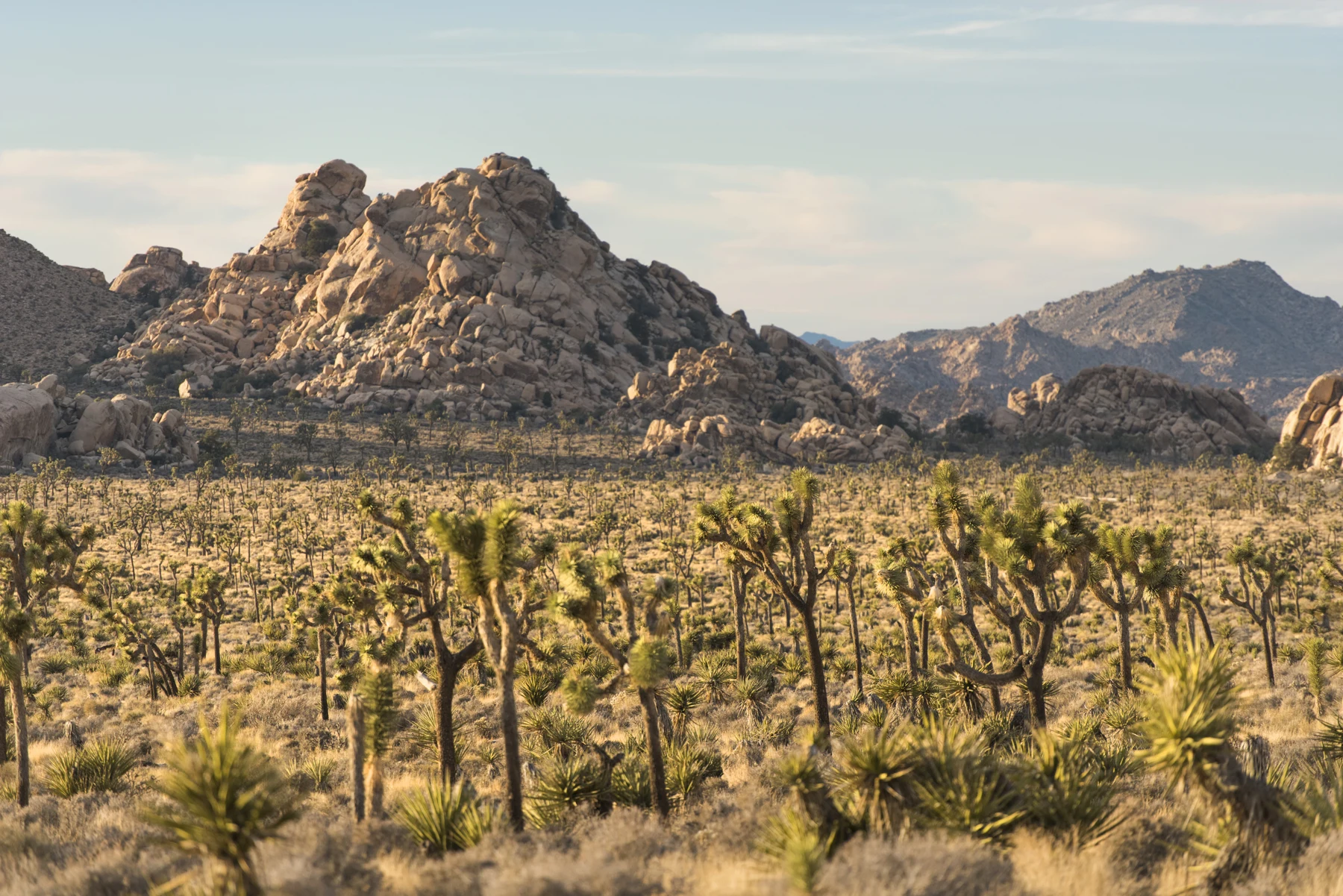
On the last Glacier page, Augie had drawn a Joshua tree holding three envelopes. Now he added a fourth envelope and announced that the plant needed a bigger mailbox.
“We haven’t even met it yet,” Ana said.
Allie wrote their new destination: Joshua Tree National Park, California.
Andy examined a photograph of branching plants among rounded boulders.
“The trees are giving directions. That one says left. That one says right. The middle one has no idea.”
“Perhaps they’re waving,” Augie suggested.
The real landscape looked wonderfully strange. Spiky leaves topped twisting branches, pale rocks rose in enormous piles, and open spaces stretched between shrubs. After Glacier’s water and ice, Andy’s first impression was that somebody had forgotten to water the scenery.
Mom and Dad had chosen a cool, suitable time for a short outing. They checked conditions and carried drinking water, sun protection, and the supplies their family needed. The desert was not a place to discover halfway through a walk that the bottle was still in the car.
At an established stopping place, the children listened. Wind moved softly past the plants. Nothing large performed for them.
“Is everyone asleep?” Andy asked.
Ana looked at the branches, then down toward the soil.
“Or are we looking at the wrong things, at the wrong time?”
Allie opened their case page: HOW DOES SO MUCH LIFE MAKE A HOME IN THIS DRY PLACE?
Augie drew a small clock beside the plant.
“Maybe the mailbox opens at night.”
It was a useful guess. But the desert had more than one way to manage its working day.
2. Two deserts without a doorstep
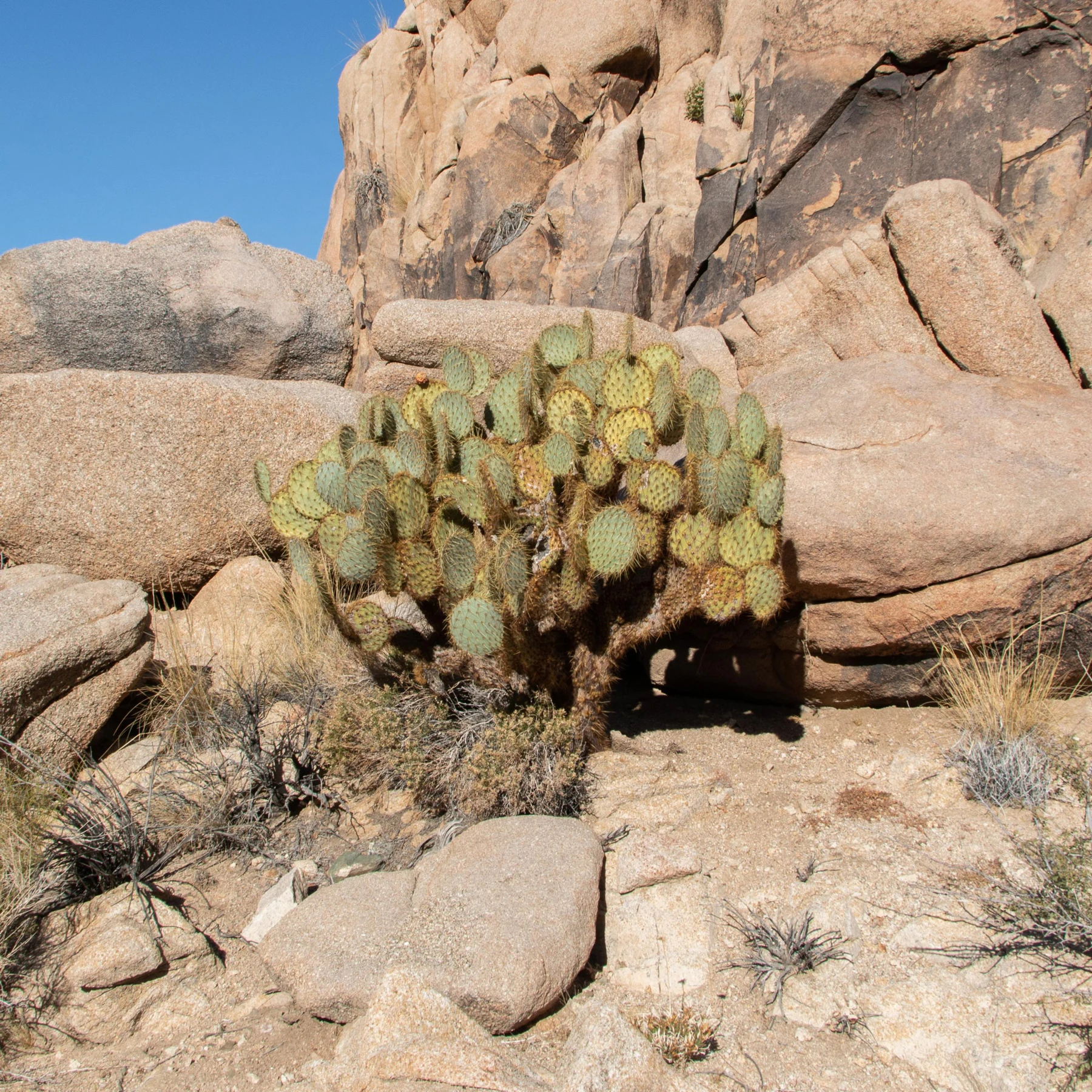
Their first clue was a map showing two desert regions meeting inside the park: the Mojave and the Colorado.
Andy looked up from the page.
“Where is the doorway?”
“There isn’t one,” Allie said. “And the Colorado Desert doesn’t mean we’ve driven to Colorado.”
The Colorado Desert was part of the larger Sonoran Desert. In Joshua Tree, it occupied lower, generally warmer areas toward the east and south. Much of the park’s higher western country belonged to the Mojave Desert, where the namesake Joshua trees were especially characteristic.
Ana traced the transition on the map. Elevation, rainfall patterns, and other conditions helped determine which communities of plants grew where. A boundary on the map simplified a landscape that changed gradually and unevenly.
“So the plants don’t stop at a line and show identification,” she said.
Augie held up an imaginary card.
“Hello. I am a shrub.”
Allie added that a desert was not defined simply by being hot or covered in sand. Scarce precipitation was central to its identity, and deserts could have cold seasons too.
Andy examined the gravelly ground.
“No giant sand dune required.”
Different plants made sense in different conditions. Cholla, creosote bush, and other desert plants belonged to the story as well as Joshua trees. Seeing fewer of the namesake plants in one area did not mean that part of the park was missing its decorations.
Ana changed Andy’s first note from FORGOTTEN GARDEN to DIFFERENT GARDEN.
Augie added TWO DEZERTS, then asked whether that meant two desserts.
“Excellent spelling mystery,” Allie said. “Unrelated snack policy.”
3. The tree that is a yucca
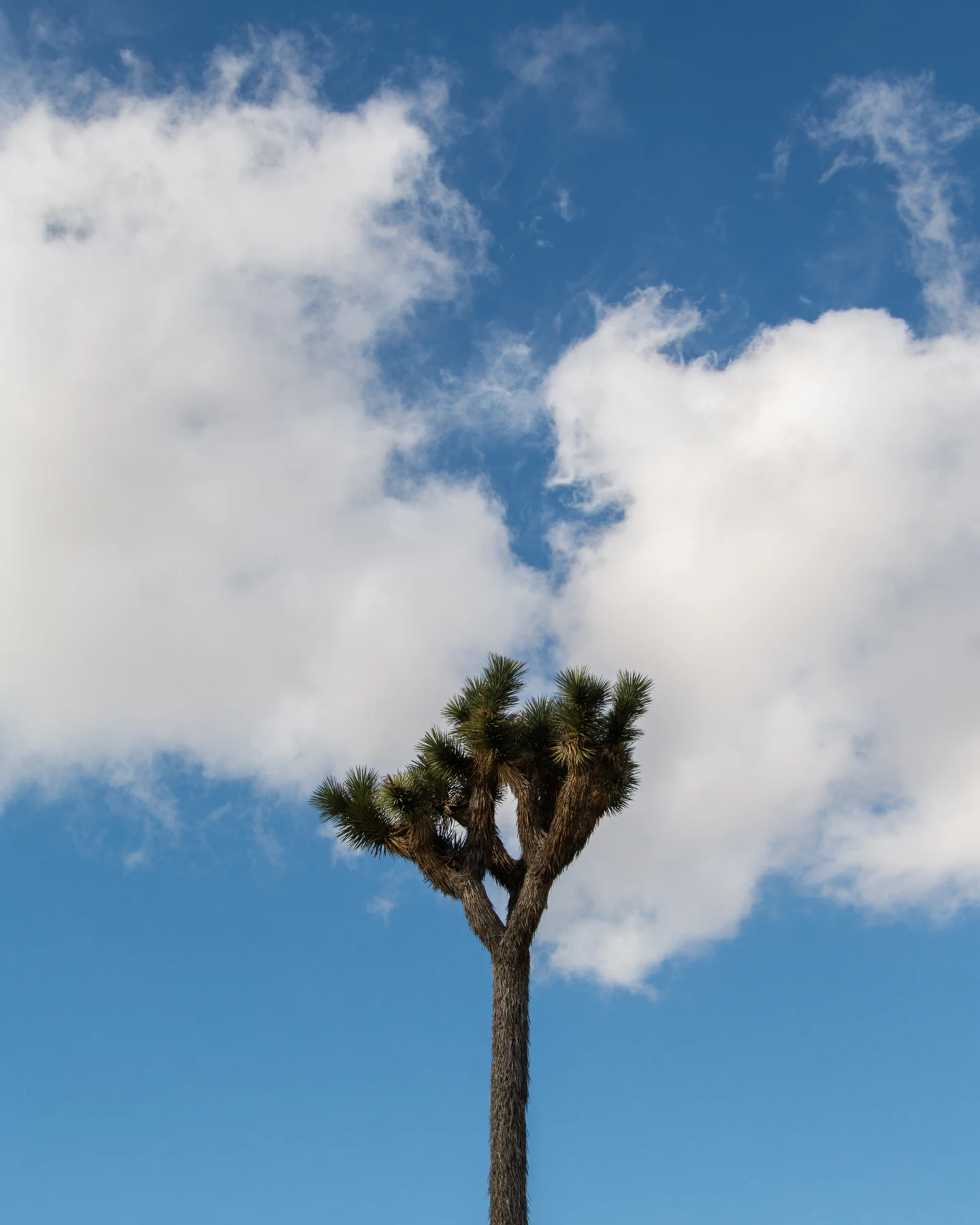
A Joshua tree stood beyond the path, its branches ending in stiff clusters of pointed leaves.
Augie waved politely. The plant did not wave back.
“Very busy,” he decided.
Allie read that the Joshua tree was a species of yucca, a flowering plant in the agave family. Its branching, tree-like shape did not make it a cactus, and its sharp leaves were not cactus spines.
Andy pointed at the notebook.
“Common names need a fact-check.”
“They can still be useful,” Ana said. “We just learn what they describe.”
The children compared it with a picture of Mojave yucca, a related plant with a different overall form and longer leaves. They looked at several features instead of identifying every spiky plant as the same species.
Joshua trees also lacked the familiar annual wood rings used to age many other trees. Counting their branches was not a reliable birthday calculator either.
Augie put down his pencil.
“So no counting all the way to a hundred?”
“You may count the crackers later,” Andy said.
The plant’s leaves and growth form helped it live in dry country. Its branches and trunk could also provide shelter and nesting places for animals. A single plant was part of a neighborhood, even when nobody was visible on it at that moment.
The children kept their hands off the leaves and did not lean on the trunk. Admiring a living plant did not require testing its strength or climbing it.
Ana drew the Joshua tree beside the glacier from their previous chapter.
“Different tools for different conditions,” she wrote.
Andy added a speech bubble to the plant: PLEASE SEND MY MAIL TO THE MOJAVE.
4. A business partner smaller than a thumb
At an exhibit, the family found a close photograph of Joshua tree flowers and an explanation of their pollinator.
“The important worker is this small?” Andy asked.
A yucca moth helped transfer pollen between flowers. The female deliberately collected pollen and placed it where the flower needed it for pollination. She also laid eggs; developing moth larvae ate some of the seeds.
Augie frowned.
“The employee eats the supplies?”
“Some,” Allie said. “The plant can still produce seeds, and the moth’s young get food.”
Ana wrote mutualism: a relationship in which both partners benefit. The moth was not receiving a salary, making a promise, or choosing to help out of kindness. Those were human ideas they were using to understand a biological relationship.
Andy drew a very tiny office desk.
“Pollination department. Seed-testing division.”
The children did not have to find a moth that day. Flowers depended on season and conditions, and a living partnership could be important even when a visitor arrived between its busiest moments.
Allie compared the idea with Olympic’s salmon. A small creature or an unseen journey could connect much larger parts of a landscape. Size and importance were not the same thing.
Augie held his fingers close together.
“Tiny boss.”
“Tiny partner,” Ana corrected gently.
Their mystery was changing. The desert did not need to look crowded to contain complicated relationships. A Joshua tree and a moth could depend on each other in ways that a quick photograph of the skyline would never explain.
Andy revised the mailbox sign: DO NOT DISTURB. IMPORTANT SMALL WORK IN PROGRESS.
5. The boulders were rounded underground
The next clue was much larger than a moth. Pale boulders lay stacked in shapes that looked almost arranged.
“Who packed the giant lunchbox?” Andy asked.
Augie studied a rounded block.
“Potato.”
“Rock,” Ana said.
“Rock potato.”
At a geology display, they learned that molten rock had cooled slowly below ground to form granitic rock called monzogranite. Cracks, or joints, developed through it. Water moved along those fractures and helped weather the rock, including changing some minerals into softer material.
Corners and edges were attacked from more directions than flat faces. Over a very long time, blocks became rounded while still surrounded by weathered material underground.
Allie drew a square with increasingly rounded corners.
“So not a giant rolling pin?”
“Not a giant rolling pin,” Ana agreed.
Later, erosion removed surrounding material and exposed the boulders. Their striking arrangement recorded a long history, including wetter conditions in the past. The rocks did not have to form entirely under the dry weather the children experienced on their visit.
Andy remembered Glacier’s old sediments and Grand Teton’s old rocks in a younger mountain landscape.
“Today’s view is the last page, not the whole book.”
They stayed on their chosen route and looked from the ground. These rock piles were not permission to scramble upward without a separate adult plan, suitable skills, and equipment. Nobody needed to sit on the tallest potato to solve its origin.
Augie drew a label: VERY OLD LUNCH. DO NOT EAT.
Allie allowed it in the jokes margin, beside the actual geological explanation.
6. The floor is holding itself together
Beside the trail, some ground looked rougher and darker than plain loose sand.
Andy lowered his voice.
“Has the floor gone bad?”
A park photograph helped them investigate biological soil crusts: communities of tiny living things at the soil surface. Cyanobacteria, lichens, mosses, and other organisms could contribute to these crusts.
“Living groundcover,” Ana read.
Augie looked down at his shoes and then carefully back at the path.
“The floor has neighbors.”
Some crust organisms helped bind soil particles together, making them harder for wind and water to carry away. They also contributed to nutrient cycling. Something a visitor might mistake for an unimportant patch of dirt could be doing useful ecological work.
The children did not decide that every dark patch was crust or try to peel off a sample. They followed the established route instead of searching for a shortcut through open ground.
Allie drew tiny imaginary threads between grains of sand.
“A model,” she labeled it. “Too small to see like this without magnification.”
Andy added a sign: FLOOR STAFF. PLEASE DO NOT STEP ON THE TEAM.
Even a single footprint could damage fragile crust. Recovery could be slow, so a landscape with plenty of apparent empty space still needed careful feet.
Ana glanced back at their first question. “We asked who lived here. We nearly missed who was underneath our noses.”
“Under our toes,” Augie said.
Allie liked the correction. Their investigation had moved from the shape of a tree to a small moth to communities at the soil surface. The quiet desert was becoming busier the longer they learned to look.
7. The night staff keeps its water
In an animal guide, a kangaroo rat stood on powerful hind legs with a long tail trailing behind.
“Tiny jumping inspector,” Andy said.
It was a rodent, not a baby kangaroo. Kangaroo rats could avoid much daytime heat by using burrows and being active mainly at night. Their bodies conserved water remarkably well, and metabolism of food such as seeds produced water they could use.
Augie checked his snack.
“Can I do that instead of drinking?”
“No,” Mom said immediately. “You need your drinking water.”
Allie wrote ADAPTATION IS NOT A HUMAN CHALLENGE.
Other desert animals used different combinations of shelter, timing, behavior, and body features. A black-tailed jackrabbit’s large ears could help exchange heat. A reptile might move between sun and shade to regulate its temperature. Not every animal was nocturnal, and cooler hours did not make all activities safe for people.
Ana compared the guide with the still landscape outside.
“Not seeing an animal doesn’t mean it’s missing.”
“And not seeing danger doesn’t mean it’s gone,” Dad added. “We keep watching where we put our feet and hands.”
They would not reach into a crevice or disturb a burrow to wake the night staff. Watching quietly and using photographs were both good ways to learn.
Andy drew a little timesheet.
KANGAROO RAT: LATE SHIFT.
ANDY: SNACK SHIFT.
AUGIE: ASK ANOTHER QUESTION SHIFT.
Augie approved the last one. He had already thought of another question: if the desert worked at night, did the stars switch on the office lights?
8. The sky does not need more lamps
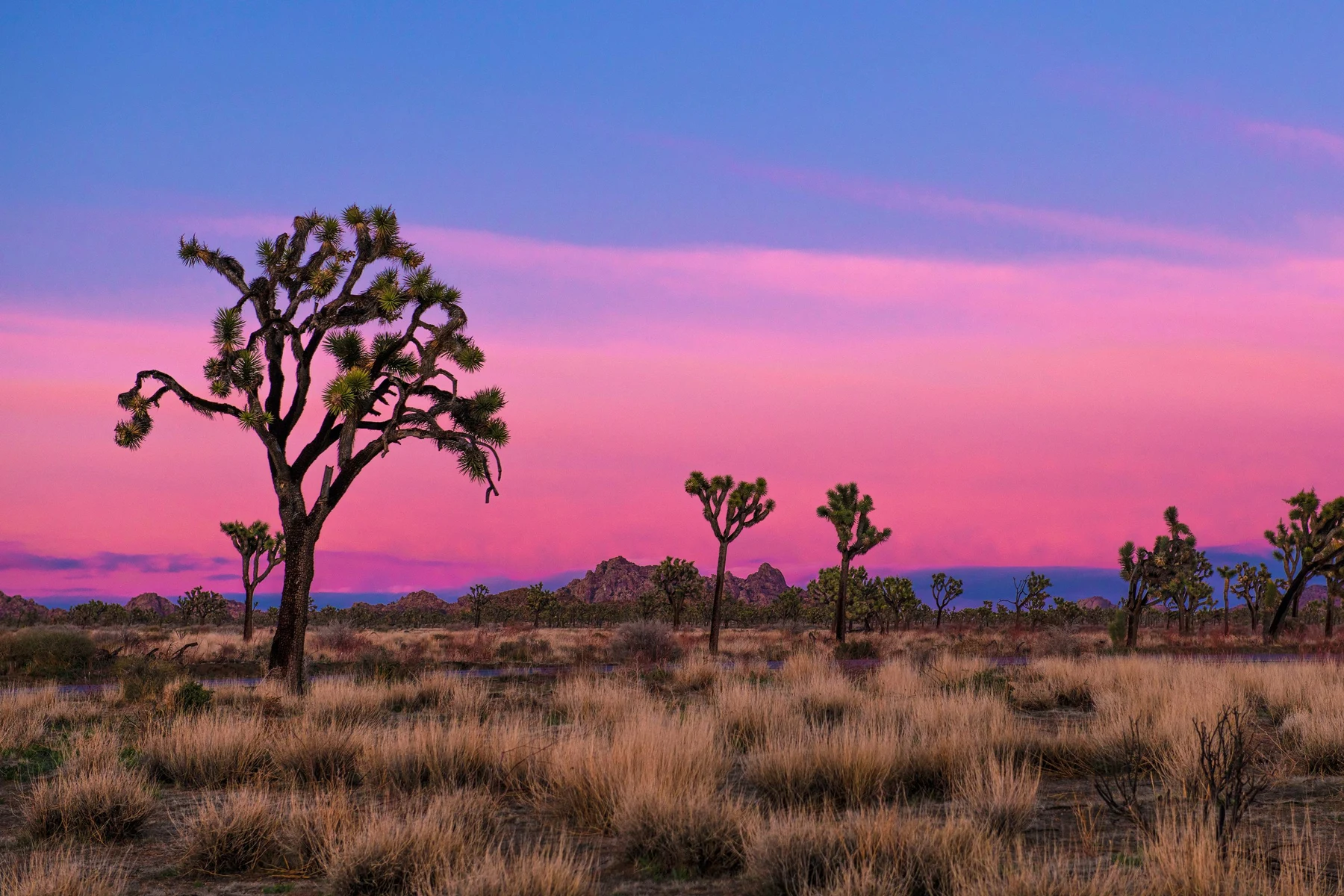
On a suitable evening, their parents chose a permitted, established place for a short look at the sky, close to their vehicle and away from traffic. Everyone stayed together, with warm layers and a red-light flashlight for seeing the ground.
The branching plants became dark shapes. The boulders lost their sunny colors. More stars appeared as the sky darkened and their eyes adjusted.
Andy whispered, “The night staff has a very large ceiling.”
Augie looked for a switch.
“Who turns it off?”
The stars had been there in daytime too. Bright scattered sunlight made most of them difficult to see. At night, artificial light from towns and poorly directed lamps could also brighten the sky and hide faint stars.
Allie learned that protecting dark skies was part of caring for the park. They avoided unnecessary bright light and used their light only as needed, pointed toward the ground. Walking safely still mattered; darkness was not permission to wander between unseen rocks and plants.
Ana connected the sky lesson to the animal guide.
“The night is habitat too.”
They did not expect the Milky Way to match a camera photograph. Long exposures could show colors and faint detail differently from human eyes, and clouds, moonlight, season, and location affected the view.
Andy made a final office notice: NO FLASH PHOTOGRAPHY OF THE ENTIRE UNIVERSE.
“That would require a very large flash,” Allie said.
Augie yawned.
“I am not on the late shift anymore.”
Their parents agreed. A short, thoughtful look had been enough. They could leave the desert to continue its night without staying awake to supervise it.
9. The quiet place was somebody’s home
Back at their table, Ana drew a line through the words EMPTY DESERT. Andy had almost written them on the first page.
“Good thing we investigated,” she said.
Their notes now included two desert communities, a yucca with a moth partner, weathered boulders, living soil, and animals using different schedules. Quiet had never meant lifeless.
They had also learned that the park lay within traditional homelands and use areas of Serrano, Cahuilla, Chemehuevi, and Mohave peoples. These communities maintained living relationships with the desert. Its human story did not begin when visitors named a strange-looking plant or drew a park boundary.
Allie wrote down a question to explore through Tribal interpretation: how had people understood and cared for this landscape across generations?
Andy looked at the map again.
“We were visitors learning the work schedule. Other people already knew this as home.”
Augie added a house beside the imaginary post office.
“And the moth has a home too.”
Their answer was not one secret trick. Desert life involved many adaptations and relationships, with water, shelter, timing, and place all important. Some work happened after sunset; some happened in daylight; some was simply too small or slow for them to notice at first.
Allie opened the next chapter page: Everglades National Park.
Andy stared at a picture of water and grasses.
“After all this careful water saving, somebody has opened the big tap.”
“Let’s investigate before deciding,” Ana said.
Augie drew a mailbox on very long legs.
“For the wet post office.”
The desert’s night shift continued without them. Their notebook had another morning’s work waiting.
Explorer’s notebook
Nine discoveries to take with you
- Joshua Tree National Park is in Southern California.
- The park includes parts of the Mojave and Colorado deserts; the Colorado Desert is part of the Sonoran Desert.
- Elevation, precipitation, and other conditions help shape different plant communities.
- Joshua trees are yuccas, not cacti, and do not have the familiar annual wood rings of many trees.
- Yucca moths pollinate Joshua tree flowers; their larvae eat some developing seeds.
- Rounded granitic boulders record underground weathering and later exposure by erosion.
- Biological soil crusts contain living communities that help stabilize soil.
- Desert animals use different adaptations, including burrows, water conservation, and activity at cooler times.
- Dark nights are part of the landscape and habitat, while the desert remains home to living Indigenous communities.
Five ways to explore thoughtfully
Choose activities with an adult using current park guidance, temperatures, closures, accessibility information, and your family’s abilities. These are options across a visit, not a one-day checklist.
- Compare photographs of the park’s two desert regions. Look for differences in plants and elevation.
- Sketch a Joshua tree from an established path. Do not climb or lean on it.
- Investigate the yucca moth partnership in a park exhibit or close photograph. Flowers and moth sightings depend on timing and conditions.
- Observe rounded rocks and joints from a suitable viewing place. Keep feet on established routes and leave soil crusts undisturbed.
- If conditions and park guidance allow, enjoy a short, supervised sky-watching stop from an established place. Use a red-light flashlight for footing, stay together, and return before anyone is too tired.
Three questions for the crew
- How can a plant and an insect both benefit from a relationship in which some seeds are eaten?
- Why might a boulder’s shape tell us about a wetter past?
- What could be present in a quiet landscape even when you cannot see it moving?
Words worth keeping
- Adaptation: a feature or behavior that helps a living thing survive and reproduce in its environment.
- Pollination: transfer of pollen to the part of a flower where it can contribute to seed production.
- Mutualism: a relationship between species in which both benefit.
- Joint: a fracture in rock, commonly with little or no movement along it.
- Weathering: physical or chemical breakdown and alteration of rock in place.
- Nocturnal: mainly active at night.